BIOL 3370: Lecture 18
 Call Kai
 Learn
 Practice Test
 Spaced Repetition
 Match
 Flashcards
 Knowt Play
1/28

There's no tags or description
Looks like no tags are added yet.
29 Terms
LH surge
occurs at the end of the Follicular stage
reactivates Meiosis 1 in the oocyte, and therefore creates a Haploid oocyte
increases P4 and E2 secretion from granulosa cells
releases inhibin to shut-down FSH secretion
releases enzymes to break down follicle membrane and ovarian epithelium, ruptures and releases oocytes
LH also transforms ruptured follicle into the Corpus Luteum
Oviduct
fallopian tubes
where fertilization occurs
many sperm enter the female reproductive tract, but only a few will reach oocyte
ultimately, only one will fuse to form a zygote
Vitelline membrane
site at which one sperm will force its way through the granulosa layer with use of enzymes, and bind to species-specific receptors (at Zona pellucida or vitelline membrane)
during fertilization

Acrosomal reaction
upon sperm binding to receptors at Zona pellucida/vitelline membrane, an acrosomal reaction occurs
releases release that dissolves the glycoprotein matrix of the zona pellucida
Steps of fertilization
one sperm forces its way through the granulosa layer with the use of enzymes and bind to species-specific receptors at Zona pelludica, or the vitelline membrane
upon binding, an acrosomal reaction occurs, thus releasing the stimulant which dissolves the glycoprotein matrix of the zona pellucida
sperm then moves in and fuses to oocyte membrane
causes change in membrane polarity and cortical reaction
Cortical reaction
exocytosis of vesicles that lift the Vitelline Membrane
ensures that only 1 set of haploid chromosomes are delviered to the oocyte during fertilization
Implantation
rising P4 levels prepare endometrium for implantation, secreted by the corpus luteum
the newly fertilized zygote divides up to the blastocyst stage, then implants itself into the endometrium
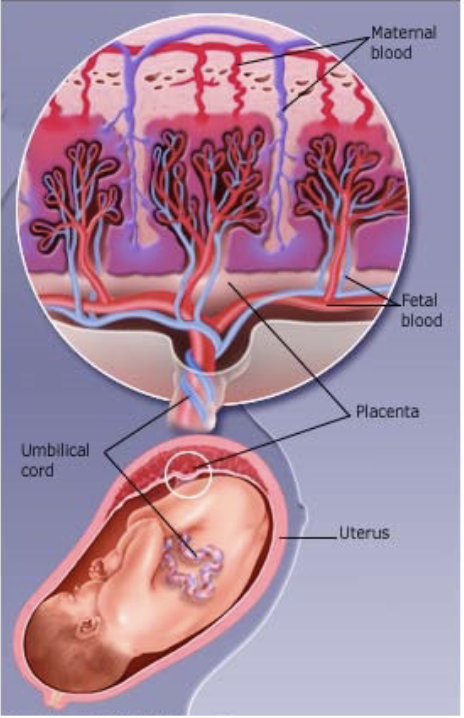
from the trophoblast → placenta
2 cell lines of developing blastocyst
embryoblast: forms the embryo
trophoblast: forms the Chorion, an endocrine structure that eventually becomes the placenta
Embryoblast
forms the embryo
1 of 2 cell lines in developing blastocyst
Trophoblast
forms the Chorion
1 of 2 cell lines in developing blastocyst
Chorion
an endocrine structure that eventually becomes the placenta
Chorionic gonadotropin
an LH analog
synthesized and released from the Chorion, which re-lutenizes the Corpus Luteum so that it can continue to secrete P4, E2, and inhibin throughout pregnancy
Trophoblast → placenta
endocrine structure eventually replaces the corpus luteum at start of the 2nd trimester, takes over the production of P4 to E2 to sustain pregnancy all the way to delivery
E2 in the uterus
E2 from the corpus luteum and placenta is supplied to the uterus throughout pregnancy
this stimulates the synthesis of connexins in the myometrial smooth muscles
this provides electrical connectivity between cells so that coordinated contractions can be generated
also stimulates production of oxytocin receptors in uterine myometrium
Connexins
ie gap junctions
synthesis of Connexins (stimulated via E2 from corpus luteum and placenta supplied to the uterus) in the myometrial smooth muscles
works to provide electrical connectivity between cells so that coordinated contractions can be generated
Oxytocin
production is stimulated via E2 in the uterus
stimulates contractions via the production of prostaglandins
stretch receptors at the head of the cervix creates positive feedback to hypothalamus and pituitary for more oxytocin release
also release is induced via direct tactile or auditory stimuli during breast-feeding
therefore inducible, rather than constitutive
Positive hormonal feedback during delivery
delivery is propagated via positive hormonal feedback
posterior pituitary releases oxytocin, which signals the stretch receptors at the head of the cervix to undergo myometrial contractions
thus transmitting info via afferent neurons to the brain, and again stimulating hypothalamic secretion of oxytocin via posterior pituitary

Milk production
prolactin from the anterior pituitary stimulates alveolar epithelial cells, where milk is produced
prolactin release controlled by thyroid hormones
Milk ejection
oxytocin from posterior pituitary stimulates milk ejection from the alveolar cells of the mammary gland via contraction of myoepithelial cells, via prostaglandin release
offspring cries create auditory stimulation of the thalamus, which then stimulates the hypothalamus and posterior pituitary
stimuli that induce the secretion of both hormones include:
auditory inputs (crying)
tactile inputs (grabbing, suckling)
What stimulates milk ejection?
stimuli that induce the secretion of both hormones include:
auditory inputs (crying)
tactile inputs (grabbing, suckling)
Prolactin levels throughout pregnancy
prolactin rises through late pregnancy, thus priming the mammal glands for milk production
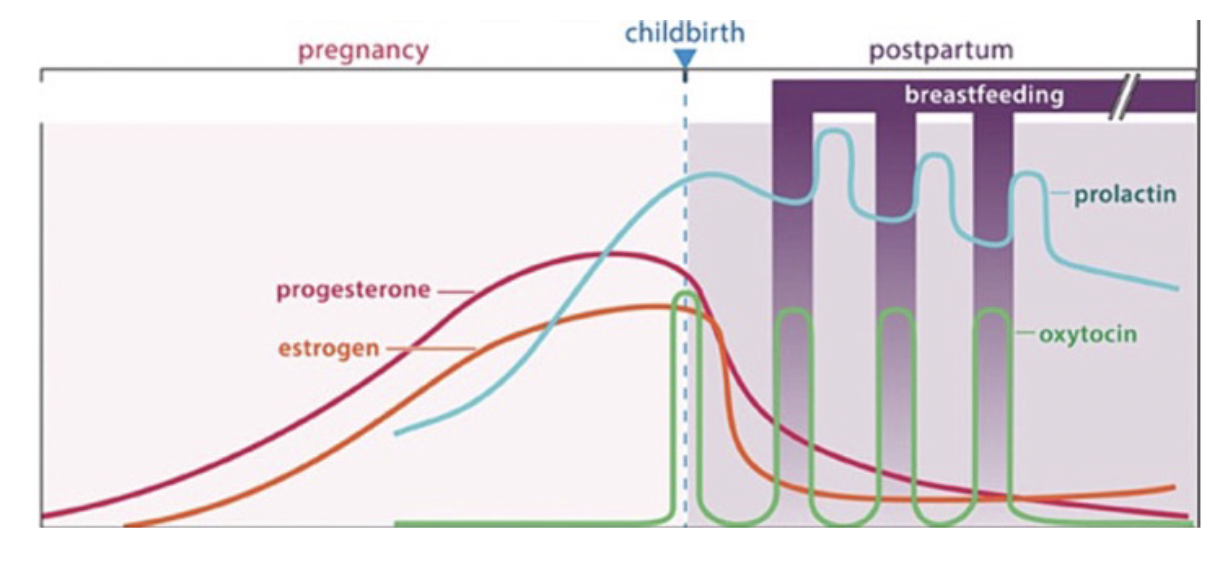
Oxytocin levels throughout pregnancy
oxytocin spikes at delivery (positive feedback loop), and throughout breastfeeding in response to auditory and tactile stimuli

Metabolic rates in lactating mothers
metabolic rates are inherently higher in lactating mothers than in non-lactating women
lactating women:
increased thyroid hormones, which upregulate prolactin secretion and milk production
this is done in spikes after breast-feeding sessions, not continuously
non-lactating women:
higher dopamine levels which keep prolactin low
Hooded seals breast milk
Black rhino breast milk
Tammar wallabies breast milk
Eastern cottonball breast milk
Human female breast milk
Rock dove breast milk