SPPA 220: exam 3 anatomy, stop before facial epression
 Call Kai
 Learn
 Practice Test
 Spaced Repetition
 Match
 Flashcards
 Knowt Play
1/68

There's no tags or description
Looks like no tags are added yet.
69 Terms
in terms of speech, adjustments in shape of these cavities
What is articulation
structures that effect these shape changes
What are articulators
the frequency of sound to which the cavity most effectively responds
govern our vowels
What is resonant frequency
forms framework for organs of mastication, speech, respiration, muslce of facial expression
What is the facial skeleton
house and protects brain
What is the cranium
Begins as paired bone with a symphysis
Fuses early in development to become single bone
Fuses through embryological development
What is the mandible
Mental foramen: Small holes in lateral anterior side
What is this?

Alveolar arch: portion of mandible that our teeth embedded, not out teeth
What is this?

Angle of mandible: part where we have a change from more vertical orientation to more transverse orientation
What is this?

Coronoid process: anterior and superior projection
What is this?

Condylar process: posterior projection, articulates with temporal bone to form joint that moves jaw
What is this?

Corpus of mandible: flat portion or body of mandible on either side, from the angle forward to mental symphysis
What is this?

Paired bone that forms upper jaw, forms through embryological development
Contributes to formation of: roof of mouth, floor and lateral walls of nasal cavity, floor of orbit
What is the maxialle
Zygomatic process of maxilla
What is this?

Frontal process of maxilla: superior projection, articulates with frontal bone
What is this
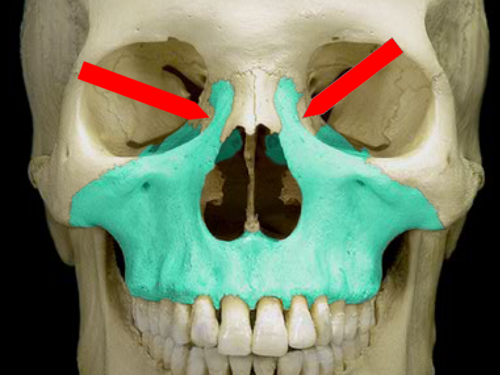
Palatine process of maxilla: articulates with palatine bone
What is this

Alveolar process of maxilla: portion that our teeth are in
What is this
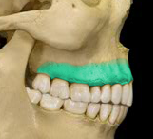
Pre-maxillary suture: front of mouth
What is this

Incisive foramen: tiny pic at base of premaxillary suture
What is this

Intermaxillary suture: where left and right maxialle are fused
What is this

Transverse palatine suture: where the palatine process of maxialle is fused with palatine
What is this

Nasal bones: Two small oblong plates
Placed side by side, form bridge of nose
Lie medial to frontal processes of maxillae
What are these

Palatine bones: small, but complex, L shaped bones that are facing each other
Posterior to maxillae
Contribute to: floor and lateral wall of nasal cavity, posterior ¼ of hard palate, floor orbit
What is this

Horizontal plate: contributes to post ¼ of hard palate
What is this
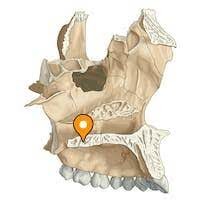
Perpendicular plate: portion that is more vertical, contributes to the lateral walls
What is this

Inferior nasal conchae: small, scroll-like bones
Makes up inferior most aspect of lateral wall of nasal cavity
Articulates with maximilla, palatine and ethmoid bones
What is this?

Vomer: at midline of the nose
Inferior half of bony nasal septum
Articulates with maxillae, palatine, sphenoid, and ethmoid bones
Anterior border articulates with cartilaginous septum
What is this?

Zygomatic: cheekbone, along with zygomatic process of maxilla and temporal bone, form zygomatic arch
roughly quadrilateral body with 3 processes: maxillary, temporal, frontal
What is this
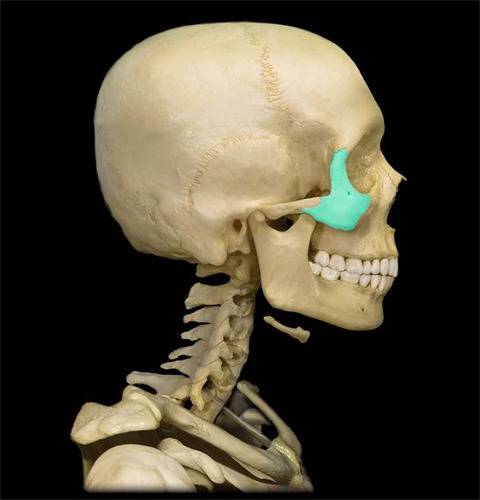
Lacrimal: form lateral nasal wall and small portion of medial orbit, sits behind where tear gland is
What is this

deep to maxilla and other bones, called cranial bone but contributes to facial skeleton
Inferior part projects down between orbital plates of frontal bone
What is the ethmoid bone
Crista galli of the ethmoid bone: superior projection, goes up into the cranium
What is this

Cribriform plate: contributes to floor of cranium
What is this

Perpendicular plate: inferior projection, contributes to bone nasla spetum
What is this

Conchae of ethmoid
What is this

Orbital plate
What is this

Sphenoid: located at base of skull, being ethmoid, and in front of foramen magnum
looks like bat with wings
articulates with all bones of cranium and 3 facial bones
What is this

Frontal bone: forms anterior part of brain case, vertical plate
contributes to forehead, horizontal plate contributes to roof of orbit and nasal cavities
What is this

Parietal bone: forms most of rounded roof of cranium
- articulates with frontal bone at coronal suture
- joined together as sagittal suture
- articulates with occipital bone at lambdoid suture
What is this

Sagittal suture: joins the two parietal bones
What is this

Coronal suture: between parietal and frontal
What is this

Lambdoid suture: between parietal and occipital
What is this

Occipital bone: only one, lower and back part of cranium
What is this

Temporal bone: paired bones forming most of lateral base and sides of brain case
What is this

Squamous portion of temporal: lateral, anterior, superior aspect of bone
Includes EAM: ear opening/canal
zygomatic process- with temporal process of zygomatic bone, forms zygomatic arch
What is this

Tympanic portion of temporal: In front of mastoid and below squamous & petrous portions
Forms anterior and inferior part of EAM
Includes styloid process
What is this
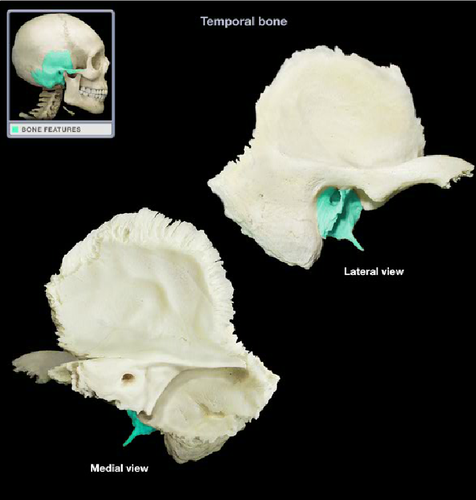
Petrous portion of temporal bone: at base of skull, houses essential organs of hearing
What is this

Mastoid portion of temporal bone: posterior part
What is this

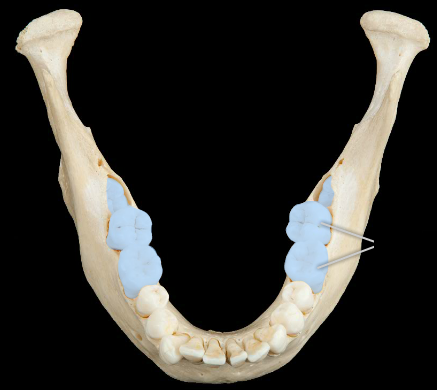
Incisors: cutting teeth
What are these
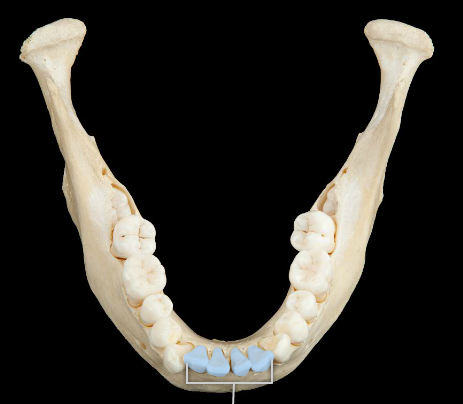
Canines: tearing, also called cuspids
What are these
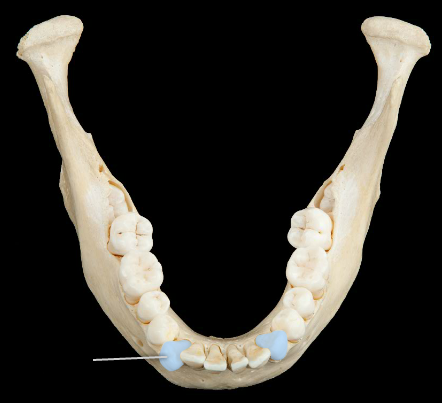
Premolars: have 2 points/crowns/cuspids, don’t have these as babies
What are these
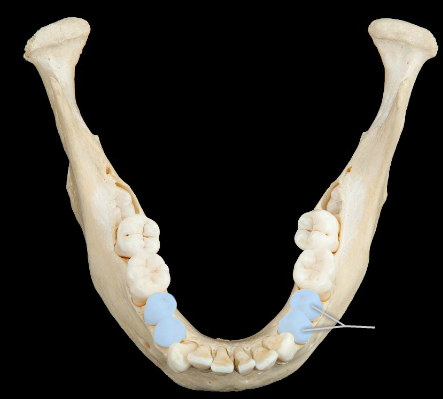
Molars: grinding, largest, have 3: 1st, 2nd, 3rd
What are these
Visible portion, 1/3 of tooth, covered by enamel
What is the crown of a tooth
Hard part that covers the tooth
What is the enamel of a tooth
Houses nerves
What is the pulp canal of a tooth
Transition between crown and root
What is the neck of a tooth
Remaining 2/3 of tooth, embedded in bone and covered by cementrum
What is the root of a tooth
Medial: surface facing the midpoint/midline, towards the front of teeth
What is this

Distal: surface farthest from midline, towards back of mouth
What is this

Buccal: part between teeth and check
What is this

Lingual: surface facing tongue
What is this

Occlusal: surface between upper and lower teeth, flat part
What is this

When the teeth in front don’t come out of gum enough, leaving a gap in the front
What is an open bite
When you have an open or closed bite on only one side
What is a lateral bite
When the top incisors project beyond the bottom incisors
What is an overjet
Anterior teeth fail to erupt to reach line of occlusion, or if posterior teeth have erupted past normal line of occlusion
What is an open bite
Bounded anteriorly and laterally by alveolar processes and teeth
Bounded superiorly by hard and soft palate
Bounded inferiorly by muscular floor of mouth
Bounded posteriorly by anterior faucial pillars
What is the oral cavity
Highly variable in shape and dimension
Space limited by lips and cheek externally and alveolar process and teeth internally
Between our teeth and cheeks
What is the buccal cavity
Tube in back of mouth and nose
From vocal folds to behind nasal cavity
3 sections: nasopharynx, oropharynx, laryngopharynx
What is the pharyngeal cavity
Behind the oral cavity
Where is the oropharynx located