2B Foraging and Farming
 Call Kai
 Learn
Learn Practice Test
 Spaced Repetition
 Match
Match Flashcards
 Knowt Play
1/5

There's no tags or description
Looks like no tags are added yet.
Name | Mastery | Learn | Test | Matching | Spaced | Call with Kai | Chat |
|---|
No analytics yet
Send a link to your students to track their progress
6 Terms
What behaviors link foraging and farming
benign or mutually beneficial exploitation
e.g. foraging and dispersing seeds, tolerating wild dogs that eat our scraps while guarding our homes
active management
e.g. burning land, channeling watermelon selectively harvesting
cultivation
e.g. often considered a type of agriculture
e.g. planting in prepared areas, controlling animals’ movements, stocking ponds
domestication → central to “full blown agriculture”
e.g. changing species deliberately or not such that they are less able to live in the wild and are more dependent on humans
what are the implications of domestication?
traits of domesticated species are usually less adaptive or even maladaptive under natural (wild) conditions
traits may change through natural selection
what interacting factors influence our ability to get food?
plant suitability
e.g. not toxic, an be digested, has nutrients, can be harvested, regularly available
human ingenuity
tools and practices for harvesting and processing, management, cultivation, artificial section
time and effort required vs other options
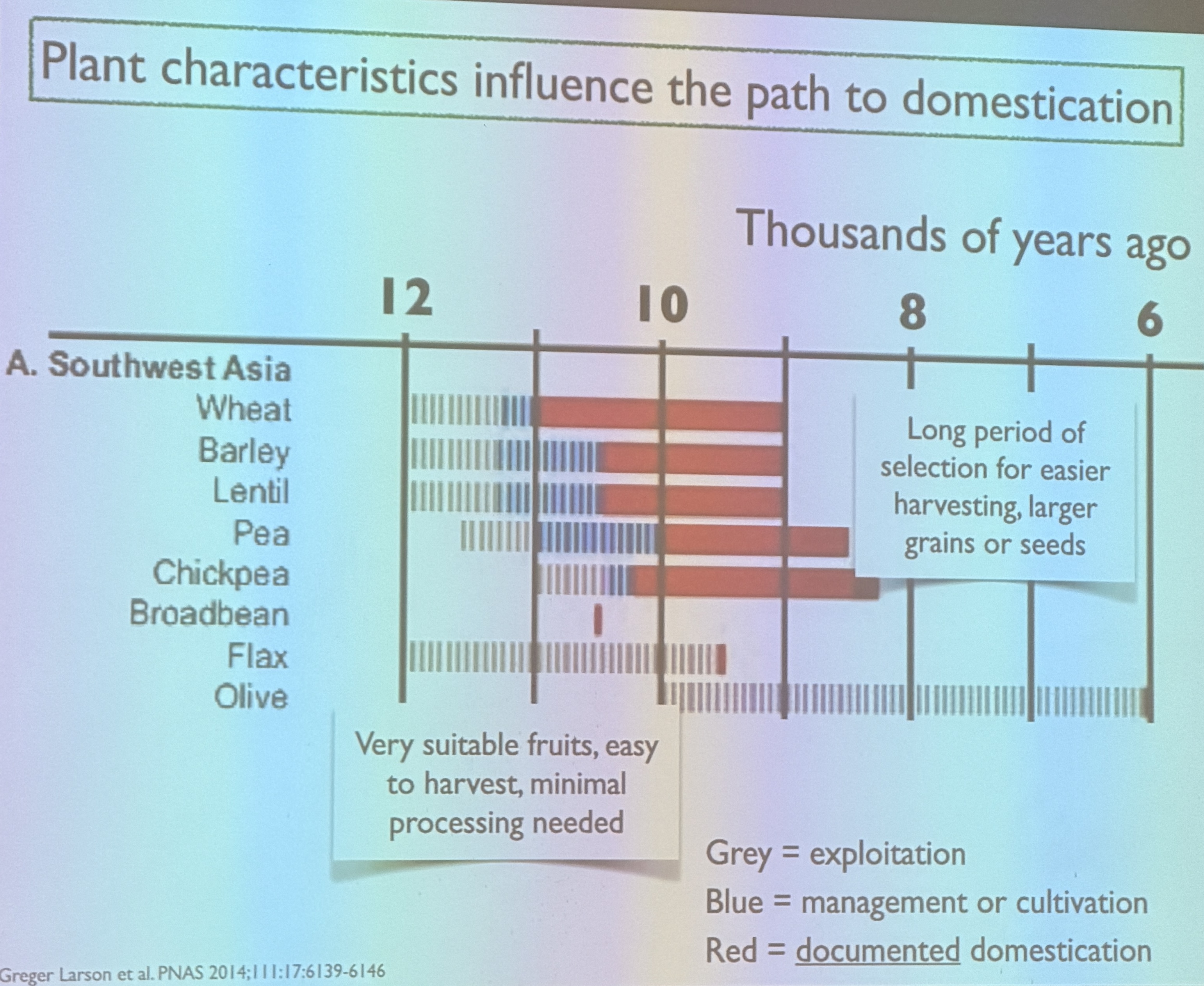
Path to domestication
some plants we’ve been able to continuous exploit bc they’re easy to harvest, very suitable
other plants we’ve had to manage and cultivate -→ domesticate
Explain the relevance of the maize ancestor teosinte
is this plant suitable? is it worthwhile to forage, manage, cultivate compared to other options? can we make it edible and worth our time?
big seeds made it difficult