Chapter 39: Animal Form and Function
 Call Kai
 Learn
 Practice Test
 Spaced Repetition
 Match
 Flashcards
 Knowt Play
1/43

Earn XP
Description and Tags
Comprehensive vocabulary flashcards covering the key terms, biological hierarchies, structural adaptations, surface area dynamics, and homeostatic feedback mechanisms presented in Chapter 39: Animal Form and Function.
44 Terms
Anatomy
The study or description of an animal's form and physical structures.
Physiology
The study of how an animal's anatomical structures work and carry out their functions.
Emergent Properties
Novel properties not present at the preceding level of the biological hierarchy that arise from the interactions of a level's component parts.

Adaptation
An inherited structural, physiological, or behavioral trait that helps an organism survive and reproduce in a specific environment, spreading through a population over generations via natural selection.
Trade-off
An evolutionary compromise where improving one trait costs or diminishes another because an organism cannot be built to maximize every function at once.
Historical Constraint
The evolutionary limitation where adaptations must be built by modifying preexisting ancestral structures and existing genetic variation rather than beginning from scratch.

Acclimatization
A short-term, reversible physiological or phenotypic change that occurs in an individual organism within its lifetime in response to altered environmental conditions.
Tissue
A group of similar cells functioning together to perform a specific, coordinated job.
Organ
A body structure composed of several different tissues working together to execute specific complex tasks.
Organ System
A group of interconnected organs that coordinate with one another to execute a major physiological process.
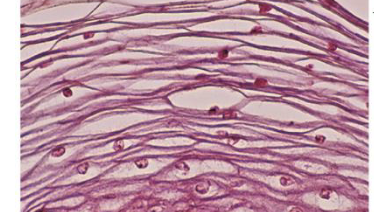
Epithelial Tissue
A basic animal tissue that covers external body surfaces, lines internal cavities and organs, and regulates the transport of substances across boundaries.
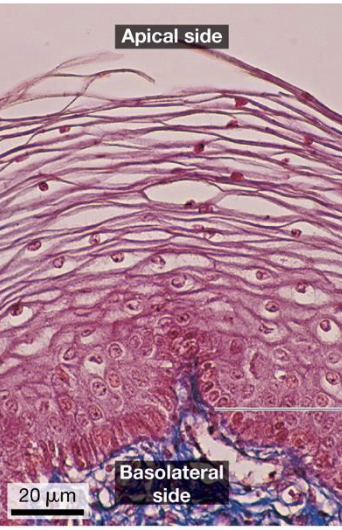
Apical Surface
The polarized face of an epithelial sheet that borders the exterior environment or an internal hollow lumen.
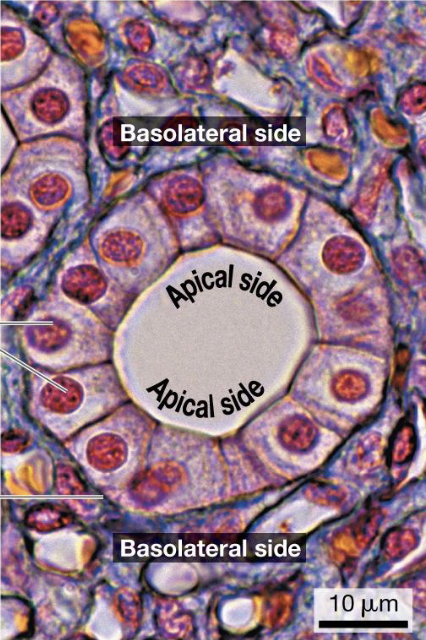
Basal Surface
The polarized face of an epithelial sheet that faces the interior of the body and binds to underlying tissue via the basal lamina.
Connective Tissue
A primary tissue type consisting of scattered cells embedded in an abundant extracellular matrix that they secrete, serving to support, connect, or cushion other tissues.
Muscle Tissue
An excitable tissue consisting of cells packed with specialized proteins that contract to generate mechanical force and movement.
Nervous Tissue
A primary tissue type composed of neurons that transmit rapid electrical signals and glia that support neuronal function.

Neuron
A specialized cell in nervous tissue consisting of dendrites to receive electrical signals, a cell body, and an axon to send impulses to other cells.

Dendrite
A branched extension of a neuron that functions as an antenna to receive incoming signals from other cells.
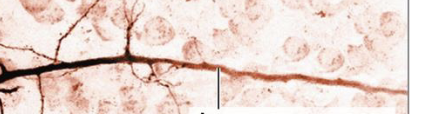
Axon
A long cellular projection of a neuron that conducts outgoing electrical signals away from the cell body toward target cells.
Glia
Non-neuronal support cells found within nervous tissue that protect, nourish, and assist neurons.
Surface Area-to-Volume Ratio
The relationship between the external exchange surface of an animal and its internal tissue volume; as body size increases, volume grows more rapidly than surface area, decreasing this ratio.
Homeostasis
The dynamic physiological process by which an organism maintains its internal physical and chemical environment within a tolerable, steady range.
Set Point
The target or baseline reference value for an internal physiological variable around which normal fluctuations occur.
Regulator
An organism that actively expends metabolic energy to maintain an internal variable at a constant level despite changes in the external environment.
Conformer
An organism whose internal physiological conditions passively change to match the conditions of its external environment.
Endotherm
An animal, such as a mammal or bird, that produces most of its internal body heat via metabolic processes.
Ectotherm
An animal, such as a lizard or insect, that absorbs most of its body heat from the surrounding environment rather than producing it internally.
Sensor
The component of a homeostatic regulatory pathway that detects a physical or chemical stimulus indicating an environmental condition.
Integrator
The control center of a homeostatic system (typically a brain region) that compares input from sensors to the set point to determine whether a physiological response is necessary.
Effector
A cell, tissue, or organ that carries out the physiological action directed by the integrator to bring an internal condition back toward the set point.

Negative Feedback
A homeostatic control mechanism in which a deviation from the set point triggers a response that counteracts and reverses the original direction of change.
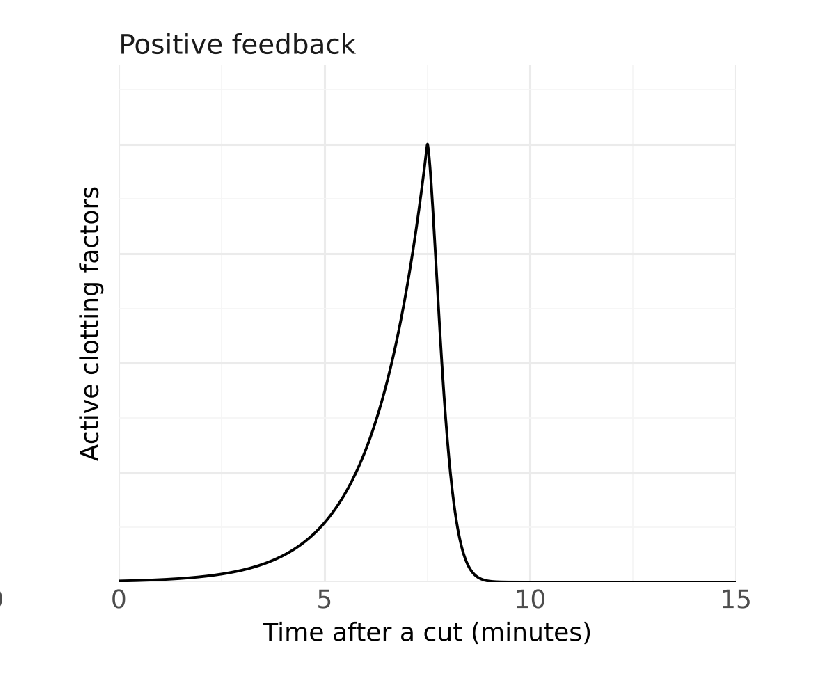
Positive Feedback
A physiological control loop in which a stimulus triggers responses that further amplify the change in the same direction until a culminating event concludes the process.
Antagonistic Hormones
A pair of hormones with opposing physiological effects that coordinate to regulate a single physiological variable within a narrow range.
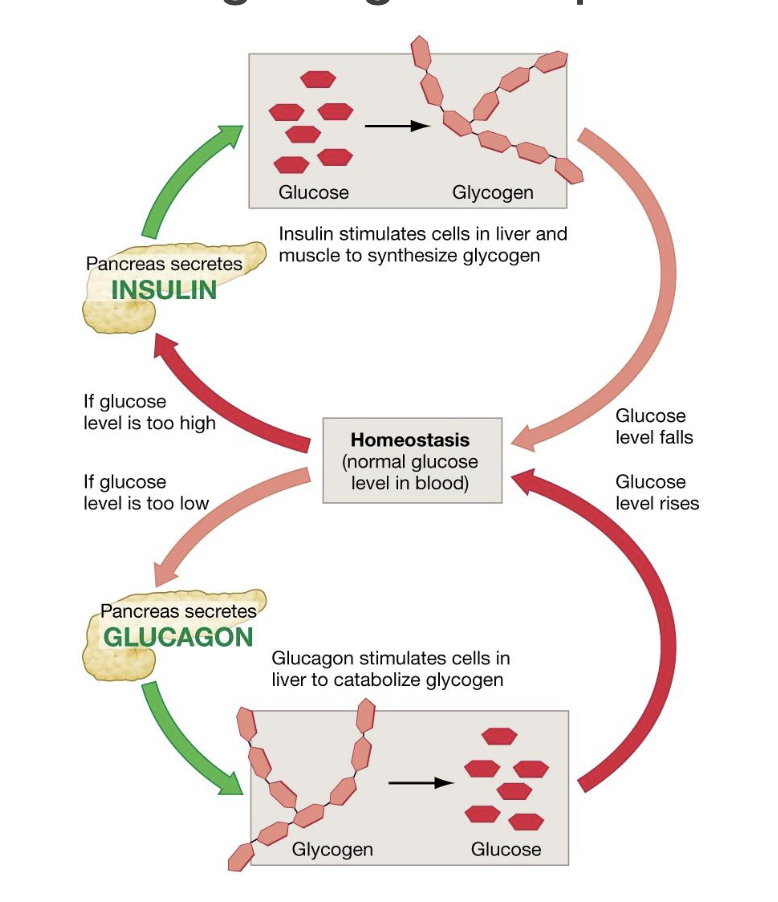
Insulin
A hormone secreted by the pancreas in response to high blood glucose that directs liver and muscle cells to synthesize glycogen, reducing blood glucose levels.

Glucagon
A hormone secreted by the pancreas in response to low blood glucose that stimulates liver cells to catabolize stored glycogen into glucose, raising blood glucose levels.

molecular level (protein)
Binds a specific substrate and catalyzes a reaction (enzymatic activity)

cellular level (Organelle)
increases membrane surface area to host the ETC and produce ATP (cellular energy

loose
a soft cushion around organs
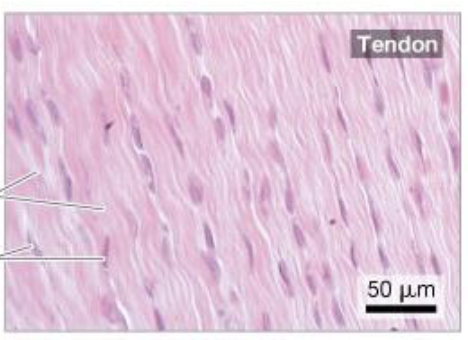
dense
tough fibers in tendons and ligaments
supporting
a firm matrix in bone and cartilage

fluid
blood, with a liquid matrix (plasma

skeletal
striped (striated) cells that move your bones
▪ voluntary
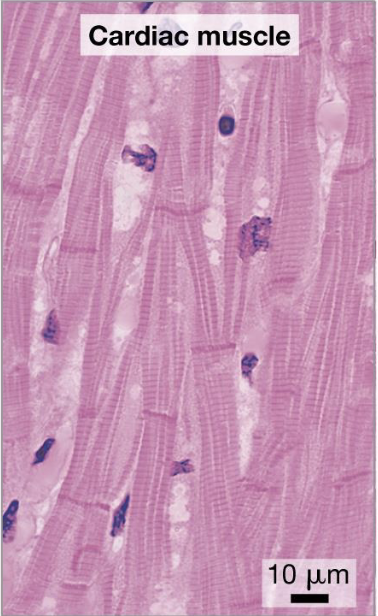
cardiac
branched cells in the heart wall
▪ involuntary

smooth
tapered cells in the walls of the gut and
blood vessels
▪ involuntary