pr1154 (pharm cal + ic 1-6)
 Call Kai
 Learn
Learn Practice Test
 Spaced Repetition
 Match
Match Flashcards
 Knowt Play
1/85

There's no tags or description
Looks like no tags are added yet.
Name | Mastery | Learn | Test | Matching | Spaced | Call with Kai | Chat |
|---|
No analytics yet
Send a link to your students to track their progress
86 Terms
definition of a drug (1)
substance intended for diagnosis, mitigation, treatment, or prevention of disease in humans or other animals
systemic effects of drug (2)
drug entrance into circulatory system to be transported to the cellular site of function
effects are generalised
local effects of drug (2)
achieved by direct application of drug to desired site of action
limited to area of application
why does local effect have fewer side effect (2)
reduced amount of drug traveling through the rest of the body
smaller overall dose is required
how are local or systemic effects achieved (2)
using a variety of medicinal products (dosage forms)
administering by different routes
define dosage form (1)
combination of drug components and an assortment of non-drug components (excipients) used for administration of drug by an appropriate route
define excipients (1)
any additive or inert substance in the formulation that is not the active drug substance
function of excipients (3)
to bulk up the active ingredient or
to guarantee stability and bioavailability of API or
for other specific purpose (eg texture and taste)
define pharmaceutical compounding (1)
act of preparing, mixing, assembling, packaging, and/or labelling a medicinal product as a result of a prescription or as pharmacy stock in anticipation
when is compounding required (1)
for drugs in forms that are not commercially available
such small scale product preparation is typically performed iin a hospital / retail pharmacy and is known as... (1)
extemporaneous compounding
how long are prescriptions valid for (1)
1 year
what are examples of legal requirements in a prescription (7)
patient's name
patient's ic number + address
name of API + strength
direction of use
quantity of medication to be dispensed
date of prescription
prescriber's name + signature
step 1 of compounding process (1)
read & evaluate the order carefully
what checks regarding the prescription must be performed during step 2 of compounding process (3)
it is legally correct and authentic
dose of drug
pharmacological action of drugs are compatible
what documentation must be recorded on compounding worksheet in step 3 of compounding process (3)
full formula
required calculations
complete compounding methodology
what critical verification must occur during step 6 of compounding process before mixing the components (1)
ingredients should be counter checked
what key factors should be considered when selecting a container in step 7 of compounding process (2)
product stability
interaction of product with material used for container
what actions are performed on the compounding worksheet in step 9 of compounding process (2)
countercheck compounded products
sign & date on compounding worksheet
what should be done to the compounding worksheets in step 10 of compounding process (1)
file for record keeping
define pharmacopoeia (1)
an official collection of standards for pharmaceutical substances (active drugs and excipients) and medicinal products (dosage forms)
components of main label (9)
name & dosage form
name & strength of API (_g/5mL)
quantity dispensed
directions for use
patient’s name
name & address of pharmacy
pharmacy ref no
date of dispensing
expiry date
which of the following directions for use written on the main label is correct (1)
take two 5mL spoonfuls two times a day

recommended shelf-life for this preparation stored as pharmacy stock (2)
total 12 months (incl after issue)
if opened, 3 months

recommended shelf-life for this preparation after issue to patient (1)
4 weeks

recommended shelf-life for this preparation stored as pharmacy stock (1)
to be recently prepared
total 1 month —> 2 weeks as stock

recommended shelf-life for this preparation after issue to patient (1)
to be recently prepared
2 weeks
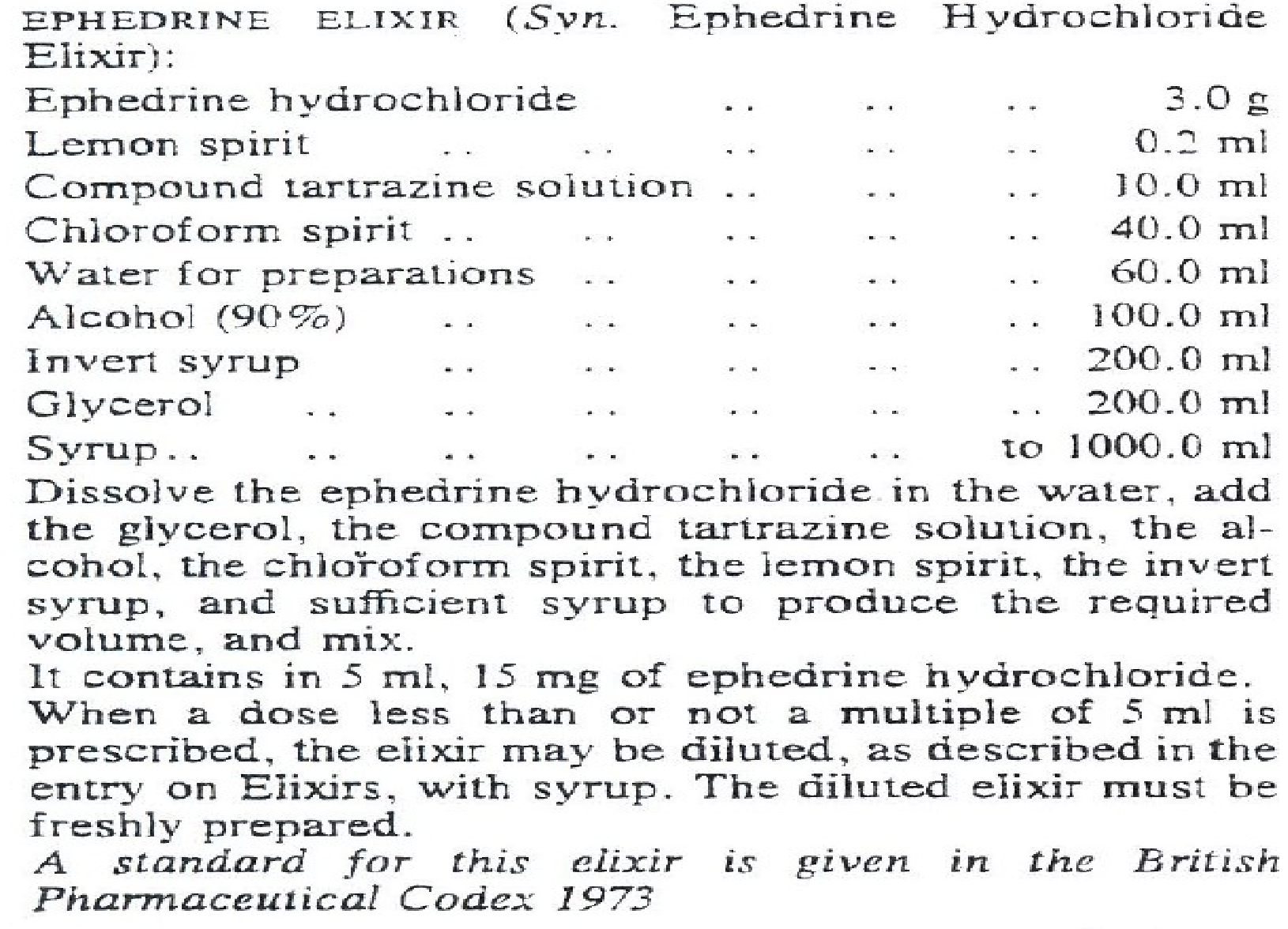
recommended shelf-life for this preparation stored as pharmacy stock (1)
to be freshly prepared
prepared not more than 24h before issue

recommended shelf-life for this preparation after issue to patient (1)
to be freshly prepared
2 weeks
suggested shelf-life for ‘unofficial’ unresearched formulation to be stored as pharmacy stock (1)
prepared not more than 24h before issue
suggested shelf-life for ‘unofficial’ unresearched formulation after issue to patient (1)
2 weeks
suggested shelf-life for diluted ‘official’ formulation to be stored as pharmacy stock (1)
usually prepared not more than 24h before issue
suggested shelf-life for diluted ‘official’ formulation after issue to patient (1)
2 weeks
define auxiliary labels (1)
supplementary labels placed on drug product containers in addition to main labels
purpose of auxiliary labels (2)
to provide important information needed for storing / using the drug product
reinforce information provided during counselling
what are black auxiliary labels used for (1)
drugs to be taken internally / swallowed
what are red auxiliary labels used for (1)
drugs not meant to be swallowed
what auxiliary labels are to be placed on all liquid preparations (1)
shake the bottle
why are oral solid dosage forms most commonly used (2)
easier to carry around
greater stability than liquid
define capsules (1)
medicinal agents with / without inert substances enclosed within a gelatin shell
hard vs soft capsule shell composition (2)
both contain gelatin, water sugar
in addition, soft capsule shell contains plasticisers
purpose of plasticisers in soft capsule shell (1)
to make gelatin more malleable / flexible
at what temperature are capsule shells soluble in water (1)
37°C
solid medicaments are enclosed in hard / soft capsules (1)
hard
liquid / semi-solid medicaments are enclosed in hard / soft capsules (1)
soft
medicaments are added to cap / body of hard capsule shells (1)
body
minimum weight of hard capsules (1)
100mg
how are hard capsule sizes designated numerically (1)
largest 000, 00, 0, 1, 2, 3, 4, 5 smallest
what capsule size should be used for 125mg medicament (1)
4
what capsule size should be used for 160mg medicament (1)
3
what capsule size should be used for 225mg medicament (1)
2
what capsule size should be used for 290mg medicament (1)
1
what capsule size should be used for 450mg medicament (1)
0
what capsule size should be used for 550mg medicament (1)
00
what capsule size should be used for 950mg medicament (1)
000
disadvantages of capsules (3)
sensitive to heat & humidity (esp softgel)
not suitable for certain populations like muslims and vegetarians
more costly than corresponding medication in liquid form
define linctuses (1)
viscous liquids that are usually used for treatment of cough
precaution for patients consuming linctuses (1)
should be sipped slowly without dilution of water
define elixirs (1)
clear, pleasantly flavoured liquids containing syrup, high content of ethanol and other solvents like glycerol
at what concentrations of alcohol do elixir become self-preserving (1)
10-12%
why are elixirs often used for potent and unpleasant tasting drugs (1)
high ethanol and syrup content masks unpleasant drug taste
define mouthwashes (2)
aq solution in concentrated form, with antiseptic / local analgesic or astringent properties
used to clean and refresh oral cavity
purpose of gargles (1)
to relieve soreness in mild throat infections by bringing the medicament into contact with mucous surface of throat
gargles vs mouthwash (2)
both have similar type of ingredients
gargles tend to contain higher concentration of API
define suspensions (1)
coarse dispersion containing finely divided insoluble material suspended in a liquid medium
characteristics of indiffusible solid suspension (1)
contains drug that settle too rapidly / do not wet enough to produce a uniform smooth suspension
characteristics of diffusible solid suspensions (2)
readily disperse in aqueous media when suspension is shaken
solid remains suspended for sufficient time to allow withdrawal of uniform dose
how are indiffusible solids successfully formulated into stable oral suspensions (1)
by incorporating suspending / thickening agents
purpose of suspending / thickening agents (1)
to increase the viscosity of the vehicle
examples of diffusible solid suspension (3)
light kaolin
light magnesium carbonate
magnesium trisilicate
examples of indiffusible solid suspension (4)
aspirin
chalk
barbiturates
phenacetin
types of suspending agents (4)
natural polysaccharides (eg tragacanth powder)
semisynthetic polysaccharides (eg methylcellulose)
clays (eg bentonite)
synthetic thickeners (eg carbomer)
define inhalations (2)
liquid preparations containing volatile substances
used to reduce inflammation and congestion of respiratory tract
define emulsions (2)
disperse system consisting of 2 immiscible liquids
the disperse phase is finely divided and distributed through the continuous phase
emulsions are stabilised by… (1)
emulsifying agent
properties of emulsifying agents (2)
adsorb at the interface between oily and aq phases
have hydrophilic and lipophilic groups
examples of fixed oil emulsions & proportions of oil:water:gum (2)
almond oil, arachis oil, castor oil, cod-liver oil
4:2:1
examples of mineral oil emulsions & proportions of oil:water:gum (2)
liquid paraffin
3:2:1
examples of volatile oil emulsions & proportions of oil:water:gum (2)
turpentine, cinnamon oil, peppermint oil
2:2:1
examples of oleo-resin emulsions & proportions of oil:water:gum (2)
male fern extract
1:2:1
ways to categorise dosage forms (4)
physical state
route of administration
site of action
microbiological quality
key considerations in formulating a drug into a dosage form (4)
therapeutic
drug factors
biopharmaceutical
regulations & standards
chemical stability of pharmaceutical product (1)
each active ingredient retains its chemical integrity and labeled potency, within the specified limits
physical stability of pharmaceutical product (1)
retention of original physical properties, incl appearance, palatability, uniformity, dissolution, suspendability
microbiological stability of pharmaceutical product (1)
maintenance of sterility and resistance to microbial growth
first-pass effect (3)
some drug is broken down by enzymes in the gi tract
liver enzymes break down large portion of active drug into inactive form before it is being circulated around the body
results in decreased drug absorption