Health Assessment Exam 1
 Call Kai
 Learn
Learn Practice Test
 Spaced Repetition
 Match
Match Flashcards
 Knowt Play
1/136

There's no tags or description
Looks like no tags are added yet.
Name | Mastery | Learn | Test | Matching | Spaced | Call with Kai | Chat |
|---|
No analytics yet
Send a link to your students to track their progress
137 Terms
Therapeutic communication strategies
S- sit squarely to client and get close
O- open posture
L- lean forwad
E- eye contact
R- relax
components of communication: patient perspective
time, active listening, caring, non-judgemental attitude, honesty, trust, empathy, clarification
components of communication: examiner perspective
confrontation, interpretation, explanation, summary
temperature
37 C, 98.6 F
body maintains steady temperature through feedback mechanism regulated in hypothalamus
influenced by
diurnal cycle
menstruation
exercise
age
hormones
fat
hyperthermia
above 37.8
hypothermia
below 36
temperature- children
try to use electronic thermometer
avoid rectal
use oral (4,5,6 years old)
heart rate
number of times the heart beats in 1 minute
50-95 BPM
bradycardia <50bpm
tachycardia >95 bpm
heart rhythm
regular, even tempo
sinus arrhythmia
heart rate varies with respiratory cycle (speeds up with inspiration and slows down with expiration)
commonly found in children
pulse
pressure wave that expands and recoils the artery when the heart beats
pulse force
strength of hearts stroke volume
3+, 2+ (normal), 1+, 0
factors of pulse
fluid status
fever
medications
exercise
anxiety
pulse-children
palpate for A typical rate
in children 2+ use radial pulse
fluctuates more with children, naturally higher
respiration
relaxed, regular, silent breathing
20 breaths per min (16-25)
bradypnea vs tachypnea
bradypnea- 8-12
tachypnea- >25
factors influencing respiration
O2 status
age
anxiety
respirations- children
watch infants abdomen
sleeping RR is most accurate
count for a full minute
systolic vs diastolic pressure
systolic- pressure when heart contracts
diastolic- pressure when heart rests
120/80

BP- children
BP not normally checked in children less than 3
use correct size cuff and peds sized stethoscope
use electronic BP device
pulse pressure
difference between systolic and diastolic (lets us know Stroke Volume, or the amount of blood circulating body)
cardiac output
increase CO leads to increase in BP (vise versa)
vascular resistance
increased resistance (vasoconstriction) leads to increase in BP
volume of circulating blood
fluid retention leads to decreased BP
elasticity of arterial walls
increasing rigidity=increase in BP
factors influencing blood pressure
age, sex, race, social determinants, diunal rhythm, weight, exercise, emotions, stress
orthostatic blood pressure
have person rest supine for 3 minutes, take baseline reading of pulse and BP, then repeat with person sitting and then standing
orthostatic hypotension
drop in systolic pressure of more than 20 or diastolic pressure more than 10 after changing to standing
thigh pressure
when BP in arm is excessively high, compare with thigh pressure
thigh pressure is higher (systolic is 10 to 40 mm higher, diastolic is the same)
coarctation of aorta
arm pressure is higher than thigh pressure
Pulse Ox
assessment of arterial oxygenation 97-99%
OLD CARTS
O- onset (when did pain start, did it appear suddenly or gradually)
L- Location (where is the paid, does it radiate)
D- duration (how long does it last, does it come and go)
C-character (describe the nature of the pain)
A- aggravating factors (what makes your pain worse/triggers)
R- Relief (have you tried anything to relief the pain or make it better)
T- Timing (does the pain have a pattern throughout the day, when does it occur)
S- Severity (on a scale of 1-10 how bad is the pain)
nociceptive pain
when functioning and intact nerve fibers in the periphery and CNS are stimulated
throbbing, aching, cramping, squeezing, pressure
neuropathic pain
result of nerve damage or malfunctioning nervous system
burning, shooting, tingling
acute pain
short term, self limiting, protective
signs- gaurding, grimacing, moaning, restlessness, stillness, diaphoresis, change in vitals
chronic pain
does not stop when injury heals
signs- bracing, rubbing, signing, change in appetite
malignant pain
chronic pain caused by tumor cells d/t tissue necrosis or streching of an organ by growing tumor
chronic nonmalignant
pain associated with musculoskeletal conditions like arthritis, low back pain, fibromyalgia
general survey
covers general health survey and any obvious physical characteristics
provide an overall impression
includes aread of physical appearance, body structure, mobility, behavior
components of general survey
physical appearance
body structure
mobility
behavior
physical appearance
age, sex, LOC, skin color, facial features, overall appearance
body structure
stature, nutrition, symmetry, posture/position, body build, contour, obvious physical deformity
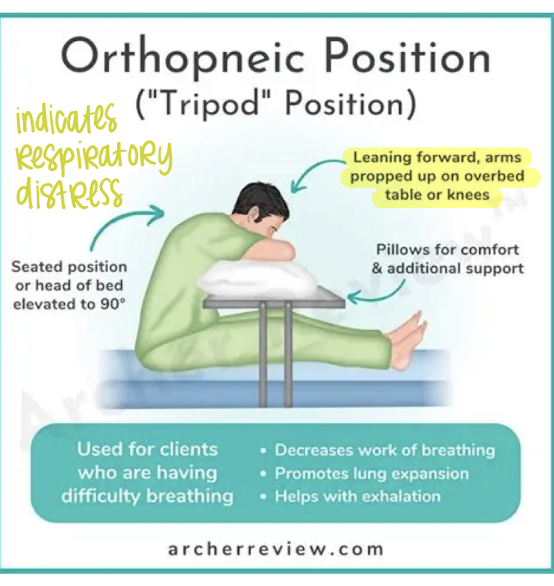
orthopneic position
indicates respiratory distress
scoliosis, kyphosis, lordosis

mobility
gait, ROM, voluntary/involuntary movements
behavior
is it appropriate for the conversation
facial expression
mood & affect
speech articulation and clarity
speech pattern
dress
personal hygiene (can they care for themselves)
arthropometric measurements
height (indicates growth pattern)
weight (reflects nutritional status
BMI (helps assess risk for chronic conditions)
Waist circumference (assess central obesity)
weight considerations
use similar scale, clothing, time of day
hortontal measuring board for children
height considerations
no shoes, stand up straight
BMI categories

waist circumference
measure just above hip bones
female- 35>
male- 40>
if greater= increased risk for metabolic syndrome
infant and child growth
physical growth is the best indicator of child health
healthy growth is continuous but uneven (growth spurts)
red flags about growth
falls below 5th of above 95th percentile with no explanation
wide percentile differences with weight and height
growth suddenly stops
head circumference
measure at birth and every visit up to age 2, annually to 6 years
circle around head aligned with eyebrows at prominent frontal and occipital bones
newborn head/chest circumference
32-38 cm— 2cm larger than chest circumference
6 mo-2 years head/chest circumference
head equals chest
2 years and older head/chest circumference
chest larger than head
situational awareness
ability to notice what is happening around you, what it means, and anticipate what might happen next.
they recognize patterns, emotions, expressions, etc
the foundation for safe nursing care

purpose of health history
collect, subjective data, producing a complete picture of the persons past and present health
biographic data
name, age, DOB, birthplace, address, phone #, gender, race, ethnicity, job
reason for seeking care
quote patient as much as possible
present health
reason they are seeking care from the time of first symptom to now
for healthy person they may state “they feel healthy)
PQRST
provocation
quality
region/radiation
serverity
time
pas history
childhood illnesses, accidents/injuries, serious illness, hospitalization, surgeries, OB history, immunizations, allergies
medication reconciliation
all medications currently taken and taken in past to reduce errors and promote patient safety
family history
highlights diseases and conditions for which the patient may be at increased risk
pedigrees
ROS- Review of Systems
collection of subjective data of our body systems limited to patient statements and in order of head to toe
purpose- evaluate past and present health of each bodily system
Health history questions for infants and children
birthmarks?
change in skin color?
rashes or sores?
diaper rash?
burns of bruises?
exposure to contagious disease?
nail biting or twisting hair?
what steps are taken to protect child from sun?
Health history questions for adolescents
skin problems such as pimples and blackheads
health history questions for adults
ask about changes in skin, delayed wound healing, skin pain, change in feet, falls history of diabetes or peripheral vascular disease, how do you care for your skin
physical exam techniques
assess skin throughout examination
separate skin folds (intertriginous areas)
inspect feet, toes, toenails
inspect skin color
pigmentation, freckles, moles, birthmarks
widespread color change- pallor, erythema, cyanosis, jaundice
inspect temperature
use back of hand to palpate
skin should be warm and equal bilaterally= normal circulation
hands and feet may be slightly colder
other skin inspections
moisture- dehydration/diaphoresis
edema
texture
thickness
mobility/turgor
vascularity/bruising
lesion inspection
elevation- flat, raised, pedunculated
pattern/shape- grouping
size- cm
location
exudate- color/odor
hair inspection
color
texture
distribution
lesions
nail inspection
profile sign- view index finger and note angle of nail base (160)
consistency- smooth, regular
color- pale pink, translucent
capillary refill
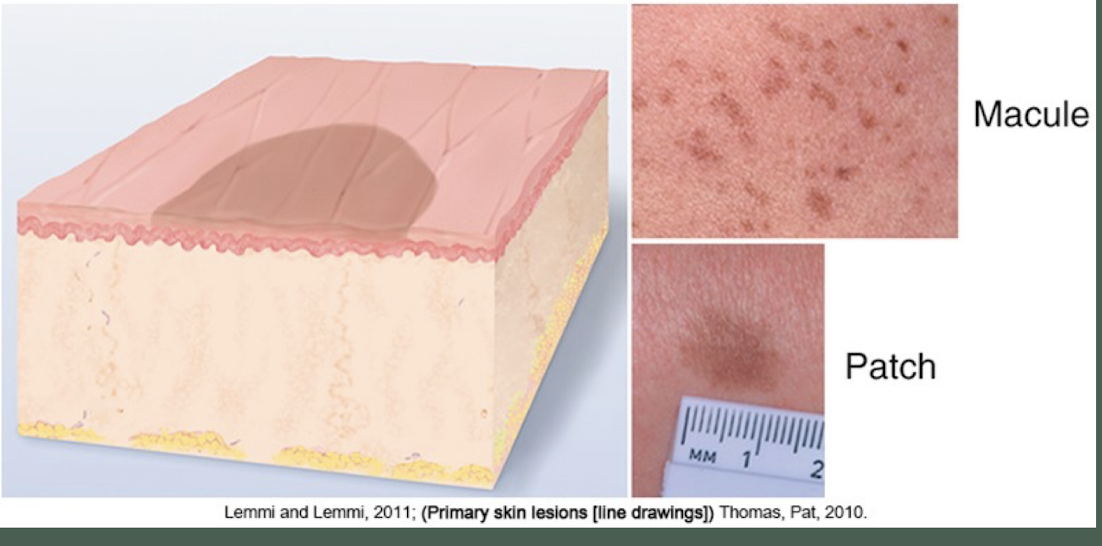
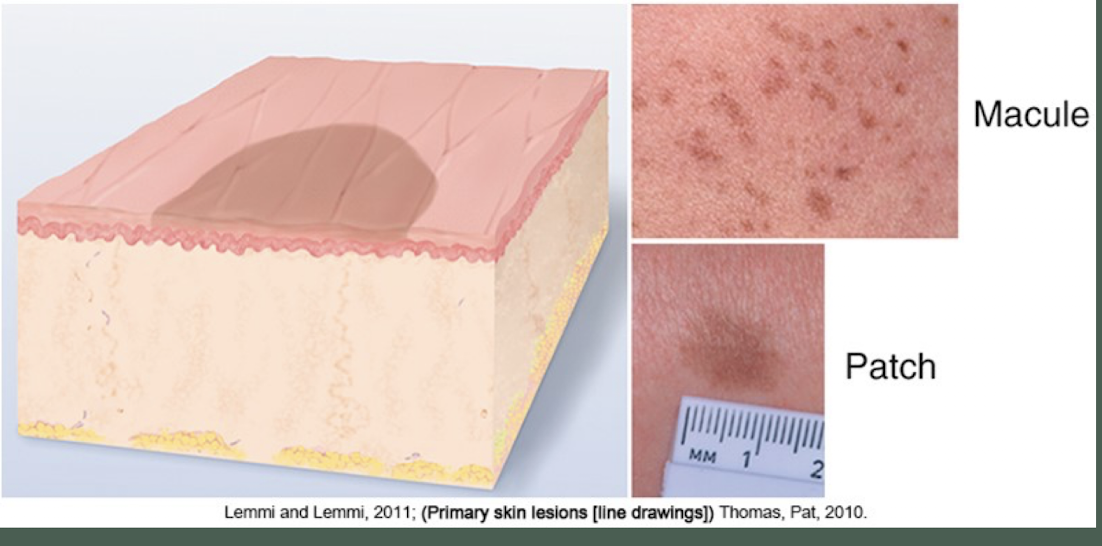
macule
a color change, flat, round, less than 1 cm
papule
felt, and caused by superficial thickening of epidermis

patch
macules that are larger than 1 cm
plaque
papules coalescing to form surface elevation wider than 1 cm

nodule
solid, elevated, hard or soft, greater than 1 cm that may extend deeper into dermis than papule

wheal
superficial, raised, transient and erythmatous, irregular shape d/r edema

tumor
larger in diameter, first or soft, deep in dermis, may be benign or malignant

urticaria (hives)
wheals coalesce to form pruritic reaction

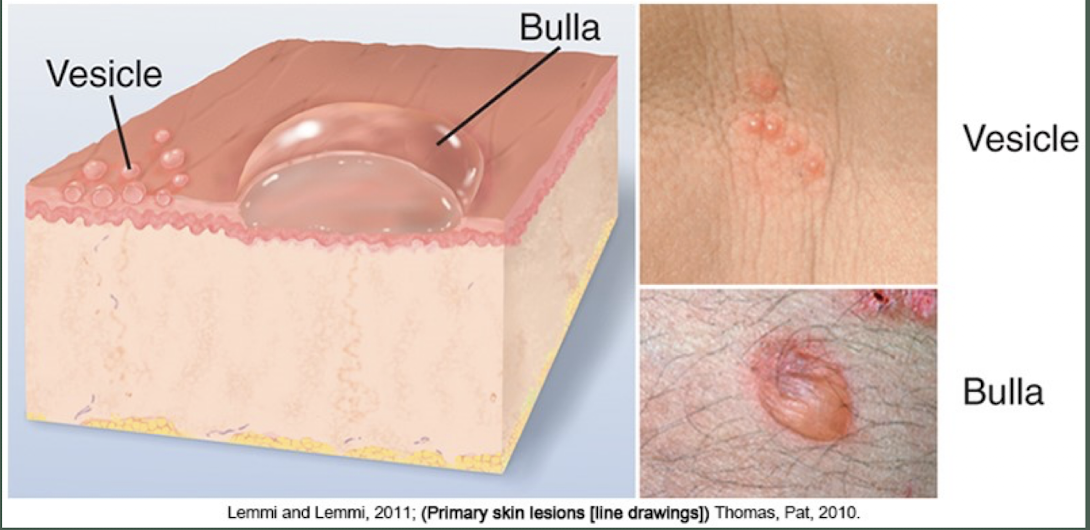
vesicle
elevated cavity containing fluid up to 1 cm

cyst
encapsulated fluid filled cavity

bulla
larger than 1 cm, usually single chamber, superficial in dermis and ruptures easily
pustule
round, elevated, filled with pus

ABCDE
A- asymmetry
B- boarder irregularity
C- color variation
D- diameter
E- evolution/englargement
use sunscreen, avoid tanning beds, visit dermatologist regularly
Braden Scale
Scale used to assess pressure ulcer risk
risk factors for pressure injuries
sensory perception- ability to respond to pressure related discomfort
moisture
activity- physical activity
mobility- ability to change and control body position
nutrition- usual food intake pattern, how much they eat and how often
friction and shear
SCORE OF 12 OR LESS= HIGH RISK
pressure points
occiput (back of head)
shoulder blades
elbow
sacrum
ischial tuberosity
heel
toe
DEVICE
D- DETECT- be aware of devices and risk factors of skin breakdown
E- EVERY PATIENT, EVERY SHIFT
V- VISUALIZE- palpate skin under devices
I- INTERVENE- rotate pt
C- CUSHION with foam dressing
E- EDUCATE
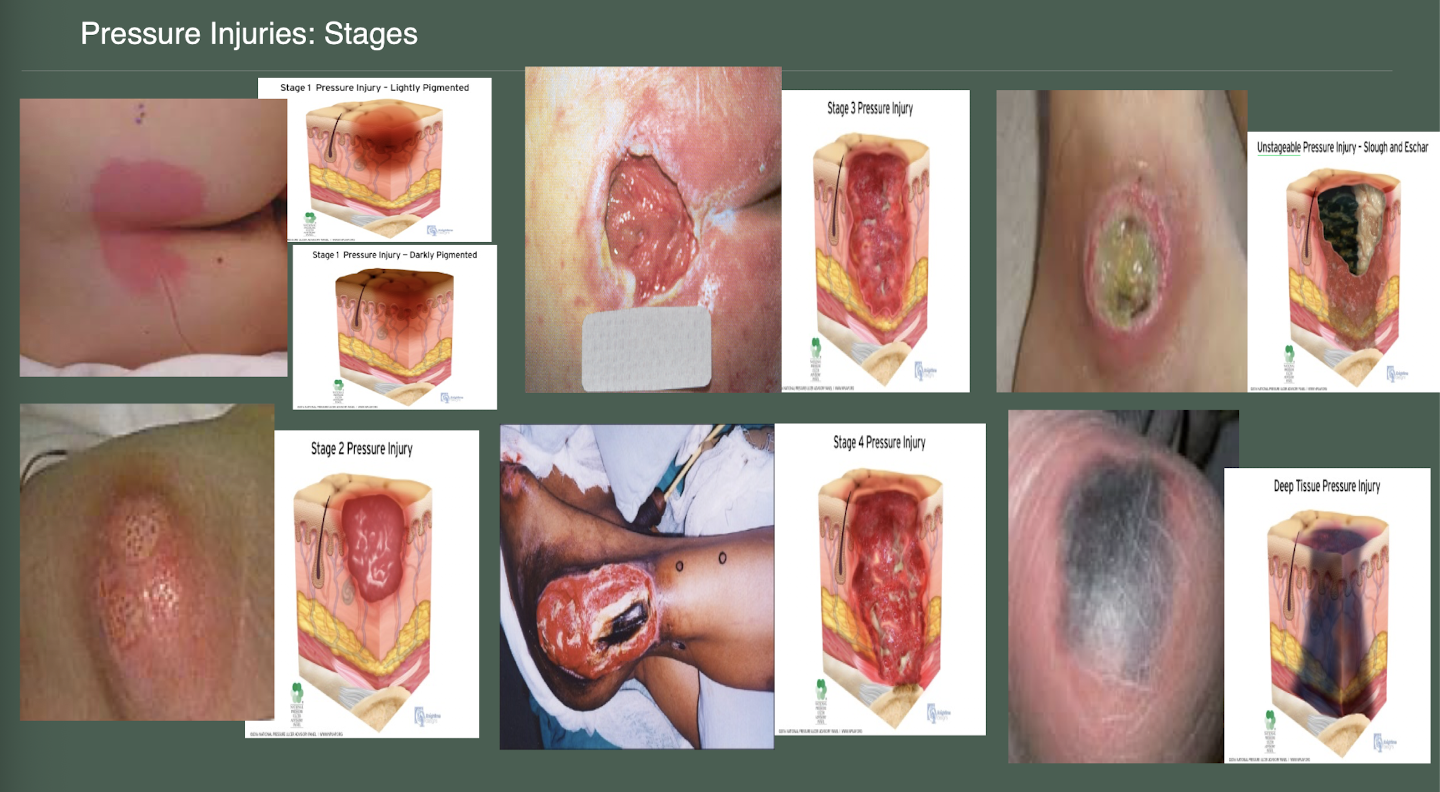
pressure injury stages
stage 1- non blanchable
stage 2- partial thickness skin loss
stage 3- full thickness skin loss
stage 4- full thickness skin loss
Head/face/neck/lymphatic assessment
inspect and palpate skin- size, contour, deformities, palpate temporal artery and TMJ, tenderness
Inspect/palpate face- observe facial expression, cranial nerve VII (symmetrical movement), observe abnormal movements
inspect/palpate neck: active ROM, enlargements and position of trachea, auscultate thyroid (nonpalpable)
Nose assessment
nose-
position person sitting up straight with their head at eye level
inspect external nose for symmetry
palpation- test patency of each nostril
inspect with nasal speculum nasal mucosa, septum, turbinates
palpate sinus area (press under eyebrows and cheekbones
swelling, bleeding, polyps, discharge
mouth and throat assessment
position person sitting up straight with his head at the examiners eye level and offer paper towel for person to remove dentures
move anterior to posterior, use penlight andd tongue blade
inspect with penlight: mouth, teeth, gums, buccal mucosa, palate, tonsils, pharyngeal wall
palpate when indicated
for adults bimanual palpation of mouth
in neonates, palpate for integrity of palate and assess sucking reflex
infant and children considerations
note infant head posture and control, can turn head side to side by 2 weeks
do nose, mouth, throat exam last for kids because it’s invasive
older adult considerations
sense of smell and taste decrease with age
saliva production decreases