Bacterial Cell Biology and Diversity
 Call Kai
 Learn
Learn Practice Test
 Spaced Repetition
 Match
Match Flashcards
 Knowt Play
1/27

Earn XP
Description and Tags
Flashcards testing vocabulary and key concepts from the lecture on bacterial structure, morphology, growth, metabolism, diseases, and historical context.
Name | Mastery | Learn | Test | Matching | Spaced | Call with Kai | Chat |
|---|
No analytics yet
Send a link to your students to track their progress
28 Terms
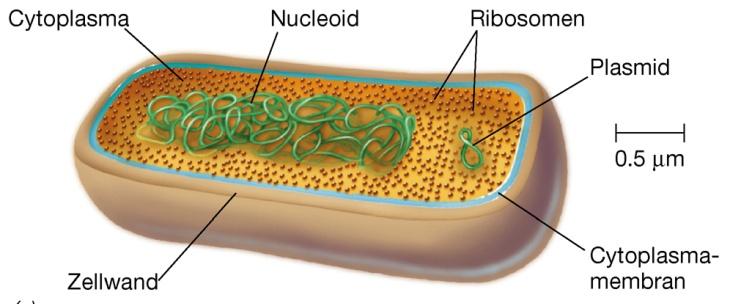
Prokaryote
A single-celled organism, such as a bacterium, that lacks a membrane-bound nucleus and possesses cell walls composed of peptidoglycan.
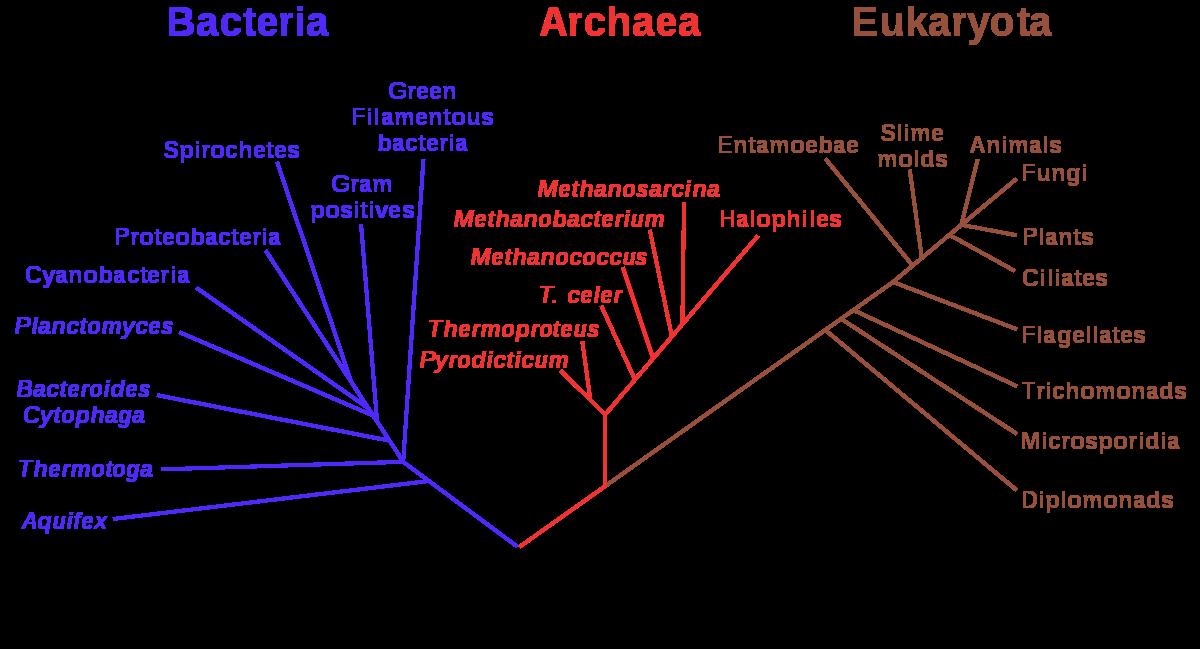
Three Domains of Life
The primary evolutionary divisions of cellular life, comprising Bacteria, Archaea, and Eukaryota.
Nucleoid
The region within a bacterial cell where the circular chromosome is concentrated without a surrounding nuclear membrane.
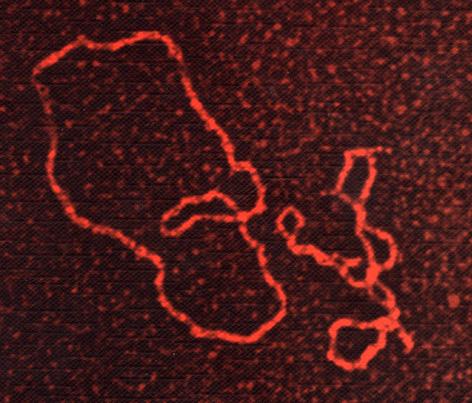
Plasmid
An extrachromosomal, autonomously replicating circular DNA molecule that can transfer between bacteria and carry genes for antibiotic resistance or pathogenicity.
Coccus
A spherical or ovoid bacterial cell morphology.
Bacillus
A rod-shaped bacterial cell morphology.

Spirochete
A flexible, spiral-shaped bacterial cell morphology.

Spirillum
A rigid, curved or spiral-shaped bacterial cell morphology.

Peptidoglycan
A strong cell wall polymer composed of alternating sugars NAG and NAMA linked by β(1→4) glycosidic bonds and cross-linked by peptide side chains.

Gram-Positive Cell Wall
A bacterial cell envelope composed of a cytoplasmic membrane and a thick peptidoglycan layer up to 40 layers thick that retains the Gram stain.

Gram-Negative Cell Wall
A three-layered bacterial cell envelope composed of an inner cytoplasmic membrane, a thin peptidoglycan layer in the periplasm, and an outer membrane containing Lipopolysaccharide (LPS).
Gram Stain
A differential staining technique developed by Hans Christian Gram that differentiates bacteria into Gram-positive (purple) and Gram-negative (pink) based on cell wall composition.
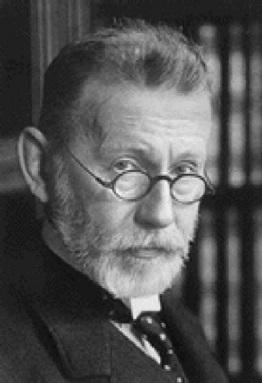
Hans Christian Gram
Danish bacteriologist (1853–1938) who invented the Gram stain method for rapid bacterial identification.
Lysozyme
An enzyme that cleaves β(1→4) glycosidic linkages between NAG and NAMA in peptidoglycan, leading to bacterial cell lysis in hypotonic environments.
Fimbriae
Short protein surface structures on bacteria that function primarily in cellular attachment to surfaces.
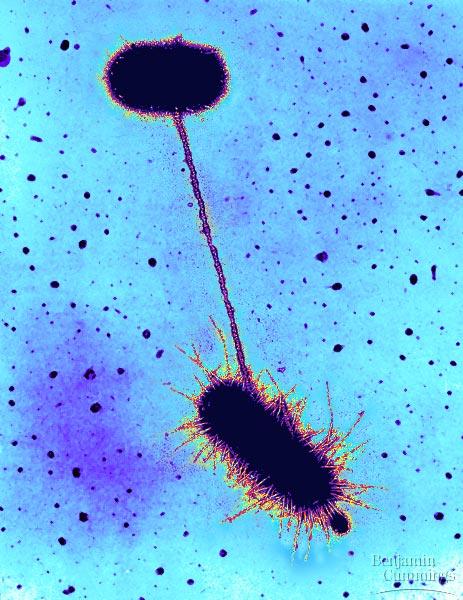
Pili
Hair-like surface appendages on bacteria involved in cell adherence and genetic exchange via conjugation.

Bacterial Flagellum
A slender, rigid nano-machine motor structure (20nm diameter, 15–20μm length) composed of a filament, hook, and basal body that drives cell motility.

Binary Fission
An asexual reproduction process in bacteria where a cell replicates its DNA, elongates, forms a central septum, and divides into two identical daughter cells.
Generation Time
The time required for a bacterial population to double during exponential growth.
Exponential Phase
The growth curve stage where bacterial cells divide at their maximal rate (1→2→4→8…).


Endospore
A highly durable, dormant cell structure produced by genera such as Bacillus and Clostridium that withstands extreme heat, chemicals, and UV radiation.
Anoxygenic Photosynthesis
An early form of photosynthesis carried out by purple and green sulfur bacteria using H2S and CO2 to produce carbohydrates and sulfate (SO42−) without producing oxygen.
Human Microbiome
The population of approximately 30×1012 microorganisms inhabiting the human body alongside an equivalent number of human cells.

Yersinia pestis
A Gram-negative bacterium responsible for the Plague (Black Death), transmitted primarily by the rat flea Xenopsylla cheopis.
Bubonic Plague
A form of plague where Yersinia pestis multiplies in lymph nodes, resulting in localized swelling (buboes) and an 80% mortality rate within 8 days if untreated.
Septicemic Plague
A form of plague characterized by Yersinia pestis circulating in the blood, causing local hemorrhages, necrosis (black patches), and death in 3 to 5 days.
Pneumonic Plague
A highly contagious airborne form of plague caused by Yersinia pestis infecting the lungs, causing a 90% death rate within 48 hours.

Sir Alexander Fleming
The scientist who discovered penicillin in 1928 from the fungus Penicillium notatum, winning a Nobel Prize in 1945.