PIE & Indo-European langs
 Call Kai
 Learn
 Practice Test
 Spaced Repetition
 Match
 Flashcards
 Knowt Play
1/77

Earn XP
Description and Tags
Language and culture of the PIE
78 Terms
Substrate influences
When a language takes over the language of the previouse generation, influencing the new natively learned language.
visible in sound shifts or in loan words
What are sound laws?
Regular, rule-based sound change
Sound laws are bound by what factors?
limited to a certain phonetic enviornment
operated only for a limited time span (expired)
geographically bound
Analogy
the creation of a word based on a model from elsewhere in the language. Resolved pervevied irregularities
4th law of Kurylowicz
when both forms are retained the older form only occurs in specific contexts
Ablaut
e-grade, o-grade, zero/ø- grade
Brungmann's Law
PIE *o > Skt. ɑ̄/ _CV
Palatlization of Velars
Palatal consonants become palatalized infron of PIE front Vowels (*e, *i)
Indo-Iranian: /k, g, kh/ —> /c, j, j/
*WHEN FOUND IN PIE (sound changes before)
Grassmann's Law
if an aspirated consonant is followed by another aspirated consonant in the next syllable, the first one loses the aspiration
PIE 3sg Perfect
Reduplication of syllable: C1e-C1oC2-e
When was it attested?: Old Church Slavonic
10th c. CE
When was it attested?: old Prussian
14th-17th c. CE
When was it attested?: Latin
7th c. BCE
When was it attested?: Albanian
15th c. CE
When was it attested?: Tocharian A
8th-9th c. CE
When was it attested?: Tocharian B
6th-9th c. CE
When was it attested?: Hittie
17-13th c. BCE
When was it attested?: Old Irish
inscription 400 c. CE, literature 7th c. CE
When was it attested?: Leponic
Inscriptions 5th-1st c. BCE
When was it attested?: Lithuanian
16th c. CE
When was it attested?: Armenian
5th c. CE
When was it attested?: Vedic Sanskrit
orally 1200-100 c. BCE, written from 2nd c. CE
When was it attested?: Avestan
Orally from 1000 BCE
When was it attested?: (Mycenean) Greek
14th c. BCE
Cyrillic Alphabet
Bato-slavic Script derived from Glugolithic (Cyrill & Methodus)
Devanāgarī Script
Most commonly used for Sanskrit
When was it attested?: Gothic
4th c. CE
Satem Languages(&sound changes)
Indo-Iranian, Bato-Slavic, Armenian, Albanian
-palatalvelars -> sibilants
-labiovelars -> velars
Centum Languages(&sound changes)
Germanic, Italic, Celtic, Hellenic, Anatolian, Tocharian
-palatalvelars -> velars
-labiovelars -> labiovelars
Relative Chronology
The chronological order of sound change or sound laws
Greek sound laws order
palatalization
grassmann
Sibilant sound meaning
Fricative hissing sounds of the satem languages
Sanskrit sound laws order
grassmann
Palatalization
Brugmann
Linear A
An undeciphered writing system used in Crete in the 1800 c. BCE., Minoa's first written language; has not been translated.
Linear B
The first attestation of Mycenaen writting in the form of an inscription in Linear B
When was it attested?: (Homeric) Greek
8th c. BCE
Most inportant Vedic texts:
Rigveda (or R̥gveda) -- the oldest of the Vedic texts
Atharvaveda
Sāmaveda
Yajurveda
Ausnchmslosigkeit dar Lausgesetze
Bastard
“Sound Laws are exceptionless”
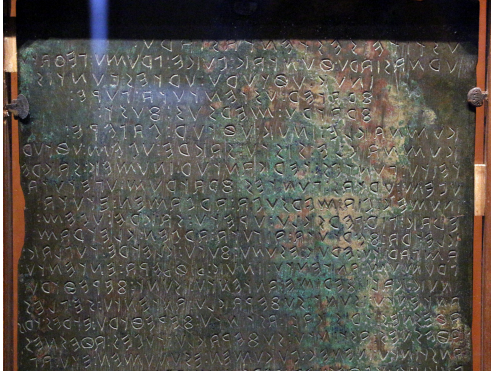
Umbian
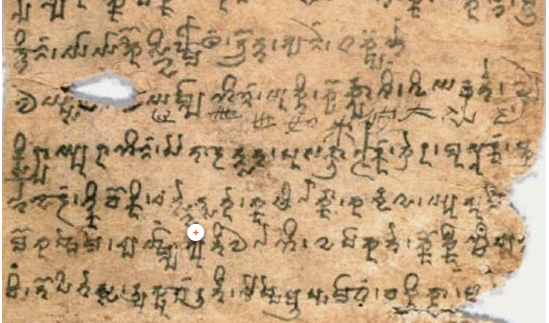
Tocharian B
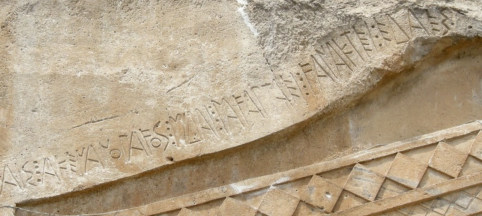
Old Phrygian

Old Russian
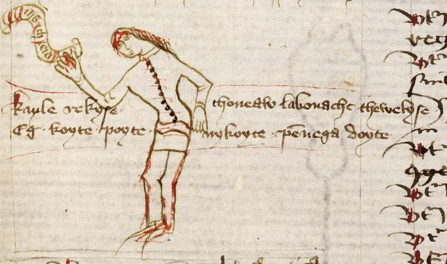
Old Prussian
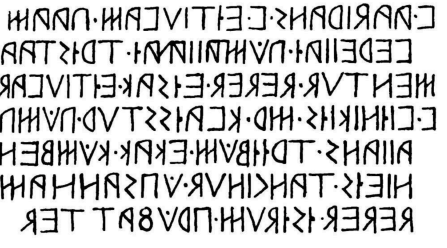
Oscan
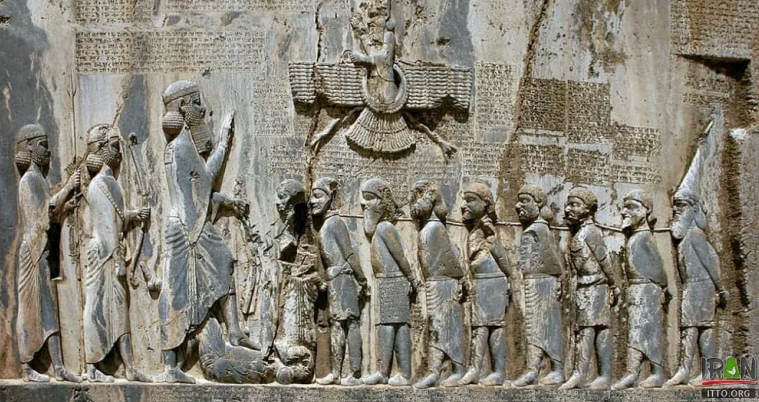
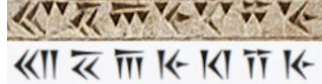
Old Persian
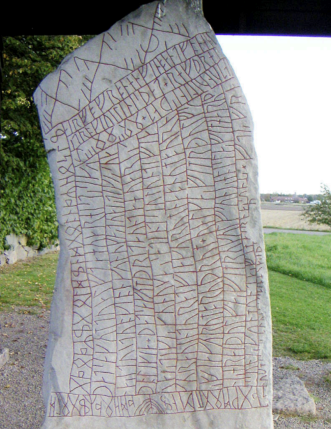
Old Norse (Anglo-Saxon runic alphabet)
Futhark Alphabet
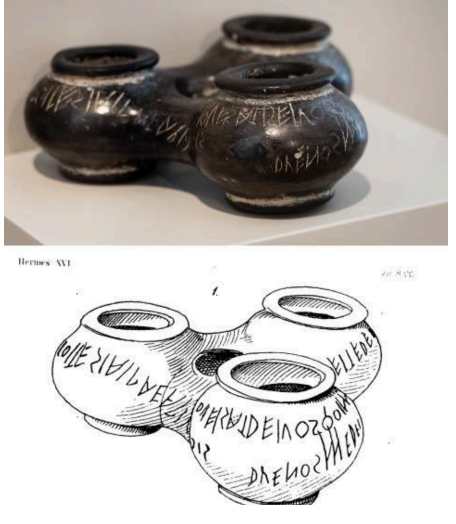
Old Latin (Duenos Insciption)
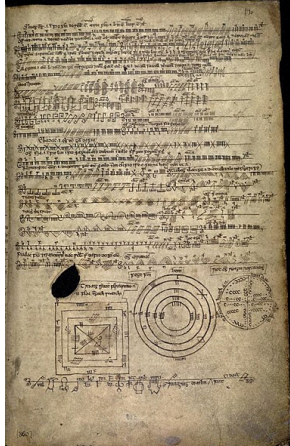
Old Irish (Ogham alphabet)
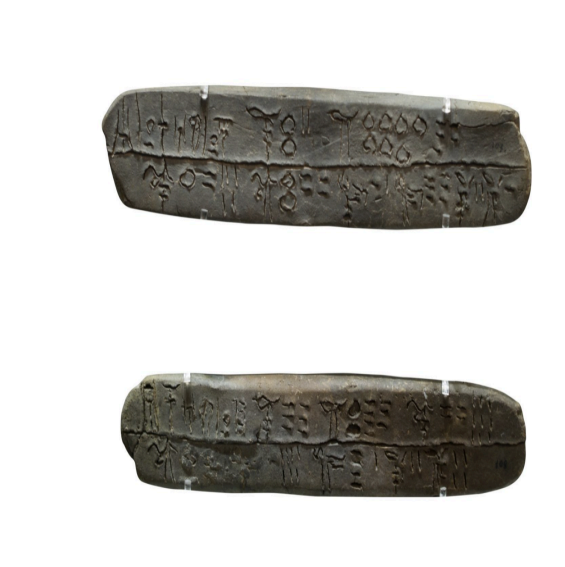
Linear B
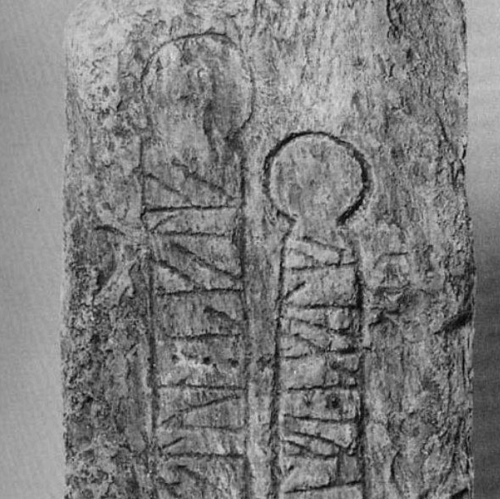
Lepontic
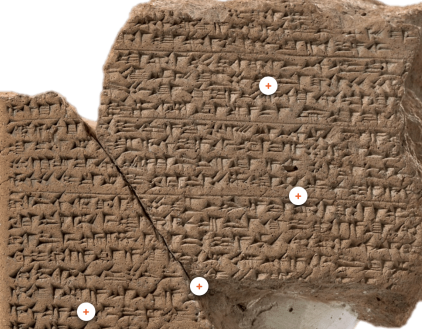
Hittie Cuneiform
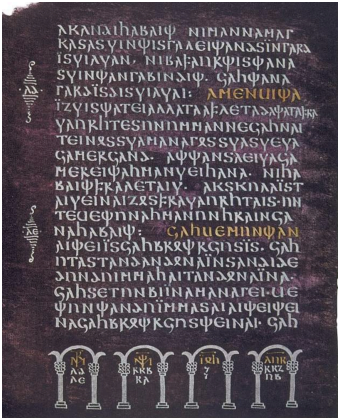
Gothic
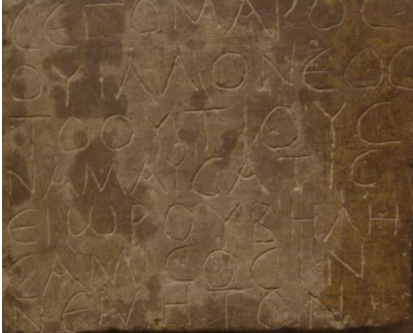
Gaulish (greek alphabet)
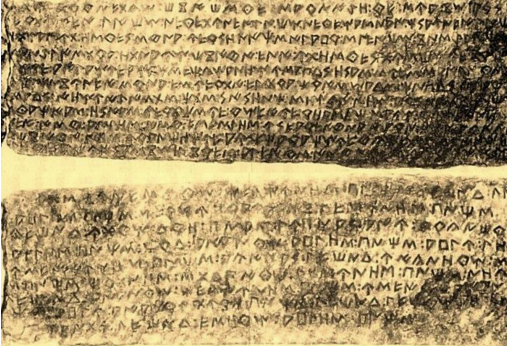
Celtiberian
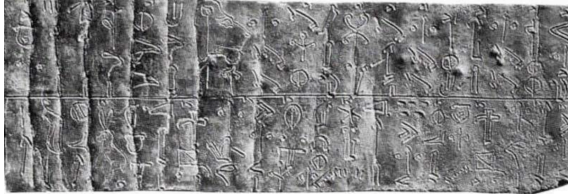
Hieroglyphic Luwain
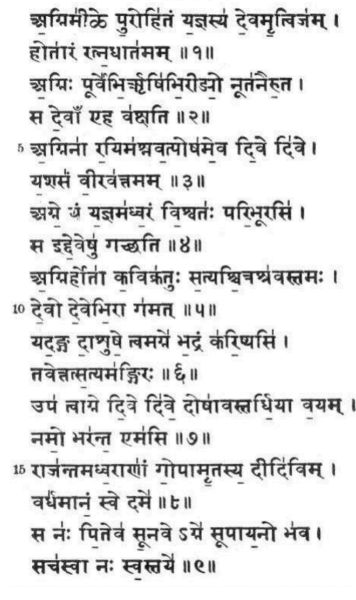
Sanskrit (Devanāgarī script)
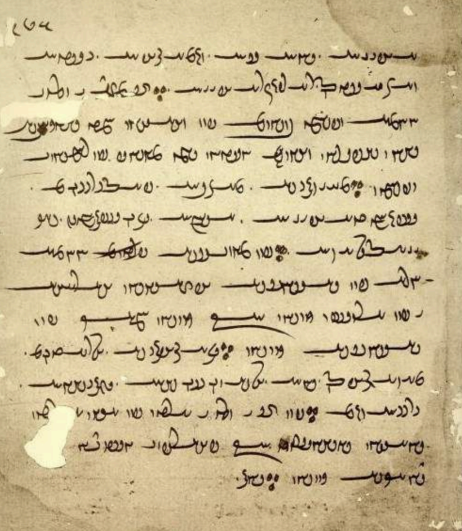
Old Avestan
Greek pharyngeals
*eh1 |
*eh2 |
*eh3 |
*oH |
*h1e |
*h2e |
*h3e |
*eh1 | ē |
*eh2 | ā |
*eh3 | ō |
*oH | ō |
*h1e | e |
*h2e | a |
*h3e | o |
Sanskrit pharyngeals
*eh1 |
*eh2 |
*eh3 |
*oH |
*h1e |
*h2e |
*h3e |
*eh1 | ā |
*eh2 | ā |
*eh3 | ā |
*oH | ā |
*h1e | a |
*h2e | a |
*h3e | a |
Avestan pharyngeals
*h1e |
*h2e |
*h3e |
*h1e | a |
*h2e | a |
*h3e | a |
Latin Pharyngeals
*h1e |
*h2e |
*h3e |
*h1e | e |
*h2e | a |
*h3e | o |
Old Irish Pharyngeals
*h1e |
*h2e |
*h3e |
*h1e | e |
*h2e | a |
*h3e | o |
Sanskrit
*h1 |
*h2 |
*h3 |
*h1 | i, ø (/#_C) |
*h2 | i, ø (/#_C) |
*h3 | i, ø (/#_C) |
Armenian
*h1 |
*h2 |
*h3 |
*h1 | e (/#_C) |
*h2 | a (/#_C) |
*h3 | a (/#_C) |
Av. Lith. OCS, Go., Lat., OIr., Welsh
*h1 |
*h2 |
*h3 |
*h1 | ø (/#_C) |
*h2 | ø (/#_C) |
*h3 | ø (/#_C) |
Satem languages
*p |
*b |
*bh |
*t |
*d |
*dh |
Skt. | Av. | Lith. | OCS | |
*p | p | p | p | p |
*b | b | b | b | b |
*bh | bh | b | b | b |
*t | t | t | t | t |
*d | d | d | d | d |
*dh | dh | d | d | d |
Centum languages
*p |
*b |
*bh |
*t |
*d |
*dh |
- | Gr. | Go. | Lat. | OIr |
*p | p | f / b | p | ø |
*b | b | p | b | b |
*bh | ph | b | f-, -b- | b |
*t | t | þ / d | t | t |
*d | d | t | d | d |
*dh | th | d | f-,-d-,-b- | d |
Satem languages
*k’ |
*g’ |
*gh’ |
*kw |
*gw |
*gwh |
Skt | Av- | Lith. | Ocs | |
*k’ | s’ | s | š | s |
*g’ | j | z | S^ | z |
*gh’ | h | z | ž | z |
*kw | k | k | k | k |
*gw | g | g | g | g |
*gwh | gh | g | g | g |
Centum
languages
*k’ |
*g’ |
*gh’ |
*kw |
*gw |
*gwh |
,
Gr | Go | Lat | Osc | OIr | Welsh | |
*k’ | k | h / g | c | - | c | - |
*g’ | g | k | g | - | g | - |
*gh’ | kh | g | h | - | g | - |
*kw | - | hw | qu, c | p | c | p |
*gw | - | kw | v, g, gu | b | b | b |
*gwh | - | b, g, w | f-, v, g, gu | unknown | g | gw (g/_i) |
*s in Skt., Gr., Lat.
Skt | Gr | Lat | |
*s | s | s / h/#_V | s / r/V_V |
Grimm’s Law
The loss of palatals in Germanic
Verner’s Law
Voiceless stops in the middle of a word becomes voiced stops instead of fricatives,
Unless the stress falls on the directly preceding syllsbles
Ditchersprache
Poetic language
Formulas: Parallel formulas in variousr Indo-European epics and traditions
Myths
Theft of cattle & dog herding in oIr Tán Bó Cuáilinge and Rigveda
PIE ‘farher heaven’ *Dieu(s) ph2ter
Gr. Zeus Zeū páter
Lat. Jupiter
Vedic. Dyàuspítar
Luwain. Tàtis
Umbrian. Iupater
PIE Dawn Goddess *h2éusōs
Vedic. Usās
Gr. eōs
Lat. Aurōra
Greek poetic meter
Hexameter → every verse contains 6 feet
HH= spondee
HLL= dactyl
Steep hypothesis
Proto-cespian → yamanan people
Culture was strongly patriarchal →gathered from language reconstruction
An absence of evidence IS NOT a sense of existence.
Ex. Horses & wheels existed but don't have a common Pie word