Tumor imaging and tracking, therapeutic potential of hippo yap taz
 Call Kai
 Learn
 Practice Test
 Spaced Repetition
 Match
 Flashcards
 Knowt Play
1/8

There's no tags or description
Looks like no tags are added yet.
9 Terms
Definition of transgenic mouse model
mice genetically engineered ro develop cancer from normal tissue
4 different types of transplant mouse models
Syngeneic: Mouse cancer cells injected into a genetically identical mouse
Allograft: Mouse cancer cells injected into a mouse- sometimes used interchangeable with Syngeneic, but could also be mouse cells injected into non-genetically identical immunocompromised mouse
Xenograft: non-mouse cancer cells injected into an immunocompromised (usually) or humanized mouse
Patient Derived Xenograft (PDX): Cells taken from a cancer patient and directly injected into a immunocompromised (usually) or humanized mouse.
Injection sites
Orthotopic: Cancer cells injected into the same organ/tissue from which the cancer originated
Subcutaneous: Cancer cells injected under the skin
Intravenous (tail vein, retro-orbital): Cancer cells injected into venous circulation (will return to heart -> then the lungs)
Arterial (intracardiac): Cells injected directly into left ventricle so they enter systemic circulation
Direct injection into non-orthoptic organ- Used to model metastatic colonization of specific tissues (intratibial, portal vein, intracranial, ect.)
Experimental metastasis assay (2)
inject cells intravenously into the tail vain
assay lung metasteses and extravasation
intracardiac injections
assay systemic metastesis
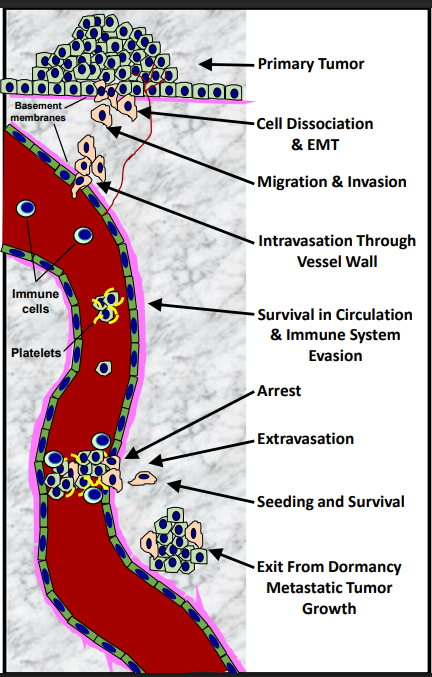
Image of the metastatic cascade
which model can be used to label tumor cells

What enzyme can you have in your cancer cells to allow you to assay tumor and metastatic growth over time in living mice?
Luciferase
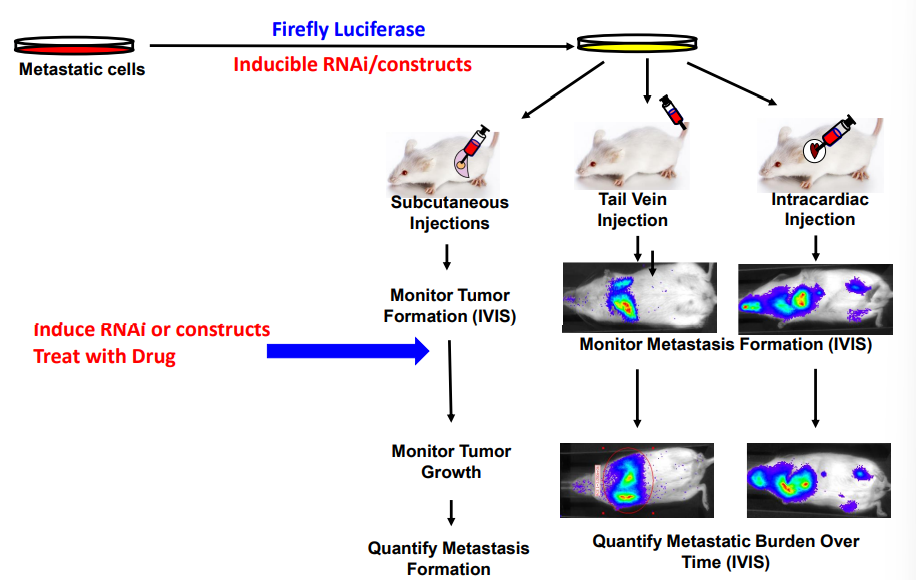
Diagram showing how to assay each step of the metastatic cascade

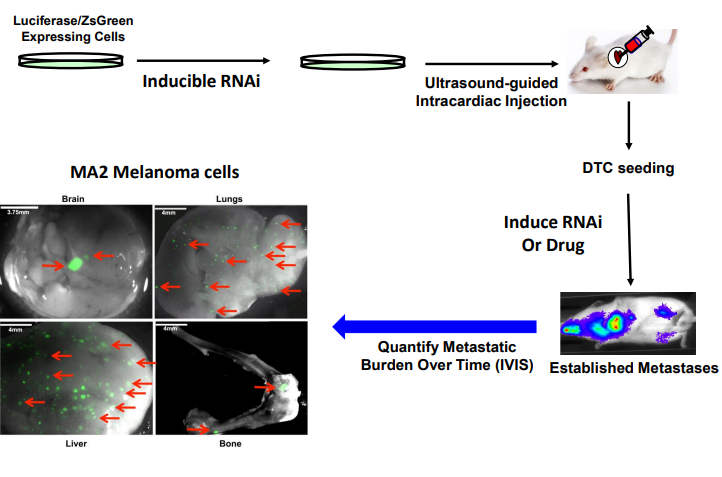
How can you use intracardiac injections to assess tropism or tissue specific requirement of a gene
have luciferase expressing cells
inject into heart
DTC seeding wull occur
induce RNAi/drug
quantify metastatic burden over time (IVIS)
specifically, you can look at diff orans/tisues to see if cells are growing there (brain, lungs, liver, bone)