Flashcards PSYC 221 midterm #2 review
 Call Kai
 Learn
 Practice Test
 Spaced Repetition
 Match
 Flashcards
 Knowt Play
1/194

There's no tags or description
Looks like no tags are added yet.
195 Terms

According to Janis' study, participants who were asked to give a speech on a topic that opposed their own opinion on the topic ______.
changed their attitudes more than those who listened to the speech

According to dissonance theory, when making difficult decisions, people tend to ______.
exaggerate the negative features of the unchosen alternative
According to the passage, attitudes and behavior are more strongly correlated in _
individualistic cultures


Attitudes can be important determinants of behavior when they are
strong and specific to a behavior
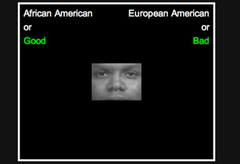
How does the implicit association test (IAT) measure implicit attitudes?
through the speed of associating pairs of concepts

In the context of group decision-making, transactive memory refers to
the process of dividing a large body of information into smaller portions among group members
Replications of Norman Triplett's bicycle study on how the presence of others affect performance led to contradictory results, which can now theoretically be explained via ______.
the Zajonc solution


Social facilitation is a process whereby the presence of others enhances performance on easy tasks but impairs performance on difficult tasks.
True

The Bay of Pigs invasion is an example of how groupthink can operate successfully.
false
The degree and intensity of political polarization is greater than it has been in any of our lifetimes.
true

social loafing?
A group-produced reduction in individual output on tasks where contributions are pooled.
The reduction in individual motivation or effort when people work in group vs alone
Same person contributes less effort because they're in a group (because other people are available to do the work/job)
Believing that individual performance cannot be evaluated
Ringelman effect
According to evolutionary psychology, what is a fundamental reason for humans' need to belong to groups?
to ensure physical protection from predators

How can Zimbardo's principles associated with deindividuation explain why sports fans can be destructive following their team's win?
Negative emotionality is not a principle, so even excitement can lead to deviant behavior.

How can groups guard against groupthink, according to Irving Janis?
encourage criticism and avoid taking a strong stand early in discussions

What is one reason why people join groups?
to affiliate with others and engage in collective action

What is collective?
2+ people together engaged in a common activity
Little direct interaction with one another
Ex: ppl in a movie theater

Group?
2+ people together interacting with one another
Interdependence here

Interdependence?
The extent to which group members are dependent upon each other to reach a common goal
Ex: people on a sports team

How does the presence of others affect performance?
Presence could mean: being evaluated, people just around you, or being watched

Triplett?
Faster times were recorded when cyclist competed directly against each other compared to when they raced against solo against the clock
Social facilitation theory
Studied kids performed faster when they turned a fishing rod in a group vs when they did it alone

What was the social facilitation theory for Triplett?
That cyclist raced faster against others so performance was increased
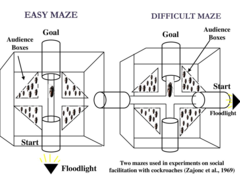
Cockroach study: Zajonc et al., 1969?
Constant: cockroaches run a maze
IV: 1: either easy or difficult maze 2: yes spectators or none
DV: how fast they run
For easy roaches ran faster in the presence of others
For hard maze the roaches were more slow in the presence of others

Physiological arousal?
The presence of others can trigger an arousal response increasing heart rate, adrenaline etc
This can especially happen in an unfamiliar situation/ evaluation presentation

yerkes-Dodson:
A model that says some arousal can increase our attention, but too much can impair us
your performance is best when you have a moderate amount of stress or mental alertness (called "arousal"), rather than too little or too much
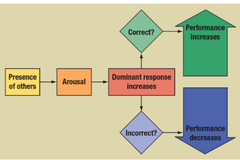
Social facilitation theory?
the tendency for people to perform better on simple, well-learned tasks and worse on complex or unfamiliar tasks when in the presence of others
the tendency for people to perform simple or well-practiced tasks better when other people are around

Cause the sense of arousal?
Mere presence of others (we feel uncertainty about what others might do that we might have to respond to)
Evaluation apprehension (we feel concern about being judged by others)
Distract conflict (it's about attention, not necessarily arousal, we get distracted from the task by the audience)

Evaluation apprehension: Sasfy and Okun
Extra pressure can interfere with the task at hand
Constant: students perform difficult motor task
IV: 1: non expert audience or expert audience 2: evaluation or non evaluation
DV: performance on the task
The direct and indirect weakened the performance was the results

Ringelman effect?
The tendency for individual members of a group to become less productive as the size of the group increases
(tug of war example)

Social facilitation vs social loafing?
When performance is evaluated we tend to feel higher arousal and social facilitation occurs
When not evaluated we tend to relax and increase social loafing
How to decrease social loafing?
Individualize, identification, rewards, challenge
Individualize in SL:
If you make individual performance identifiable and evaluated
Identification in SL?
Gives members a sense of "us"
Rewards in SL?
Gives members a reason to work hard, punish poor performance
Challenge in SL?
Make members feel like they must all work hard in order to succeed

Cyberloafing?
Online social loafing can include doing anything besides one is supposed to be doing for their work that they're being paid to do
Ex: shopping during work hours

Group polarization?
The tendency of the decisions and attitudes of groups to be more extreme than those individuals
Group discussion enhance the average opinions of its individual members

Group think?
Consensus within the group is encouraged and alternatives aren't considered
What happens to qualify of discussion when agreement becomes more crucial then the details there
Leads to faulty decision making
People tend to minimize conflict by thinking alike and publicly agreeing with each other
High group cohesiveness
Isolation
Strong and directive leadership
Stressful situations to resolve
Stereotypes of grouthink?
Collective rationalism
Stereotypes of outgroups as weak; evil
Self appointed mind guards
Belief in groups moral rightness
Bay of pigs invasion?
Example of group think
Eisenhower had CIA train Cuban exilers to infiltrate Cuba
There were clear warnings not to go through with it but the cabinet downplayed the really bad issues that would occur
1400 cuban exilers were killed or captured


Deindividuation?
People may engage in uncharacteristic behavior in a large group because we become less concerned by our actions in a group
Leads to uncharacteristic behavior
A reduced sense of individual identity
Accompanied by a self awareness, regulation restraint

Stealing candy on halloween Diener et al: (1976)
Had a bunch of candy in a bowl and told trick or treaters to take one
IV: alone identified, alone anonymous, group identified, groups anonymous
Being anonymous in a group makes us feel that we can get away with anything and do behaviors that aren't on character
Individuation?
Making individual self more noticeable
Focusing on self and being more self aware
Watching eyes image decreased littering and increase charity donation
Reduced sense of individual self

According to the contact hypothesis, under what conditions will direct contact between members of rival groups reduce intergroup prejudice?
when the contact is based on equal status and personal interaction

Belonging to multiple stigmatized groups ______.
increases the likelihood of experiencing discrimination

People may perceive outgroup members as homogeneous due to ______.
lack of familiarity and diversity of experiences with outgroup members
People with concealable stigmas may face the burden of ______.
deciding whether and when to reveal their stigma to others
Social identity theory suggests that people favor ingroups over outgroups in order to ______.
boost their self-esteem


Stereotype threat can affect individuals ______.
regardless of their belief in the negative stereotype
The division of the social world into ingroups and outgroups has led to
increased prejudice and discrimination
What is the term used to describe beliefs or associations that link whole groups of people with certain traits or characteristics?
Stereotype

What is the term used to describe the tendency to discriminate in favor of ingroups over outgroups?
Ingroups favoritism

What was one successful educational intervention that aimed to reduce gender bias?
watching high-quality videos that portray research on gender bias and effective methods of reducing it
Persuasion?
Communication with intentions to influence attitudes
Uses ELM
the act of using words, reasons, or feelings to convince someone to change their mind, believe an idea, or take an action


Elaboration Likelihood Model?
2 routes by which people process persuasive messages
Central
Peripheral

Central route?
Direct, explicit, requires logical thinking
Occurs when people think carefully about the content and logic of the argument
When people are influenced by deep cues (the quality of the argument)
An argument in the central needs a connection between its reasons and conclusions

Peripheral route?
Occurs when people focus on incidental information
Influenced by superficial cues (whether the speaker seems like they know what they're doing)
Audience member can be brought to a quick conclusion without honestly knowing what the underlying message of speaker is
When does the central route occur?
Motivation
Do the thinking carefully
We have time to actually consider what the speaker is saying

When does the peripheral route occur?
When we're distracted
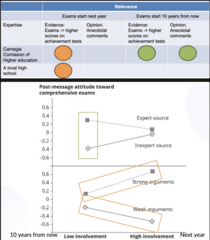
Petty, Cacioppo and Goldman?
They studied issues student would care about

What are the IVs for Petty, Cacioppo and Goldman?
Involvement as in did the new rule come into effect when the students were in school or not
Expert so did the argument written come from a professional committee or a student
Strong argument in support of exams or a weak argument was given

What was the conclusion of the Petty, Cacioppo and Goldman?
In situations with high personal then students were more in influenced/ persuaded by the strong argument
In situations with low personal then try were more persuaded by the power of the expert aka if they were or not
Attitudes formed or changed via the central route area consequences?
Stronger (more accessible to memory)
Longer lasting
More resistant to attack
Better prediction of behavior
Attitudes formed or changed via the peripheral route area consequences?
Weaker
Less persistent
Less resistant to attack
Worse predictors of behaviors
Components of persuasion?
Message learning approach
You have independent variables: source, message, recipient, context
All of these are mediated by feelings, thoughts, behaviors
DV: difference in opinion


Persuasion: the message
Fear appeals
Primary effect
Recency effect

Fear appeals:
Persuasive messages that arouse fear in order to direct behavior through the threat of impending danger or harm
Primary effect:
Information presented first is most memorable and influential
Less cognitive load
Occurs when both arguments presented followed by a time gap before a choice is made

Recency effect?
Information presented last is most memorable and influential
Occurs when there is a time gap before reaching a decision
Characteristics of a message that can make it more or less persuasive including?
Whether the listener personally cares about the topic
How the message is presented as in is it face to face or over the phone (method of delivery)
Framing

Framing?
The process of changing the way information is presented to make it more persuasive
ex: making it positive framing
Recipient variables?
Attitude strength
Personality
Intelligence
Self esteem
Need for cognition
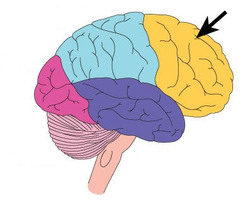
What is the need for cognition?
The tendency to enjoy and seek out affordable thinking
Context variable?
How a message is delivered can make it more or less persuasive
Distraction
Forewarning
Repetition

What is forewarning?
Changes what the listener expects

Repetition?
Can create psychological reactants
Mere exposure effect: we are more likely to be conceived by something repetitive

Source variable?
Characteristics of individual
Credibility is the source qualified or trust worthy
Attractiveness
Social power

Credibility?
Expertise
Trustworthy
The 2 factors we consider for the extent we'll be persuaded

How do you establish credibility?
Look and sound confident and certain
Look and sound competent and knowledgeable
Confident is a signal saying inaccurate claims sometimes though

Persuasion: the source
Psychical and or interpersonal attractiveness
Halo effect

Halo effect:
Cognitive bias that a favorable person affects our judgements on topics

Motivated reasoning?
We use reasoning strategies that allow us to draw our preferred conclusions
Conclusions which we are motivated to draw in order for us to selectively attend information that confirms our original attitudes and confirmation bias

Taber and Lodge?
Participants saw a matrix of 16 pro or anti gun control arguments and got to decide on 8 that they would read
Showed that people chose arguments that were conforming to their existing views

Previous commitments?
Persuasive messages have to overcome audiences existing commitments
Ex: brand loyalty or political party
Prior knowledge?
Shows that people who were pro the idea and had the information coming in didn't shift their attitudes
The pro idea people who came in with little information though shifted their attitudes more after hearing an anti message about that idea
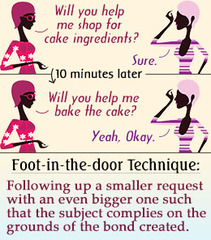
Direct persuasion technique?
Norm of reciprocity
Foot in the door and door in the face
Free samples
Scarcity
Social proof

Attitude Inoculation: McGoire
The process of building up resistance to attempts at persuasion.
Small attacks on people's beliefs that engage their preexisting attitudes, prior commitments, and background knowledge, enabling them to counteract a subsequent larger attack

According to Albert Bandura's social learning theory, how do models influence behavior?
Models can influence both prosocial and antisocial behavior through observation.

How does alcohol contribute to increased aggression?
by lowering inhibitions against aggression
How does the homicide rate in the United States compare to that of other high-income countries for homicides involving firearms?
The rate in the United States is 25 times higher.
Reactive aggression is also known as ______.
emotional aggression

What type of aggression portrayed in the media has been linked to an increase in aggression among girls?
relational aggression

Which statement is true about gender and aggression?
Females are just as likely to feel anger, but less likely to act on it than males.
Aggression is behavior intended to harm someone.
True
Displacement is the act of aggressing against a substitute target because aggressive acts against the source of the frustration are inhibited by fear or lack of access.
true

What is the weapons effect?
the influence of weapons on increasing aggression merely by their presence
Rumination is the tendency to perceive hostile intent in others.
False

Social identity theory:
Made by Henry
Explains how individuals derive their self concept from a group
Provides a framework of understanding of how groups form
Ex: if a sports team win we say "we won" even though they didn't participate because the team becomes our self concept
Brewer expands it to include outgroups
Through its process of social categorization show how we see outgroups vs ingroups

Stereotypes:
Ruled in cognitive biases
They're also mental shortcuts to categorize people
Beliefs about traits, attributes, and behaviors of members of various groups

Prejudice?
Is affective (emotional)
Uses feelings of like or dislike
The attitude/ feeling directed towards others because they're members of a certain group

Discrimination?
Actions tell us what behavior we take