Electron Transport Chain | HHMI BioInteractive Video
 Call Kai
 Learn
 Practice Test
 Spaced Repetition
 Match
 Flashcards
 Knowt Play
1/14

There's no tags or description
Looks like no tags are added yet.
15 Terms
Center of Activity in Cells
The center of activity that brings your cells to life is found inside the dynamic mitochondria organelle.
Inner Mitochondrial Membrane Enzymes
The inner mitochondrial membrane is coated with enzymes that catalyze the chemical reactions of respiration. Working in sequence to generate the electron transport chain.
Complex I (First Step)
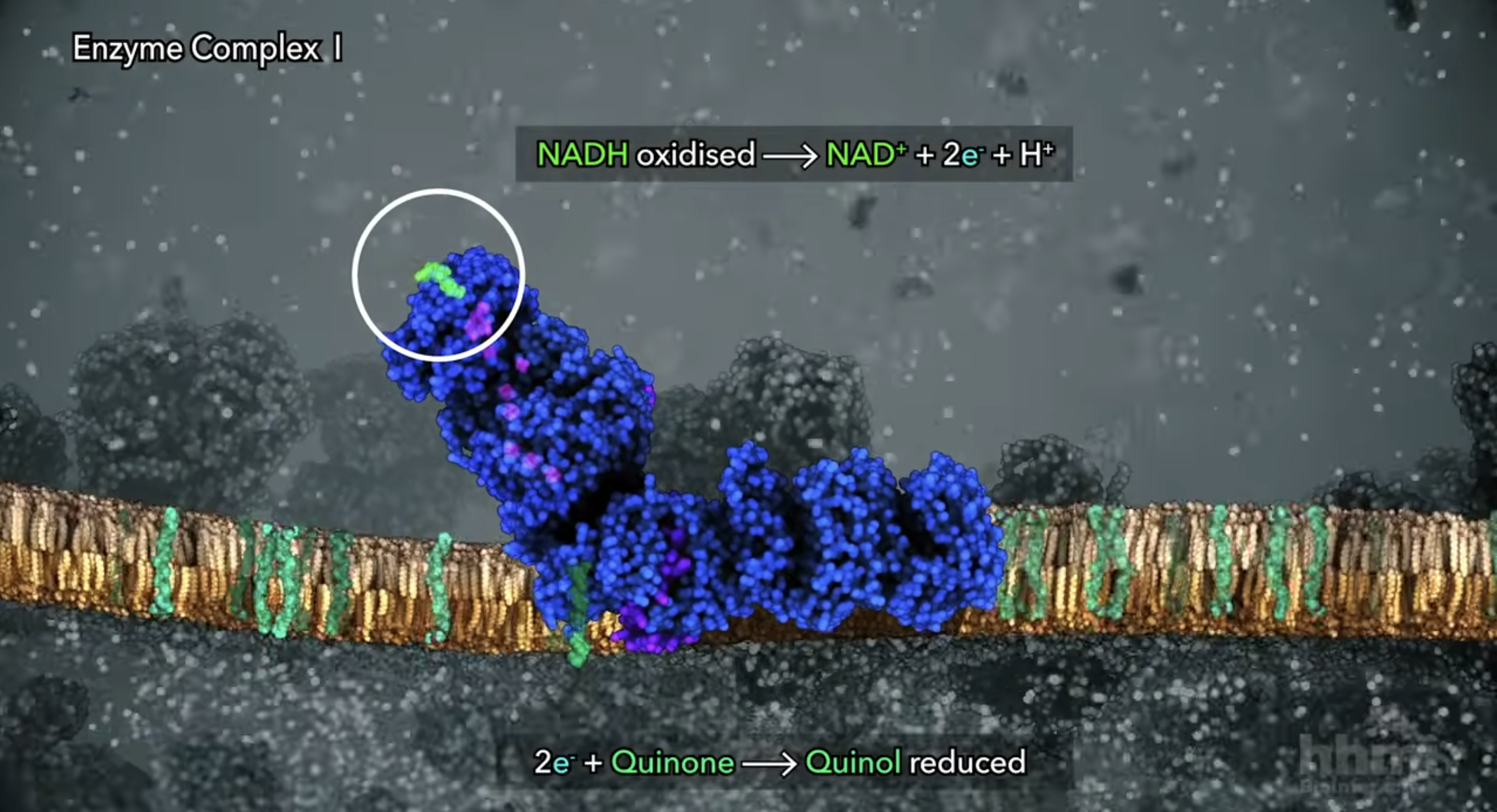
The first step in the electron transport chain is performed by enzyme complex I. Complex I receives electrons from Coenzyme nadh, a substrate produced by the citric acid cycle.
Complex I (Catalytic Mechanism)
The catalytic mechanism of enzyme complex 1 connects two different kinds of reaction.
Coenzyme NADH is oxidized at one end of the enzyme, releasing two electrons that hop through the interior to Coenzyme Q, which is reduced traveling amongst membrane lipids.
Complex I mechanism

Coenzyme Q (Carrier)
Coenzyme Q carries electrons to the next step in the electron transport chain.
Complex I (Proton Pumping)
The movement of charged electrons through complex I makes it bend in shape, transmitting energy for pumping four protons across the membrane.
Complex III (Second Step)
The second step of the electron transport chain is performed by enzyme complex iii. The mechanism of complex III separates electrons from Coenzyme Q, passing one electron to cytochrome C, which is reduced.

Complex III (Proton Transport)
A complete reaction cycle of enzyme complex 3, cytosine 3 transports four protons across the membrane, traveling within the intermembrane space.
Cytochrome C (Electron Carrier)
Reduced cytochrome C carries the electron to the final step in the electron transport chain.
Complex IV (Final Step)
The destination for electron transport is a molecule of oxygen held Inside Enzyme Complex 4. Reduced cytochrome C delivers electrons that transfer to the reaction center of enzyme complex iv.

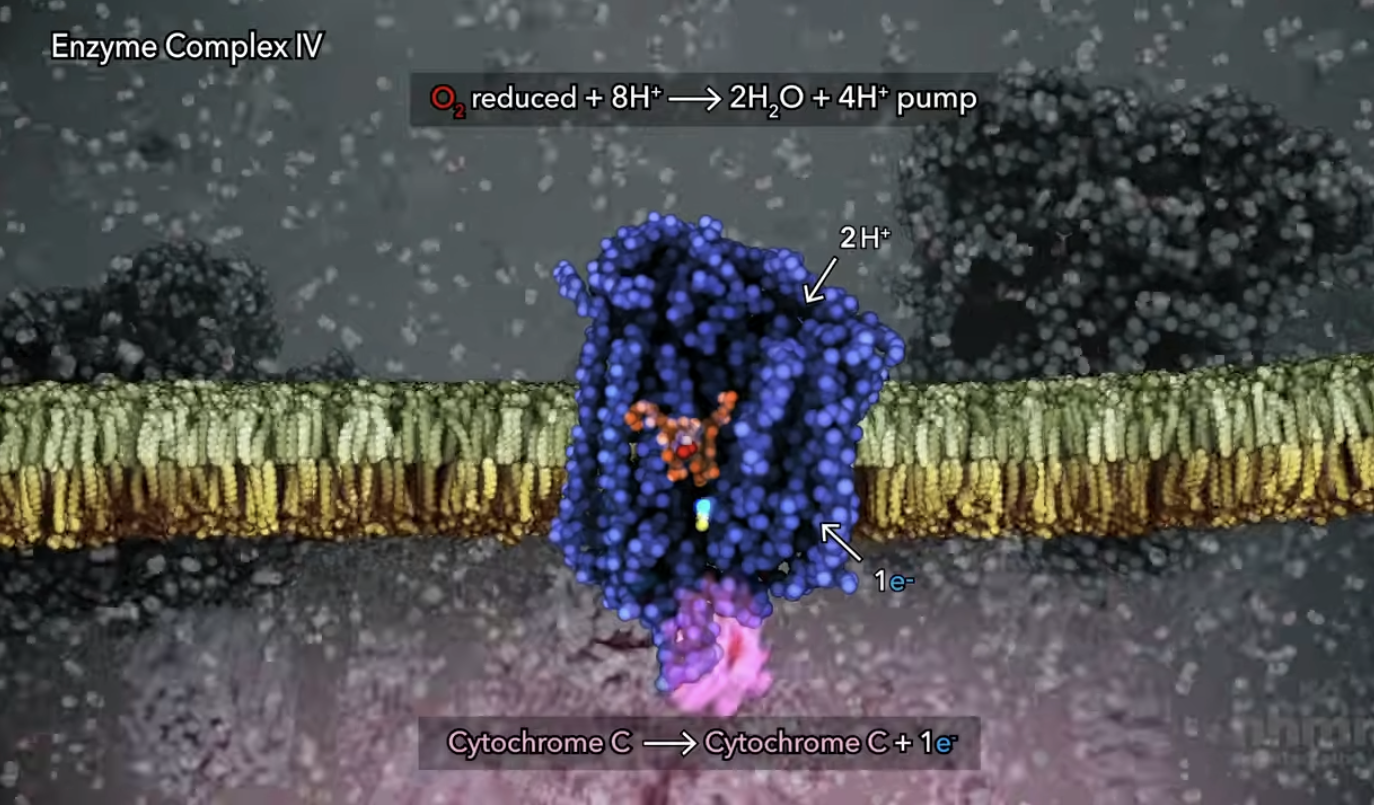
1 O2 = 4H+ pumped
Complex IV (Oxygen Reduction)
A molecule of oxygen from the air you breathe is captured, split and reduced. The separated oxygen atoms accept electrons and pick up protons, creating two molecules of water.

1 O2, 2 H2O, 4 H+
NADH (Electron Source for Complex I)
The substrate providing electrons TO Enzyme Complex 1 is coenzyme NADH, a product of the citric acid cycle.
Complex 2 (Second Electron Supply)
A second supply of electrons for the electron transport chain is from step 6 of the citric acid cycle performed by enzyme complex 2. Enzyme complex 2 catalyzes oxidation of succinate, releasing two electrons which hop through the enzyme to Coenzyme Q, which is reduced.

Coenzyme Q (Carries Electrons to Complex 3)
Traveling through the membrane. Coenzyme Q carries the electron TO enzyme complex 3 of the electron transport chain.