Wildlife Nutrition Exam 1
 Call Kai
 Learn
Learn Practice Test
 Spaced Repetition
 Match
Match Flashcards
 Knowt Play
1/102

There's no tags or description
Looks like no tags are added yet.
Name | Mastery | Learn | Test | Matching | Spaced | Call with Kai | Chat |
|---|
No analytics yet
Send a link to your students to track their progress
103 Terms
Describe and compare the different (general) nutritional niches of wild animals.
Herbivores
Carnivores
Omnivores
Scavengers/detritivores
Herbivore vs. omnivore vs. carnivore
Herbivores: Animals that only consume plant matter (leaves, twigs, seeds, fruits, and nectar), elongated digestive tracts and rely on symbiotic gut microbes to break down their food.
Carnivores: Animals whose diet consist of primarily or exclusively of animal tissue (Meat) Highly digestible and nutrient-dense, they have relatively short, simple digestive tracts.
Omnivores: Opportunistic feeder that consume both plant and animal matter, shift diet based on season
Scavengers: organisms that consume dead organic matter, dead animals, while detritivores consume decomposing organic debris and waste/
What does it mean when a species is an (dietary) opportunist?
Animal eats a wide variety of foods based on availability and change its diet based on what is easy to find to its environment.
Evolutionary and nutritional advantages and disadvantages of carnivory
Meat-eating
Advantages:
High nutrient density
easily absorbable protein, fats, + chemical energy,
need smaller meal sizes + less continuous feeding time
simple digestion
Disadvantages:
High energy cost
Unreliable food supply
inflexible diet
Evolutionary and nutritional advantages and disadvantages of
herbivory
Advantages:
Abundant food source
Lower risk of injury
Disadvantages:
Low nutrient density, lower concentration of protein and usable energy than meat
Constant feeding required, large portion of each day grazing or chewing
complex digestion needed, hard to digest, multi-chambered stomachs needed to extract nutrients
Explain why animals require nutrients, not food items
Animals bodies only recognize chemical building blocks.
(biochemical and physical characteristics of food items matter)
What is Nutrition?
The series of processes by which an animal acquires, processes, digests, absorbs, metabolizes and excretes portions of its external chemical environment for the function of internal metabolism
What is a nutrient?
Any chemical element or compounds in the diet that supports normal reproduction, growth, lactation, or maintenance of life processes
What is the relationship between food items and nutrients?
Food items acts as the physical vehicles or matrices that deliver essential nutrients (such as carbohydrates, proteins, fats, vitamins, and minerals)
Discuss the different strategies available to know what animals consume in the wild?
Direct observation
feeding site surveys
post-ingestion sampling
Biological indicators (stable isotopes, signatures of specific nutrients (Fatty acids, etc.))
What are factors that may influence what animals consume in the wild?
food abundance
food quality
nutrient requirements
What is Direct observation advantages and disadvantages
Advantages
real time, recorded media
Disadvantages
time-consuming
limited/biased observations
Feeding site survey advantages and disadvantages?
advantages:
clip patches of randomly selected areas (Like grass from a certain spot)
disadvantages
must mimic animal selectively
What is post-ingestion sampling?
analyzing food resources or markers after they have been consumed by an animal
more accurate window into true nutrient intake and digestibility
for fecal analysis, only most resistant items are present (digestible components are digested)
morphological ID or molecular techniques (profiling prey DNA)
DNA metabarcoding
Fistula, gavage, fecal, post-mortem
INVASIVE
requires reference collection ☹ and ID keys
What are the Biological Indicators?
Stable isotopes
S13C (13C/ 12C)
C3 plants tend to have lower 13C while C4 plants tend to have higher
S14N (14N/15N
Indicates position on food chain
15N tends to become enriched in consumers over their diets
S17O (18O,17O,16O)
metabolic water vs. preformed water
Nutrient signatures
fatty acids
What are the six main classes of nutrients? (Is energy a nutrient?)
Carbohydrate
Protein
Lipid
Vitamins
Minerals
these are micronutrients
Water
Nutrient Requirement
The defined level of a particular nutrient required to support the maintenance of life processes (growth, reproduction, lactation, if applicable)
What are nutrients used for?
Used to produce energy, build and repair tissues, and regulate life-sustaining functions
What may be some consequences of malnutrition (toxicities or deficiencies)?
Lethargy
Failure to maintain BW
emaciation
Signs of nutrition-related disorders
DEATH
stunted growth
Failure to reproduce
What does it mean when a nutrient is dietary essential?
It is required
cannot be synthesized by the body in sufficient amounts (or at all) to satisfy metabolic needs
What impacts nutrient requirements?
Genotype (population wise)
species/breeds = differences in GIT
Sex
Genotype (individual wise)
genetic variations
Environment-ish
housing condition
Age/life stages
exercise level
BW and body condition
How do we know nutrient requirements of a given species?
empirical dose-response/titration studies
Explain how natural history influences species’ nutritional ecology
natural selection in nutrition ecology
similar structure on overall GIT
species specific adaptations reflecting their unique dietary niche
ex: Galapagos finches with different types of beaks (woodpecker, ground, warbler for insects, seeds ,etc.)
Describe the general structure of the gastrointestinal tract (
Headgut
foregut
midgut
hindgut
*Liver, gallbladder, bile duct, and pancreas are not considered apart of digestive tract
What organs are included in the headgut?
Buccal cavity and Pharynx (lips, cheeks, teeth, hard + soft palates, tongue, and salivary glands)

What organs included in foregut?
Esophagus and stomach

What organs included in Midgut?
Small intestine
Pancreas and biliary system

What are the small intestine parts?
Duodenum
Jejunum
Ileum
What organs included in Hindgut?
Large intestine
cecum/ceca, colon, and rectum

Nutritional Processes include what?
prehension (picking up things to put in mouth)
Ingestion
Mastication (chewing)
Deglutition (Swallowing)
Digestion (mechanical, chemical, enzymatic)
Absorption
Metabolism
Excretion
What are the liver, gallbladder, and pancreas?
They are accessory organs
but technically foregut
Foregut vs. hindgut fermenters including their nutritional functions and
significances.
Foregut: (ruminants)
herbivores that digest plant fibers
chambered stomach
microbial breakdown that takes a long time
larger SI than LI
animal eats first then the microbes do to actually gain the nutrients
regurgitate then chew again their food (Cud) to digest nutrients
digestion takes place in an enlarged stomach or specialized pouch (like the rumen) before food reaches the true stomach and small intestine.
Hindgut:
monogastric herbivores that digest plant fiber using symbiotic microorganisms
simple stomach, one chambered
undigested fiber like cellulose digest in cecum/ceca and large colon
faster time to digest than foregut fermenters
symbiotic bacteria + microbes create VFAs (volatile fatty acids)
fermentation happens AFTER the small intestine
What materials/nutrients are the main target of fermentation here? And why do
they need to be fermented (and by what)?
Fibrous carbohydrates (plants)
cellulose, pectin, hemicellulose
Fermentation breaks down complex polymers down into volatile fatty acids (VFA), uses as a major energy source
nutrient release (it degrades the plant cell walls, releasing trapped intracellular nutrients like sugar, protein, and starches) so animals can use them
Auto-enzymatic vs. allo-enzymatic digestion
Auto-enzymatic: digestive enzymes come FROM the host animal (they secrete it themselves)
auto = self
humans, pigs, dogs ,cat, monogastrics
Allo-enzymatic: Host cannot digest on their own, enzymes produced from symbiotic microorganisms/microbes like bacteria, protozoa and fungi inhabiting the gut.
ruminants and hindgut fermenters
Where is the fermentation site for foregut vs. hindgut fermenters?
Foregut: occurs BEFORE the small intestine, specialized multi-chambered stomach or pre-gastric pouch (Rumen, reticulum in ruminants)
Hindgut: occurs AFTER the stomach and small intestine, localized in enlarged sections of lower digestive tract, (cecum/ceca or colon, horses, rabbits, elephants)
What are the advantages and disadvantages of foregut vs. hindgut fermenters?
foregut
advantages:
protein recycling, animals digest microbes themselves when they pass into true stomach, gaining rich microbial protein
fiber efficiency: excellent at extracting max. energy and nutrients from poor-quality, highly fibrous food
toxic breakdown: microbes
Carnivores vs. omnivores vs. herbivores (foregut vs. hindgut fermenters); can
you justify your classification?
Carnivore: eat meat, simple short digest tracts, sharp canines to tear flesh, highly acidic stomachs to break down proteins quickly
Omnivores: eat both plant and animal. unspecialized teeth, moderately long digestive tract able to process mixed diet
Herbivore: eat primarily plants, plant cellulose hard to digest, required specialized fermentation chambers and long digestive tracts. Herbivores split into two distinct digestive ways
Foregut fermenters (ruminant, pregastric): cows, sheep, etc, ferment plant fiber BEFORE the true stomach and intestine. feed microbes first. microbes break down cellulose early, and animal later absorbs both nutrients and microbial protein in SI, highly effective but slower
Hindgut (post gastric): feed animals first. horses, rabbits, rhinos, use simple stomach + digest food enzymatically first, leaving fiber fermentation for enlarged cecum and LI, processes food faster but extracts LESS overall nutrition unless animal coprophagy (ingesting feces) to recover microbial proteins (rabbits).
Justifying: evolutionary functional anatomy, diet dictates length and complexity of GIT.
What is comparative nutrition? What is nutritional wisdom?
Comparative: cross-species study (comparing) of adaptions and utilization of diff nutrient sources.
Nutritional wisdom: Unfounded concept that animals have innate ability to select from best of foods to satisfy their nutrient requirements
From a comparative nutrition perspective, how to find a good model if we don’t
have much information on our species of interest?
Use data of a well-researched animal with a close relationship as a model.
Describe the important functions of teeth
Upper (maxillary) jaw
Lower (mandibular) jaw
Incisors: small teeth at front, nip, gnaw
Canines: long pointed teeth, tear, puncture, hold
Premolars: puncture and slice
Molars: Large flat teeth, crush or grind
What are the important functions of the tongue?
prehensile organ during digestion
mixing food in mouth
transport food posteriorly to esophagus
sensory: touch, temp, taste (sweet, sour, bitter, salt, umami)
Papillae (buds)
What are the importion functions of salivary glands?
lubricate food making it easier to mash and digest
buffering capacity (pH)
nutrients (for microbes)
enzymatic capacity
membrane protection
Homodont vs. Heterodont
homodont (same): teeth have same shape and size (shark, crocodile, dolphin, most non-mammalian vertebrates)
heterodont: teeth are differentiated into distinct types w/ specialized functions (most mammals)
Deciduous vs. permanent teeth
Deciduous: baby teeth (temporary that fall out)
Permanent: final adult set that replaces baby teeth
What species have the zygomatic glands?
only carnivores
Special adaptations of ruminants, how having no upper incisor can be
advantageous for them?
continuous and large volume of saliva production
grip, press, tear tough grass and forage against hard upper gum line called dental pad
Why do ruminants produce a large volume of saliva daily?
neutralizes acid (buffering) bc contains bicarbonate, keep rumen pH stable
Feeding microbes
Moistening food to swallow easily and to regurgitate cud for re-chewing
Identify and compare the numbers and forms of incisors, canines, premolars, molars (and carnassial) among mammalian species.
Incisors: located at front of mouth, single-rooted, biting, nipping, grooming sharp-edged
canines: sharp pointed teeth, puncture, grab, tear food, or serve as weapon/defense
Premolars: found behind canines, cheek teeth have one or more cusps and deciduous, crush, grind, slice food
Molars: very back jaw, multi-cusped, no baby predecessors, crush or grind food in final stages of chewing
Carnassial: specialized shearing teeth found in carnivores (cats, wolves) act like scissors to slice flesh and cut tough animal tissue, last upper premolar (p4) and first lower molar (M1)
How could we tell the differences between herbivores’ and carnivores’ teeth? (hint: what is the occlusal surface?)
Occlusal surface: specific chewing or biting surface where upper and lower teeth meet
carnivores: sharp, blade like, or serrated, triangle or jagged knives
Herbivores: Broad, flat, and heavily ridged, works like millstone to pulverize tough, fibrous plant walls.
What are carnassial teeth? What species have carnassial teeth?
shearing teeth found in carnivores (cats, wolves) act like scissors to slice flesh and cut tough animal tissue, last upper premolar (p4) and first lower molar (M1)
What is the dental formula. Can you write down the dental formula if given a skull image?
2 (I U/L C U/L P U/L M U/L)
What is the composition of saliva?
Water
Mucin
Bicarbonate salts
Enzymes (species-specific)
amylase (not in ruminants, carnivores, birds…)
Lipase
What enzymes are present in the saliva? (and hence what nutrient(s) are first
digested in the oral cavity?)
Enzymes:
Amylase
lipase
Lysozyme(protective enzymes)
carbohydrates (starch + complex sugars) first digested
Does it make sense for some species to have low to no amylase activity in their headgut?
Yes, depending on what they eat.
strict carnivores: natural diet contains no starch, producing salivary amylase would be waste of energy
Herb and Omnivores: high-starch diets (humans, rodents, pigs), high level of headgut amylase, begin breaking down food after chewing
What does the esophagus connect?
Mouth to stomach (pharynx to stomach)
What is peristalsis?
alternating contractions + relaxations of muscles layers squeezing and layers pushing
moves material through digestive track
Why are the upper and lower esophageal sphincters important?
UES: prevent reflux of ingesta from esophagus back into throat
LES: prevent gastric content from re-entering into esophagus
What are the four major anatomical parts of the stomach?
Cardia
Fundus
Body
Pylorus (pyloric sphincter)
What are the regions of epithelial lining in the stomach?
Non-glandular stratified squamous
Cardiac gland region
Proper gastric glands
Pyloric gland
nonglandular vs. glandular regions of epithelial lining in stomach?
Non-glandular: stratified squamous epithelium
Glandular: simple columnar epithelium, forms gastric pits and tubular glands
What are the functions of each epithelial lining in stomach?
Non-glandular stratified squamous:
stomach protection (mucus)
storage and holding
mechanical mixing
fermentation site
Cardiac glandular: Mucus, HCO3
Proper (fundic) gastric glandular: HCL and pepsinogen
Pyloric glandular (sphincter): mucus, HCO3 (bicarbonate)
What are the five major components that are secreted in the stomach and what
are their respective functions?
Mucin
protects mucosa from chemical and mechanical damage, and a lubricant
Hydrochloric acid (HCL)
highly acidic (~pH 2)
made by gastric parietal cells
denatures (unfolds) protein
activates digestive enzymes, pepsinogen → pepsin
kills bacteria
Pepsinogen
inactive proteolytic enzyme
active enzyme form → pepsin
starts protein digestion into polypeptides
Rennin (chymosin)
proteolytic enzyme
only in young mammals
coagulate milk to reduce rate of passage
Gastrin (hormone)
hormone released from pyloric cells (G cell)
Due to stomach distention and/or presences of proteins
stimulates HCl and pepsinogen secretion and gastric motility
What happen to food (or technically, ingesta at this stage) when it is in the
stomach?
when swallowed food mass called bolus enters stomach, mechanical churning and chemical digestion
stomach transforms ingesta into thick, semi-liquid mixture called chyme
where in the stomach does that happen?
cardia
fundus and body (corpus)
Antrum
The pylorus
What nutrient(s) is being digested in the stomach and by what?
proteins primary nutrient digested,
broken down by pepsin and gastric acid
Why is the stomach highly acidic and why is that important?
Presence of hydrochloric acid (HCl), drops gastric pH to highly acidic 1.5-3.5
Adaptations in Avians
Crop
proventriculus
ventriculus
Adaptations in ruminants
Rumen
Reticulum
Omasum
Abomasum
What are crop, proventriculus, and ventriculus in an avian species and what are
their functions?
crop: some avian species (not all)
many shapes
thin-walled, expanded, muscular pouch of esophagus
Mucous, no enzymes
Functions
temp food storage
moistening and softening
“crop milk”
Fermentation - Hoatzin
Proventriculus (gastric stomach)
tubular gland: mucous
gastric gland: HCl and pepsin
Ventriculus (muscular stomach_
“gizzard”
smooth muscle
cuticle/koilin
protective CHO/Protein membrane from HCl, digestive enzymes + grinding
For grinding and crushing
What are the four components of a ruminant’s stomach and what are their
functions respectively?
Rumen: 80% of a ruminant stomach by volume
primary site of fiber digestion by anaerobic microbial fermentation
wide, flat papillae
absorption by increasing surface area
blind sacs
end products of fermentation: VFA and NH3
Help push food back to esophagus (regurgitation)
No enzyme secretion
Mucous secretion
Esophageal groove (young ruminants)
Reticulum: 5% of a ruminant stomach by volume
honeycome-like lining
help trap large food particles or foreign objects “hardware disease”
ingesta movement
rumination → oral cavity
Mixing → rumen
Passage → Omasum
Omasum: 7-8% of ruminant stomach by volume
leaf-like folds
further reduce food particle size before moving to abomasum
large surface area to absorb water, volatile, fatty acid (VFA) and minerals (sodium and potassium)
Reticulo-omasal orifice (ROO)
Abomasum: 7-8% ruminant stomach by volume
functions as monogastric animal’s stomach
“true stomach”
has glands and secretes enzymes
What is ruminal acidosis and how does that inform dietary managements?
rumen pH drops significantly and rapidly (5.5-5.0) when consumes easily and highly fermentable feed
ex. grains, high-sugar forages (large amount of VFA)
shifts from fiber-digesting microbes to lactic acid producing bacteria
further lowing the pH
Clinical signs: anorexia, bloat, diarrhea, bloat, death if severe
normal rumen pH: 6.2-7.0
require sufficient amount of “low-quality” fiber to maintain healthy rumen
diet high in fermentable CHO and low in fiber

label number 1
Mouth (oral cavity)
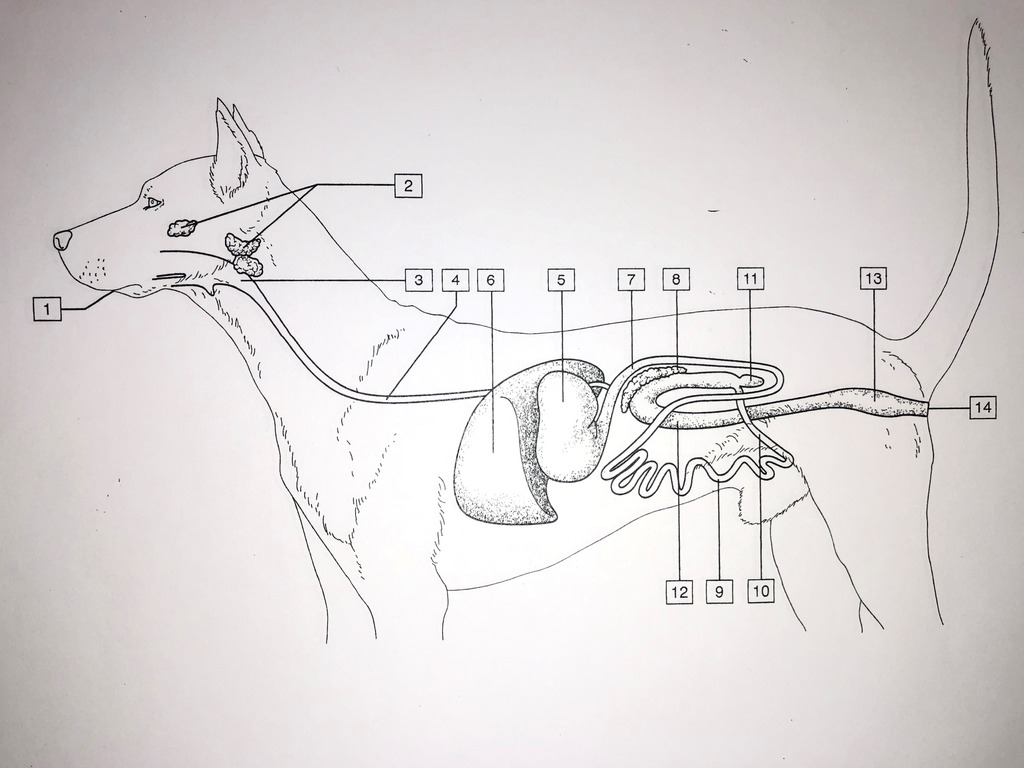
what is number 2?
Salivary glands

What is number 3?
Pharynx

What is number 4?
Esophagus

What is number 5?
Stomach
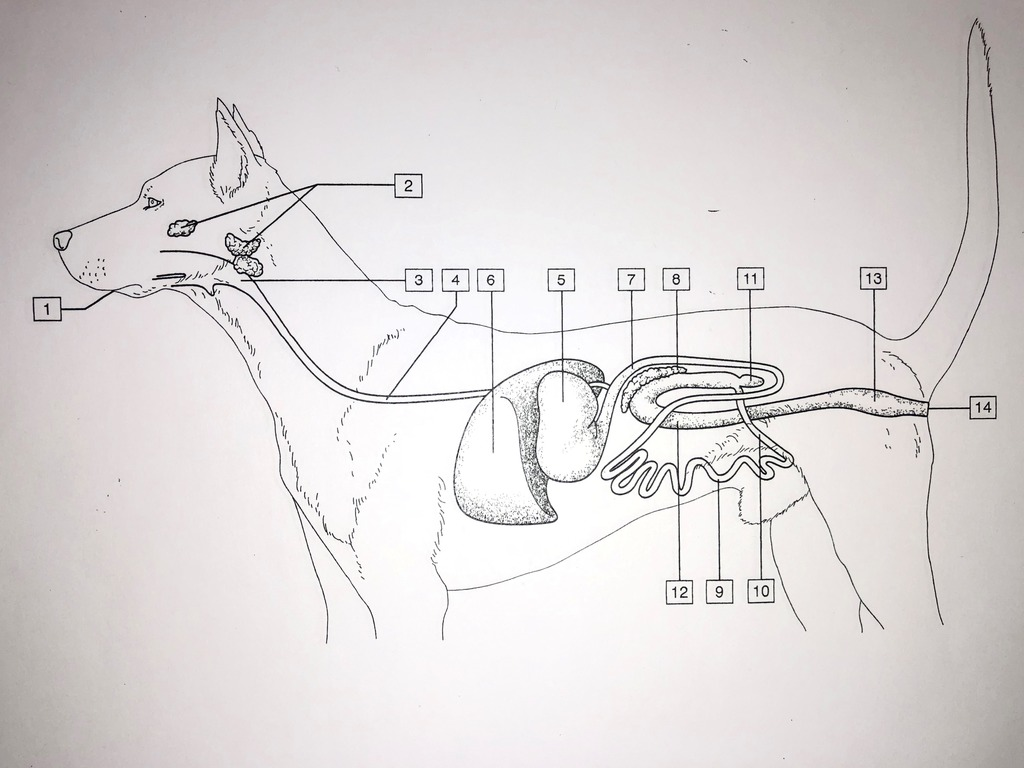
What is Number 6?
Liver
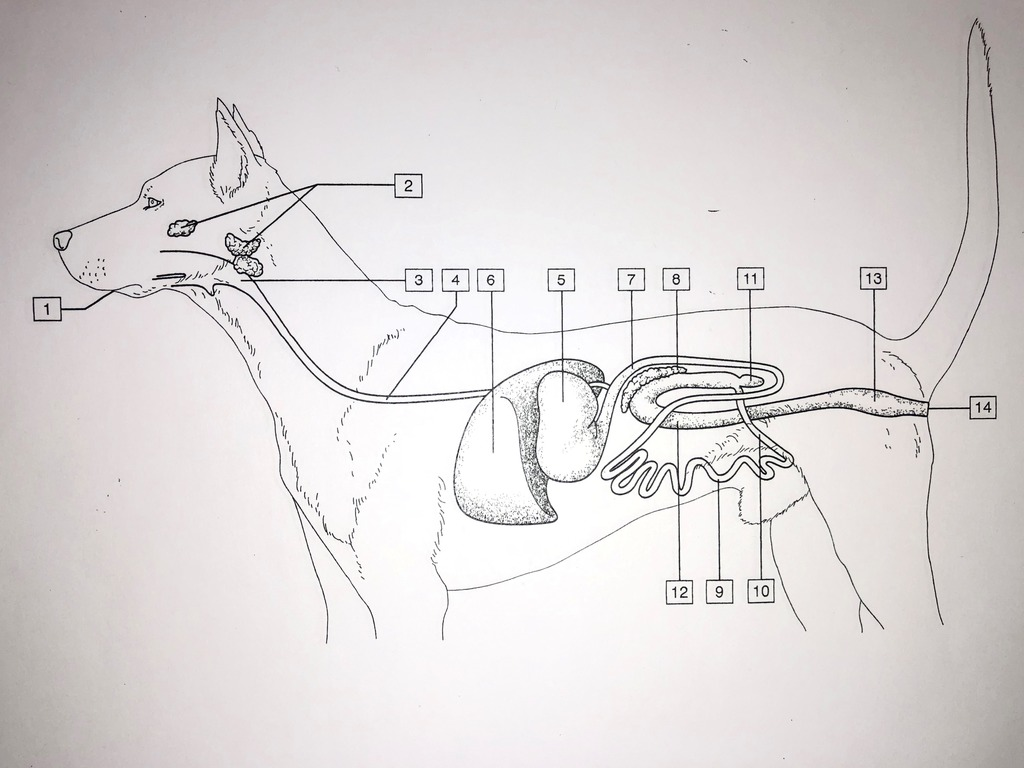
What is number 7?
Duodenum (mostly digestion) SI
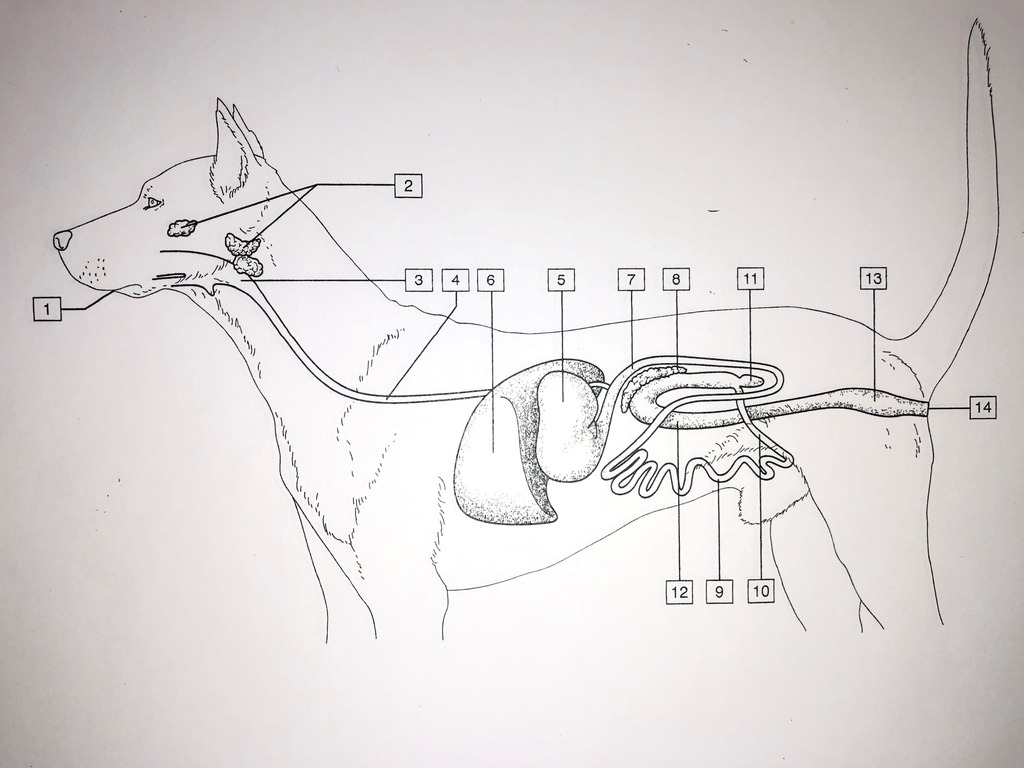
What is number 8?
Pancreas
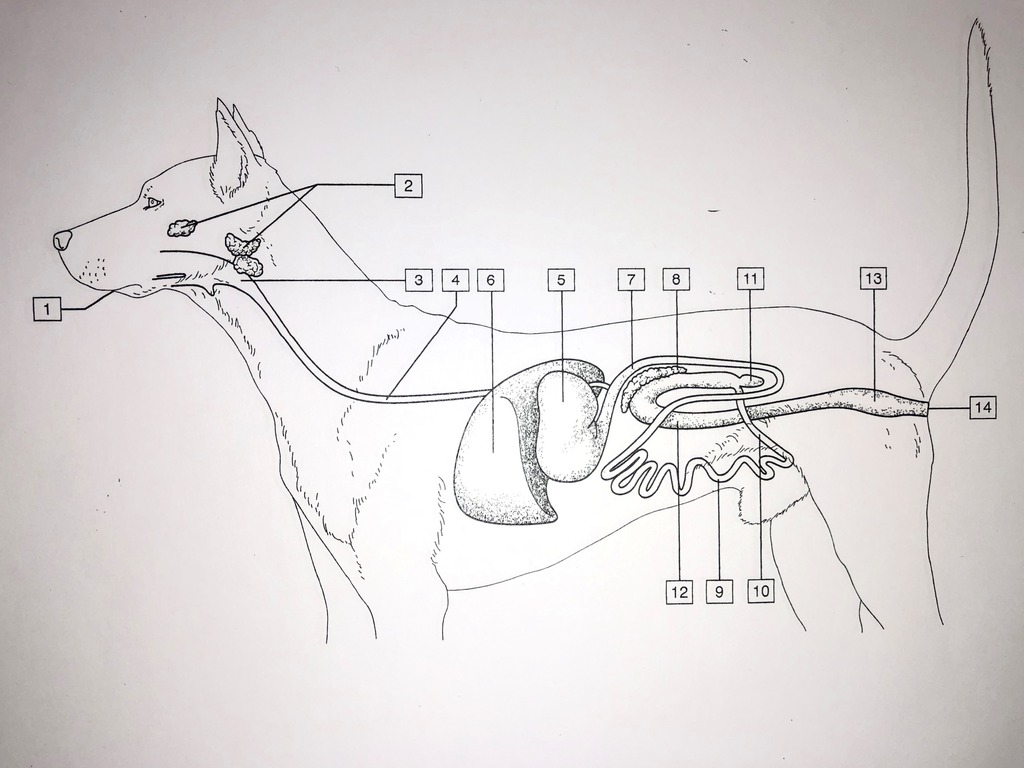
What is number 9?
Jejunum (digestion and absorption) SI
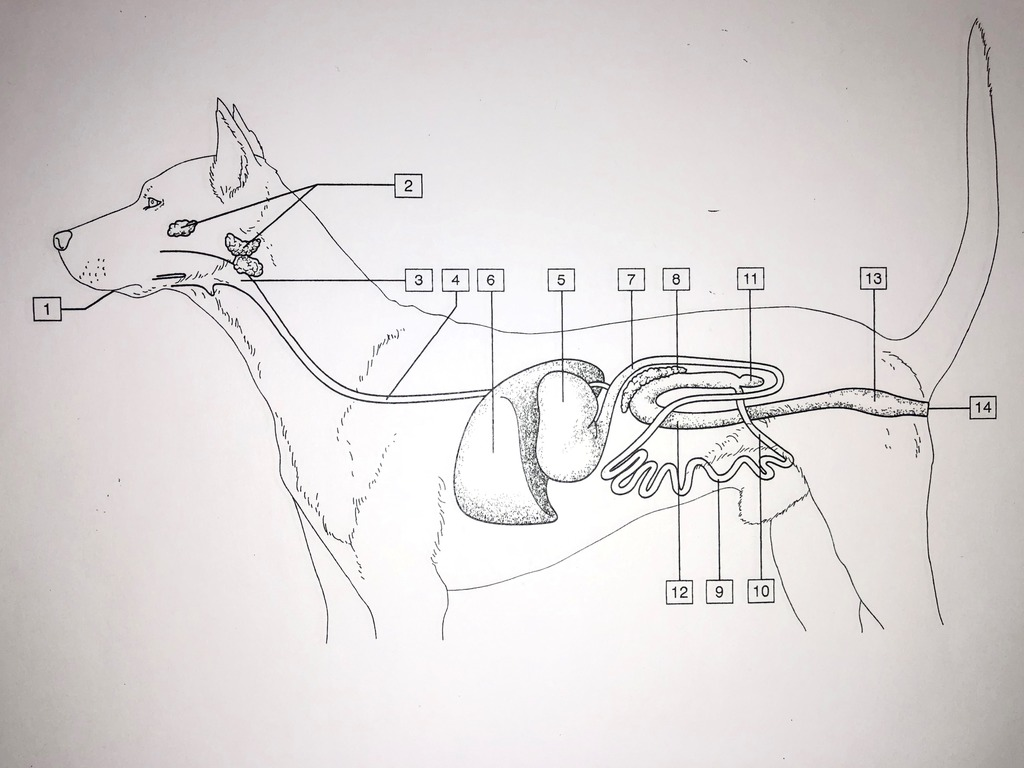
What is number 10?
Illeum (absorption) SI

What is number 11?
Cecum

What is number 12?
Colon

What is number 13?
Rectum

What is number 14?
Anus
Why do liver/gallbladder (and the bile ducts) as well as pancreas all cluster
around at the very beginning of the duodenum?
All share common embryonic origin from embryonic gut tube and must release digestive juice (secretions) where food first exits stomach
major duodenal papilla
Gastrin vs. Secretin, cholecystokinin (CCK), and gastric inhibitory peptide
What are their functions respectively and at what stage(s) of the
eating/digestion are they released?
Gastrin: stimulates stomach acid production also release of HCL hydrochloric acid and pepsinogen from parietal and chief cells, increases stomach contractions (motility) helps promote mucosal growth, released during cephalic and gastric stages (STOMACH G CELL)
Secretin: originates in duodenum wall cells SI
release cuz of chyme and acid
stimulates production of pancreatic juice for buffering
stimulates decreased stomach motility and acid
Cholecystokinin (CCK): duodenum wall cells SI
release cuz of lipid and protein in duo.
slows stomach acid
stimulates pancreatic and bile secretions
Gastric inhibitory peptide (GIP): SI
Duodenum wall cells
release cuz of lipid + protein in duodenum
inhibits stomach acid and enzymes
decrease stomach motility
Where is bile produced vs. stored? What are functions of bile?
produced by liver
stored in gallbladder, enters duodenum from bile duct
98% of bile recycled
fat emulsification
pancreatic lipase activation
(DOES NOT contain digestive enzymes)
What are the accessory organs?
Pancreas
Gallbladder
Salivary glands
Liver
Pancreatic alpha cells vs. beta cells (what hormones do they produce
respectively)?
Endocrine portion of pancreas
alpha cells: produce glucagon
Beta cells: produce insulin
in protein digestion, why is it important to have a precursor
form?
enzymes involved
stomach → pepsin (pepsinogen)
SI/pancreas → trypsin (trypsinogen), chymotrypsin, elastase
precursor: inactive enzyme form (zymogen or proenzyme) that safely travels to where it’s needed before turning into active protein-digesting tool
What enzymes are in Starch digestion
headgut/salivary glands
salivary amylase
Small intestine/pancreas
pancreatic amylase
Brush border enzymes
dextrinase
glucoamylase
lactase (young mammals)
maltase
sucrase
Lipid digestion
headgut/salivary glands
lingual lipase (minimal)
Stomach
gastric lipase (minimal)
SI/pancreas
pancreatic lipase
colipase
not enzymes but bile salts and micelles
Why is it important to have increased surface area in the intestine?
maximizes the rate and efficiency of nutrient absorption into bloodstream.
Identify key physiological adaptations that increase absorption efficiency.
Three levels:
macro - extreme surface area expansion
strategic vascularization
cellular level (micro)
villi and microvilli
abundant mitochondria
molecular level (subcellular)
specialized transporter proteins
electrochemical gradients
Can you label the ceca/cecum, colon, and rectum on a GIT illustration?

What are the main functions of the large intestine?
absorb remaining water + electrolytes, house beneficial gut bacteria, form and eliminate solid waste
Fermentation is a symbiotic relationship between the hosts and the microbials.
What do the host and microbials provide respectively?
both parties help eachother
both exchange vital resources to survive and thrive
What is animal fiber?
natural materials made mostly of proteins that come from animal hair, fur, skin, insect secretions
ex: wool, silk, fur, feathers, leather
What enzymes are secreted in each section and what nutrients do they digest?
digestive enzymes are released in specific parts of digest tract to break down carbs, proteins, and fats into smaller parts your body can absorb
mouth → salivary amylase, lingual lipase
stomach → pepsin, gastric lipase
Pancreas → pancreatic amylase, trypsin, chymotrypsin, carboxypeptidase, pancreatic lipase, nucleases (DNA and RNA)