Unit 1 Study Guide: Lab Safety, Scientific Method & Variables
 Call Kai
 Learn
Learn Practice Test
 Spaced Repetition
 Match
Match Flashcards
1/12

There's no tags or description
Looks like no tags are added yet.
Name | Mastery | Learn | Test | Matching | Spaced | Call with Kai | Chat |
|---|
No analytics yet
Send a link to your students to track their progress
13 Terms
Lab Safety: Chemicals
Always treat every chemical in the laboratory as if it could be hazardous, even if it looks harmless.
Lab Safety: Broken Glass
Never pick up with bare hands; immediately inform your teacher and use a broom or dustpan.
Lab Safety: Hair
Long hair must be tied back or kept completely out of the way to prevent fire and contamination hazards.

Lab Safety: Food & Drink
Never eat or drink at your lab station, and wait for teacher instructions before starting.

Scientific Observation
Information gathered directly through senses or tools, stating direct facts without interpretation.
Scientific Inference
An explanation, logical conclusion, or interpretation based on prior observations.
Quantitative Data
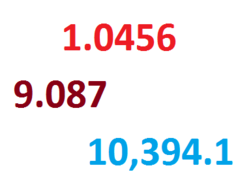
Measurable numerical data recorded with units that can be graphed and averaged (e.g., 14.2 cm).
Qualitative Data
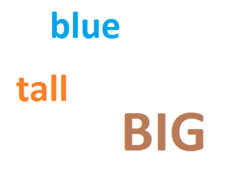
Descriptive data regarding qualities such as color, texture, shape, or behavior.
Scientific Method Step 3: Hypothesis
Created using the format: If [IV], then [DV], because [scientific reasoning].
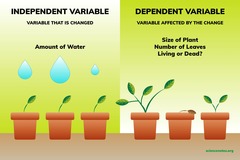
Independent Variable (IV)
The factor deliberately changed or tested; plotted on the horizontal X-axis.

Dependent Variable (DV)
The factor being measured that changes in response; plotted on the vertical Y-axis.
Controlled Variables
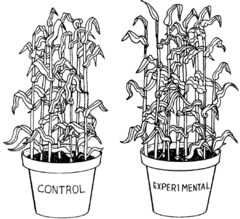
Factors kept identical across all test groups to ensure valid cause-and-effect results.
Variable Identification Statement
Use the statement: '[Independent Variable] affects [Dependent Variable].'