L17: Food chains

0.0(0)
Studied by 0 people
call kaiCall Kai
learnLearn
examPractice Test
spaced repetitionSpaced Repetition
heart puzzleMatch
flashcardsFlashcards
GameKnowt Play
Card Sorting

1/16

encourage image

There's no tags or description

Looks like no tags are added yet.

17 Terms

1
New cards

Plants prevent predation using:

  • spines

  • thorns

  • toxins/anti-nutrients


2
New cards

Predation encourages:

  • pollination

  • seed dispersal


3
New cards

Herbivores prevent predation using:

  • speed and agility (escape)

  • large groups (distraction)

  • camouflage, burrowing, crepuscular/nocturnal (avoidance)

  • toxins, false toxin-colouration (deter)


<ul><li><p>speed and agility (escape)</p></li><li><p>large groups (distraction)</p></li><li><p>camouflage, burrowing, crepuscular/nocturnal (avoidance)</p></li><li><p>toxins, false toxin-colouration (deter)</p></li></ul><p></p>
4
New cards

Carnivores prevent (or enable) predation using:

  • claws/talons

  • beaks/teeth

  • horns

  • venomous bite/scratch/sting


5
New cards

Venom for Defence or Attack in the slow loris

  1. When provoked to activate its venom the slow loris raises its arms

  2. The brachial gland contains the venomous fluid

  3. Needs saliva to be activated

  4. In this defensive position the loris can easily access this gland and apply saliva

  5. Spreads venom on the head (defence) or keeps in the mouth to bite


<ol><li><p>When provoked to activate its venom the slow loris raises its arms</p></li><li><p>The brachial gland contains the venomous fluid</p></li><li><p>Needs saliva to be activated</p></li><li><p>In this defensive position the loris can easily access this gland and apply saliva</p></li><li><p>Spreads venom on the head (defence) or keeps in the mouth to bite</p></li></ol><p></p>
6
New cards

Trophic (feeding) levels:

  1. Producers: plants/algae/phytoplankton (photosynthesis)

  2. Primary consumers: herbivores (eat plants/algae)

  3. Secondary consumers: omnivores/carnivores (eat herbivores)

(a) Tertiary consumers: omnivores/carnivores (eat omnivores/carnivores)

(b) Apex predators: tertiary consumer with no predators

  1. Decomposers & Detritivores


<ol><li><p>Producers: plants/algae/phytoplankton (photosynthesis)</p></li><li><p>Primary consumers: herbivores (eat plants/algae)</p></li><li><p>Secondary consumers: omnivores/carnivores (eat herbivores)</p></li></ol><p>(a) Tertiary consumers: omnivores/carnivores (eat omnivores/carnivores)</p><p>(b) Apex predators: tertiary consumer with no predators</p><ol start="4"><li><p>Decomposers &amp; Detritivores</p></li></ol><p></p>
7
New cards

Autotrophs

An organism that produces its own food (nutrients) using light, water, carbon dioxide, and another simple chemical compounds

8
New cards

Heterotrophs

An organism that cannot produce its own food and instead consumes plant and animal matter as a source of nutrients

9
New cards

Producers examples

  • plants (monocots, dicots, trees, moss, lichen)

  • algae

  • phytoplankton

  • not fungi (decomposer)


<ul><li><p>plants (monocots, dicots, trees, moss, lichen)</p></li><li><p>algae</p></li><li><p>phytoplankton</p></li><li><p>not fungi (decomposer)</p></li></ul><p></p>
10
New cards

Characteristics of producers

Autotrophs

  • ‘make’ their own food

  • create chemical energy from solar/light energy

  • photosynthesis = H2 O + CO 2 –-(light) sugars + O


<p><strong>Autotrophs</strong></p><ul><li><p>‘make’ their own food</p></li><li><p>create chemical energy from solar/light energy</p></li><li><p>photosynthesis = H2 O + CO 2 –-(light) sugars + O</p></li></ul><p></p>
11
New cards

Characteristics of primary consumers

Heterotrophs

  • Must eat food to derive/absorb nutrients

  • herbivores eat producers


<p><strong>Heterotrophs</strong></p><ul><li><p>Must eat food to derive/absorb nutrients</p></li><li><p>herbivores eat producers</p></li></ul><p></p>
12
New cards

Characteristics of secondary consumers

Heterotrophs

  • Must eat food to derive/absorb nutrients

  • omnivores/carnivores that eat herbivores
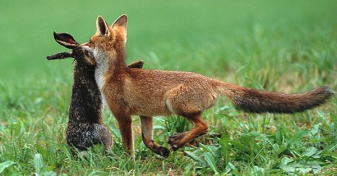

<p>Heterotrophs</p><ul><li><p>Must eat food to derive/absorb nutrients</p></li><li><p>omnivores/carnivores that eat herbivores</p></li></ul><p></p>
13
New cards

Characteristics of tertiary consumers

Heterotrophs

  • Must eat food to derive/absorb nutrients

  • omnivores/carnivores that eat other omnivores/carnivores


<p><strong>Heterotrophs</strong></p><ul><li><p>Must eat food to derive/absorb nutrients</p></li><li><p>omnivores/carnivores that eat other omnivores/carnivores</p></li></ul><p></p>
14
New cards

Characteristics of apex predators

Heterotrophs

  • Must eat food to derive/absorb nutrients

  • omnivores/carnivores that eat other omnivores/carnivores

  • no (wild) predators (top of the food chain)

  • vital to their ecosystems (‘keystone species’)
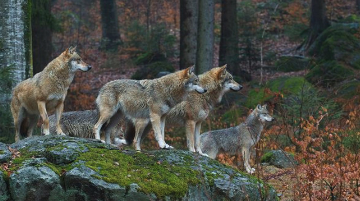

<p><strong>Heterotrophs</strong></p><ul><li><p>Must eat food to derive/absorb nutrients</p></li><li><p>omnivores/carnivores that eat other omnivores/carnivores</p></li><li><p>no (wild) predators (top of the food chain)</p></li><li><p>vital to their ecosystems (‘keystone species’)</p></li></ul><p></p>
15
New cards

Characteristics of decomposers and detritivores

Heterotrophs

  • Must eat food to derive/absorb nutrients

  • break down or consume decomposing plants/animals

  • release inorganic nutrients back into the environment


<p>Heterotrophs</p><ul><li><p>Must eat food to derive/absorb nutrients</p></li><li><p>break down or consume decomposing plants/animals</p></li><li><p>release inorganic nutrients back into the environment</p></li></ul><p></p>
16
New cards

Decomposers

  • Bacteria, fungi, protists

  • Absorb and metabolize nutrients on a molecular scale (saprotrophic nutrition)

  • Cannot ingest discrete lumps of matter


<ul><li><p>Bacteria, fungi, protists</p></li><li><p>Absorb and metabolize nutrients on a molecular scale (saprotrophic nutrition)</p></li><li><p>Cannot ingest discrete lumps of matter</p></li></ul><p></p>
17
New cards

Detritivores

  • Invertebrates and some vertebrates e.g. sea stars, fiddler crabs, terrestrial worms, some catfish species, larval sea lamprey, most larval insects

  • Consume detritus (decomposing plant and animal material, and feces)
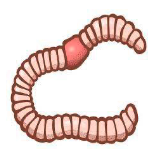

<ul><li><p>Invertebrates and some vertebrates e.g. sea stars, fiddler crabs, terrestrial worms, some catfish species, larval sea lamprey, most larval insects</p></li><li><p>Consume detritus (decomposing plant and animal material, and feces)</p></li></ul><p></p>



