Beyond the Risk Figure
 Call Kai
 Learn
 Practice Test
 Spaced Repetition
 Match
 Flashcards
 Knowt Play
1/20

There's no tags or description
Looks like no tags are added yet.
21 Terms
What is risk?
Weighing up the positives and negatives
Dangers and the chance of something bad happening
Something that has the potential of have a negative impact
Dangers you are not aware of
Prediction of bad event
The potential exposure to harm or danger
What are the features of Nichola and Stefan?
Both have Achondroplasia
Is the baby going to be average height
Risk of pregnancy being double dose
Can a double-dose be tested for
What are Nichola’s counselling reflections?
25% risk seemed really small but then realised how large the 25% was
Following third double dose result there were strong emotions that negated the facts
Were there more achondroplasia genes than others – did the test produce the risk
Without genetic counselling wouldn't have continued with the family
Gently drawn back to the facts that the doubts were valid but emotional not medical
What are Stefan’s counselling reflections?
Knew less than Nichola and didn't consider double dose
Science and facts made sense but overshadowed by the excitement
Third time the facts removed the enjoyment and was more about the genetics
GC came back to earth and straightened the myths and doubts and talked to other family members in a way they understood
What factors influence risk?
Influence of family or friends
Lay beliefs
Cultural beliefs
Personality
Religious beliefs
Barriers to understanding
Phycological wellbeing
Media influences
What are barriers to understanding?
Education
Language
Distractions
What is the Angelina affect?
Underwent risk reducing surgery for BRCA1
Knowledge of the inherited causes of breast and ovarian cancer increased
Risk perception chanced and surge in people wanting referral
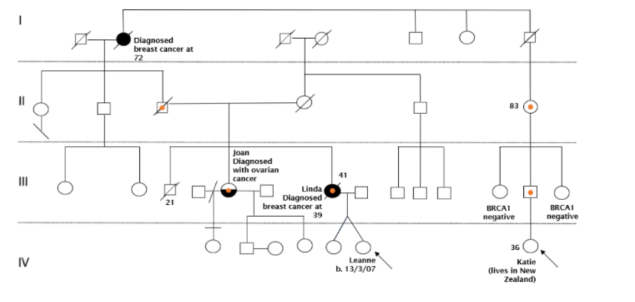
What is Leanne’s experience?
Leanne's mother was diagnosed with breast cancer when she was 7
Lived experience of a close relative being diagnosed and therapy
All women close to Leanne have developed cancer
All of the women close to Leanne have inherited the familial BRCA1 gene
Leanne's mother died from breast cancer when she was 41 and Leanne was 9

What is Katie’s experience?
Has no close relatives affected with cancer and no lived experience of the diagnosis
Father and grandmother both have the gene alternation and are well known
Not all of Katie's close relatives have inherited the familial BRCA1 gene alternation
How are Katie’s and Leanne’s experience different?
Both have the same level of risk of inheriting the variant but the expectations are different
Different lived experiences and impacts own perception of their cancer risks and available options
Important to elicit a patients experience of cancer to understand the factors influencing risk
Taking a family history may also reveal other beliefs that could influence their risk perception
What are individuals lay beliefs?
Someone will be prone to illness that has been experienced by a close relative of the same gender
Physical features are inherited
Extended to health issues and behavioural attributes
Mannerisms identified as being part of the image of a particular relative
Not all relatives have all family characteristics skip a generation
Children often resemble one side of the family more than the other
Someone can only pass on what they are seen to have
Has to have at a certain age presentation, 50/50 so one has to have it
What is the effect on risk perception?
Patients may have beliefs about whether they carry the familial gene
Identity in the family and hard to change
Not necessarily learnt from genetics
If they struggle about inheritance it may be assumed due to intelligence or emotional but may be due to lay belief about inheritance
Could be only that a certain gender has the condition
GC can help identify lay beliefs and explore with the patient and how they influence the perception of risk
What are the features of religious beliefs?
Thought to be associated with genetic risk but no research
High risk more evidence on medical than religious decision making
One study found that using spirituality had a lower perception of risk
Religious beliefs can have a positive effect on risk and anxiety
What are the key points about religious beliefs?
Key Points
Can play a role in decision making
Can provide comfort and guidance in terms of uncertainty
When medical and religious beliefs conflict further information is helpful
Medical interventions can conflict with religious beliefs and must respect and adjust to these
What are the cultural beliefs in the Philippines?
Namamana which means the inheritance of passing on a trait
Could go against the autosomal recessive idea
Lihi means conception of maternal cravings
Certain conditions are due to the diet during pregnancy
Pasma is hot and cold syndrome
Having a healthy balance
Sumpa and gaba are a curse
Namalingo are mystical and supernatural causes
Kaloob ng diyos is God's will
What are key cultural beliefs?
Are part of almost every community across the world
May influence how to process new information, make decisions and cope
CG role is to be curious to understand an individuals beliefs and help to integrate genetic information to the understanding
How does risk and genetic counselling work?
Exploring risk perception with patients is important in enabling informed decision making
Can help identify blind spots
Can identify support needs
Important tool in helping to prevent post-decisional regret
What are the advantages of the NIPT?
A simple blood test
No risk to the developing baby
Quick result
What are the disadvantages the NIPT?
Many are at low risk and perception of low risk may have an impact and 'bad news' hasn't been considered nor the decisions
Ill-equipped to deal with the result and increase post-decisional regret
How does risk perception need to be explored?
Explore an individuals perception of risk
Address any misconceptions in a non-judgemental and supportive way
Present clear information and back up with evidence
Consistent language, summarise, paraphrase, repeat key information and allow clarifying questions
Reinforce with summary letter and information leaflets
Direct parents to appropriate support groups
Invite people back to the clinic for further appointments
How does genomics change the scope?
Technologies and the concepts are becoming more complex and uncertain
Due to additional findings will have BRCA mutations in individuals with no family history are they pathogenic