Biomechanics 3: Bone, Joint, and Muscle Biomechanics
 Call Kai
 Learn
 Practice Test
 Spaced Repetition
 Match
 Flashcards
 Knowt Play
1/72

There's no tags or description
Looks like no tags are added yet.
73 Terms
bone function
stability, mobility, protection
bone stability
provide a frame to support the body
bone mobility
provide attachment sites for muscles, allowing movement of limbs
move the bones
goal of movement
cortical (hard) bone
dense, forms hard outer layer of a bone segment
higher density
trabecular (spongy) bone
low density, fills the interior of a bone segment
apply excessive amount of forces to the bone
how can you fracture a bone?
fracture
different force patterns can lead to different types of
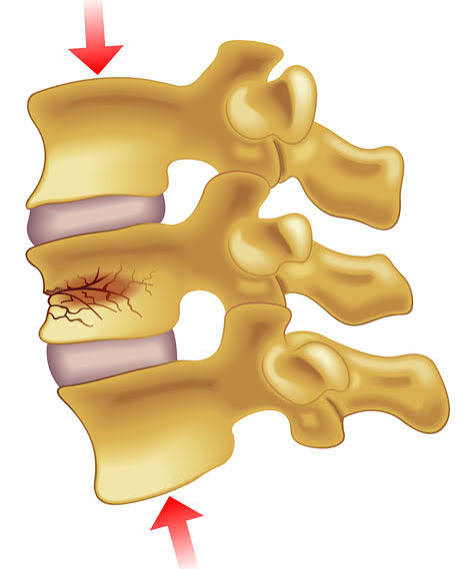
compression force/fracture
two forces move towards each other in the same line of action
tension force
two forces move away from each other in same line of action
ex: transverse patella fracture
bending force
compression force applies to one side of the object while tension force applies to the other side of the object
Colles’ fracture
fall onto an outstretched hand (FOOSH)
dinner fork deformity if untreated
shear force
two forces move towards/away from each other in different lines of action
shear force
tibia fracture
direct blow to the tibia from the side while the foot is fixed on the ground
torsion
two torques rotate the object in different directions
ex: tibia fracture; turning the tibia forcefully while the foot is fixed on the ground
weight bearing exercise
how do we strengthen bones?
Wolff’s law
if loading on a particular bone increases, the bone will remodel itself over time to become stronger to resist that sort of loading
stress, strain
2 parameters to determine stiffness
stress
the force that acts on the object
strain
change of shape of the object
stiff
the object is ______ if large amount of force can only cause small amount of shape change
stiffness
slope of the stress/strain curve

effect of immobilization

synarthrosis
joints that can barely move
ex: skull
amphiarthroses
joints that can move slightly
usually connected by fibrocartilage (intervertebral joint)
diarthroses/synovial
joints that can move freely with certain amounts of “degrees of freedom”
degrees of freedom
number of axis that the joint can rotate around
synovial
_________ joints have at least 6 different configurations of degrees of freedom
plane joint
articular surfaces are flat
ex: intercarpal joints
allow only gliding movements
hinge joint
a joint that is modeled like a door hinge
ex: humeroulnar joint
allow 1 degree of freedom
pivot joint
a ring-shaped bone rotates on the longitudinal axis of the other bone
ex: atlantoaxial joint, radioulnar joint
allow 1 degree of freedom
saddle joint
joint surface has both concave and convex configurations
ex: CMC joint
allows 2 degrees of freedom
the joint configuration allows flexion/extension, abduction/adduction, but limits transverse rotation
condyloid joint
an oval head sits on an elliptical cavity
ex: radiocarpal joint
allow 2 degrees of freedom
the joint configuration allows flexion/extension, abduction/adduction, limits transverse rotation
ball and socket joint
ball head sits on a round socket
ex: hip and shoulder
allow 3 degrees of freedom
socket could be “shallow” or “deep”
joint configuration, soft tissues, joint position
factors contributing to joint stability
joint configuration
allows less degrees of freedom, tend to be more stable
soft tissues
ligaments, capsules and muscles provide joint stability
close-packed position
the joint space is minimized, most ligaments and capsules surrounding joint are taut
ex: position for knee joint: full extension and external rotation
loose-packed position
the joint space is maximized, most ligaments and capsules surrounding the joint are loose
ex: position for knee joint: 25 degrees of flexion
muscle
muscles play a major role in moving the joints
muscle belly ← muscle fibers ← sarcomeres
the basic unit of a muscle is sarcomere
type I muscle fiber
slow twitch oxidative fibers (uses oxygen to generate energy)
high endurance, low power
type IIa muscle fiber
fast twitch oxidative fibers
intermediate power and endurance
type IIb muscle fibers
fast twitch glycolytic fibers
high power, low endurance
type I
posture muscles, such as the erector spinae are more
type II
power muscles, such as the quads, hamstrings, and biceps are more
adaptable
muscle fibers are _________ and can change their functional and metabolic properties in response to training
type I
endurance athletes tend to have a greater proportion of ______ __ fibers
type II
power athletes tend to have a greater proportion of _____ __ fibers
effects of aging on muscle fibers
changes in muscle fiber proportion
all muscle fibers become smaller
atrophy is greater in type II muscle fibers than type I muscle fibers
motor unit
muscle fibers are part of a
alpha motor neuron → axon → muscle fibers innervated
parts of the motor unit
CNS
controls muscle activities through controlling motor units
size of motor unit
defined by the number of muscle fibers it controls
type I
small size of motor unit controls
type IIa
medium size of motor unit controls
type IIb
large size of motor unit controls
smallest, largest
motor units are recruited from ______ to _______
helps us preserve energy
low, high
___ intensity, ____ repetition exercises could better improve endurance
high, low
____ intensity, ___ repetition exercises could better improve power
parallel muscle arrangement
parallel to the longitudinal axis of the muscle
ex: sartorius
this type of muscle is usually long and can travel a long distance, which results in great ROM
pennate muscle arrangement
the muscle fibers are at an angle to the longitudinal axis of the muscle
angle called pennation angle
ex: deltoid
pennation
there can be more fibers in a muscle of a given volume, which creates more force
force advantage
stress-strain curve
shows the typical relationship between stress and strain observed in soft tissues such as ligaments and muscles
toe region: fibers are re-aligned but not fully straightened
linear region: fibers are straightened
in these regions, fibers can return to the original shape when the force is removed (elastic)
final point of linear region: yield point
fibers begin to have permanent, irreversible change in shape after being stretched over the yield point (plastic region)
failure point: fibers are torn

straighten
in stretching, we first ________ the muscle fibers to enter the linear region
yield point
the goal is to bring the muscle beyond the ______ ______ so that the muscle length won’t go back to the origin
stay away from failure point
active tension
when the muscle is doing active contraction
passive tension
when the muscle is being stretched, there is a positive relationship between the muscle length and tension
at resting length
in which position can we produce the largest amount of active tension?
passive, but only when muscle stretched a lot
can we generate greater active tension or greater passive tension?
two-joint muscle
muscle that crosses over two different joints
ex: hamstrings
crosses both hip and knee
action: knee flexion and hip extension
active insufficiency
muscle becomes weak so it has reduced ability to drive the joint through its full range of motion
passive insufficiency
the muscle is too tight so its restricts joint range of motion in the opposite side
force-velocity curve
Y: force generated by the muscle
X: velocity of muscle shortening or lengthening
