coronary artery disease (CAD)
 Call Kai
 Learn
Learn Practice Test
 Spaced Repetition
 Match
Match Flashcards
 Knowt Play
1/27

There's no tags or description
Looks like no tags are added yet.
Name | Mastery | Learn | Test | Matching | Spaced | Call with Kai | Chat |
|---|
No analytics yet
Send a link to your students to track their progress
28 Terms
facts about CAD
→ most common type of CV disease
→leading cause of death in US
→ pts may be asymptomatic or develop chronic stable angina
→ may evolve to more serious conditions of unstable angina and MI
what is CAD?
the narrowing or obstruction of one or more coronary arteries
caused by atherosclerosis
atherosclerosis
accumulation of lipid-containing plaque in the arteries
plaque hardens over time→ hardening of the arteries
can occur in any artery
→ individuals with this condition are high stroke risk
stage 1 of atherosclerosis→ chronic inflammation and injury
chronic injury and inflammation lead to a damaged endothelial lining of the artery
no longer able to repair self immediately
lipoproteins carry cholesterol and other lipids into the arterial intima

stage 2 of atherosclerosis → development of the fatty streak
earliest form of atherosclerosis
these are lipid-filled smooth muscle cells
appear in coronary arteries by age 20

stage 3 of atherosclerosis→ fibrous plaque formation
plaques can form on one side of the artery or in a circular fashion involving the entire artery lumen
may begin to develop by age 30
increase with age

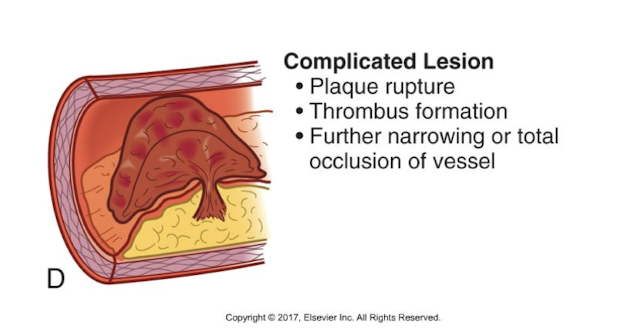
stage 4 of atherosclerosis→ plaque disruption
dangerous stage
development of a complicated lesion
platelets aggregate and create a thrombus
high risk for MI
effects of CAD on perfusion
perfusion depends on the heart’s ability to generate enough cardiac output to distribute blood to all body tissues
significant CAD negatively affects heart function; impaired CO and decreased perfusion
collateral circulation
arterial anastomoses within coronary circulation
allows for an alternative supply of coronary blood flow during an episode of acute or chronic ischemia
collateral circulation can improve cardiac outcomes →still able to get blood flow

non-modifiable risk factors CAD
increasing age
biologic sex
ethnicity→ highest incidence among Black males
family history of heart disease
genetic predisposition
Heart disease in women
leading cause of death in women in the US
incidence increases after menopause
atypical symptoms of heart disease
fatigue, weakness, SOB, upper back pain, nausea, indigestion, lightheadedness, palpitations, and anxiety
high rate of delay in treatment/ HCP identification
modifiable risk factors for CAD
elevated lipid levels
hypertension > 120/80
tobacco use
diabetes
physical inactivity
metabolic syndrome
obesity
cholesterol
necessary for building cells, production of certain hormones, & aids in digestive process
cholesterol comes from sources
naturally produced by the liver, obtained from animal sources
too much circulating cholesterol increases risk of CAD
triglycerides & lipoproteins
triglycerides→ main storage form of lipids, aid in transportation of cholesterol throughout body
high-density lipoproteins (HDL)→ good cholesterol, remove cholesterol
low-density lipoproteins (LDL) → bad cholesterol, hold onto cholesterol
hypertension & tobacco use
HTN more common in postmenopausal women
stretched vessel walls from high blood pressure cause endothelial injury and increase risk for developing atherosclerosis
tobacco use is a major risk factor of CAD
causes vasoconstriction
affects endothelial function increase risk of atherosclerosis and blood clots
diabetes
major modifiable risk factor
incidence of CAD increases
manifestations of CAD seen earlier
aim to keep HbA1c <7% (3 month BS, life of a RBC)
physical inactivity
lack of physical activity increases risk of developing CAD
physical activity promotes lipid metabolism, increased HDL production, decrease risk of thrombus formation, and decreases workload on the heart
obesity & metabolic syndrome
death rate higher in obese patients
metabolic syndrome is a cluster of risk factors for CAD
Must have 3/5:
central obesity
hypertension
hypertriglyceridemia
low HDL levels
high fasting glucose levels
CAD manifestations
asymptomatic
chest pain
palpitations
cold sweats
dyspnea
syncope
cough or hemoptysis
excessive fatigue
diagnostic testing
electrocardiogram (ECG)→ ST depression/ T wave inversion; STEMI
lipid panel→ cholesterol, triglyceridides, HDL, LDL
stress test→ nuclear vs treadmill
cardiac catheterization→ shows presence and extent of atheroclerotic plaques in coronary arteries
percutaneous transluminal coronary angioplasty (PTCA)
coronary artery bypass grafting (CABG)
lipid panel
cholesterol→ (<200 mg/dL)
triglycerides→ (male: 20-160; female: 35-155 mg/dL)
HDL→ (male: >45mg/dL; female >55 mg/dL)
LDL→ (<130 mg/dL)
identifying and managing high risk pts
Identifying
thorough health hx (fam hx, current/past medical problems, meds, diet, level of activity, job)
complete physical assessment
Managing
recommend preventative measures, maintain ideal body weight, adequate physical exercise, reduce saturated fat intake, avoid tobacco/substance abuse
physical activity guidelines
30-60 min/day of moderate aerobic activity or 15-30 min/day of high intensity aerobic activity with strength training 2days/week
FITT
F→ frequency: perform physical activity on most days of the week
I→ intensity: HR determines activity intensity
T→ types of activity: regular, rhythmic, and repetitive using large muscles
T→ time: should be at least 30 min, may vary among individuals
nutrition therapy
focus on lowering LDL levels
choose foods low in saturated fat and cholesterol
lean meats, fat-free/low fat dairy; mono/poly unsaturated fats
increase complex carbs
whole grains, fruit, veggies
consume omega 3-fatty acids
fatty fish (salmon, mackerel, tuna
avoid simple sugars
sweet treats, fruity drinks, soda, white flour
decrease sodium intake
recommended <1500 mg/day, educate where hidden sodium is in foods
fibric acid derivatives
Fenofibrate (Tricor), Gemfibrozil (Lopid)
purpose: decrease triglycerides & LDL, increase HDL
side effects: increase liver enzymes myopathy, rhabdomyolysis
nursing considerations: increase effects of Coumadin, may increase adverse effects of statin when used together, myopathy
statins
Atorvastatin (Lipitor), Pravastatin (Pravachol), Rosuvastin (Crestor), Simvastatin (Zocor)
purpose: block synthesis of cholesterol, decrease triglycerides and LDL
side effects: increase liver enzymes, myopathy, rhabdomyolysis
nursing considerations: monitor liver enzymes, given in evening
Niacin
Niacin (NIaspan)
purpose: decrease triglycerides& LDL, increase HDL
side effects: flushing and itching on upper torso and face; GI upset orthostatic hypotension
nursing considerations: taking Aspirin 30 min before drug may decrease flushing, take with food

omega -3 fatty acid
Omega-3 acid ethyl esters (Lovaza)
purpose: decrease triglycerides, increase HDL
side effects: anaphylaxis (fish allergy), taste changes, GI problems
Nursing considerations: increase coumadin effects, take with meals, do not open or dissolve capsules