Screening for Disease and Pain Patterns
 Call Kai
 Learn
 Practice Test
 Spaced Repetition
 Match
 Flashcards
 Knowt Play
1/127

There's no tags or description
Looks like no tags are added yet.
128 Terms
a process where PTs make clinical judgments based an data from an examination, may identify problems that require another provider
what is a PT evaluation
treat, refer, both
what are the options post evaluation
early release and outpatient surgeries, aging
what are the main types of patients seen in PT
to rule out disease as being responsible for symptoms and determine if there is an undiagnosed medical condition
what is the purpose of a systems review/disease screening
CVP, endocrine, ENT, eyes, GI, GU, reproductive, skin, neuro, musculoskeletal
what are the systems that we need to review as PTs
physical or emotional
what types of changes regarding a patients health status should PTs take note of
review patient data, patient interview/history, physical exam
what is the screening process
intro, CC, HCI, PMH, PLF, personal/family history, wrap up
what are the parts of a history
age, race/ethnicity, sex/gender, occupation
what are risk factors that fit into personal/family history
from the skin, well localized
what is a cutaneous source of pain
skin, fascia, tendons, periosteum
what are somatic superficial sources of pain
bone, nerves, muscles, tendons, ligaments blood vessels poorly localized
what are deep somatic sources of pain
diffuse, not localized pain usually from the organs
what is visceral pain
sharp, shooting, burning, tingling sensation related to dysfunction of the NS
what is neuropathic pain
pain felt in an area different than the injury (usually well localized)
what is referred pain
muscle pain such as tension, spasm, trauma, deficiency
wat is myofascial pain
systemic or musculoskeletal
what can joint pain be caused by
pain in the musculoskeletal system in a dermatome, scerlotome, or myotome
what is radicular pain
pain that increases with increased systolic pressure
what is arterial pain
exercise, fever, bending over
what activities can increase systolic pressure
pleural and tracheal pain
pain with changes in respiratory movements, usually described as throbbing
GI pain
pain that is increased with peristalsis, usually relieved with fasting or defication
neoplasm or ischemia
what can pain at rest be caused by
musculoskeletal disorders, may be due to systemic causes
pain with activity is usually found with...
CVP and GI
what are common pain patterns to the shoulder
CVP, GI, UG
what are common pain patterns for the low back
CV, GI, and UG
what are pain patterns to the lumbar and pelvic region
cramping, colicky pain, cyclic pain, abdomen and low back
what types of sensations would one feel if there were spasms of the smooth muscles walls of the GI tract
Cardiovascular
What system is usually involved with sensations of throbbing, cramping, or aching
with pressure, tightness, or heaviness in thorax, neck, face, or UE
when would vitals and immediate screening of the CV system be called for
nervous system
weakness, poor balance, numbness, and pins and needles are symptoms felt by...
symptom changes with position, movement, or posture. PT intervention has an effect on the symptom and the pain is not worse at night
what symptoms usually indicate musculoskeletal involvement
vary depending on the organ, intermittent pain, change in intensity, worse at night
what are some symptoms with visceral involvement
heart disease, surgery, smoking, family history
follow up questions should be asked about what things regarding medical history
vitals and edema
how can we screen CVP system
pliability, integrity, color, scarring
how can we screen skin
symmetry, ROM, GST
how can we screen MSK
cognition
what system is the first to show signs of dysfunction in dehydration
observation, vital signs, inspection, palpation, percussion, auscultation
what are tools PTs can use to screen for disease
mental status
level of alertness, coherent sppech, alert to day, date, and time, memory and confusion are all indicators of a patients...
muscle wasting, hair loss, dry flakey skin, abdominal distention, fatigue/lethargy, bruising
what are symptoms of malnutrition
bad breath, alcohol, fruity breath
what types of odors should PTs watch out for
diabetic ketoacidosis
fruity breath is a symptom of...
observe and inspect
what types of things can we do with the skin?
texture, color, temp, breakdown, mobility and elasticity
what types of things can we observe/inspect about skin
asymmetry, border, color, diameter, evolution
what types of things do we look for regarding cancer
shingles
this painful rash occurs on a dermatome due to a viral infection present in the DRG
window test, look for the presence of a gap between nails
how would be test for abnormal nail shapes
oxygen deprivation
what is usually the cause of clubbing
not easily seen or palpated
what do normal lymph nodes feel/look like
firm, hard, and tender
what do abnormal lymph nodes feel like
anterior cervical lymph node
what is this lymph node

posterior cervical lymph node
what is this lymph node

tonsilar lymph nodes
what is this lymph node
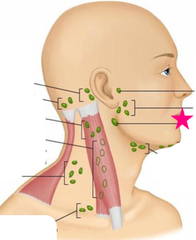
submandibular lymph node
what is this lymph node
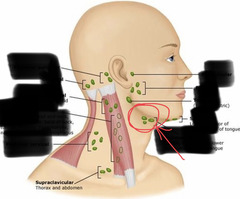
submental
what is this lymph node

supraclavicular lymph node
what is this lymph node

periauricular
what is this lymph node

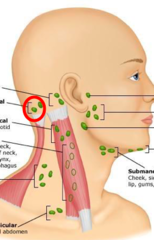
posterior auricular
what is this lymph node
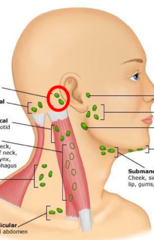
occipital lymph node
what is this lymph node
axilla
besides the lymph nodes in the head and neck, where else can we palpate lymph nodes
wide and flat
when palpating abdomen, how should hands be positioned
light pressure initially, going deeper if there is no pain. quadrants should be compared
how do we palpate the abdomen pressure wise and location
tenderness, mass, pain, guarding, referred pain
what are things of not with abdominal pain
peritoneal inflammation
pain with rebound tenderness suggests...
rebound tenderness
this test uses firm, downward pressure followed by a quick release
flatness, dullness, resonance, tympani
what are sounds that can be heard with percussion of the abdomen
LBP, dull ache on the left side of abdomen, abdominal heartbeat, palpable mass in abdomen
what are signs and symptoms of an abdominal aortic aneurism
starting on the left side of the midline, find pulse and move laterally to determine width
how do we palpate the abdominal aorta for signs of AAA
reproduced back pain
what are we looking for with palpation of the abdominal aorta
abdominal organ transplant, kidney disease, appendicitis, suspected aortic aneurism
when is palpation of the abdomen contraindicated
Collicky at the costovertebral angle, not changing with position
what type of pain is associated with kidney complications
percussion: flat hand over the costovertebral angle and thump with the other hand
what would be done with suspected kidney pain
McBurney's point, rovsing test, psoas sign, obturator sign, iliopsoas test
what are tests for appendicitis
rovsing test
this test puts pressure on the LLQ with a quick release producing symptoms in RLQ
psoas sign
contraction of the psoas through SLR or a stretch of the psoas by hip extension producing RLQ pain
obturator sign
test that internally and externally rotates the hip looking for reproduction of symptoms
iliopsoas test
have the pt raise the LE 30 cm off the table with resistance
patellar pubic percussion test
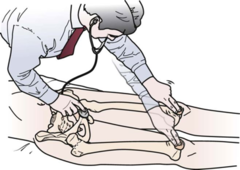
symmetry of sound
what is the PT looking for with patellar pubic percussion
gradual, progressive, cyclical pain that is constant and doesn't get better
what are general symptoms of visceral pain
bone, cancer
viscerogeneic pain has a disproportional relief of __________ pain from ____________
change in bowel/bladder, sore throat, unusual bleeding, a lump, indigestion, change in mole/wart, cough/hoarseness
what are red flags for cancer
uncontrolled HF or pulmonary edema, myocarditis, unusual fatigue, dyspnea, dizziness
what are precusions/contraindications to therapy
frequency of urination, excessive thirst and appetite, weight loss, orthostatic hypotension, blurred vision, sensory deficits, extremity pain
what are signs and symptoms of diabetes
diabetes diagnosis, recent blood tests, A1C
if it is suspected that someone has diabetes, what things should we ask?
embryologic development, multisegmental innervation, direct pressure and shared pathways
what are the 3 mechanisms of pain referral patterns
T9-L1
what dermatome is effected with renal pain
ischemia, inflammation, infection
what are causes for renal pain
it is constant, dull, aching and boring
how is ischemic renal pain different than inflammatory or infectious
it decreases with changes in position
how is inflammatory renal pain different than ischemic or infectious
there is no difference with change in position
how is infectious renal pain different than ischemic or inflammatory
posterior subcostal and costovertebral region, ipsilateral groin
where is renal pain
suprapubic region and low back
where are urologic pain referred to
moderate to severe and intermittent
how would one describe urologic pain
significant urinary urgency, dysuria, tenesmus
what are signs and symptoms of urologic pain
renal is more ipsilateral, urologic is more central
what is the difference between renal and urologic pain
mid-lower abdomen and sacral region
where is large intestine pain referred to
dull steady cramping
how would someone with large intestine pain describe their pain
mid abdomen and back
where is small intestine pain referred to