Attachment Theory: Bowlby's Stages, Ainsworth's Styles & Lifespan Effects
 Call Kai
 Learn
 Practice Test
 Spaced Repetition
 Match
 Flashcards
 Knowt Play
1/26

There's no tags or description
Looks like no tags are added yet.
27 Terms
What is attachment?
A strong emotional bond with another person, especially important in infancy.
What is the main premise of attachment theory?
Children are biologically predisposed to develop attachments with caregivers to increase chances of survival.
What did Harlow's monkeys study demonstrate about attachment?
Monkeys preferred comfort from a cloth mother over a wire mother, showing attachment is about contact comfort, not just basic needs.
Who inspired John Bowlby in his attachment theory?
Freud and Konrad Lorenz.
What are Bowlby's four stages of attachment?
1. Preattachment (Birth - 6 weeks), 2. Attachment in the making (6 weeks - 6-8 months), 3. Clear-cut attachment (6-8 months - 18-24 months), 4. Goal-corrected partnership (18-24 months onward).
What occurs during the 'Preattachment' stage?
Babies attract caregiving through behaviors like smiling and recognizing their mother's voice.
What is 'separation anxiety' and when does it typically develop?
Separation anxiety is the distress experienced when separated from a caregiver, typically developing around 6-8 months.
What is the 'Goal-Corrected Partnership' stage?
A stage where the child becomes less dependent on the caregiver and understands they will return.
What did Mary Ainsworth contribute to attachment theory?
She provided empirical support for Bowlby's theory through her research, including the Strange Situation.

What does the Strange Situation assess?
It assesses the use of the caregiver as a secure base, reactions to a stranger, separation anxiety, and reunion behaviors.
What are the four types of attachment styles identified in infants?
Secure, Insecure (resistant or avoidant), and Disorganized.
Describe the behavior of infants with secure attachment.
They use the caregiver as a secure base for exploration and show excitement upon reunion.
What characterizes insecure/avoidant attachment?
Infants explore with or without the caregiver and do not seek comfort from the caregiver upon reunion.
What is the behavior of infants with insecure/resistant attachment?
They stay close to the caregiver, do not explore, and both seek out and reject the caregiver at reunion.
What does disorganized attachment behavior look like?
Infants display a mix of avoidance, resistance, and apprehension, lacking consistent coping strategies.
What factors influence attachment security?
Parental sensitivity, caregiver's relationship quality, economic resources, and child temperament.
How does a secondary caregiver influence attachment?
The infant's attachment style is often similar to both parents, and secure attachment is more likely with understanding and involvement.
What is the impact of temperament on attachment?
An easy temperament may facilitate secure attachment, while a challenging temperament can still lead to secure attachment with sensitive parenting.
What is the role of secondary attachment figures?
They broaden the child's attachment network and provide additional sources of comfort and co-regulation.
What does research say about attachment in non-nuclear families?
Sensitive, responsive caregiving is more important than the number or gender of parents.
What is the Ferber Sleep Method and its impact on attachment?
A sleep training method that allows babies to cry before receiving comfort; evidence suggests it does not negatively impact attachment if parents are otherwise responsive.
What is Reactive Attachment Disorder (RAD)?
A condition where a child cannot form attachments, leading to disturbances in social and emotional functioning.
What is the concept of 'Maternal Buffering'?
The idea that maternal sensitivity can help buffer against negative experiences and promote secure attachment.
How do early experiences shape romantic attachment in adulthood?
Secure adults often describe supportive early childhood experiences, influencing their romantic relationships.
What is the connection between attachment security and peer competence?
Attachment security in childhood is linked to better friendship quality and emotional expression in adolescence.
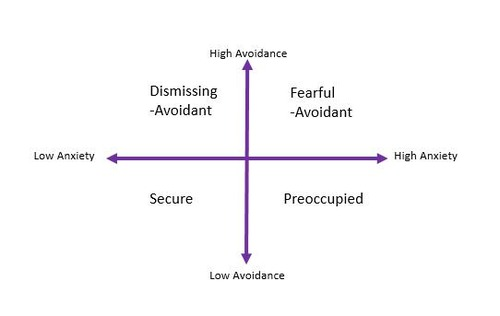
What are adult attachment styles?
Secure, Anxious-Preoccupied, Dismissive-Avoidant, and Fearful-Avoidant.
What is the significance of the 'Internal Working Model' in attachment?
It refers to mental representations of attachment relationships that shape expectations of future relationships.