che 102 (unit 3)
 Call Kai
 Learn
 Practice Test
 Spaced Repetition
 Match
 Flashcards
 Knowt Play
1/15

There's no tags or description
Looks like no tags are added yet.
16 Terms
what conditions must be met for a chem rxn to occur (collision theory)
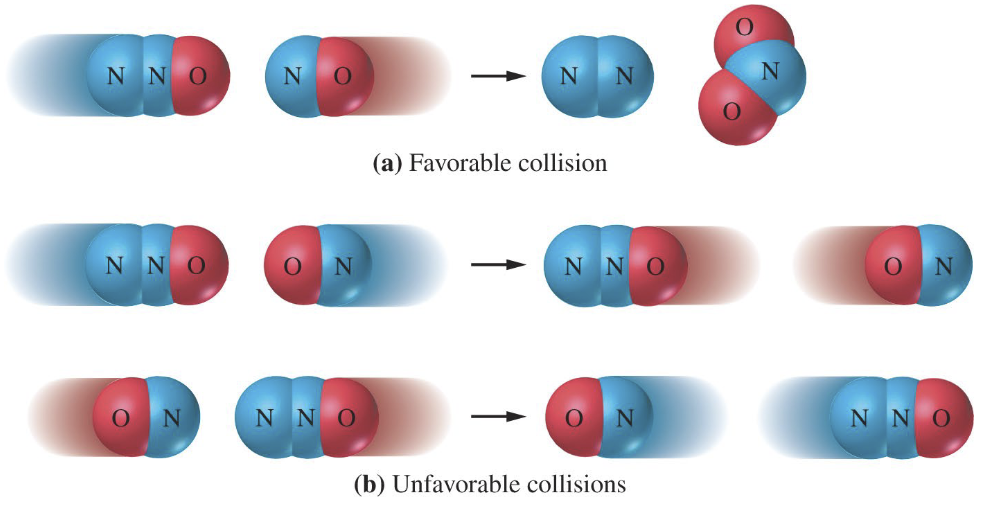
molecules must collide with sufficient energy in correct orientation
molecular collisions
activation energy →avg activation energy = minimum energy for key bonds to break
collision orientation
what is activation energy?
energy level that reactant molecules must achieve for a rxn to take place (i.e. for key bonds to break)

what is an activated complex?
hypothetical transitory species → can return back to og reactants or form products
formed when sufficiently energetic reactants collide
catalysts (what it does, how, why, types)
what/how: increases rate of rxn by providing a different rxn path with lower Ea (and diff activated complex)
participates in rxn but NOT altered (does not appear in overall chem rxn)
why: alternative for high temps that would be necessary for rxn with high Ea
types: homogeneous (same phase as reactants) or heterogeneous (diff phase)

favorable and unfavorable collision orientation
what can affect reaction rate and why
concentration of reactants →inc reactant molecules in same volume=inc collision probability
rxn temp → inc temp=inc avg kinetic energy of reactants (inc speed)=inc collision frequency
presence of catalysts → provides diff rxn pathway with lower Ea
physical nature of reactants → gas>liquid>solid, higher surface area
rate of reaction equation
change in concentration over change in time

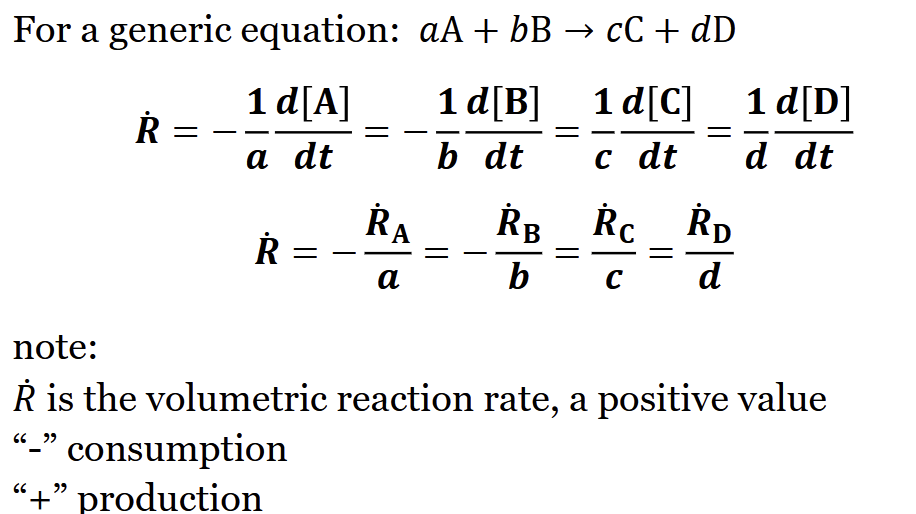
volumetric rate of reaction equation
divide rate of rxn equation by system volume to get rate of rxn per unit volume

rate of reaction for generic equation aA+bB → cC + dD
how must a rxn rate be determined
experimentally (empirically)
what is a differential rate law and when is it used
what is an integrated rate law and when is it used?
zero order rxn, rxn rate eqns
first order rxn, rxn rate eqns
second order rxn, rxn rate eqns
what is the arrhenius eqn and when is it used?