Rat dissection: Organs and their functions + Dissection tools
 Call Kai
 Learn
 Practice Test
 Spaced Repetition
 Match
 Flashcards
 Knowt Play
1/31

There's no tags or description
Looks like no tags are added yet.
32 Terms
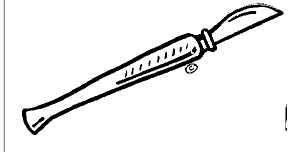
Scalpel
used for precision cutting
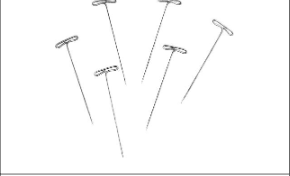
T-Pins
used to position or identify parts of a dissected organism.

Dull Probe
used to manipulate specimens and probe openings

Small Dissecting Scissors
used to cut skin and tissues. Keep the blades at a shallow angle when cutting into an organism to prevent damage to internal structures
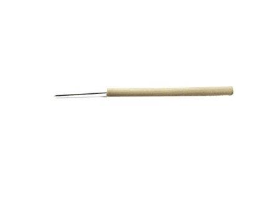
Dissecting Needle
multi-purpose tool that can be used to manipulate, probe, or clean parts of specimens

Razor Blade
used for precision cutting, particularly when you need to be very meticulous in your cutting
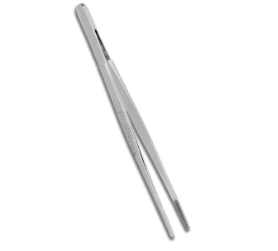
Forceps
used for grasping and manipulating parts of an organism during a dissection
Cervical vertebrae:
Neck vertebrae, including the Atlas (C1), which supports the skull, and the Axis (C2), which allows head rotation.

Thoracic vertebrae
Vertebrae in the chest region that attach to the ribs.

Lumbar vertebrae:
Large vertebrae in the lower back that support most of the body's weight.
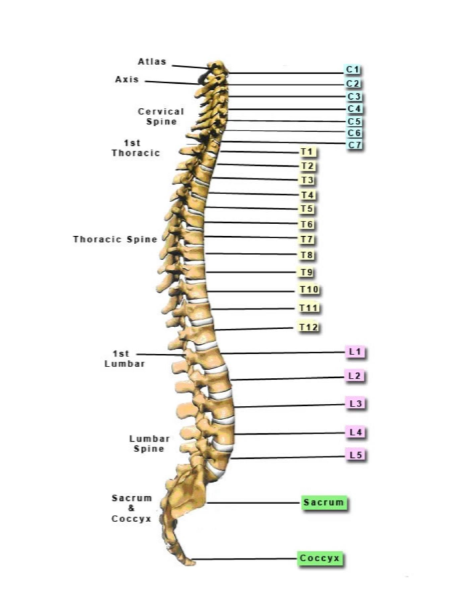
Sacral vertebrae (Sacrum)
Fused vertebrae that connect the spine to the pelvis.

Caudal vertebrae (Coccyx/Tail vertebrae)
Vertebrae that form the tail in rats; in humans, these are fused into the coccyx (tailbone).

Arms
Humerus, Radius, Ulna

Legs
Femur, Patella, Tibia, Fibula

Bones in the head and trunk of the body
Skull, Ribs, Sternum

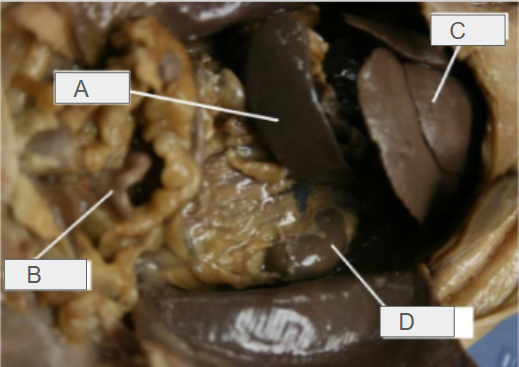
what is A
Spleen: Recycles RBCs

What is C
Liver: Creates Bile which emulsifies fats; Site of fat soluble vitamin storage (A, D, E, and K)

What is A
Pancreas: Lots of enzyme and hormone production

What is C
Large Intestine (Colon): Most water absorption occurs here.
Vitamin K and B12 are absorbed

What is B
Small intestine: Most nutrient absorption occurs here.

What is D
Caecum: Large blind sac filled with bacteria to breakdown cellulose

What is A
Stomach: digest food

What is A
Esophagous - A muscular tube that carries food and water from the mouth to the stomach.

What is B
Trachea - The windpipe, a tube that carries air from the mouth and nose to the lungs.
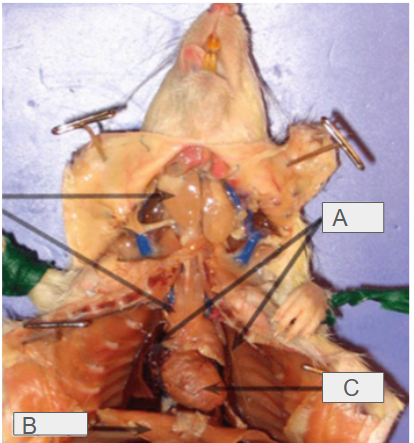
What is A
Lung: Primary organ of respiration

What is B
Diaphragm: Skeletal muscle that changes the volume of the thoracic cavity for respiration. Separates the thoracic and abdominal cavities internally

What is C
Heart: pump blood to lungs and rest of body

What is B
Body of Uterus: Fetus storage and maturation in certain animals (humans for example)

What is C
Horn of Uterus: Fetus storage and maturation in certain animals (rats for example)

What is A
Seminal Vesicles: Secretes the majority of fluid that becomes semen

What is B
Testis: Produce sperm (gametes) and androgens
Kidney
Filter blood and remove wastes