L1: Intro to Cancer Pathogenesis & Principles of Cancer Therapy (furmanski)
 Call Kai
 Learn
 Practice Test
 Spaced Repetition
 Match
 Flashcards
 Knowt Play
1/159

There's no tags or description
Looks like no tags are added yet.
160 Terms
Cancer is a collection of hundreds of diseases characterized by:
1. Abnormal growth control
2. Loss of differentiated tissue properties
3. Cellular immortality
4. Evasion of host defenses
5. Invasion into the surrounding tissues and circulation
6. Metastasis and growth in distant sits
7. Lethality for the hose
Which of the following is the MOST common classification of malignant tumors, accounting for approximately 80% of cancers?
Carcinoma
Which of the following best describes the cellular origin of carcinomas?
Epithelial cells
Which of the following best describes the cellular origin of sarcomas?
Mesenchymal tissues, such as muscle and connective tissue
Which of the following best describes the cellular origin as hematopoietic?
Red blood cells (RBCs)
Which of the following best describes the cellular origin as neuroectodermal?
Neural cells
Which of the following is the MOST common subclassification of carcinomas?
Adenocarcinoma
Which of the following best describes the tissue origin of adenocarcinomas?
Glandular tissue (produces and secretes substances such as hormones, mucus, and milk)
Which of the following carcinomas arises from cells lining passageways?
Squamous cell carcinoma
Which of the following sarcomas originates from fibrous connective tissue that holds tissues together?
Fibrosarcoma
Which of the following sarcomas originates from bone tissue?
Osteosarcoma
Which of the following sarcomas originates from cartilage tissue?
Chondrosarcoma
Which of the following sarcomas originates from muscle tissue?
Rhabdomyosarcoma
What is true regarding the development of cancer?
cancer is a multistep process that usually takes a long time (continue to evolve over time)
cancer is due to an accumulation of particular genetic and epigenetic changes)
cancer develops as changes occur in oncogenes (drivers) and suppressor (inhibitory) genes
What is the process by which cancer develops at the CELLULAR level?
Normal cell → Hyperplasia → Metaplasia → Dysplasia → Anaplasia → Tumor Grade Invasive Carcinoma (I, II, III)
What is the process by which cancer develops at the TISSUE level?
Normal → Carcinoma in-situ → Locally invasive → Local/Regional Metastasis (LN) → Distant Metastasis (Tumor Stage 0, 1, 2, 3, 4, 5)
Cancer is a disease that results from ______ and ______ in cells, that continuously accumulate over a period of time, and that affect an array of oncogenes and tumor suppressor genes that control cell growth and the natural relationships among cells
Genetic and epigenetic changes
What is the origin of the genetic and epigenetic changes involved in the development of cancer?
1. You can be born with those changes (inherited, germline, congenital, nature)
2. They can occur during your life (acquired, somatic, soporadic, nurture)
Which of the following is true regarding the "causes" of cancer?
About 90% of the alterations occur during the course of our lives as a sporadic event, mostly the result of our "environment" (diet, smoking, sunlight, sexually transmitted and other infectious agents, occupation and other exposures to cancer-causing chemical and physical agents)
about 10% of the genetic alternation leading to cnacer are inherited
spontaneous changes during one’s lifetime (errors in DNA replication or epigenetic making)
Which of the following best describes the primary GOAL of cancer therapy?
Significantly increase patient survival, tumor-free interval, and quality of life.
Which of the following best describes the primary OBJECTIVE of cancer therapy?
Eliminate as many local, invaded, and systemic tumor cells as possible while minimizing damage to essential normal cells.
What are the types of cancer treatments available?
surgery (localized) or radiation (regional spread)
chemo prevention (primary and secondary)
medical/pharmaceutical treatments (cytotoxic agents, biologics, hormones, antimetab, immunologics, molecularly targeted agents)
Which of the following chemotherapy agents was discovered to have potential anticancer effects following exposure to mustard gas during World War II?
Nitrogen Mustard
Which of the following observations led to the recognition of nitrogen mustard as a potential treatment for leukemia and lymphoma?
Leukopenia and bone marrow aplasia
Methotrexate is an anti-folate that was synthesized to inhibit ....
DHFR (an enzyme required for production of THF)
Methotrexate was found to be effective in the treatment of ...
Certain leukemias, choriocarcinomas, and other cancers
Which of the following best describes primary chemotherapy with curative intent?
Chemotherapy used as the main treatment with the goal of curing cancer.
Which of the following best describes ADJUVANT chemotherapy?
Chemotherapy administered after primary treatment to eliminate residual cancer cells and reduce recurrence risk.
Which of the following best describes NEOADJUVANT chemotherapy?
Chemotherapy administered before primary treatment to reduce tumor size.
Which of the following best describes CONSOLIDATION chemotherapy?
Chemotherapy administered after initial treatment to eliminate remaining cancer cells and strengthen the treatment response.
Which of the following best describes MAINTENANCE chemotherapy?
Chemotherapy administered over an extended period to maintain remission and prevent disease recurrence.
Which of the following best describes SYMPTOMATIC treatment in cancer patients?
Treatment primarily focused on relieving cancer-related symptoms.
Which of the following best describes PALLIATIVE chemotherapy?
Chemotherapy administered to control advanced cancer, relieve symptoms, and improve quality of life rather than achieve a cure.
Which of the following is the MOST common application of chemotherapy?
Combination therapy in the adjuvant setting
Which of the following best describes ADJUVANT chemotherapy?
Chemotherapy administered after surgery or radiation to eliminate residual and systemic cancer cells.
Which of the following best describes the preferred strategy when selecting drugs for combination chemotherapy?
Use drugs with different mechanisms of action and minimal overlapping toxicities that are effective against the tumor type.
Which of the following best describes the dosing strategy used in combination chemotherapy?
Administer drugs at or near their maximum tolerated doses (MTDs), allowing extended periods between cycles for normal tissue recovery.
What is the primary purpose of using combination chemotherapy with different mechanisms of action and minimal overlapping toxicities?
Enhance efficacy, reduce toxicity, and decrease the probability of developing drug resistance.
Which of the following factors are considered when developing specific combination chemotherapy regimens?
cancer type and tissue of origin
tumor histopathology
drug combos, doses, and treatment regimens
Which of the following best describes why cancer treatments may not always be effective?
There are limitations to effective cancer therapy that can reduce treatment success.
Which of the following factors are considered important tumor determinants that influence the effectiveness of cancer therapy?
growth fraction and tumor doubling time
cell cycle and tumor pharmacogenomics
tumor type and total tumor burden
Which of the following best describes how tumor classification has evolved?
Traditionally, tumors were classified by histopathology and tissue of origin, whereas modern classification also considers genotype and epigenotype.
Which of the following best describes why LARGER tumors are generally more difficult to treat with chemotherapy?
Larger tumors may have higher interstitial pressure, limited drug diffusion, lower growth fractions, and necrotic or hypoxic areas.
Which of the following best describes the relationship between tumor growth fraction and susceptibility to cytotoxic chemotherapy?
Tumors with higher growth fractions are generally more susceptible to cytotoxic agents.
Which of the following best explains how the cell cycle influences chemotherapy effectiveness?
Tumor cells may be cycling or dormant and exist in different cell cycle phases, affecting susceptibility to cell cycle-specific agents.
Which of the following is TRUE regarding tumor determinants and chemotherapy resistance?
Mechanisms of resistance development are important determinants of effective cancer therapy.
Which of the following chemotherapy classes primarily targets the M phase (mitosis) of the cell cycle?
Taxanes and vinca alkaloids
Which of the following chemotherapy agents are primarily active during the S phase of the cell cycle?
Methotrexate and fluorouracil
Which of the following chemotherapy agents primarily targets the G₂ phase of the cell cycle?
Etoposide, Teniposide, Bleomycin
Which of the following are NON-cell cycle specific drugs?
Alkylating drugs, nitrosureas, antitumor antibiotics, procarbazine, cisplatin, dacarbazine
Which of the following are considered HOST determinants that influence the effectiveness of cancer therapy?
Immune status (cancer & treatment related immunosuppression and antitumor defense mechanisms → macrophages, T-cells, NK-cells)
General health status of patients (ability to tolerate drugs and side effects, nutritional status, infections, renal and marrow function)
Host pharmacogenomics and site of tumor and blood supply
What are the major side effects associated with the use of anticancer drugs?
Gastrointestinal toxicity (ulceration, vomiting, diarrhea, and anorexia)
Peripheral neuropathy, alopecia, and impaired wound healing; Hyperuricemia, tumor lysis syndrome, and drug-specific toxicities
Bone marrow suppression (leukopenia, thrombocytopenia, anemia, and immunosuppression)
Heart Failure is a toxicity caused by which anticancer drug?
Doxorubicin
Secondary Cancer is a toxicity caused by which agents?
Alkylating agents
Which of the following are strategies used to mitigate the side effects of chemotherapy?
antinausea and antiemeitc meds
symptom management for sores, alopecia, and neuropathies
hemotopoietic growth factors, liposomal drug encapsulation and other pharmaceutical approaches
Which of the following chemotherapy classes is MOST commonly associated with the development of secondary neoplasms?
Mainly associated with alkylating agents, but also with topoisomerase inhibitors and doxorubicin
Which of the following best describes the proposed mechanisms responsible for secondary neoplasms following chemotherapy?
Mutagenic, carcinogenic, or immunosuppressive effects of chemotherapy drugs
True or False:
Eventually, all tumors will become resistant to a drug treatment, if given the opportunity and time
True
Which of the following best describes the mechanism of multidrug resistance (MDR) mediated by P-glycoprotein (P-gp)?
Acts as an ATP-dependent efflux pump that transports chemotherapy drugs out of cancer cells, reducing intracellular drug concentrations.
Which of the following chemotherapy agents may be affected by P-glycoprotein-mediated multidrug resistance?
vincristine and vinblastine
doxorubicin and actinomycin D
etoposide and paclitaxel (Taxol), mithramycin
Which of the following best describes the Goldilocks Window in cancer chemotherapy?
An optimal dosing range that balances tumor cell cytotoxicity, normal cell toxicity, immune activity, and the risk of resistance and metastasis.
Which of the following best describes the Maximum Tolerated Dose (MTD) approach to chemotherapy?
Administering chemotherapy at the highest tolerable dose to maximize tumor cell cytotoxicity.

Which of the following best describes the risk of metastasis within the Goldilocks Window compared with doses approaching the MTD?
The risk of metastasis is relatively lower within the Goldilocks Window and increases at higher doses approaching the MTD.
What is the primary purpose of using gene expression profiles in cancer treatment?
To assess molecular risk, predict prognosis, and guide treatment decisions
Which of the following best describes the role of gene expression profiling in determining the need for adjuvant chemotherapy?
Gene expression profiles help identify patients who may benefit from adjuvant chemotherapy based on molecular and clinical risk.
Which of the following correctly describes the sequence of tissue development?
Stem cells → Transit-amplifying cells → Highly differentiated cells → Cell death
Which of the following are characteristic properties of cancer stem cells that contribute to tumorigenesis and treatment resistance?
extensive self-renewal capacity
inherent resistance to external hazards
longevity and low growth fraction
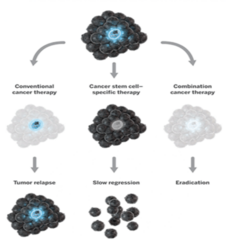
Which of the following best describes the outcome of conventional chemotherapy that eliminates differentiated tumor cells but fails to eliminate cancer stem cells?
Tumor relapse due to cancer stem cell survival and repopulation
Which of the following treatment strategies is MOST effective at achieving tumor eradication?
Combination therapy targeting both cancer stem cells and differentiated tumor cells
Which of the following best describes the traditional reductionist view of tumors?
Tumors are simple collections of cancer cells.

Which of the following best describes the current view of tumors and their microenvironments?
Tumors exist in complex, heterotypic microenvironments consisting of cancer cells, stromal cells, immune cells, and supporting structures.
Which of the following best describes the importance of the tumor microenvironment?
Tumors depend on their surrounding microenvironment and supporting structures for survival; disrupting these structures may prevent tumor survival, ultimately leading to tumor elimination.

Which of the following best describes the role of angiogenesis in tumor growth?
Tumors secrete pro-angiogenic factors that stimulate new blood vessel formation, promoting rapid tumor growth and metastasis.

Which of the following best describes the mechanism of anti-angiogenesis therapy (e.g., Avastin)?
Inhibits VEGF activity to reduce blood vessel formation, cutting off the tumor's blood supply and preventing tumor growth and progression.
Which of the following are some alternative strategies being tested for administering and modulating chemotherapy?
dynamic intermittant therapy
metronomic chemotherapy
microbiome manipulations
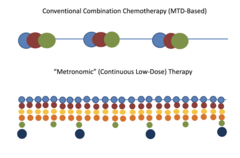
Which of the following best describes the difference between conventional combination chemotherapy and metronomic chemotherapy?
Conventional chemotherapy administers high doses of multiple drugs followed by breaks, while metronomic chemotherapy administers low doses continuously without breaks.

Which of the following best describes the concept of "fitness cost" in dynamic intermittent (adaptive) chemotherapy?
Chemotherapy is administered intermittently, allowing drug-sensitive cells to compete with resistant cells, which suffer a fitness disadvantage in the absence of treatment, thereby helping control tumor growth.

Which of the following best describes the role of the intestinal microbiome in tumor response to chemotherapy and immunotherapy?
The intestinal microbiome modulates tumor response to chemotherapy and immunotherapy; depletion of the microbiome may reduce treatment effectiveness.
Which of the following BEST defines alkylating agents?
Electrophilic molecules that covalently attach alkyl groups to nucleophilic sites on biologically important molecules → most notably DNA, resulting in DNA damage and cytotoxicity
True or False:
Alkylating agents are generally not cell-cycle specific
True
Which of the following are platinum-containing alkylating agents?
Cisplatin, Carboplatin, and Oxaliplatin
Which of the following best describes the mechanism of action (MOA) of platinum compounds?
Bind to the N7 position of guanine, forming primarily intrastrand DNA crosslinks that inhibit DNA replication and transcription, ultimately leading to apoptosis.
Platinum compounds exhibit broad antineoplastic activity against which of the following cancers?
Ovary, testicular, head-and-neck, bladder, esophagus, lung colorectal
Platinum compounds inhibit ...
Replication and transcription

Which of the following platinum chemotherapeutic agents forms intrastrand crosslinks with DNA?
Cisplatin
What are the toxicities associated with the use of platinum compounds?
alopecia
ototoxicity and gastrointestinal tox
nephrotox (dose limiting)
Which of the following are mechanisms of resistance to platinum compounds?
production of altered DHFR w dec affinity for drug
dec transport into cells (Active)
inc amt of DHFR (gene amplification) → tumor cells make much more enzyme
Which platinum compound does NOT show cross-resistant with other platinum comounds?
Oxaliplatin
__________ are analogues of critical cellular metabolites, especially those involved in nucleotide/nucleic acid biosynthesis
Antimetabolites
What is the MOA of antimetabolites?
Interfere with normal nucleic acid metabolic pathways, or are incorporated as analogues into DNA and cause strand breaks or chain termination
Antimetabolites tend to be .....
Cell-cycle specific (although phase of effect varies by agent)
Which of the following chemotherapeutic agents were the FIRST to produce remission in leukemia and a "cure" of a solid tumor?
Antifolates (antimetabolites)

Which of the following best describes the mechanism of action (MOA) of antifolates?
Inhibit dihydrofolate reductase (DHFR), preventing the conversion of FH2 → FH4 and disrupting nucleic acid synthesis.
Folic acid (FH2) is an ....
Essential vitamin required in the diet (spinach)
What is required for the transfer of 1-Carbon (CH3) units during nucleic acid and protein synthesis?
Folic acid (FH2)
Which of the following is an analog (antimetabolite) of dihydrofolate (DHF)?
Methotrexate
What is the MOA of Methotrexate?
Competitive inhibitor of dihydrofolic acid reductase (DHFR)
Methotrexate binds tightly to DHFR, and is referred to as .....
Pseudo-irreversible

True or False:
Methotrexate inhibits all 1-carbon transfer reactions involved in the synthesis of thymidylate (dTMP), purines, glycine and methionine. This results in the inhibition of DNA, RNA, and protein synthesis
True
During which phase of the cell cycle are antifolates primarily active?
S phase