O Chem Test 2
 Call Kai
 Learn
 Practice Test
 Spaced Repetition
 Match
 Flashcards
 Knowt Play
1/60

There's no tags or description
Looks like no tags are added yet.
61 Terms
chirality
describes molecules without a line of symmetry (left and right hand)

Enantiomers
molecules that are not identical to their mirror images. Usually have chirality centers. Always come in a pair of two molecules. Mirror images of chiral molecules
A few examples of molecules that cannot show chirality
CH2, CH3, C double bonded to C, and C triple bonded to C
Achiral molecules
Have a plane of symmetry
Chirality Centers
The point in a molecule where 4 different atoms or groups attach to one carbon.
Formula to find number of stereoisomers using # of chirality centers
2x (where x = # of chirality centers in molecule)
Specific rotation formula

dextrorotory molecules
rotate light clockwise (+) (right)
levorotatory molecules
rotates light counter clockwise (-) (left)
Racemic mixture
1:1 mixture of enantiomers, unable to rotate the plane-polarized light (due to cancelling specific rotations. One molecule is dectrorotatory, while the other is equally levorotatory)
Nomenclature of chiral molecules
rank atoms 1-4 that connect to chirality center. Largest atomic # = highest ranking
If two atoms have the same atomic number, look at the second atom(s), then the third, and so on.
Multiple bonded atoms are equivalent to the same number of single bonded atoms (1 double bond = 2 single bonds)
R configuration
(when highest ranking is pointing away) Clockwise (right)
S configuration
(When highest ranking is pointing away) counter-clockwise. Left
Diastereomers
Require at least 2 chirality centers. First, find R and S of the chiral carbons, then compare to the other molecule. If they differ from each other (except when they are totally opposites), they’re diastereomers. For example, if the first molecule is RSR, and the second is SSS, they’d be steroisomers because they differ in 2 chiral centers

Meso compound
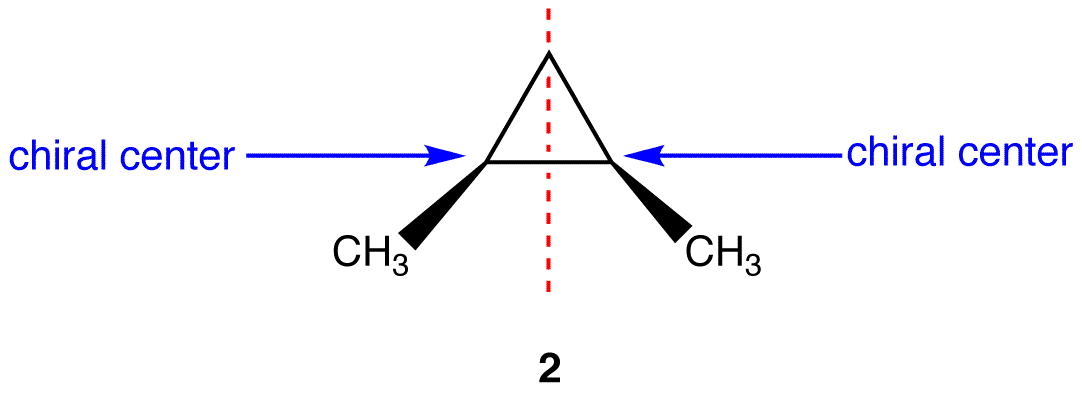
An archiral compound (has a plane of symmetry) with chirality centers. Always will have that plane of symmetry.
Resolution
the process of seperaing enantiomers. Normally done by adding a chiral resolving agent which can react reversibly to make two diastereomers. The distereomers then can be seperated by recrystallization.
Addition reactions
2 molecules combine; no atoms are left over.

Elimination Reactions
One molecule splits into 2 products. Often involves the formation of a small molecule such as water or HBr

substitution reactions
parts from two molecules exchange. Most common organic reaction

Rearrangement reaction
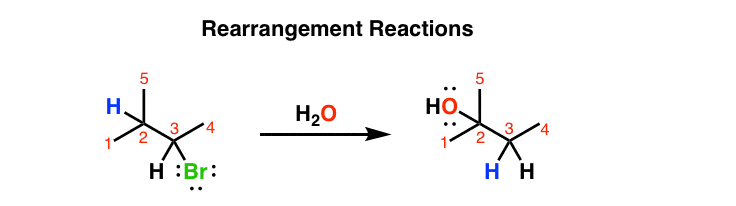
A molecule undergoes changes in the way its atoms are connected. Just one molecule changing.
Symetrical bond breaking
HOMOLYTIC. Each product gets an electron. Half arrows are used.
Unsymmetrical bond breaking
HETEROLYTIC. One product gets both electrons. Full arrow is used.
Symmetrical bond forming
one electron comes from each reactant. Half arrow is used.
Unsymmetrical bond forming
both electrons come from one reactant. This is usually seen with ions. Full arrow is used.
Carbon in functional groups
Usually positively charged. Only exception is when it’s bonded to metals. Otherwise, C will be an electrophile.
Carbonyl vs alkene stability
Carbonyl groups (C = O) are much more stable than alkenes (C = C)
Polarizability
the tendency for atoms to undergo polarization. Larger atoms are typically more polarizable.
Charge density
Atoms can have more or less space to distribute their charge. Larger atoms have way more space to spread it out, leading to a lower density.
Nucleophile
Loves nucleus (which is positively charged). These species are either negatively chargerd or have excess electrons. Technically a lewis base, since it donated LP electrons. If no negative charge, look for LP electrons or pi bonds)
Eletrophile
loves electrons. These species are electron-poor, and may have open orbitals. Technically a lewis acid, since it accepts LP electrons. Look for empty orbitals and metals.
Radical reactions
Highly reactive because it contains a species with an odd number of electrons (usually 7) in its valence shell. No charge on radicals.
Chlorination of Alkane (Methane) reaction steps
Initiation: Cl2 splits, creating two Cl radicals
Propagation: One radical generates many more radicals in a self-sustaining cycle.
Termination: Combination of two radicals to form a stable product. May lead to a very low % of unused product.

Keq>1
more material present as products
Keq<1
more material present as reactants
Keq formula

Gibbs Free energy
the max amount of work that may be performed by a thermodynamic close system at constant temperature and pressure
If Keq>1 ____
gibbs free energy < 0. Energy is released to the surroundings (exothermic) Forward reaction is favored
If Keq<1, ____
Gibbs free energy > 0. Energy is absorbed from surroundings (endergonic). Reverse reaction is favored
Bond dissociation energy
Amount of energy needed to break a bond in gas phase to produce 2 radicals
Transition state
absolute highest point (peaks) on an energy diagram
Activation energy Ea
Energy needed to go from reactants to transition state
High Ea favors fast or slow reaction?
slowwwww
Small Ea favors fast or slow reaction?
faster reaction
How much energy is needed to react two radicals together
0
negative delta G°
energy is RELEASED
positive delta G°
energy is ABSORBED
saturated compound
single bonds and no rings. Just C and H
Degree of unsaturation (DU)
Summer number of multiple bonds or rings (triple bond gives 2 DU)

Example of how to use alkane formula (CnH2n+2) to find DU
ex) you have C4H6. Compared to C4H10, theres 4 deficient Hydrogens. Divide by 2, to get a DU of 2.
DU of halogens
halogens substitute one hydrogen. They act just like a hydrogen. Add halogens and hydrogens, and compare to alkane formula to find DU.
DU of oxygen/sulfur
Totally ignore them. Cross them out. After they’re gone, use the alkane formula to find DU.
DU of nitrogen
subtract H by amount of N. ex) C5H9N —> C5H8. Then use alkane formula to find that this has a DU of 2.
Naming alkenes
find longest parent chain that contains double bond
number the C in the chain, giving the double bond the lowest number (if there is a substitution, still prioritize the double bond, but if the double bond is in the middle, give any substituent a lower number)
Write full name. Arrange alphabetically. Indicate double bond position by writing the number of the first carbon atom of the double bond and place that number in front of the parent name. Rings have cyclo. (ex. 1,5-dimethylcyclopentene. 2-ethyl-1-pentene)
Cis-trans isomerism in alkenes
must have that double bond, and cannot have two of the same atom or molecule on the same side.
What to do in tri or tetra substituted alkenes?
Compare the top and bottom of each side. (Higher vs lower) From there, you can figure out if they are lined up or not. (Cis or trans)
Zame zide Z
If the starting alkene is unsymmetrical…
The reaction prefers to go towards the higher carbon (the one with more hydrogens). Hydrogen connects to the lower carbon, halogen gets the higher one.
Regioselectivity
“selective region” The preference of forming/breaking bonds in only one direction over any other direction
Markovnikov’s orientation
halogen attached to the higher carbon, hydrogen attaches to the lower one.
more hydrogens connected to a carbocation results in more or less stability?
less. The carbocation prefers to be tertiary if possible.
Carbocation rearrangements
if a carbocation has an immediate neighbor with a higher carbon, rearrangement will happen. The carbocation will move to the 3° carbon over a 2° carbon. This results in more stability.