AP Art History: Medieval, Global, and Decorative Arts Matrix
 Call Kai
 Learn
 Practice Test
 Spaced Repetition
 Match
 Flashcards
 Knowt Play
1/25

Earn XP
Description and Tags
Vocabulary flashcards covering the historical context, artistic styles, technical terms, and visual programs of the Early Medieval, Romanesque, Gothic, African, and Kamakura artworks featured in the AP Art History study guide.
26 Terms
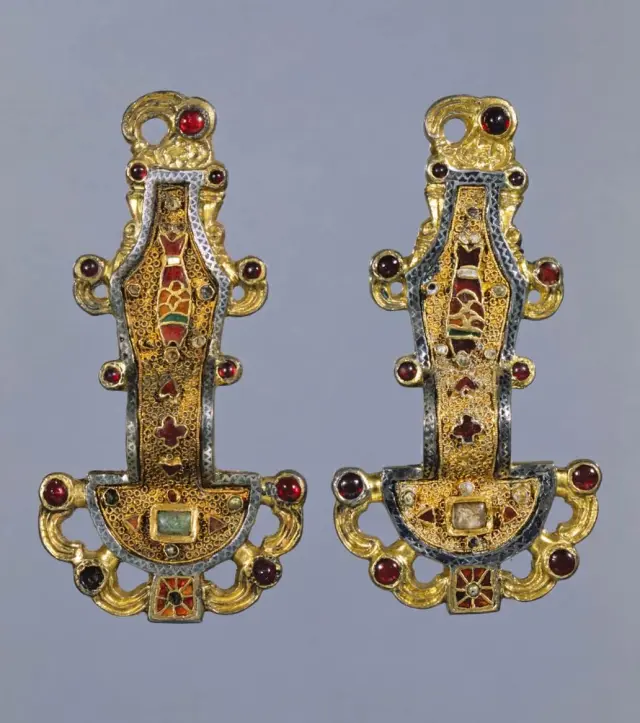
Merovingian Looped Fibulae
silver gilt garment brooches from early medieval Frankish Europe, crafted using filigree, chasing, and cloisonné garnet inlays with stylized eagle and fish motifs.

Cloisonné
A metalworking technique featuring soldered wire cells filled with stones or colored inlays, utilized on elite items like the Merovingian Looped Fibulae.

Filigree
Fine, delicate wirework ornamentation applied to metal surfaces, prominently featured on Migration Period luxury goods such as the Merovingian Looped Fibulae.
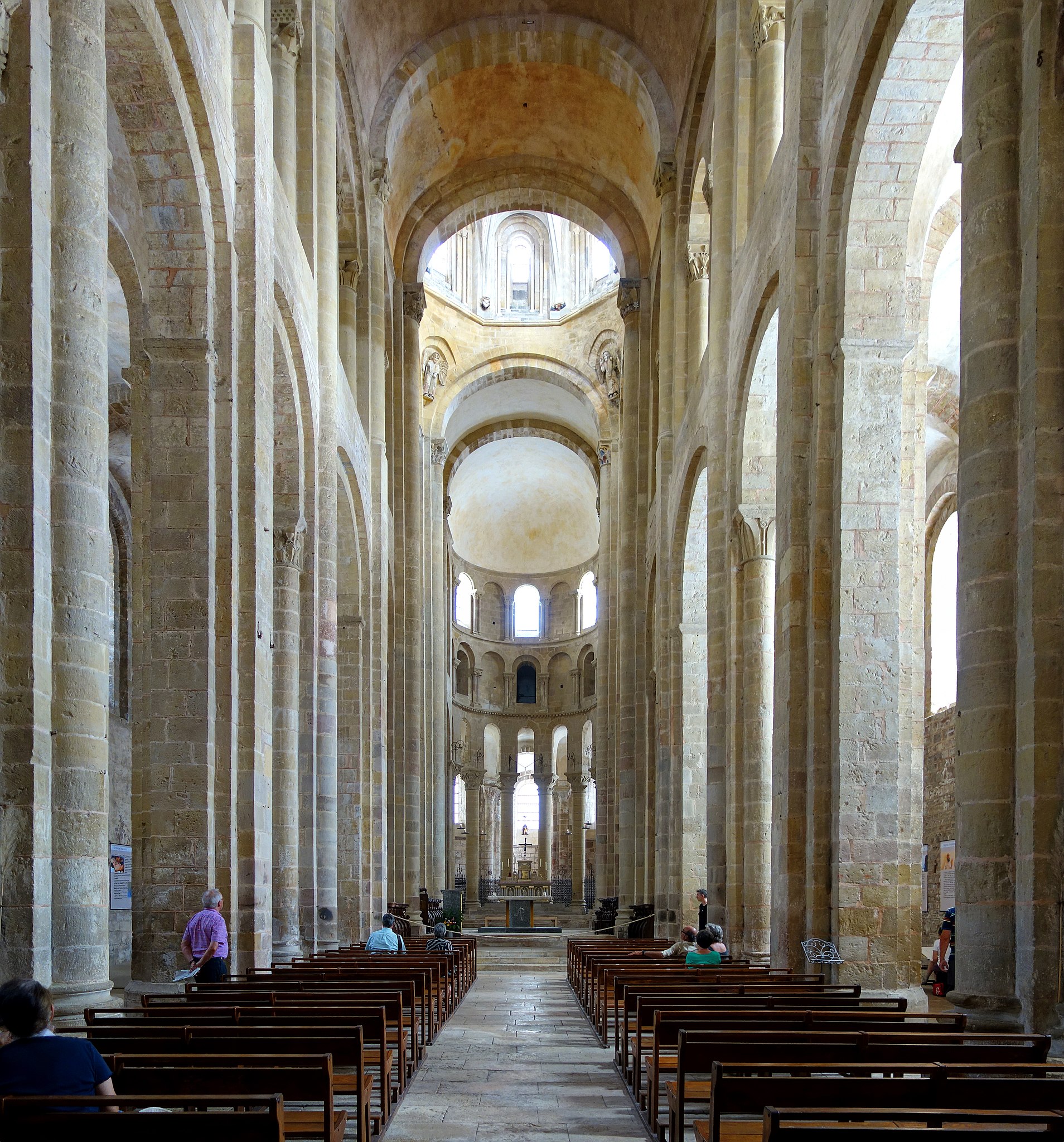
Church of Sainte-Foy
A Romanesque pilgrimage church in Conques, France (c. 1050–1130 C.E.), built with a cruciform plan, barrel-vaulted naves, thick masonry, and an ambulatory around the apse to manage pilgrim traffic.

Reliquary of Saint Foy
A 9th-century C.E. enthroned wooden statuette covered in gold, silver, gemstones, and enamel, featuring a repurposed Roman parade helmet and holding the skull of a young Christian martyr.

Tympanum of Sainte-Foy
A Romanesque stone portal relief in Conques depicting the Last Judgment, organized into a structured Heaven on Christ's right and a chaotic, terrifying Hell on His left.
Lindisfarne Gospels
An Insular illuminated manuscript created c. 700 C.E. in Hiberno-Saxon Europe using ink, pigments, and gold on vellum, blending Celtic and Anglo-Saxon metalwork motifs with Mediterranean Christian iconography.
Eadfrith
The monastic scribe and artist of Lindisfarne who wrote and illuminated the Lindisfarne Gospels.
Cross-Carpet Page
A full manuscript folio in the Lindisfarne Gospels exhibiting horror-vacui geometric patterning, balancing an orderly central Christian cross against a sea of ribbon-like animal interlace.
Incipit Page
An illuminated opening folio of a Gospel text containing monumental, highly stylized letters, such as the opening words 'Quoniam quidem…' in the Lindisfarne Gospels.

Chartres Cathedral
A French Gothic cathedral reconstructed c. 1194–1220 C.E. using pointed arches, ribbed groin vaults, and flying buttresses, engineered to accommodate soaring stained-glass clerestories.

Lux Nova
The Latin term meaning 'new light,' referring to the mystical illumination created inside Gothic churches by expansive stained glass, particularly the deep blue glass at Chartres Cathedral.

Royal Portal
The Early Gothic entryway of Chartres Cathedral (c. 1145–1155 C.E.) lined with stylized, elongated jamb statues of Old Testament kings and queens.

Notre Dame de la Belle Verrière
A High Gothic stained-glass window inside Chartres Cathedral that depicts an enthroned Virgin Mary holding the Christ child as Queen of Heaven.

Bayeux Tapestry
A continuous Romanesque embroidered linen narrative measuring over 230 feet long (c. 1066–1080 C.E.), created by Anglo-Saxon needleworkers to chronicle the events leading to the Norman Conquest.
Bishop Odo
The half-brother of William the Conqueror who commissioned the Bayeux Tapestry to legitimize the Norman conquest of England and decorate the nave of Bayeux Cathedral.
Bibles Moralisées
Lavish, illustrated Gothic manuscripts commissioned for royal figures, characterized by architectural trefoil frames and roundels that pair scriptural passages with moral and political allegories.
Dedication Page with Blanche of Castile and King Louis IX
An illuminated vellum folio (c. 1225–1245 C.E.) from a French moralized Bible depicting Queen Regent Blanche instructing the young King Louis IX, above a cleric directing an urban professional scribe.
Röttgen Pietà
A German Gothic polychromed wood sculpture (c. 1300–1325 C.E.) featuring exaggerated heads and grape-cluster blood wounds, portraying the Virgin Mary mourning the corpse of Jesus.
Andachtsbild
A German late medieval devotional image designed for personal, contemplative prayer, created to trigger a visceral emotional reaction and empathetic sorrow from the viewer.
Reliquary Figure (Byeri)
A carved wooden guardian figure with a dark palm oil patina, created by the Fang peoples of southern Cameroon to guard bark reliquary boxes holding ancestral skulls and bones.
Golden Haggadah
A late medieval luxury illuminated manuscript from Spain (c. 1320 C.E.) featuring Passover texts alongside French Gothic courtly figural scenes of the Plagues, Liberation, and preparations.
Convivencia
The historical period of cultural coexistence in medieval Spain during which Jewish, Christian, and Muslim communities shared artistic, literary, and intellectual styles.
Night Attack on the Sanjō Palace
A Kamakura-period Japanese handscroll (c. 1250–1300 C.E.) depicting the 1159 Heiji Rebellion through right-to-left continuous narrative, bird's-eye views, and dynamic fiery brushwork.
Fukinuki Yatai
The 'blown-off roof' architectural perspective convention in Japanese emaki handscrolls that allows viewers to look inside building interiors from an elevated bird's-eye angle.
Otoko-e
The 'men's style' tradition of Japanese narrative painting characterized by dynamic brushwork, sharp diagonal compositions, and fast-paced historical or military themes celebrating the samurai class.