AST101
 Call Kai
 Learn
Learn Practice Test
 Spaced Repetition
 Match
Match Flashcards
 Knowt Play
1/73

There's no tags or description
Looks like no tags are added yet.
Name | Mastery | Learn | Test | Matching | Spaced | Call with Kai | Chat |
|---|
No analytics yet
Send a link to your students to track their progress
74 Terms
Scale of the solar system

100 billion stars
roughly in the milky way
Light year
Distance light travels in a year 9.461 trillion km
300,000km/s
The farther away you look, the farther back in time you look
Light takes time to travel
can look at the past far away but cant see present
can look at present on earth but not the past
There are 1 trillion galaxies visible from Earth!
Can’t see any more because its too far (beginning of universe)
1 trillion galaxies each with roughly 100 billion stars
The cosmic web
Galaxy clusters and webs
The universe
Further we look, further back in time
Universe is expanding and cooling, expand faster further away
Universe is now transparent, but it wasnt 13.7 billion years ago

Primodial plasma
Hot, dense gas, glowing
Doppler shifted to microwaves now
Cant see further past
Universe HAS a beginning

Science is an epistemological system
Objectively describes and predicts the behviour of the universe
Is testable
Orbit Summary
All orbit in the same plane (Ecliptic Plane)
All orbit the same direction, sun rotates in the same direction too
All have elliptical orbits.
Closer the planet is to the sun, the faster it orbits
All = including dwarf planets
Mercury
Closest to sun
No atmosphere
Highly cratered surface
Rocky exterior with iron core
Temp = -170C to 425C (day/night) HOTTTTTTT
No moons
Two probes
Mariner 10
Messenger
Venus
About same size as earth
Lots of volcanoes
THICK CO2 atmosphere
Runaway greenhouse effect due to this
Always 460C everywhere
It rains acid
No moons
Rotates very slowly and backwards
Many probes and landers
Earth (tilt?)
About the same size as venus
Lots of volcanoes
O2 + N2 atmosphere
Large oceans regulate CO2
Surface heavily affected by life
Large moon
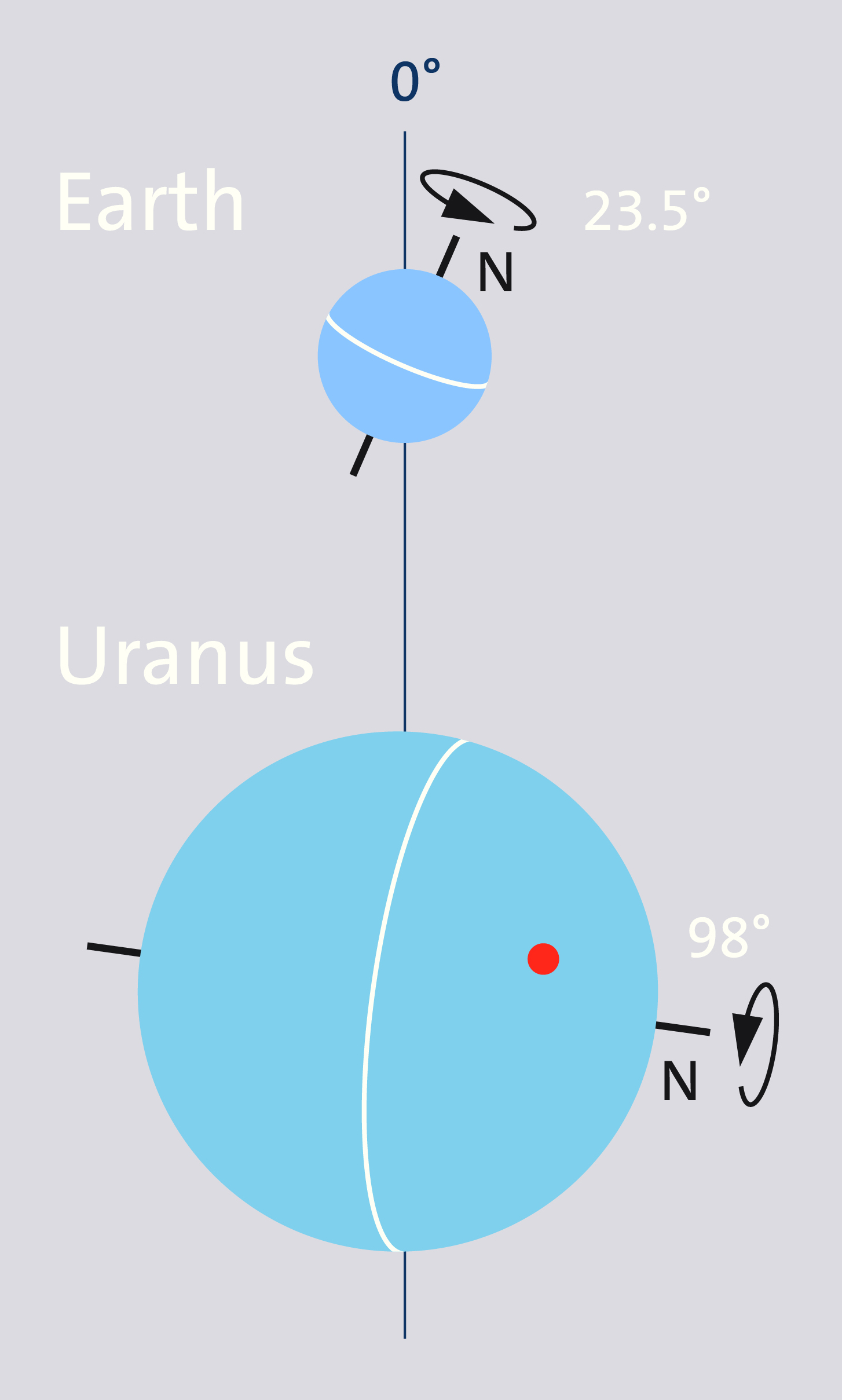
23.4 degree rotational tilt producing significant seasons
Mars
Extinct volcanoes
Very thin CO2 atmosphere
Oceans have evaporated
No life
Two tiny moons
Polar ice/dry-ice (frozen CO2)
25.2 degree orbital tilt produces significant seasons
Terrestrial planets summary
Small
Rocky
Relatively thin or no atmosphere
Few moons
Made from heavy elements
Jupiter
Largest planet
Thick gaseous atmosphere surrounds a giant ball of liquid hydrogen
Very faint rings
Many moons: more than 60 known to date
Several probes have visited
Saturn
Second largest planet
Structure is much like jupiter
Giant rings
Many moons: more than 60 known to date
Several probes
Uranus
Coldest planet
Small rocky core (we think)
Thick water + ammonia + methane mantle
H2/helium atmosphere
Rotation axis is tilted 98 degrees
Thin rings and lots of moons
Neptune
Furthest planet from the sun
Very similar to uranus
Rotation axis 28 degrees
More surface features
Strongest winds in the solar system: up to 2100km/h
Jovian planets overview
Large
Gas + liquid
Many moons
Mostly light elements
Earth’s moon
Rocky
No atmosphere
Cratered
No geological activity
Looks similar to mercury
Orbit plane is tipped a bit to the eliptical plane
Jupiter’s moons
Io, Europa, Ganymede, Callisto (over 1000km diameter)
over 60 known
High ice content
Io is the most geologically active in the solar system (volcanoooooooes)
Orbit plane is close to elliptical plane
Saturn's moons
over 60 known
5 are over 1000km
High ice content
Orbit in the same plane and direction as the rings
Uranus’ Moons
over 60 known
4 over 1000km
High ice content
Orbit in same plane as uranus’ rotation -97 degrees
Neptune’s moons
14 known
Only 1 over 1000km – triton
Orbit not the same plane or direction as neptune’s rotation
Surface is frozen nitrogen
Dwarf planets
9 identified, but may be hundreds
Very dim, hard to see
Only pluto and ceres have been visited by probes
Pluto has very high ice content (lots of frozen nitrogen)
Asteroid belt
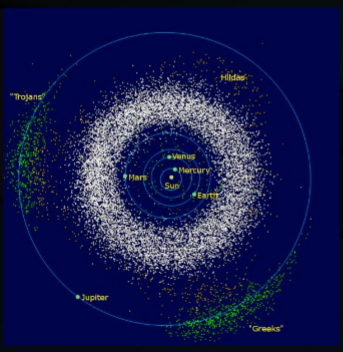
Around a million asteroids larger than 1km diameter
Total mass is around 3% of the moons
Some asteroids have been visited by probes
Between mars and jupiter
Some between jupiter, some after jupiter
25143 Itokawa
One of millions of smaller asteroids
330m length
Visited by the Hayabusa space probe (Japan) in 2005
Samples returned to earth for study.
Kuiper belt
Past neptune’s orbit
Vast collection of small icy bodies
Include several dwarf planets
Total mass around the earth’s moon
Two objects visited by New Horizons Probe

Arrokoth
Kuiper Belt object visited by the New Horizons probe in 2019
36 × 20 × 10 km in size
6 light-hours from Earth
Comets
Icy bodies from outer solar system
Highly elliptical orbits
Emit tails when they get close to the sun

Voyager Probes
In 1977, alignment of planets was just right to visit all 4 jovian planets
used each planet’s gravity to accelerate and change direction to next planet (slingshot)
two launched — voyager 1 & 2
still operating, furthest man made object, 20 light-hours from earth
Heading directions
e.g. W34N
or 304 degrees

Seasons summer vs winter
Summer:
Daylight is longer and darkness is shorter
Sun gets “higher” in the sky, so sunlight is more direct
So Hotter!
.
Winter:
Daylight is shorter and darkness is longer
Sun does not get as “high” in the sky, so sunlight is at an angle
So Colder!

Seasons — cont.
Summer
june 21
sun reaches 70 degrees above horizon
15 hour 26 mins of daylight
.
winter
december 21
sun reaches 23 degrees above horizon
8 hour 55 min of sunlight
December solstice
Northern hemisphere (winter solstice)
tilted furthest away from the sun
shortest day/longest night
.
Southern hemisphere (summer solstice)
tilted furthest towards the sun
longest day/shortest night
June solstice
Northern hemisphere (summer solstice)
tilted furthest toward the sun
ongest day/shortest night
.
Southern hemisphere (winter solstice)
tilted furthest away from the sun
shortest day/longest nightl

The poles in the June and Dec solstice
Artic circle
constant daylight in June solstice
constant nighttime in Dec solstice
.
South pole
constant daylight in Dec solstice
constant nighttime in June solstice
Spring and fall equinox
Sun shines equally on both hemispheres, vertical sun at equator
.
Spring equinox
sun setting in south pole
sun rising in north pole
.
fall equinox
sun setting in north pole
sun rising in south pole
The angle light hits a surface matters!
Not hotter because closer to the sun in summer!
Because:
Light at a steep angle is concentrated — brighter, hotter
Light at shallow angle is spread out — dimmer, colder
(also longer day — more time to heat up)

Constellations
Looking at the sky, one can see patterns in the stars
We can imagine lines between them
Diff places diff constellations
Astrology
Western popular astrology claims to be able to determine personality based on stars and planets at time of birth
did double blind study
no correlation found
“confirmation bias”
Moon phases and eclipses
Sun illuminates one side of the moon
The other side is in shadow
The phase we see depends on where the moon is compared to the sun
Phase repeat each time the moon orbits the earth once
Always see same face of the moon
.
Lunar eclipse happens when the moon enters the earth's shadow, NOT the cause of phases
Solar eclipse happens when the moon blocks the sun
Moon orbiting in the ecliptic
The moons orbit is tipped up by 5 degrees, stays constant
passes below earth’s shadow
passes above sun
until it hits the NODE
middle of orbit intersects ecliptic plane — crosses the ecliptic
if lines up with earth and the sun = eclipse
twice a year hit the node
Moon phases — new moon
Moon is lined up with the sun — Earth, moon, sun
Tipped = no eclipse
Far side of the moon (never see) is lit up — Unlit side faces the earth
The only time a solar eclipse can happen
Transits (is highest in the sky) when the sun does
Rises the same time as the sun rises and sets the same time as the sun sets
Not generally visible
Moon phases — waxing(growing) crescent
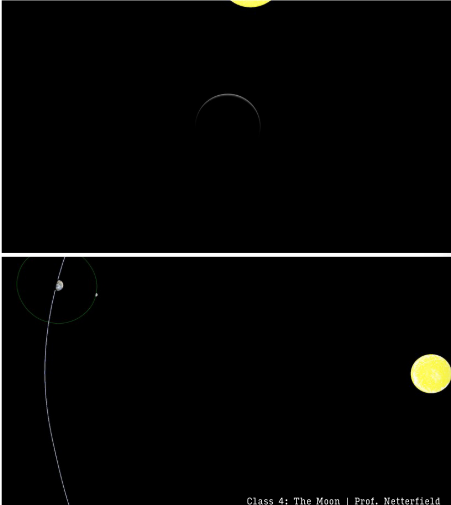
3-4 days after new moon
Transit (highest in the sky) 3 hours after the sun
rises 3 hours after sun, sets 3 hours after sun
Most of the time its in the daytime, but can see it in the night
Easiest to see right after sunset
(*depends on daylight saving time (rises and sets (daylight length)/2 before and after transit, 3 hours only true around the equinox)
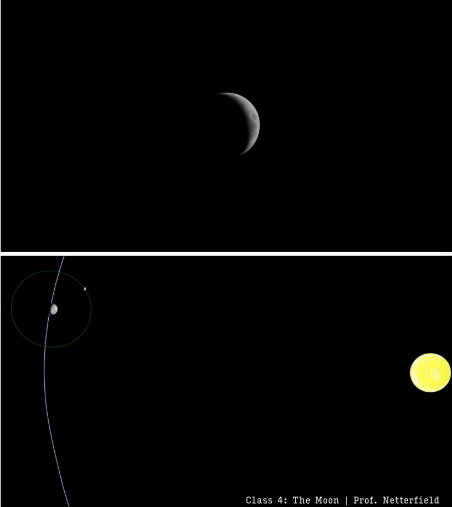
1st quarter moon
1 week after the new moon
Moon is lit from the side
Transits 6 hours after the sun
Rise around 6 hours after the sun, set around 6 hours after the sun
Noon till midnight
Easiest to see at night before midnight

Waxing gibbous
10-11 days after the new moon
Transits 9 hours after sun does
Rise 9 hours after sun
Sets 9 hours after sun
Easiest to see at night - may set before sunrise
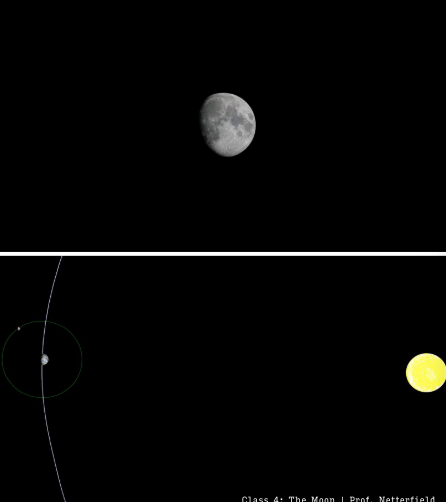
Full moon
Two weeks after the new moon
Only time a lunar eclipse can happen
Transits 12 hours after the sun does
Rises around 12 hours after the sun rises (so – near sunset)
Sets around 12 hours after the sun sets (so – near sunrise)
Visible most of the night

Waning (decreasing) gibbous
10-11 days before the next new moon
Transits around 9 hours before the sun does
Rises around 3 hours* after the sun sets
Sets around 3 hours* after the sun rises
Rises before midnight, and is up the rest of the night and morning
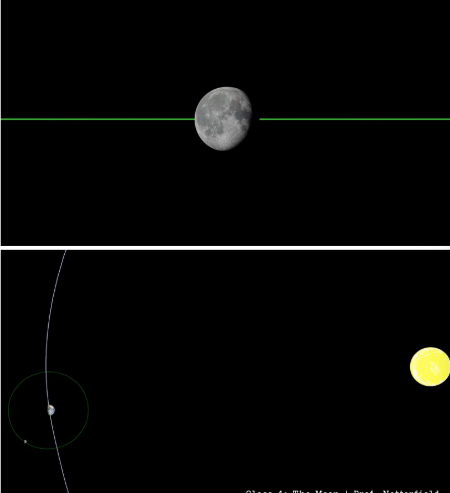
3rd Quarter
~ week before next new moon
transits 6 hours before sun transits
rise 6 hour before sun rises, sets 6 hours before sun sets
rises around midnight, up for rest of night and morning

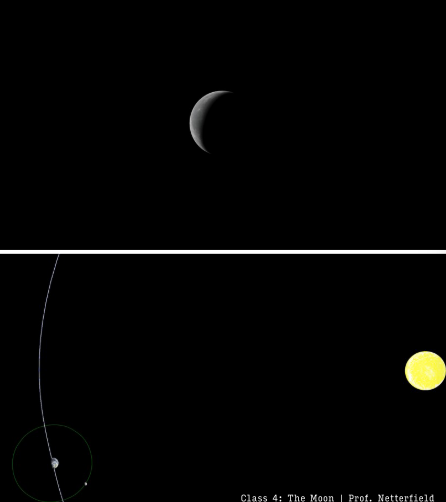
Waning crescent
2-4 days before new moon
transits 3 hours before sun transits
rise 3 hours before sun, sets 3 hours before sun
easiest to see before sunrise
Solar eclipse
When the moon blocks light from the sun
Happens when new moon crosses ecliptic plane while in front of the sun
Because moons orbit is tipped relative to the ecliptic plane, happens rarely (every few years, somewhere on earth)
Only casts a shadow on a small part of earth

How does solar eclipse work?
Apparent size of the moon is the same as the size of the sun (Sun is about 400 times wider than Moon, but about 400 times farther away from Earth)
North and south, angle of seeing the moon changes, see partial eclipse
Inside umbra – eclipse
Outside – partial

Annular eclipse
Type of solar eclipse where Moon passes directly in front of the Sun but appears too small to completely cover it
due to slight changes in orbit
Lunar Eclipse
when moon enters the Earth’s shadow
happens when full moon crosses ecliptic plane
can be seen from anywhere on earth
more common than solar eclipse (earth is larger than moon, larger shadow)
“red” due to light interacting with atmosphere
Problems with my model/simulation:
not to scale
tilt of lunar orbit is dramaticized
moon’s rotation axis should be tipped
orbits should be ellipses, not circles
positions of everything is affected by everything else in the solar system
orbits should not be centred on sun and earth
speeds should change depending on distance
orbital plane of moon should precess around every 18.6 years

Astronomy before copernicus — observations
Sun, moon and stars rise and set every day
Earth feels fixed
Stars don't seem to change
Move across the sky over the year, but constellations never change
Things fall to earth
Astronomy before copernicus — assumptions
Came from ancient greeks
The “heavens” are perfect and incorruptible
Circles are perfect – heavens are perfect
Astronomy before copernicus — conclusions
The earth is the center of the universe
Up there is all the other stuff
Everything revolves in circles around the earth
Perfect things must go in circles
The Geocentric Universe
Earth is centre of universe
All celestial objects revolve around the earth
Matter of perspective

Problems — Retrograde Motion
Planets move from night to night relative to the stars
Dont follow uniform pattern relative to the stars
Appear to turn around relative to the stars
Called retrograde motion
Cycles and epicycles
Perfect circles dont work with retrograde motion
Conclusion: planets move in circles within circles
Retrograde is consistent with a circles within circles pattern
Copernicus
1473–1543
Catholic canon/scholar
Diplomat, Economist, Translator
A different idea
The sun is the center of the universe
The planets go around the sun
Moon orbits the earth

Apparent Retrograde Motion
Earth orbits faster than Mars
As earth passes mars, the position of mars compared to background stars change
Explains the motions of planets on the sky

Tycho Brahe 1546 - 1601
Danish nobleman, Had his own island as an observatory, Was exiled over politics
.
Made extremely precise accurate measurements of the motion of mars
Observed super nova (a star suddenly appearing in the sky, then disappearing)
Heavens incorruptible?
Used parallax to constrain distances
From his data, current models clearly had problems – copernicus’s model and geocentric model doesnt work
Johannes Kepler 1571 - 1630
worked from Brahe’s data
concerned with inaccuracy of current models for theological reasons
Discovered a fix
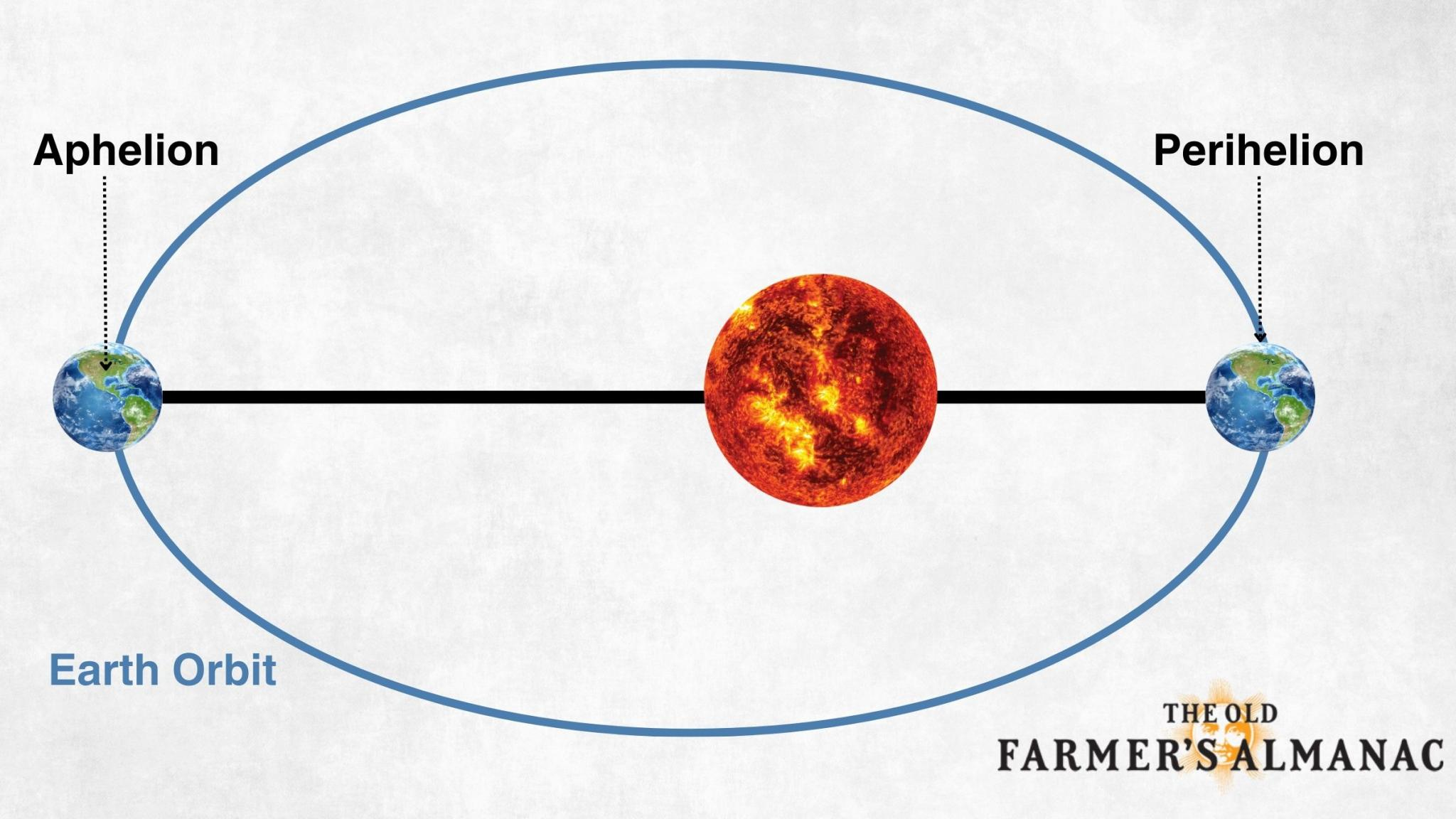
Kepler’s First Law
The orbit of each planet about the Sun is an ellipse with the Sun at one focus
Eccentricity: distance between 2 focuses
E = 0, circle

Kepler’s Second Law
A planet moves faster in the part of its orbit nearer the Sun and slower when farther from the Sun, sweeping out equal areas in equal times
Kepler’s Third Law
More distant planets orbit the Sun at slower average speeds, obeying a precise mathematical relationship

Galileo Galilei 1564 - 1642
Pioneer in telescopes
Experimented with laws of motion and gravity
Using telescopes he observed:
Moons has craters
Jupiter has moons
Venus has phases
Galileo’s observations of the moon
Has mountains and craters
So:
not everything in heavens are perfect circles and spheres
maybe elliptical orbits are fine
Jovian Moons
Galileo observed 4 moons orbiting Jupiter
So:
not everything orbits earth!
Phases of Venus
Through his telescope, Galileo observed that Venus has phases
apparent size of venus changes throughout the year
“new” phase happens when venus appears largest
“full” phase happens when venus is in line with the sun (and smallest)
.
So:
venus not orbiting earth
has to be orbiting the sun!