EPSY 2130 - Exam 1 UGA Pritchett-Neuharth
 Call Kai
 Learn
Learn Practice Test
 Spaced Repetition
 Match
Match Flashcards
 Knowt Play
1/82

There's no tags or description
Looks like no tags are added yet.
Name | Mastery | Learn | Test | Matching | Spaced | Call with Kai | Chat |
|---|
No analytics yet
Send a link to your students to track their progress
83 Terms
Purpose of Educational Psychology
to create theories that can be implemented on a larger scale in classrooms around the world
Teacher Efficacy
teacher's belief that they can reach even the most difficult students; teacher confidence can predict student achievement
Quantitative Research
objective/uses numbers; explores relationships among variables or differences between groups based on measurements and computations
Qualitative Research
subjective; explores specific people of situations in depth; tells a story; ex: interviews and observations
Correlation Studies
explores the relationship between two variables; ranges from 1 to -1; correlation does NOT EQUAL causation
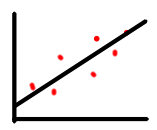
Positive Correlation
indicates that the variables increase and decrease together
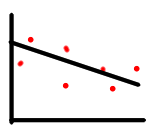
Negative Correlation
indicates that as one variable increases, the other variable decreases
Experimental Study
experiments can conclude causation; random assignment; quasi-experimental studies are when participants are not randomly assigned (i.e. classes/schools)
Single-Subject Experiments
examines the impact of an intervention; tracks behavior before intervention, experimenter adds the intervention and tracks behavior, takes away intervention again, adds it back again
Physical Development
changes in the body; maturation
Personal Development
changes in an individual's personality
Social Development
changes in the way an individual relates to others
Cognitive Development
changes in thinking
Plasticity
the brain's ability to adapt
Lateralization
specialization of the two sides/hemispheres of the brain; left brain=language acquisition/logic; right brain= visual spatial/movements
Jean Piaget's Theory of Cognitive Development
his theory is based on the fact that children have cognitive abilities and mature in identifiable stages; the standard against which all other theories are judged; 4 factors that influence changes are: biological maturation, activity, social experiences, equilibration
Adaptation
adjusting to the environment
Assimiliation
incorporating information into existing schemes; i.e. child sees a raccoon and believes that it's a cat
Accomodation
changing/expanding schemes when new information is added
Sensorimotor Stage
about 0-2 yrs; children explore the world using their senses; object permanence/goal directed actions
Pre-operational Stage
about 2-7 yrs; impressive cognitive acquisitions and equally impressive limitations; symbolic representation- use of one object to stand for another (banana=phone); egocentrism/centration
Concrete Operational
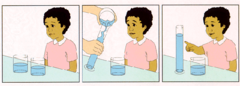
about 7-11 yrs; children able to solve concrete problems; can successfully demonstrate: conservation, reversibility, classification, seriation; cannot use hypothetical thinking
Formal Operational
adolescence to adulthood; cognitive development culminates in the ability to think abstractly/hypothetically; according to Piaget, not everyone reaches the formal operational stage

Equilibration
act of searching for balance; when disequilibrium occurs we are uncomfortable and we must search for a solution through adaptation
Schemes
organized systems of actions or thoughts that allow us to mentally represent or think about objects and events; i.e. there is a scheme on how to answer the phone (specific) or how to go to a party (general)
Object Permanence
"out of sight, out of mind"; characteristic of the sensorimotor stage

Egocentrism
tendency to perceive the world solely from one's own point of view; characteristic of the preoperational stage

Centration
tendency to focus on a single, perceptually striking feature of an object or event; characteristic of the preoperational stage
Conservation Concept
idea that merely changing the appearance of an object does not change their key properties; children in preoperational stage do not have this ability

Seriation
making orderly arrangements based on size

Vygotsky's Theory
sociocultural perspective; social interactions create our cognitive structures and thinking processes; ability to think through problems is first co-constructed by a parent or teacher and then internalized by the child to become part of their cognitive development

Zone of Proximal Development
area where a child cannot solve a problem alone but can solve it with help; "magic middle"

Scaffolding
role of the parent or teacher; helping the child in the zone of proximal development
Mirror Systems
brain rehearses the action it sees another person perform; observing and visualizing support learning
General Knowledge
applies to many different situations; to have knowledge of something is to remember it over time and be able to find it when you need it
Domain-specific Knowledge
pertains to a particular task of subject; learning requires both general and domain-specific knowledge
Sensory Memory
initial processing that transforms incoming stimuli into information; only holds information for a brief period of time (i.e. after image); very large capacity
Sensations
everything that comes directly into our senses; sight, smell, taste; more objective
Perception
how we interpret the incoming stimuli; subjective
Working Memory
system responsible for holding/processing information; limited capacity (5-9 items); central executive- supervises attention; phonological loop- holds verbal and sound information; visuospatial sketchpad- holds visual and spatial information; episodic buffer- integrates information from the other mechanisms and creates complex memories
Gestalt Principle
people have a tendency to organize sensory information into patterns and relationships; i.e. people group items based on proximity

Automaticity
when information becomes automatic; we have to think about the process while we are learning; i.e. automaticity of driving a car
Attention
selective, takes effort, guided by what we already know; can only pay attention to one cognitively demanding task at a time
Stroop Effect
color words written in different colors; tests reaction times; it takes longer to identity color when it is labeled by a different color

Cognitive Load
amount of mental resources required to perform a particular task; intrinsic- amount of processing necessary to figure out the material (essential to the task); extraneous- amount of processing used to deal with problems not related to task (avoidable); germane- deep processing of relevant information
Maintenance Rehearsal
repeating the information in your phonological loop or refreshing information in your visuospatial sketchpad

Elaborative Rehearsal
connecting the information you are trying to remember with something you already know
Chunking
grouping individual bits of information

Interference
new information gets confused with old information; as new thoughts accumulate old information is lost from working memory
Decay
information is lost by lack of use; information cannot be reactivated/it disappears altogether
Declarative Knowledge
knowing facts/information

Procedural Knowledge
knowing how to do something

Conditional/Self-Regulatory Knowledge
knowing when to do something
Explicit Memories
knowledge from memory that is recalled and consciously considered (long-term memory)
Implicit Memories
knowledge that we are not aware of recalling; unconscious memories (long-term memory)
Semantic Memory
declarative knowledge; memory for meaning; concepts; schemas ---> content memory
Episodic Memory
memory for events in your life/flashbulb memories
Scripts
a schema that involves a predictable sequence of events surrounding a common activity i.e. entering a classroom/ordering fast food; helps us to predict what is likely to happen in familiar contexts in the future
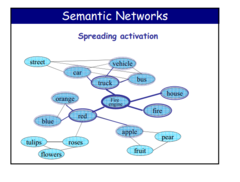
Spreading Activation
retrieval of information based on relatedness to one another
Reconstruction
recreating information by using memories, expectations, knowledge, and logic; a lot of inference/assumptions
Metacognition
ability to think about our own thinking; self awareness about our own cognitive ability i.e. self monitoring in reading for comprehension

Heuristics
approach to problem solving or learning i.e working backwards heuristic/verbalization heuristic
Functional Fixedness
focusing on the conventional uses of materials and missing out on good solutions
Response Set
getting stuck on one way of representing a problem
Divergent Thinking
ability to propose many different ideas or answers; leads to originality, fluency, and flexibility
Domain-Relevant Skills
talents and competencies that are valuable for working in a specific domain i.e. painting
Intrinsic Task Motivation
deep curiosity and fascination with the task
Argumentation
supporting your position with evidence and understanding then refuting your opponent's claims and evidence; takes time and instruction to learn because it requires higher levels of thinking
Transfer
when a rule, fact, or skill learned in one situation is applied in another situation; content is highly applicable
Overlearning
practicing past the point of mastery to the point of automaticity; helps with transfer
Constructivism
learners are active participants in the learning process (constructing their own knowledge); social interactions are important in the knowledge construction process
Cognitive Constructivism
individuals make sense of the world based on individual knowledge, beliefs, and self-concept; fitting concepts into schemas; Piaget
Social Contructivism
social interaction, cultural tools, and activity shape individual development and learning; Vygotsky
Inquiry Based Learning
students follow a scientific procedure to find an answer to a problem
Problem-Based Learning
students identify an authentic problem and seek to solve it given the restrictions of the classroom and resources
Cognitive Apprenticeships
students work with an expert to learn the skills and approaches experts use to solve problems
Reciprocal Teaching
students teach each other and critique each others' understanding of new material
Collaboration
philosophy about how to relate to others; way of dealing with people that respects differences, shares authority, and builds on knowledge
Cooperation
way of working together with others to attain a shared goal; cooperation is a way to collaborate
Jigsaw
cooperative learning strategy; every student has one portion of a topic/piece of the puzzle
Reciprocal Questioning
cooperative learning strategy; lesson followed by paired discussion to answer structured questions
Structured Controversy
cooperative learning strategy; students learn both sides of a topic and debate
Service Learning
project designed to meet community needs and is integrated into the curriculum; ongoing projects that enhance academic learning by providing students with a practical means to apply knowledge