East Asian Exam 2
 Call Kai
 Learn
 Practice Test
 Spaced Repetition
 Match
 Flashcards
 Knowt Play
1/42

There's no tags or description
Looks like no tags are added yet.
43 Terms
Shinto
• Lit. “the way of kami”
• Japanese “indigenous” belief system
• Kami worship
• Buddhist influence (teaching, institution, writing, visual art, building, etc.)
Kami
• Spirits of natural phenomena
• Gods or deities
• In the animistic tradition of Shintō, it is believed that supernatural beings or deities live in natural objects (e.g. rocks, trees, waterfalls, and mountains).
• These natural objects are kami and houses of kami, sacred dwellings of deities.
Torii
Traditional Japanese gate that marks the transition from the mundane, physical world to the sacred space of a Shinto shrine
Ise Shrine

Dedicated to Amaterasu, the Sun goddess, the ancestor of the imperial family
• First constructed in the 6th c.
• Inner shrine and outer shrine
• Preserves the prototype of Shinto buildings
Rebuilt every 20 years
Based on grain/rice granary
Amaterasu
Sun G-ddess who is an ancestor to the Imperial family
Three Imperial Regalia
Symbols of the divine authority of the emperor
• sword
• curved jewel (or seal)
• mirror
Sumo
• The “national sport” of Japan
• Believed to have originated in the celebration of a wrestling between two kami
Winner becomes embodiment of the Kami
Prince Shōtoku
Contributed to the spread of Buddhism
• Established several Buddhist temples
• Protector of Buddhism
• Considered an ideal leader both in political and spiritual realms
Commissioned Hōryūji o pray for a
recovery of his father (Emperor Yōmei) from illness

Hōryūji
Established in the 7th c (607)
• Commissioned by Prince Shōtoku to pray for a
recovery of his father (Emperor Yōmei) from illness
• Fire (670)
• One of the oldest extant wooden temples in the world

Middle gate (Hōryūji)
Guardian deities:
-un/hum (End)
-a (Begining)

Five-storied pagoda
-Monument to Original Buddha’s ashes
-Represents the five elements of Esoteric Buddhist cosmology: earth, water, fire, wind, and sky
-Circle clockwise to generate good karma/pay respects
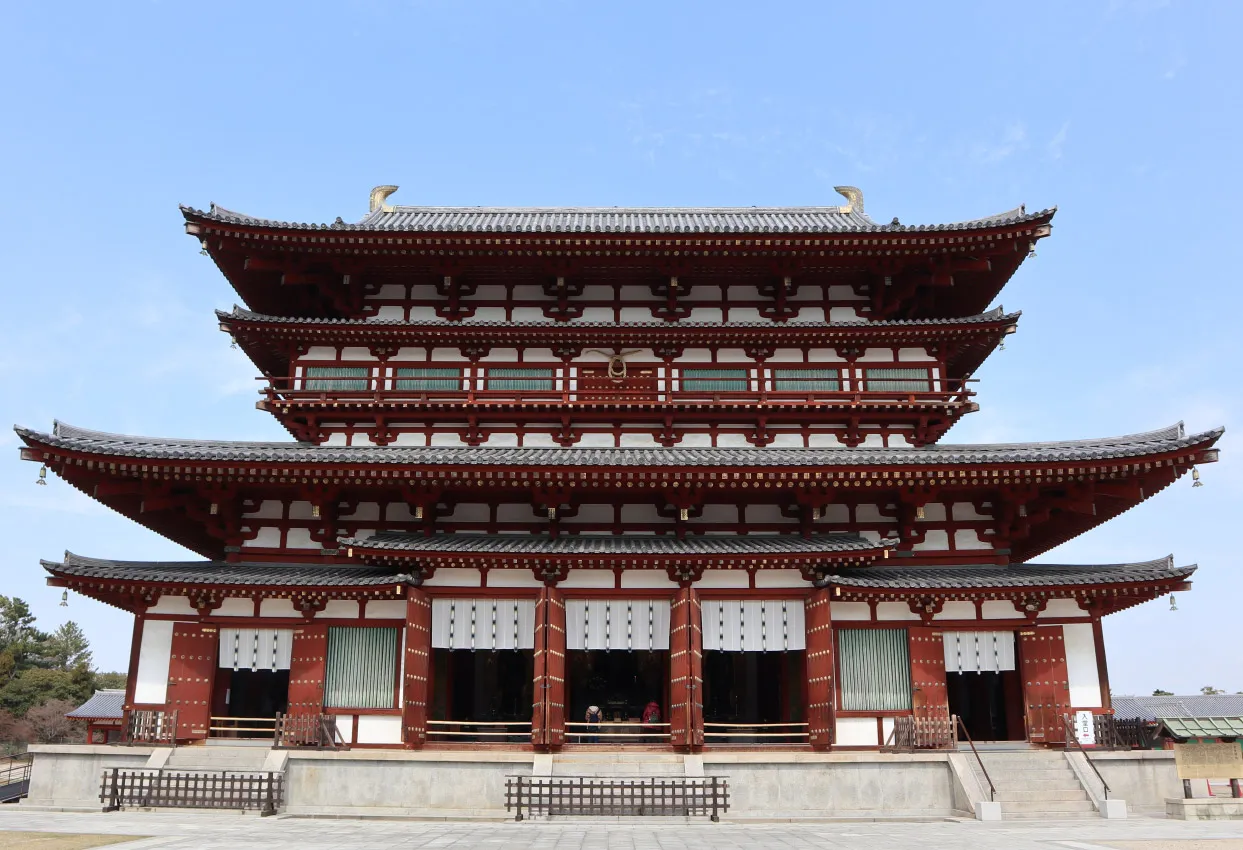
Golden Hall (Main Hall, Hōryūji Western Compound)
Depicts Shaka Triad (original Buddha and Bohdisattva’s) in bronze
• A buddha is enlightened and has entered Nirvana (the state in which a person has been released from the cycle of reincarnation, rebirth, samsara).
• A bodhisattva is also enlightened, but has decided to stay in this world in order to help other people be enlightened.
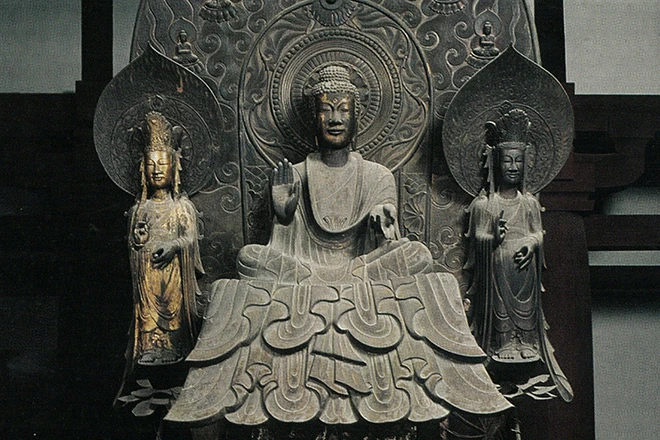
Shaka triad
Commissioned by Empress Suiko and court members as a memorial prayer for the recovery or rebirth of the influential Prince Shōtoku and his consort/wife after their deaths.

Tamamushi Shrine
-Lacquered cypress
-Tiger Jataka tale
-Decorated with Tama beetles
Heian Period (794–1185)
(794–1185)
• Golden Age in Japanese cultures
• Transfer of the capital to Kyoto
• Development of Japanese cultures based on cultures
imported from China and Korea (Japanese scripts, aesthetics,
poetry, clothes, etc.)
• Aristocratic government at its peak
• Fujiwara clan dominated political authority at court
• Various Buddhist schools (Esoteric, Pure Land, etc.)
Heian Capital (Kyoto) 794–1869
Based on Chang’an (China) architecture/design

Great Hall of State (Daigokuden)
Used for:
• Enthronement/accession
• New Year’s celebration
• Official reception of foreign ambassadors

Hall of State (Shishinden)
-Unpainted cypress wood
-Houses imperial thrones
-For major State ceremonies
Trees:
-Orange tree on the right: eternity
-Cherry tree on the left: change
The Tale of Genji
Follows the life of the Emperor’s son, his romantic affairs, and eventual banishment from royal family
• Novel
• Murasaki Shikibu
• Early 11th c. (1000–1008?)
• The chain of karmic consequence Prince Genji generated when he committed sin against his father
Murasaki Shikibu
Author of Tale of Genji
• A tutor of a daughter of Fujiwara no Michinaga (966–1028), a prominent member of the Fujiwara clan
• Later a lady-in-waiting for the daughter, when she became an imperial consort

Tōdaiji 東大寺 (Eastern Great Temple)
• Located in Nara Prefecture
• Established in 728/741
• Commissioned by Emperor Shōmu (r. 724-749)
• Originally a mortuary temple for a son of Shōmu
• Served as the headquarters of the nation-wide system of regional monasteries and nunneries (741)
Emperor Shōmu
Commissioned The Great Buddha (Vairocana) in Todaji
-Utilized and transported materials throughout Japan for national project (Todaji)

Great South Gate (reconstructed in 1199)
-Guardian deities positions are flipped
-Built with Joint-block technique, wood parts ensembled into large statue

Main Hall (Great Buddha Hall/Daibutsuden)
Bronze Vairocana, gold gilt background, formerly fully gold with lapis hair and eyes:
-Size evokes Longmen Buddhas
-Mold built and poured into
-Northeast/west guardian Kings guard Buddha

Shōsōin (Imperial Treasury Repository)
• Behind the complex of Tōdaiji in 756
• Tōdaiji’s treasure repository
• Emperor Shōmu’s personal belongings were dedicated after his death by his wife to the statue of Vairocana at Tōdaiji and then stored in Shōsōin
Hungry Ghost Scrolls (Late 1100s)
• Handscroll
Commissioned by retired Emperor
Part of collection of paintings of 6 Realms of Transmigration
Hungry Ghosts: Small mouths big stomachs: can only eat feces, the dead, and babies but still remain hungry.
Hell Scrolls (Late 1100s)
Commissioned by retired emperor, part of 6 Realms of Transmigration collection
Demons butchering humans
Hell raining fire
Hell of excrement

Jizō bodhisattva
• Savior from hell’s torment
• In the guise of a Buddhist monk
• Holds a monk's staff and a sacred jewel
Pure Land Buddhism
• Sentient beings transmigrate the cycle of the Six Realms forever (where they go next depends on karma) until they achieve enlightenment and then nirvana or attain rebirth in the Pure Land.
• Pure Land Buddhism does not promise nirvana but an immortal life in the Pure Land of Amida Buddha.
• Amida Buddha (skt. Amitābha)
• Western Pure Land; Western Paradise; (skt. Sukhāvatī)
Must sincerely chant Amida Buddha’s name 10 times before death, and envision pure lands to ensure quick rebirth
9 degrees of rebirth depending on karma

Pure Land Mandala
2D depiction of levels of Western Pure Lands, studied to get reborn in Western Pure Lands more quickly
Practitioners are reborn in lotus flowers which represent purity

Byōdōin/Phoenix Hall
Personal temple made by Fujiwara no Yorimichi, acts as a 3D visualization of the Western Pure Lands
Kyoto
Once a Villa, converted to temple 1053
Gets name from phoenix shape and gold phenoix’s on top of building

Phoenix Hall Amida Buddha (1053)
• Western Pure Land
• Mudra ―meditation/concentration
• Built by Jōchō, famous Buddhist sculpter
• Joint block technique
• Lotus throne/pedestal
Zen Buddhism
The key to enlightenment in lifetime is intense meditation
Enlightenment= One with the universe, like Daoism
• Zen (Chan) 禅 ― “meditation”
• Indian prince Bodhidharma (Daruma) ― arrived in China in the 6th c.
Bodhidharma traveled to China to meditate, spread Zen Buddhism
Ways of Enlightenment (Zen Buddhism
Zazen 座禅 (seated meditation) ― “meditation while sitting straight-backed with legs crossed”
Kōan 公案 ― “questions or exchanges with a master that cannot be understood or answered with rational thought”
○△□ Sengai (1750–1837)
Meanings of these combined shapes are open to various interpretations.
• Entire universe ― These 3 basic shapes represent everything in this world
• Tendai, Shingon, and Zen (3 Buddhist schools)
• Shinto, Confucianism, and Buddhism (3 religions in Japan)
• Earth, fire, and sky (3 elements in Buddhism)
• Absolute, form, and phenomena (by D.T. Suzuki)
• Process of enlightenment
Catching a Catfish with a Gourd by Josetsu. c.1413. Hanging scroll
Kōan question, responses on scroll

Sesshū (1420–1506)
•Zen monk and painter
Ink wash painter of landscapes
Painted 4 seasons
•Studied painting styles and techniques while he trained in Zen Buddhism at Shōkokuji in Kyoto
•Studied in Ming China in 1467–1469
Landscape (haboku style)
Minimalist ink-wash painting style that uses rapid, free-flowing brushstrokes and wet ink washes instead of rigid outlines
Related to Zen Buddhism

Landscape of the Four Seasons. By Sesshū. (1467-1469)
Handscroll on silk
Follow path like Chinese landscapes
Landscape garden
Dry landscape acting as a microcosm of the universe
Pebbles=Water
Large rocks=Mountains
Trees=Foliage
Not meditated at but act of making garden inspires reflection

Ryōanji (Dragon Peace Temple)
• Garden attached to the abbot’s quarters
• Founded in 1450
• Established by shogun’s deputy

Himeji Castle (white heron castle)
Built in 1601-9
• By feudal warlord Ikeda Terumasa (1564-1613), a son-in-law of
Tokugawa Ieyasu
• Built on the hill
• Commands an expansive view of the
surrounding area
• Keep (a fortified tower, donjon)