ID Week 1
 Call Kai
 Learn
Learn Practice Test
 Spaced Repetition
 Match
Match Flashcards
 Knowt Play
1/240

There's no tags or description
Looks like no tags are added yet.
Name | Mastery | Learn | Test | Matching | Spaced | Call with Kai | Chat |
|---|
No analytics yet
Send a link to your students to track their progress
241 Terms
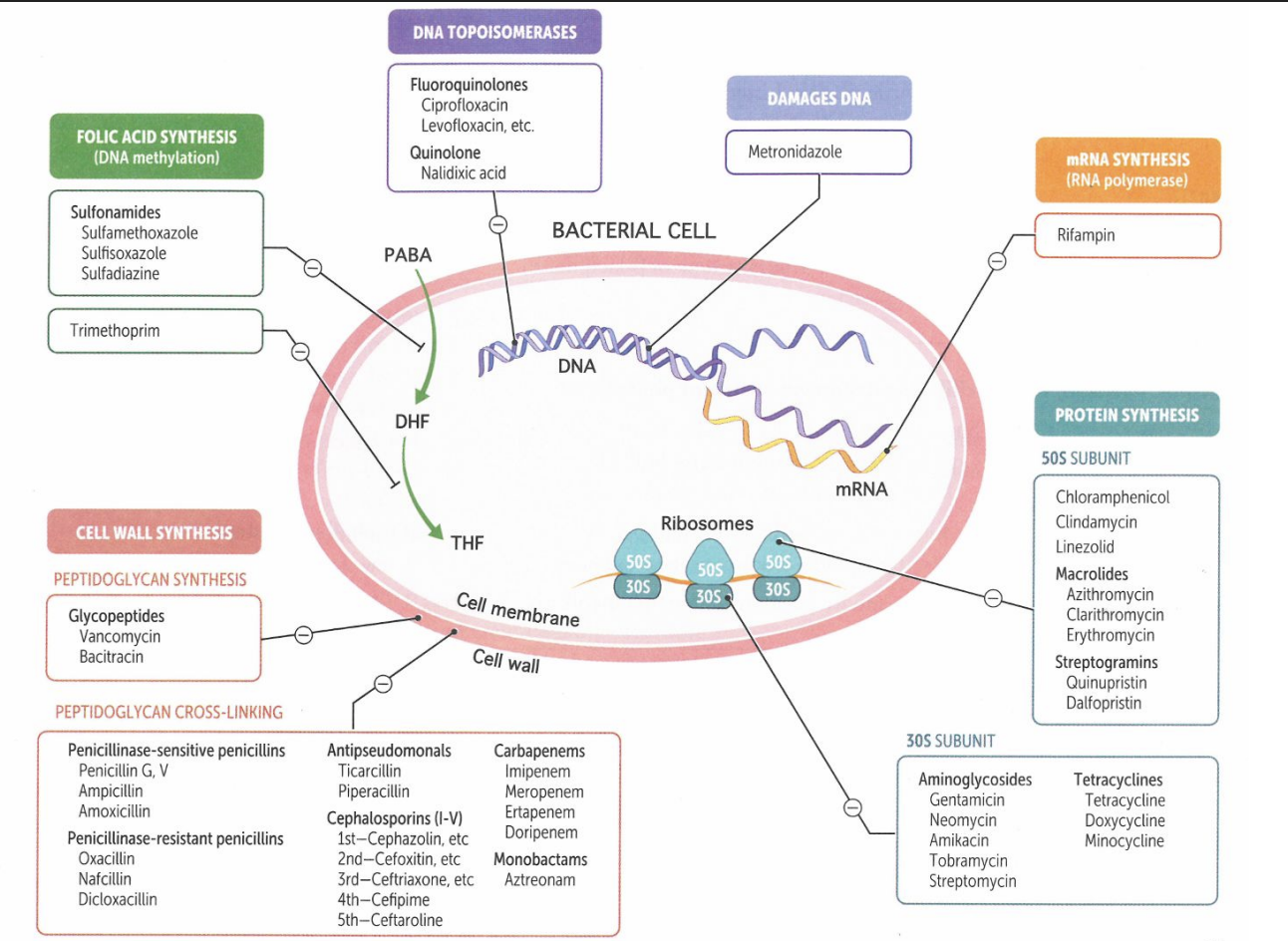
tetracyclines
doxycycline, demeclocycline, minocycline, tigecycline

macrolides
erythromycin, clarithromycin, azithromycin, roxithromycin, spiramycin, telithromycin (to remember: teli-RACES)

streptogramins
quinupristin-dalfopristin

lincosamides
lincomycin, clindamycin

oxazolidinones
linezolid, tedizolid

aminoglycosides
gentamicin, amikacin, netilmicin, sisomicin, neomycin, kanamycin, tobramycin, streptomycin

sulfonamides
sulfadiazine, sulfadoxine, sulfamethoxazole

fluoroquinolones
norfloxacin, ciprofloxacin, gatifloxacin, levofloxacin

beta lactams
penicillins, cephalosporins, monobactams, carbapenems`

glycopeptides
vancomycin, tiecoplanin, telavancin, dalbavancin, oritavancin

polypeptides
polymyxin B, colistin, bacitracin

lipopeptide
daptomycin

other cell wall active agents
fosfomycin, clycloserine
agars allow for
Agars allow for assessment of purity!
chocolate agar
boiled blood so nutrients are released from RBCs
what bacteria grow on chocolate agars
- Neisseria, Haemophilus, and other ‘ellas’

MacConkey agar
crystal violet kills G+
Lactose fermentation (P = Positive = Pink)
- You’ll only find G- here!

Mannitol Salt Agar
Depending on the kind of agar used, it can help you differentiate what colonies are present!
Positive = Yellow = Staphylococcus aureus
Negative = coagulase negative Staph
Blood Agar!!!
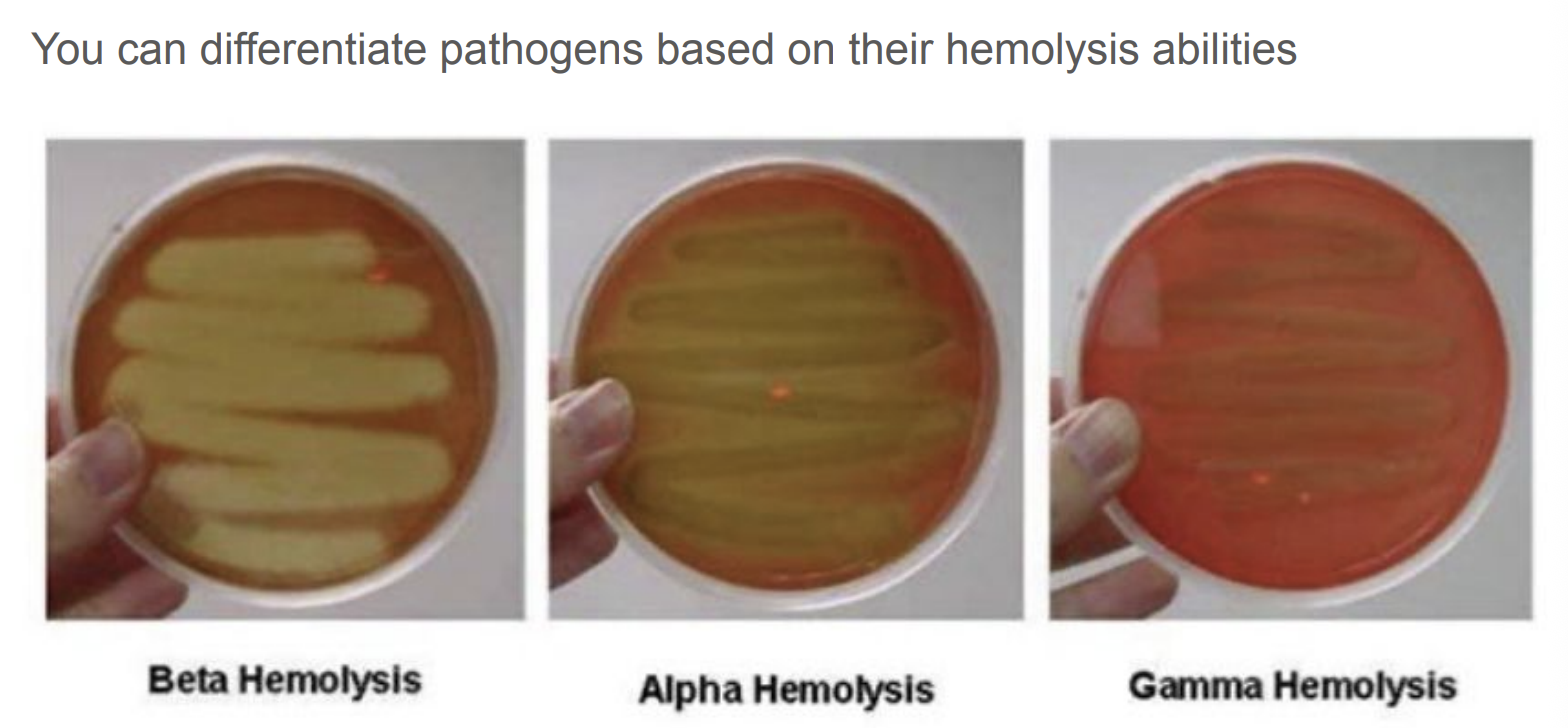
DIFFERENTIAL: HEMOLYSIS

Gram Negative Lab Algorithm

Gram Positive Lab Algorithm

actinomyces colony

Gram Stain!!! order/steps
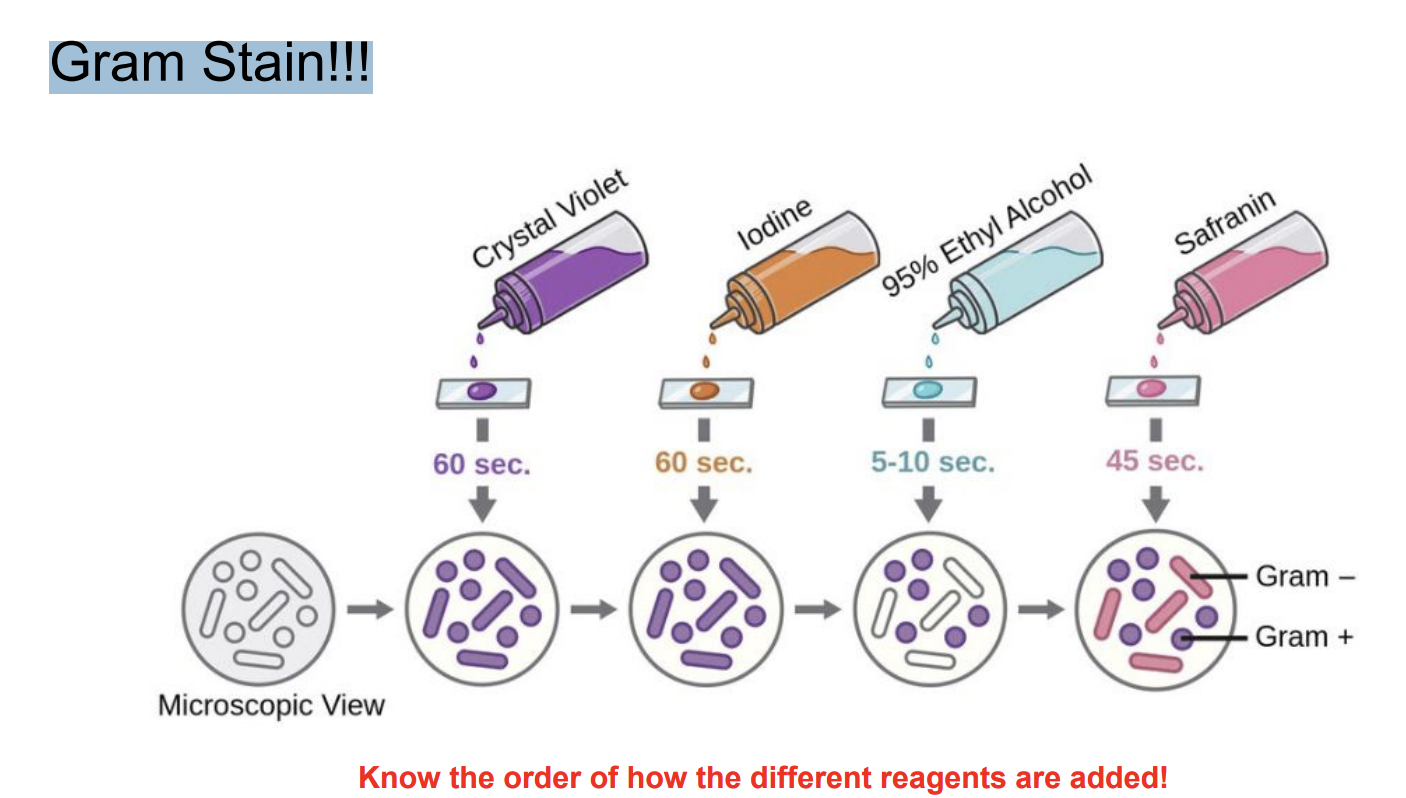
If you’re Gpositive cocci → whats next
catalase is always next
If Gram negative rod → what’s next
oxidase is next!
Streptococci all catalase ______

Strep Pneumoniae: spread
Human only pathogen; colonizes oropharynx (endogenous, hematogeous spread)
Strep Pneumoniae: can cause
Can cause: sinusitis, otitis media, pneumonia (#1 cause), meningitis, sepsis
Strep Pneumoniae: VF
VF: Polysaccharide capsule, IgA protease
Strep Pneumoniae: shape and gram status
Lancet-pairs (diplococci); Gram positive
Strep Pneumoniae: hemolysis and optochin and bile
Alpha hemolytic → sensitive to optochin → bile soluble

Strep Pneumoniae: treatment
Penicillin, 3rd gen cephalosporin
- Ceftriaxone, Levofloxacin, Clindamycin
Strep Pneumoniae: prevention
Prevention: vaccination (capsules)
Viridans group Streptococci: transmission
Human only; oral normal flora (endogenous, hematogenous spread)
Viridans group Streptococci: epi
Dental hygiene/work + abnormal (mitral) heart valve!
Viridans group Streptococci: symptoms
Slow infective endocarditis
Viridans group Streptococci: virulence factors
VF: no capsule, biofilm production
Viridans group Streptococci: hemolysis and optochin and bile
Alpha hemolytic → resistant to optochin → bile insoluble
Viridans group Streptococci: treatment and prevention
Tx: Penicillin, 3rd gen cephalosporin, vancomycin
Prevention: prophylactic abx before dental work
Strep pyogenes: transmission
Human only, oropharynx colonizer (endogenous spread; respiratory droplets - strep throat)
Strep pyogenes: diseases
pharyngitis, impetigo, scarlet fever (spares face), cellular, acute rheumatic fever (M protein- antiphagocytic, molecular mimicry), Glomerulonephritis (2wks post-infection)
Strep pyogenes: body parts affected
- Joints, <3, Nodules, Erythema marginatum, Sydenham chorea
Strep pyogenes: VF
VF: M protein, Streptolysin O, hyaluronic acid capsule, streptokinase
Strep pyogenes: hemolysis and bacitracin
Beta hemolytic → sensitive to bacitracin
Strep pyogenes: Tx
Tx: Penicillin, Vancomycin, Clindamycin, 3rd gen cephalosporin
Strep pyogenes: SpeA, B, C

Strep agalactiae - Group B Strep - Galactic Baby: transmission
Human only (GI, GU); vertical during birth to infant (ingested/aspirated)
Strep agalactiae - Group B Strep - Galactic Baby: epi
Epi: prenatal screening; prophylactic treatment at time of vaginal birth
Strep agalactiae - Group B Strep - Galactic Baby: diseases
Neonatal meningitis (#1 cause), sepsis, pneumonia
Strep agalactiae - Group B Strep - Galactic Baby: VF
VF: polysacc Capsule
Strep agalactiae - Group B Strep - Galactic Baby: hemolysis and bacitracin
Beta hemolytic → resistant to bacitracin
Strep agalactiae - Group B Strep - Galactic Baby: treatment
Tx: Penicillin/Ampicillin (give to mother if GBS+) Vancomycin, Clindamycin, 3rd gen cephalosporin
Strep agalactiae - Group B Strep - Galactic Baby: prevention
Prevention: prenatal screening or If colonized, either abx prophylaxis or C-section
Strep gallolyticus: transmission
Human colon flora (endogenous, hematogenous spread)
Strep gallolyticus: diseases
Linked to colon cancer Infective endocarditis, bacteremia
Strep gallolyticus: gram and hemolysis
Gram + , nonhemolytic (y-hemolytic)
Strep gallolyticus: PYR, NaCl?
No growth on 6.5% NaCL; PYR negative
Strep gallolyticus: treatment
Tx: ampicillin (+ gentamicin if invasive); vancomycin
Enterococcus spp. (ex: faecalis, faecium): transmission
Human and animal (ex: cow); oropharynx, GI, GU
Enterococcus spp. (ex: faecalis, faecium): disease
Common cause of HAIs → UTIs especially with catheters , wound infections, bacteremia
Enterococcus spp. (ex: faecalis, faecium): VF
VF: Biofilm formation, bile resistant
Enterococcus spp. (ex: faecalis, faecium): present in
Present in pairs or short chains
Enterococcus spp. (ex: faecalis, faecium): NaCL, PYR
Growth on 6.5% NaCL; PYR Positive

Enterococcus spp. (ex: faecalis, faecium): treatment + prevention
Tx: Ampicillin (+ gentamicin or ceftriaxone for invasive); Vanc, if resistant, linezolid Prevention: clean the hospital lol and reduce invasive devices
PYR Test L-Pyrrolidonyl -b-Naphthylamide (PYR) Test

Staphylococci - all Catalase POSITIVE: after catalase
Do coagulase test! Positive = Staph aureus
What does coagulase do?

S. aureus: body parts, symptoms, consequences

S. epidermidis: body parts, symptoms, consequences, treatment

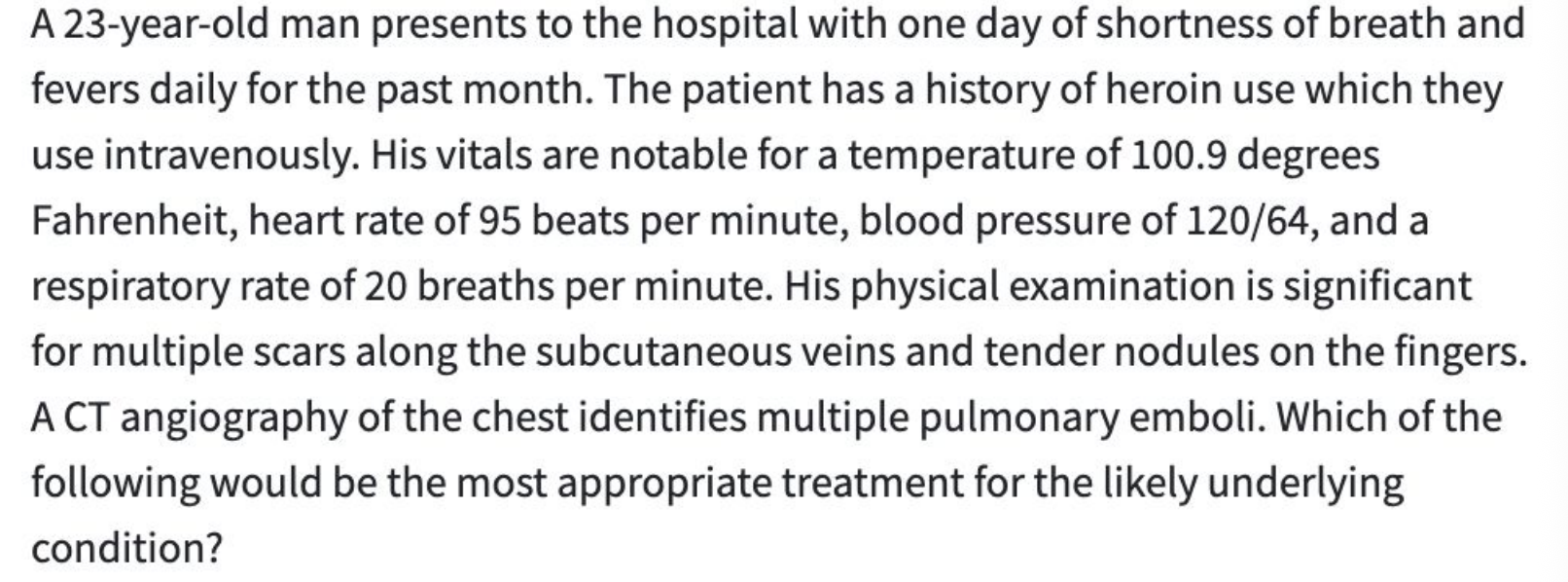


A. Gram-positive cocci in clusters
A 4-day-old full-term newborn is brought to the emergency department for increasing lethargy, refusal to eat, and rapid breathing. The infant was born by normal vaginal delivery after an uncomplicated pregnancy. Vital signs are a heart rate of 145/min, a blood pressure of 70/30 mm Hg, a respiratory rate of 70/min, and oxygen saturation of 92% in room air. On physical examination, the infant is lethargic, capillary refill is delayed, and there are mild intercostal retractions. A chest x-ray reveals diffuse infiltrates. A CBC shows a WBC of 30,000/mm3 (normal 9,000-13,000/mm3 for newborns) with 10% band forms and a markedly elevated C-reactive protein. A lumbar puncture is performed, and CSF values are normal. Blood cultures are drawn, and antibiotics are started. The infant is admitted to the neonatal intensive care unit and supported with nasal CPAP and oxygen. The following day, the blood culture is reported as positive for gram-positive cocci. Which of the following organisms is most likely to be causing the infection?
E. Streptococcus agalactiae
Clostridioides difficile:
G+ rod; obligate anaerobe; spore former
Clostridioides difficile: transmission
Found in soil, feces (intestines) of humans → easily spread person to person (ingestion of spores)
Clostridioides difficile: Risk factors
65+, broad-spectrum antibiotics, stay in hospitals/nursing homes for long period pf time, gastric acid suppression, ppl with weakened immune system, previous C.diff infection
Clostridioides difficile: symptoms
Pseudomembranous Colitis: watery diarrhea (can have blood, mucus), abd distention, cramps, fever, dehydration
Clostridioides difficile: VF
VF: spores, toxin AB (inactivates GTP-binding proteins)
Clostridioides difficile: diagnosis
Diagnosis via colonoscopy, psuedomembranes

Clostridioides difficile: treatment
Tx: oral Vancomycin or Fidaxomicin; fecal transplant (after 3 infections no bueno)
Clostridium perfringens:
G+ rod, obligate anaerobe, spore former
Clostridium perfringens: found in
nature, human/animal intestinal microbiota
Clostridium perfringens: what on what agar
Double hemolysis on blood agar

Clostridium perfringens: spores
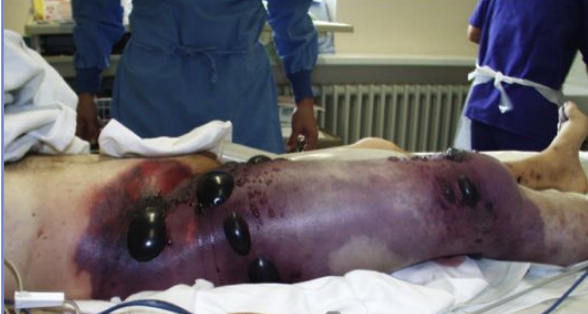
Spores can contaminate food - gravy, poultry, meat, or traumatic entry of spores in wounds (ex: deep puncture wound after accident, gas gangrene)
Clostridium perfringens: vomiting?
No vomiting!!
Clostridium perfringens: onset and symptoms
Fast onset; watery diarrhea and ion loss; resolves within a couple days Gas gangrene (myonecrosis): spores in deep wound, alpha toxin (lecithinase activity) - progresses fast → crepitus under skin, purple bullae with discoloration
Clostridium perfringens: prevention
Prevention: cook ur food fr; GG: clean wounds thoroughly ASAP!!
Clostridium tetani:
G+ rod; obligate anaerobe; spore former
Clostridium tetani: how does infection occur
Traumatic introduction of spores in wound; found in soil and some feces
Clostridium tetani: risk factors
RF: deep puncture wound, crush injuries, IVDU, septic abortion
Clostridium tetani: symptoms
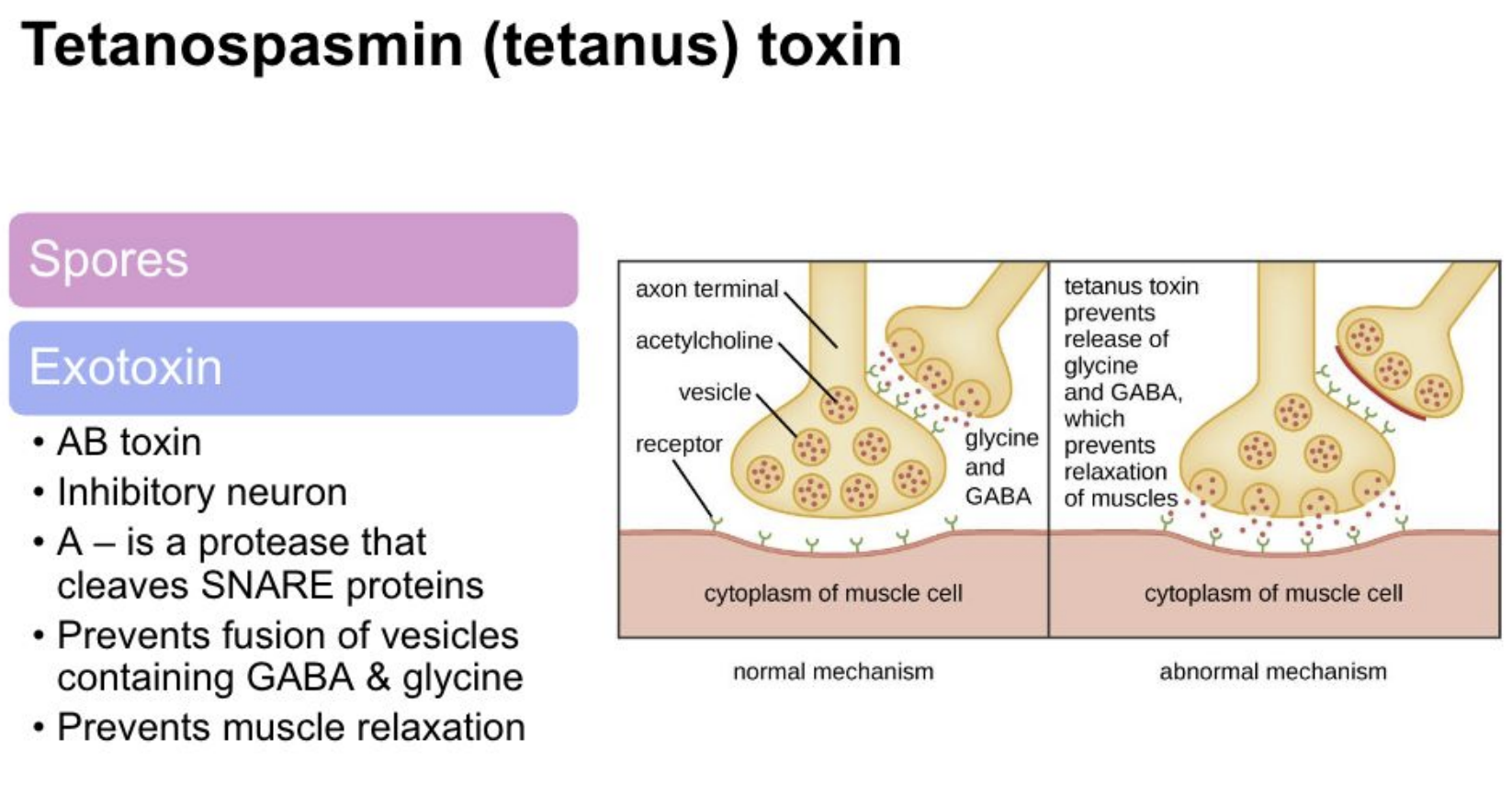
Tetanus: spores in wound = starts with ‘lockjaw’ → arched back → respiratory paralysis
Clostridium tetani: treatment
Tx: toxoid vaccination; clean ur wounds, human tetanus shot
Tetanospasmin (tetanus) toxin
Cutibacterium acnes:
G+ rod; obligate anaerobe; non-spore former
Cutibacterium acnes: found in
Part of skin flora, commensal ; lives on fatty acids in sebum (follicles)
Cutibacterium acnes: symptoms
Acne Vulgaris: pimpols

Actinomyces Israelii:
G+ branching filamentous rods; anaerobe; opportunistic pathogen
Actinomyces Israelii: reservoir/transmission
R/T: normal flora of skin, mouth gut, vagina - most infections are endogenous
Actinomyces Israelii: RF
RF: oral infection - infection in erupting teeth, dental caries, gingivitis, dental extraction
Actinomyces Israelii: symptoms
Commonly forms abscesses, ‘lumpy jaw’ - develops slowly and drains pus through sinus tract Hard, yellow granules (sulfur granules) = composed of pus!! Not sulfur
