Heart, Circulation & Blood Vessels (AQA GCSE Higher 2.2)
 Call Kai
 Learn
Learn Practice Test
 Spaced Repetition
 Match
Match Flashcards
 Knowt Play
1/39

Earn XP
Description and Tags
AQA GCSE (Higher) Biology - 2.2 Heart, Circulation & Blood Vessels. Complete flashcard set for AQA GCSE Biology (Higher Tier) Topic 2: Organisation. Covers heart anatomy, blood vessel structures, blood components, pacemaker cells, and treatments for cardiovascular diseases.
Name | Mastery | Learn | Test | Matching | Spaced | Call with Kai | Chat |
|---|
No analytics yet
Send a link to your students to track their progress
40 Terms
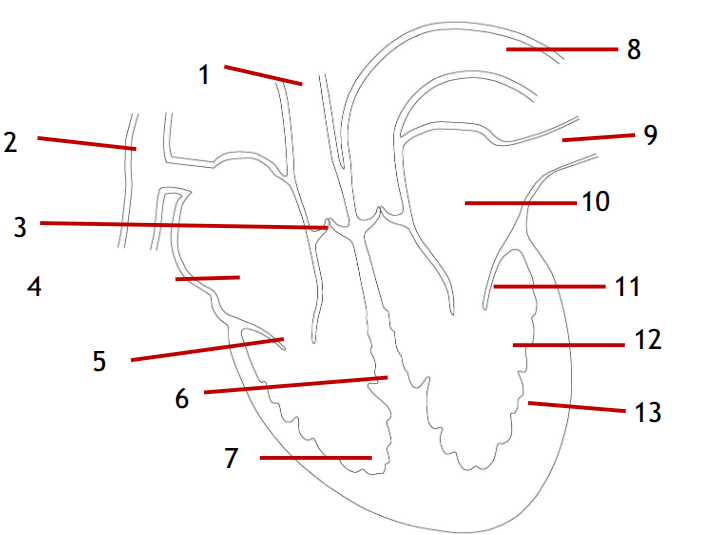
Pulmonary Artery
Artery that carries deoxygenated blood from the right ventricle to the lungs to pick up oxygen
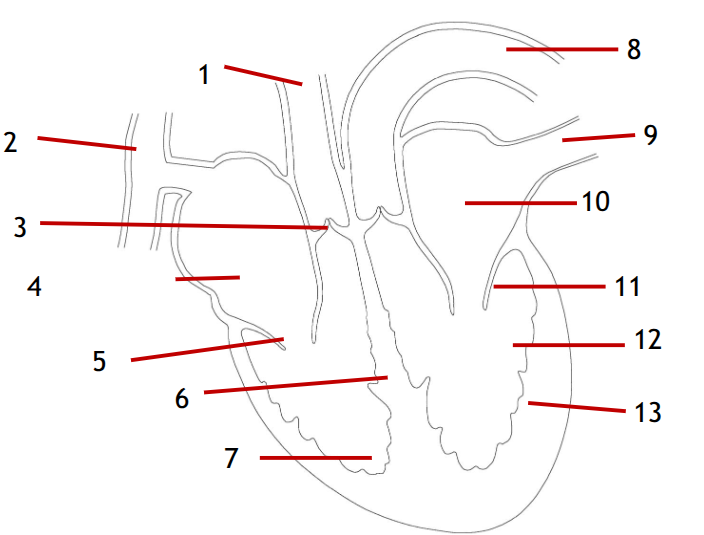
Vena Cava
Vein that carries deoxygenated blood from the body into the right atrium
Right Atrium
Upper right chamber that receives deoxygenated blood from the vena cava and pumps it to the right ventricle
Septum
A thick wall of muscle that separates the left and right sides of the heart, preventing oxygenated and deoxygenated blood from mixing
Right Ventricle
Lower right chamber that pumps deoxygenated blood to the lungs through the pulmonary artery
Aorta
Main artery that carries oxygenated blood from the left ventricle out to the rest of the body
Pulmonary Vein
Vein that carries oxygenated blood from the lungs into the left atrium
Left Atrium
Upper left chamber that receives oxygenated blood from the pulmonary vein and pumps it to the left ventricle
Valves
Prevent the backflow of blood, ensuring blood flows through the heart in one direction only
Left Ventricle
Lower left chamber with a thick muscular wall that pumps oxygenated blood at high pressure around the entire body
Heart Wall (Myocardium)
Made of cardiac muscle tissue that contracts continuously to pump blood throughout the circulatory system
Coronary Arteries
Blood vessels branching off the aorta that supply oxygenated blood and glucose directly to the heart muscle itself for respiration
Arteries
Vessels that carry blood away from the heart under high pressure. They have thick, muscular, elastic walls and a narrow lumen to withstand high pressure.
Veins
Vessels that carry blood towards the heart under low pressure. They have thinner walls, a wide lumen and valves to prevent the backflow of blood.
Capillaries
Microscopic, one-cell thick vessels that allow exchange of substances (e.g. oxygen, glucose and carbon dioxide) between the blood and tissues by diffusion.
Lumen
The central hole or cavity inside a blood vessel through which blood flows.
Elastic Fibres
Fibres in the artery walls that stretch and recoil to maintain high pressure and smooth out blood flow.
Plasma
The straw-coloured liquid component of blood that carries dissolved substances like glucose, amino acids, carbon dioxide, urea and hormones as well as blood cells.
Red blood cells
Biconcave disc cells containing haemoglobin that bind to oxygen and transport it from the lungs to tissues. They have no nucleus to fit more haemoglobin.
White blood cells
Cells involved in the immune system. Phagocytes engulf and digest pathogens; lymphocytes produce more antibodies and antitoxins.
Platelets
Small cell fragments without a nucleus that help blood clot at a wound site to prevent blood loss and pathogen entry.

1
Pulmonary Artery
2
Vena Cava
3
Valves

4
Right Atrium

5
Valves
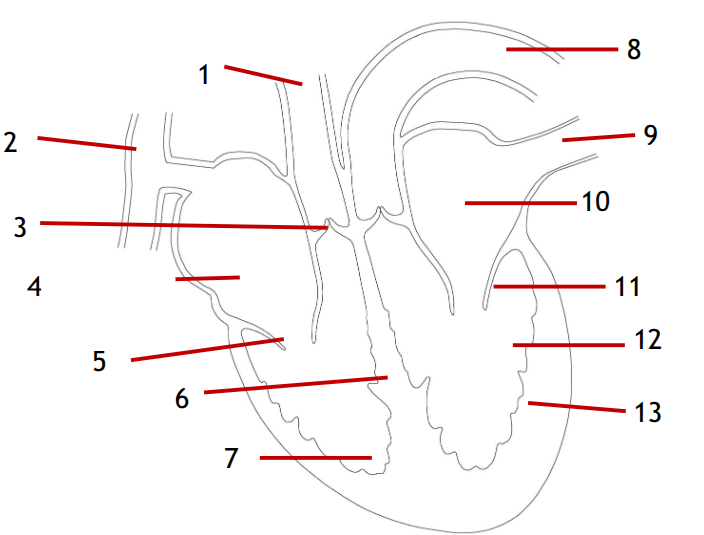
6
Septum

7
Right Ventricle

8
Aorta

9
Pulmonary Vein
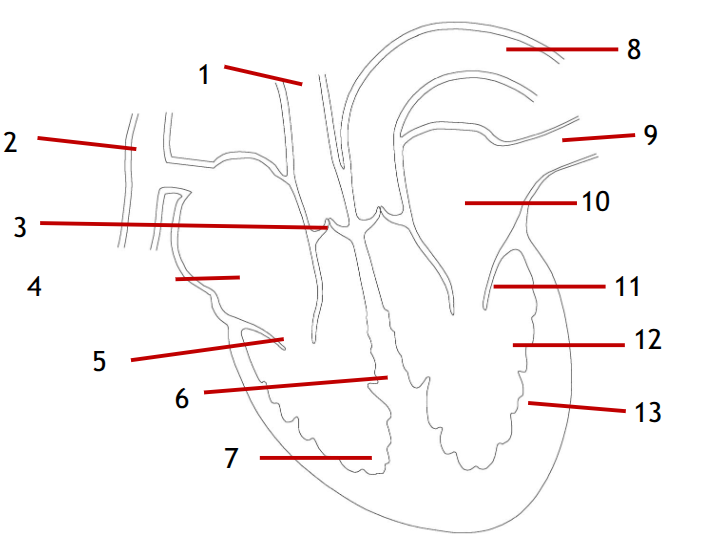
10
Left Atrium

11
Valves
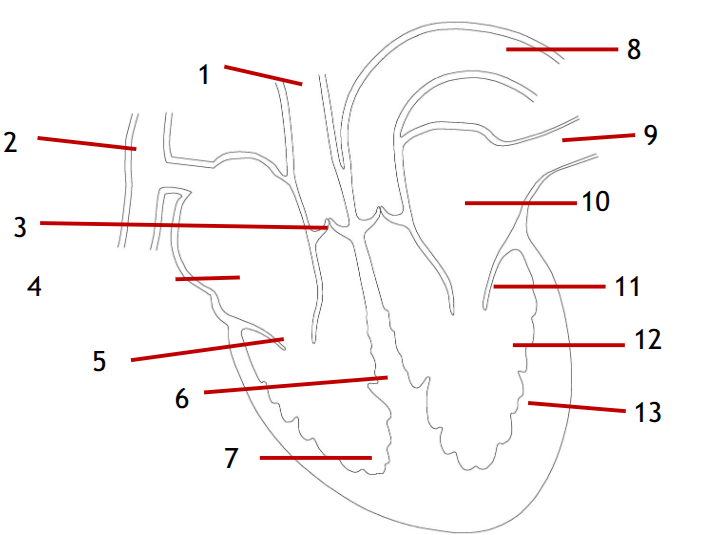
12
Left Ventricle

13
Heart Wall
Coronary Heart Disease
Condition where layers of fatty material build up inside the coronary arteries, narrowing them, reducing blood flow and limiting oxygen delivery to the heart
Stent
A metal mesh tube inserted into a narrowed coronary artery to keep it open and maintain blood flow.
Statins
Prescription drugs that lower blood cholesterol levels, slowing down the rate of fatty material buildup in the coronary arteries.
Heart Valve Replacement
The replacement of faulty, leaky, or stiff heart valves using either biological valves (from pigs/cows) or mechanical valves.
Artificial Pacemaker
An electronic device implanted under the skin that sends electrical signals to the heart to regulate an irregular heart rhythm.
Heart Transplant
A surgical procedure to replace a failing heart with a healthy donor heart (or an artificial heart as a temporary measure).