Digital Divide Lecture 4
 Call Kai
 Learn
Learn Practice Test
 Spaced Repetition
 Match
Match Flashcards
 Knowt Play
1/30

Earn XP
Description and Tags
Fintech for Consumers
Name | Mastery | Learn | Test | Matching | Spaced | Call with Kai | Chat |
|---|
No analytics yet
Send a link to your students to track their progress
31 Terms
What is the general definition of Fintech?
use of digital technologies to deliver financial services (e.g. mobile payments)
How does the FSB define “Fintech”?
tech-enabled innovations in financial services that make new business models + products possible
>it restructures how financial services are built + delivered
What are the three stages for the evolution of Fintech?
Fintech 1.0: telegraph & railways replaced typical modes of transportation for money and financial info (overseas transactions took a long time via ship), early bookkeeping systems
Fintech 2.0: banking goes digital (ATMs since 1967, SWIFT network, online banking since 1980s, internet banking since 2000s)
Fintech 3.0: smartphones, blockchain & AI, non-bank financial services
Explain the “SWIFT network”!
=a shared messaging system created in 1973 by many different countries in the world for international transactions > included instructions about money securely;
What was the trigger for Fintech 3.0?
the global financial crisis in 2008 (decline in trust in banks: trust is the most important thing for financial services)
therefore: entry of non-bank players like Amazon, Google (pay), Kakao/Naver Pay (South Korea)
>possible through big data, AI
What are some important post-crisis reforms?
Basel III, Dodd-Frank
What are some key services that FinTech offers?
Payments: mobile wallets (Apple Pay, PayPal)
Credit & Lending: crowdfunding, Person-to-Person Loans
Investment: online brokers, robo-advisers
Personal Finance Management: neo-banks (only online > Mint), budgeting & AI-advisors
Insurance: digital-only, AI risk assessment
Capital Markets: online trading, risk management
What are some technologies that enable these said services?
blockchain: cryptocurrencies, smart contracts
big data analytics: personalized finance, fraud detection
cloud computing: infrastructure for digital banking/payments
internet of things: connected devices for new payment methods
biometric technologies: fingerprint, facial recognition
ai & machine learning: chatbots, algorithmic trading
Which three drivers behind the expansion of FinTech can be differentiated?
technological drivers
institutional/regulatory drivers
consumer demand drivers
What are some technological drivers for FinTech?
mobile penetration + broadband expansion: for a growing share of the world, the smartphone is the only way to access financial services
big data + AI: customized credit scoring, robo-advisors
blockchain
What are some regulatory + institutional drivers for FinTech?
decline in trust because of global financial crisis 2008
open banking & API policies: banks can only share financial data to third parties with the consumer’s consent (EU PSD2, Korea MyData)
regulatory sandboxes: testing new products in controlled environments
central banks + financial regulators
What are some consumer demand drivers for FinTech?
convenience & low-cost: 24/7 access, instant transfers
generational shift: younger generations (Gen Z, Millennials), prefer mobile financial services compared to older generations
financial inclusion needs: serving underbanked/unbanked (for people without access to banks) > giving out micro-loans
Why is Fintech so important? What are the risks involved with FinTech?
more accessibility (24/7, low-cost), customized services, financial inclusion
· risk: fraud, data misuse, over-borrowing
What is important to note about Payments?
most visible + widely used > first contact-point for consumers
shift from cash > card > mobile/digital wallets (Apple/Google Pay)
Name some global leaders and key trends in the payment area!
Global Leaders: PayPal (online payment pioneer), Apple/Google Pay
Key trend: platformization > payments integrated into lifestyle apps (KakaoTalk > KakaoPay)
What are some promises of digital payments?
What are some pitfalls of digital payments?
fraud + cybersecurity risks (phishing, wallet hacking)
privacy concern: transaction data is collected by the platform > it learns your routines, risks: data monetization + profiling
platform monopoly: dependency on few dominant players
over-spending: less cost salience through frictionless payments (easier to just use your phone than hand cash over, you feel less “loss” and lose control over spendings faster)
What could be the future of digital payments?
cross-border instant payments (Ripple, SWIFT gpi)
CBCDs: Central Bank Digital Currencies
contactless + biometric authentication (face/fingerprint)
convergence: payments > credit, savings, investment (e.g. Revolut isn’t only an app to pay but also to invest)
What is important to note about credit & lending? Who are the global leaders?
traditionally, banks were intermediaries
FinTech innovations: direct platforms, embedded lending, alternative scoring
Global Leaders: Crowdfunding (Kickstarter), Buy Now Pay Later (Klarna), P2P Lending (Prosper)
What is the difference between traditional and alternative data?
traditional: focus on individual’s ability to repay (financial info, previous payments, demographic info)
alternative: focus on individual’s willingness to repay (ambition, reliability, social networks)
What are some promises of credit & lending?
· financial inclusion: for thin-file consumers
· faster approvals, lower barriers than banks
· supporting entrepreneurship + innovation through crowdfunding
What are some pitfalls of credit & lending?
over-indebtedness: dept spirals (several small installment-loans at the same time)
regulatory gaps + consumer protection issues: credit systems often evolve faster than regulations around it can keep up
What could be the future of credit & lending?
AI-driven credit scoring
stricter regulations
more embedded finance (credit offers in lifestyle/messaging apps and e-commerce)
What is important to note about investment & wealth management? Who are some global leaders?
traditional: brokerages, private bankers; now low-cost digital-first investment services + democratization
Global Leaders: Robinhood, Wealthfront/Betterment
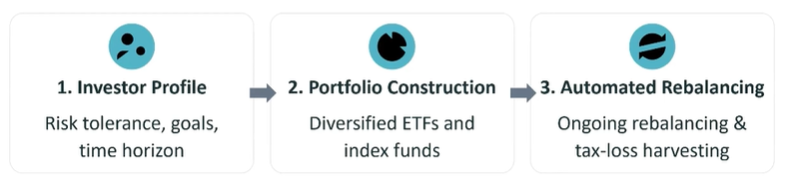
How do robo-advisors work?
robo-advisors: algorithm-driven investment platforms provide automated portfolio management
What are some promises of investment & wealth management?
· accessibility: lowers entry barriers for young/retail investors
· lower fees than traditional brokers/private banking
· automated portfolio management through AI and robo-advisors
· learning opportunity: because of broader participation
What are some pitfalls of investment & wealth management?
over-trading: the same game design elements that make investing fun, make investing feel like speculation (gamification)
risks are underestimated by inexperienced users
robo-advisors: algorithm transparency, tendency to one-size-fits-all portfolios
regulatory issues: investor protection, suitability checks
data security: sensitive financial data in only a few platforms
What is important to note about personal finance & management?
includes Budgeting & expense tracking (Mint, BankSalad), neo-banks (digital-only banks like Revolut, KakaoBank), more and more AI-powered services (Cleo)
What are some promises of personal finance & management?
accessibility: lower costs than traditional banks and better for underbanked people
transparency: real-time tracking of your spending
convenience: all-in-one platforms (pay, save, borrow, invest), nudges for saving/spending control
What are some pitfalls of personal finance & management?
Digital Divide: elderly consumers struggle with mobile-only banking, as they are not comfortable/familiar with using technology
data risk: financial data can be used for targeting/ads
over-reliance on automation: nudges might be too generic to fit every person
illusion of control: users feel like they know a lot about finances because of the app’s prompts but that is often far from the truth
What could be the future of personal finance & management?
personalized AI coaches
linking finance with health and housing (integrated ecosystems)