Russia & Ukraine: Past and Present Midterm Exam (Identifications)
 Call Kai
 Learn
Learn Practice Test
 Spaced Repetition
 Match
Match Flashcards
 Knowt Play
1/9

There's no tags or description
Looks like no tags are added yet.
Name | Mastery | Learn | Test | Matching | Spaced | Call with Kai | Chat |
|---|
No analytics yet
Send a link to your students to track their progress
10 Terms

Steppe
What: Flat prairie land
Where: Eurasia
Who: Nomadic pastoralists
Why: Major trade and migration highway, heavily contested battlefield; few natural barriers

Battle of Kulikova Pole
What: Russian army led by Grand Prince Dmitry Ivanovich of Moscow defeated Tatar-Mongol forces of Mamai alongside Grand Prince Vladimir I
When: September 8, 1380
Where: Kulikovo Field near Don River
How/Why: battle broke the myth of Mongol invincibility —> marked the beginning of Moscow's rise as the center of future Russian liberation and state-building

Yam System
What: a postal system and supply route
Where: Spanned across Mongol territories including Russia and Eurasian lands
Who: Mongol empire, later adopted by Russia
How/Why: Maintain a system of fixed stations stocked with/ horses and riders allowing messengers, decrees, and merchants to travel quickly

Cap of Monomakh
What: A revered crown used in coronations of Russian princes/monarchs
When: late 13th, early 14th century
Where: Moscow, Kremlin
How/Why: First used in Ivan IV coronation, later used to legitimize Moscow as “Third Rome” —> tsars as right heirs to the Roman and Byzantine Empire
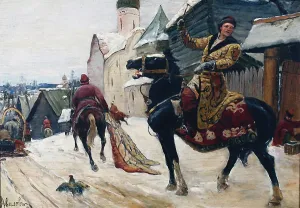
Oprichnina
What: State apparatus of surveillance, repression, public execution, and confiscation of land
When: 1565-1572
Where: The Russian Tsardom
Who: Ivan IV , the oprichniki
How/Why: Oprichniks used to crush political power of old boyar aristocracy, centralize autocracy. Devastated economy and military capacity

Serfdom Law Code
What: Legal frameworks that bound serfs to the land, stripping them of personal freedom and mobility
When: 1649, late 15th century to 17th
Where: Russian state
Who: Russian tsars, Ivan III
How/Why: Restricted peasants right to move between land owners, abolished time limits for tracking runaway serfs, categorized as property of landlords
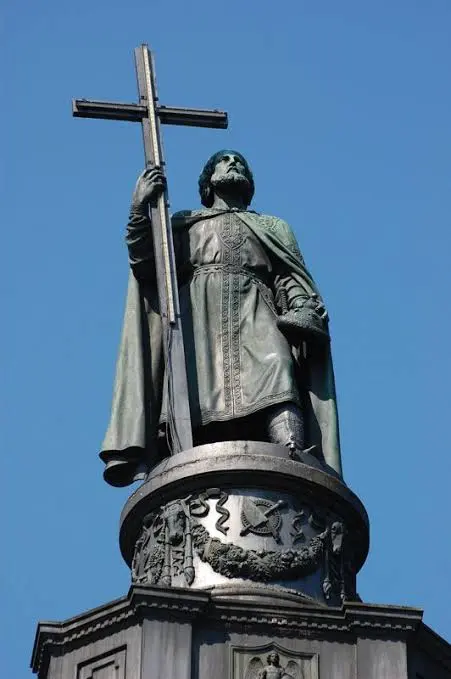
Vladimir I
What: Grand Prince of Kiev who consolidated the Kievan Rus state, expanded borders, christianized the region
When:
Where: Kievan Rus
How/Why: Reinforced pagan Slavic religious traditions, unifies tribes —> by forging diplomatic ties w/ European and Mediterranean powers. Married Byzantine princess Anna and ordered mass baptism. Laid foundational spiritual identity for modern Ukraine, Russia, and Belarus.

Novgorod
What: Hanseatic city-state
When: 9th century
Where: North western Russia
Who: Novgorod merchants, boyars, military
How/Why: Got wealthy through trade network, held significant power with democratic style of governance ; veche= public assembly

Kievan Rus
What: First East Slavic state and largest political entity in medieval Europe.
When: 9th century - mid 13th century
Where: Centered along Dniester River ‘
How/Why: Formed by consolidating trade routes along “Varangians to Greeks” corridor. Unified by Christianization by Vladimir, Eventually, invaded by Mongol Empire

Times of Troubles
What: End of Muscovite dynastic line—> widespread famine, Breakdown of state authority, Disease, Civil War
When: 1598-1613
Where: Russian Tsardom
How/Why: Triggered by extinction of Rurik Dynasty. Ended when popular militia movements expelled occupiers from Moscow (assembly of land)