Histo prac 3: Liver and gallbladder
 Call Kai
 Learn
Learn Practice Test
 Spaced Repetition
 Match
Match Flashcards
 Knowt Play
1/10

There's no tags or description
Looks like no tags are added yet.
Name | Mastery | Learn | Test | Matching | Spaced | Call with Kai | Chat |
|---|
No analytics yet
Send a link to your students to track their progress
11 Terms
What is the largest gland of the body?
The liver
What type of gland is the liver?
Mixed gland (exocrine and endocrine function) by a single cell (the hepatocyte)
What components make up the hepatic stroma?

What is the hepatic parenchyma made up of?

What structures are seen in the histological slide of the hepatic parenchyma?
Central vein, classical hepatic lobules, and portal tracts
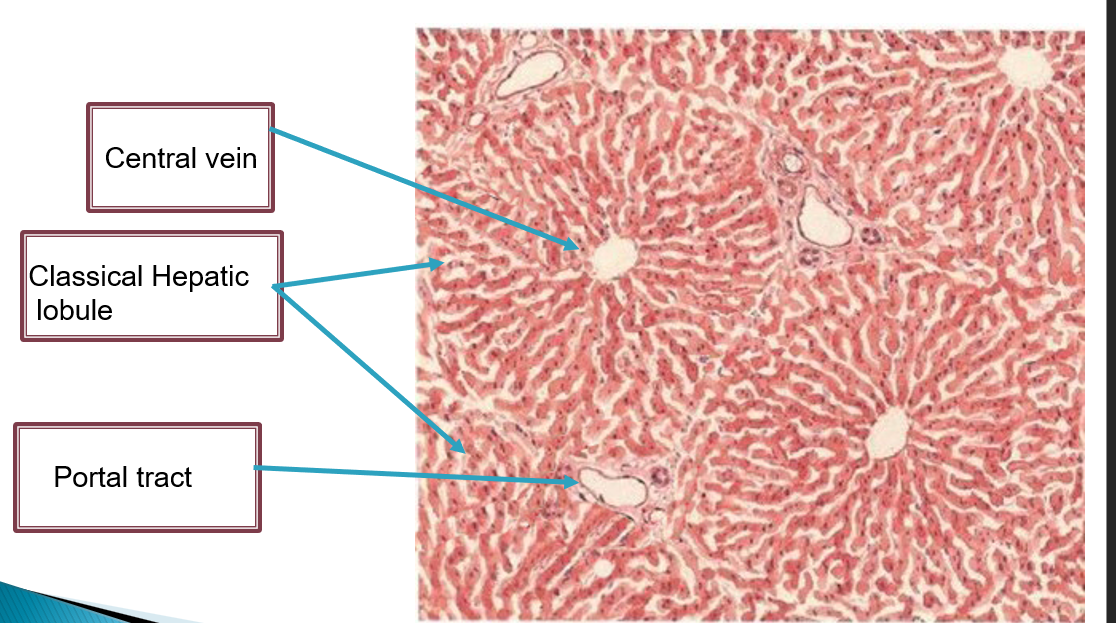
What is seen in a portal tract under microscope?
Central vein, portal canal and plates of hepatocytes

What are the histological characteristics of hepatocytes?
Contain nucleus, can be binucleated hepatocytes

What is the structure of the Gallbladder Mucosa?
Mucosa is highly folded; consists of
Epithelium: Simple columnar secretory
Corium: Loose connective tissue
Perimuscular coat: Thick fibrous CT layer partially covered with peritoneum

What is the structure of the Gallbladder Musculosa (Muscle layer)?
Thin; consists of longitudinal, transverse and oblique smooth muscle fibers
What layers are specifically lacking in the normal gallbladder wall?
Muscularis mucosae and submucosa
What are the three main functions of the gallbladder?
Storage of bile,
Concentration of bile
Evacuation of the bile into the duodenum