Opioids (Medchem)
 Call Kai
 Learn
Learn Practice Test
 Spaced Repetition
 Match
Match Flashcards
 Knowt Play
1/54

There's no tags or description
Looks like no tags are added yet.
Name | Mastery | Learn | Test | Matching | Spaced | Call with Kai | Chat |
|---|
No analytics yet
Send a link to your students to track their progress
55 Terms
Analgesia
Loss of pain without loss of consciousness
Somatic pain
Pain that originates in muscle and bone, toothache, headache, arthritic, sprains → NSAIDs
Visceral pain
Pain that originates in non-skeletal parts of the body such as gastric pain, intestinal cramps, etc. It is relieved only by opioid analgesics (fibromyalgia)
Opioid agonists
All substances, natural or synthetic, with opioid or morphine-like properties that bind with high affinity to opioid receptors (neuropathic)
Opioid antagonists
All substances that bind to opioid receptors and block or reverse the effects of opioid agonists
Endogenous opioids
There are three families of endogenous opioid peptides: endorphins, enkephalins and dynorphins
There are three principal opioid receptors:
mu, delta, and kappa. These receptors are located throughout the body and activation results in a variety of effects.
Morphine - Central nervous system effects

Morphine - Cardiovascular effects

Morphine - Gastrointestinal effects

Tolerance and Dependence

Structures of the Enkephalins (endogenous opioids): Pentapeptides (5 amino acids)

Dynorphin

Location of endogenous opioid nerve tracts in the CNS

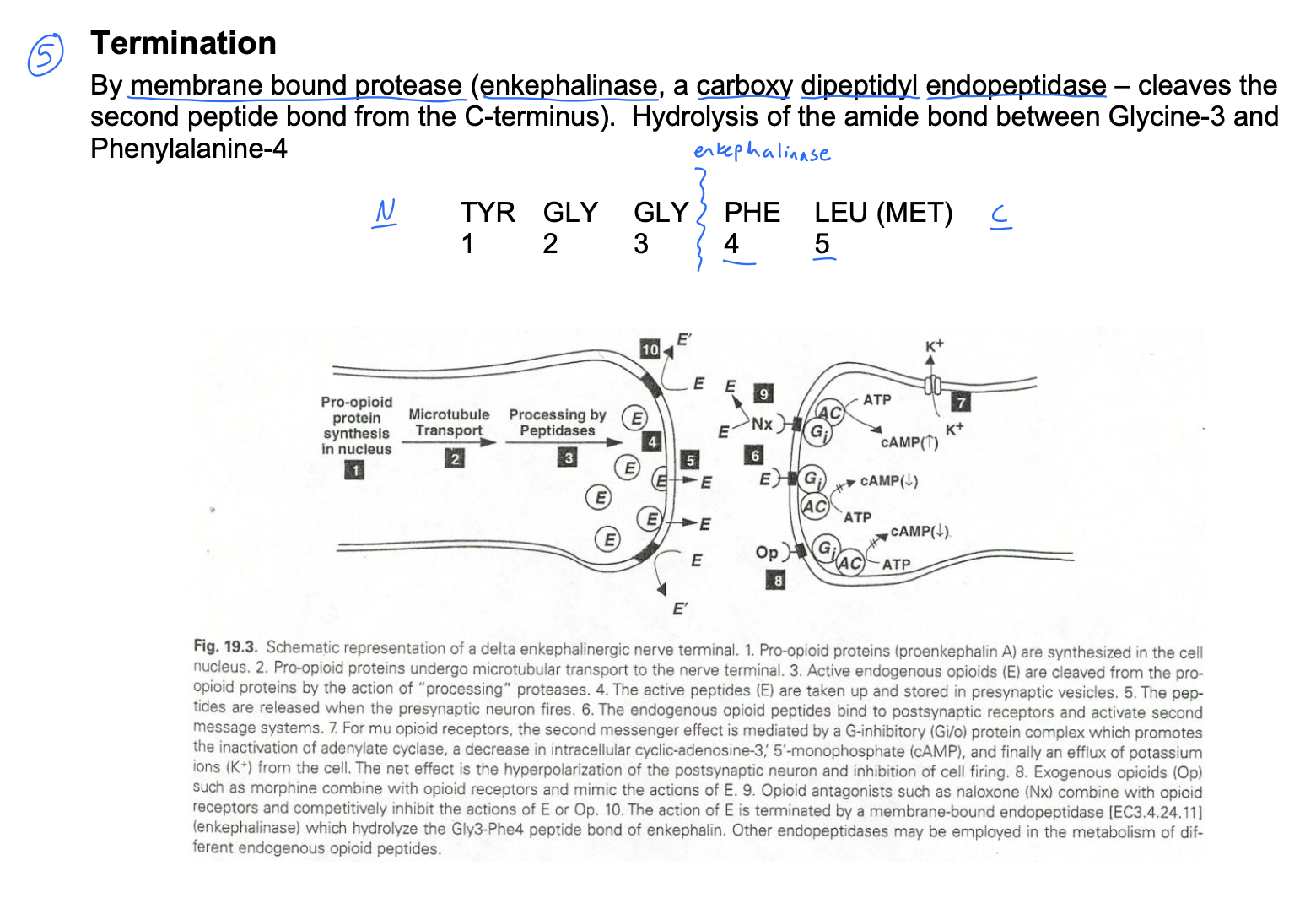
Enkephalinergic neurotransmission

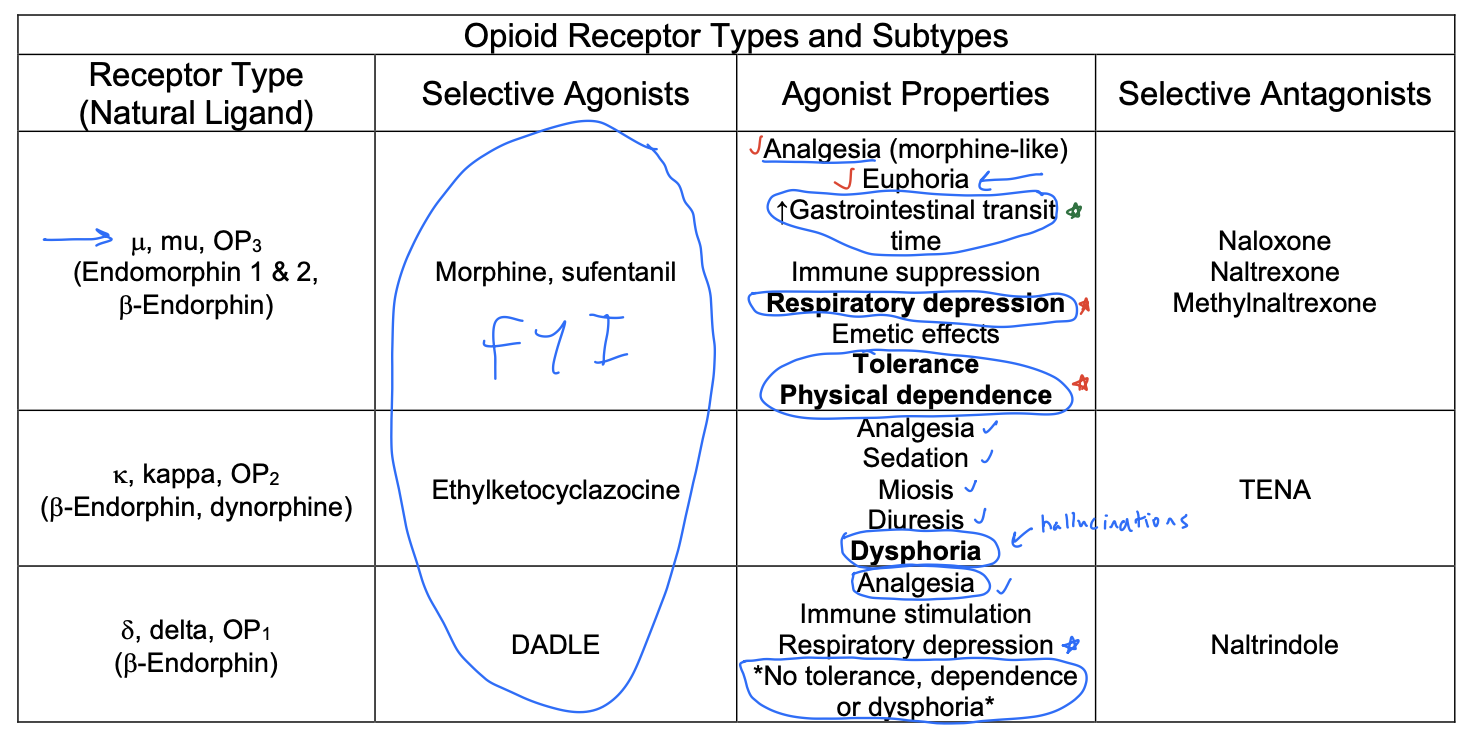
Opioid Receptor Types and Subtypes
Termination
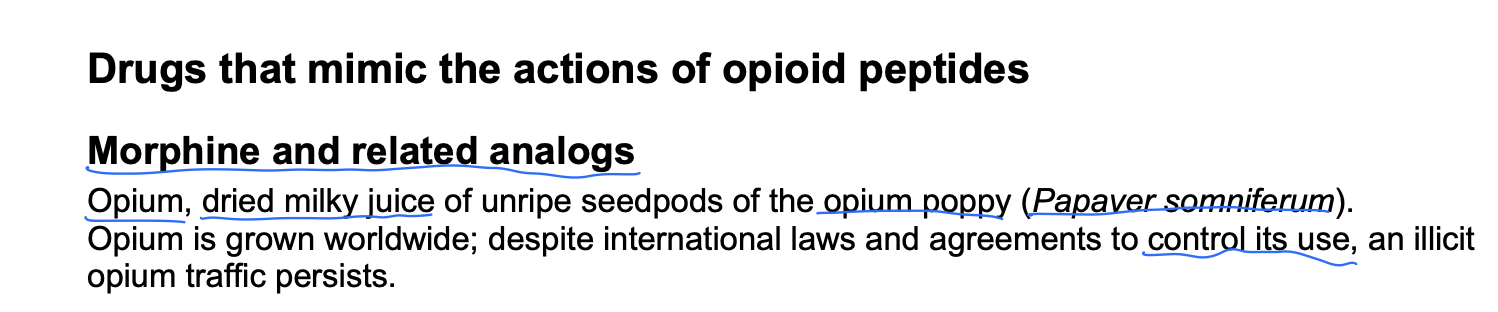
Drugs that mimic the actions of opioid peptides
Morphine and related analogs
The chief constituents of opium are:

4,5-epoxymorphinan alkaloids


Morphine Nomenclature
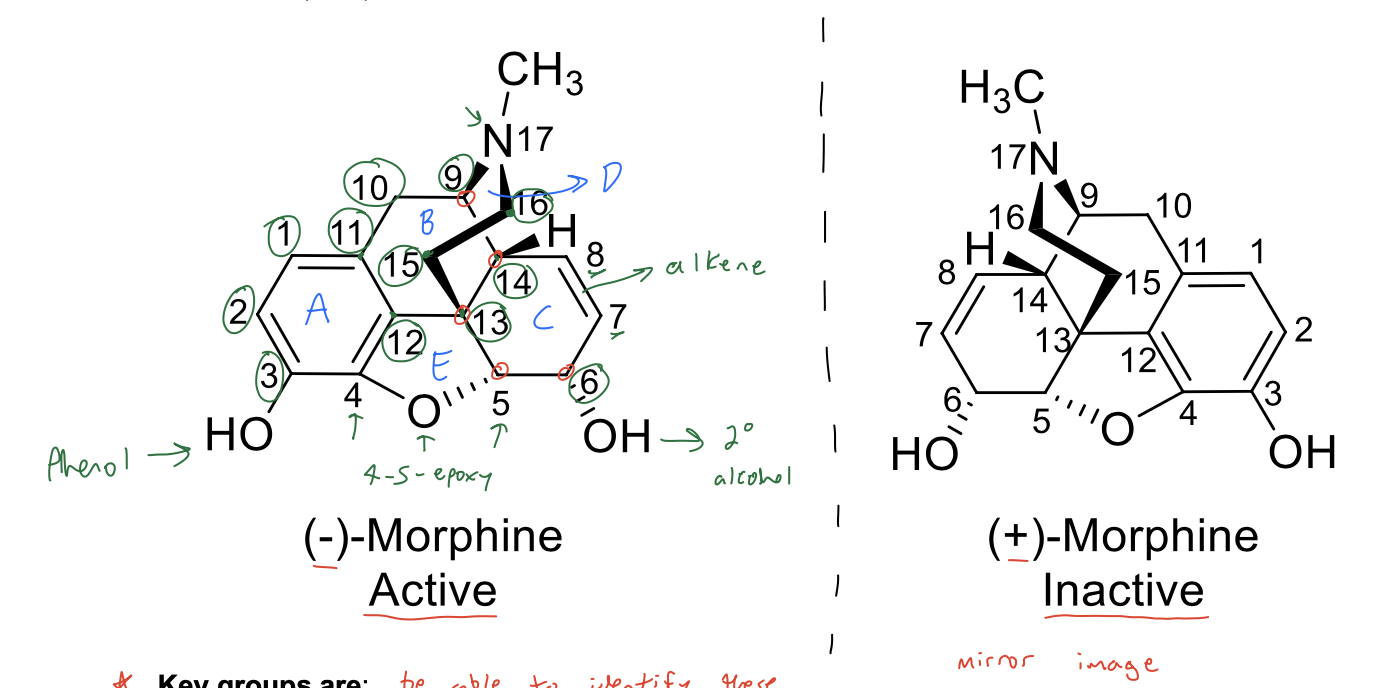
Key groups are

Peripheral modifications of Morphine
Modifications of the 3-OH group

Modifications of the 6-OH group

Converting it to the 6-keto group…

Combination of esters at 3-OH and 6-OH

Modification of the 4,5 epoxy linkage

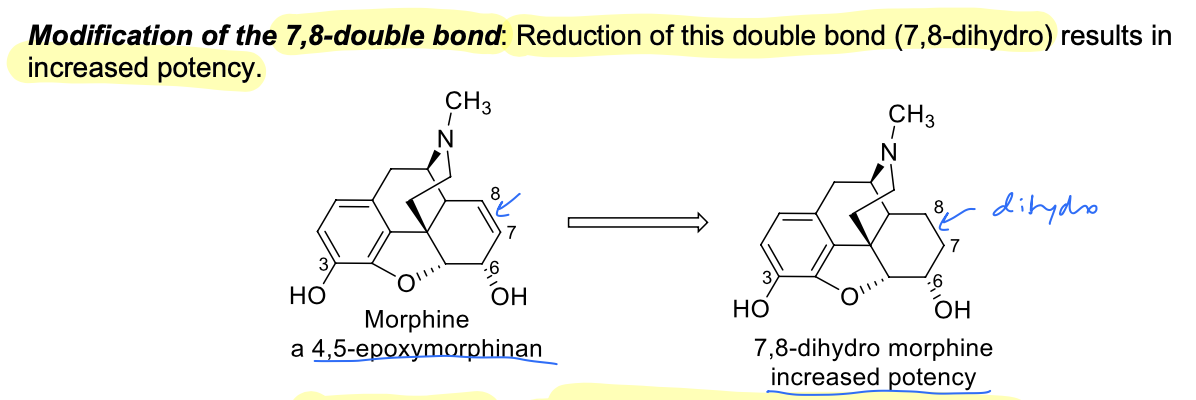
Modification of the 7,8-double bond
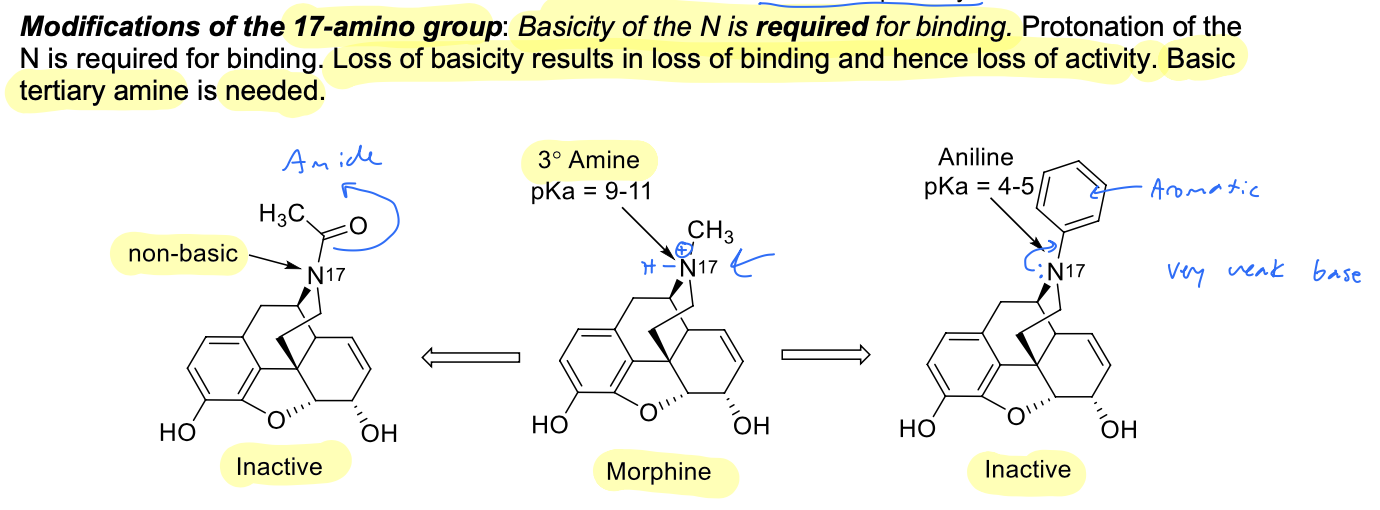
Modifications of the 17-amino group
Conversion from tertiary to secondary…

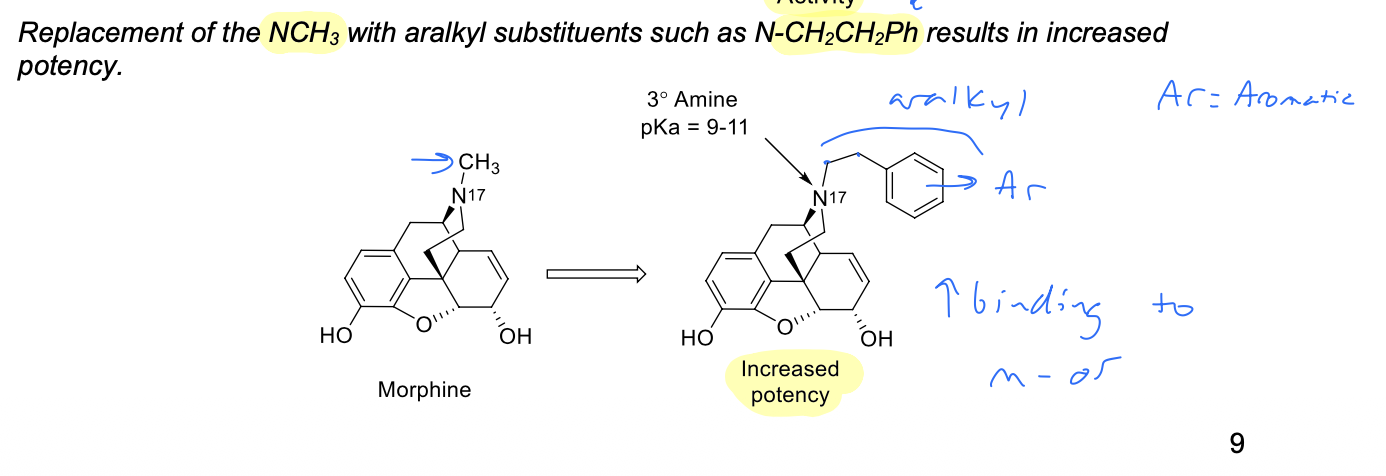
Replacement of the NCH3 with aralkyl substituents…
Replacement of NCH3 with allyl, cyclopropylmethyl groups results in…

Replacement of NCH3 with the bulkier dimethylallyl, cyclobutylmethyl groups results in…

The 14 position: A hydroxyl (OH) group at this position increases…

Commonly Prescribed Morphine Analogs (all are 4,5-epoxymorphinans or phenanthrenes)

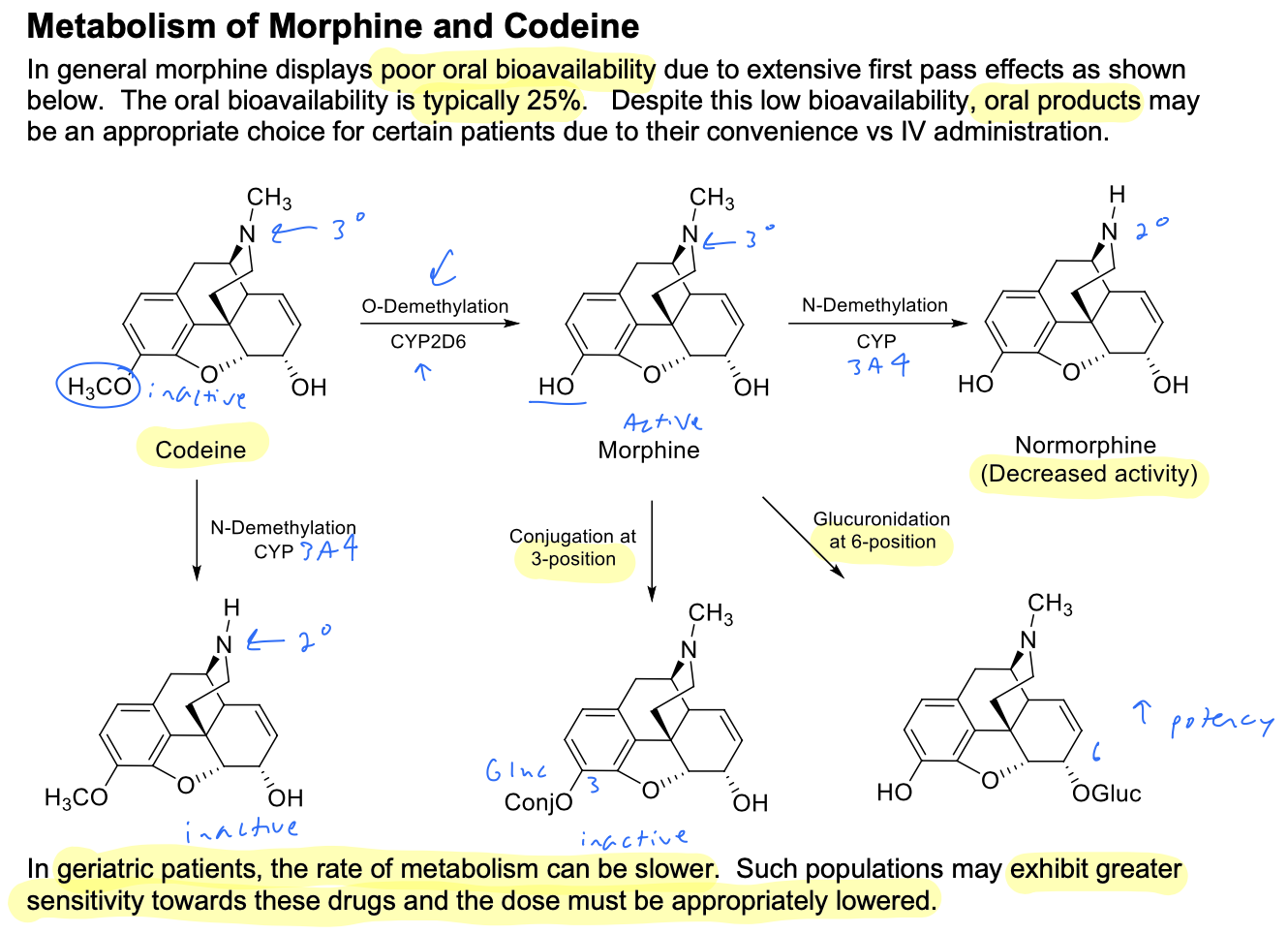
Metabolism of Morphine and Codeine
Nuclear modifications of Morphine
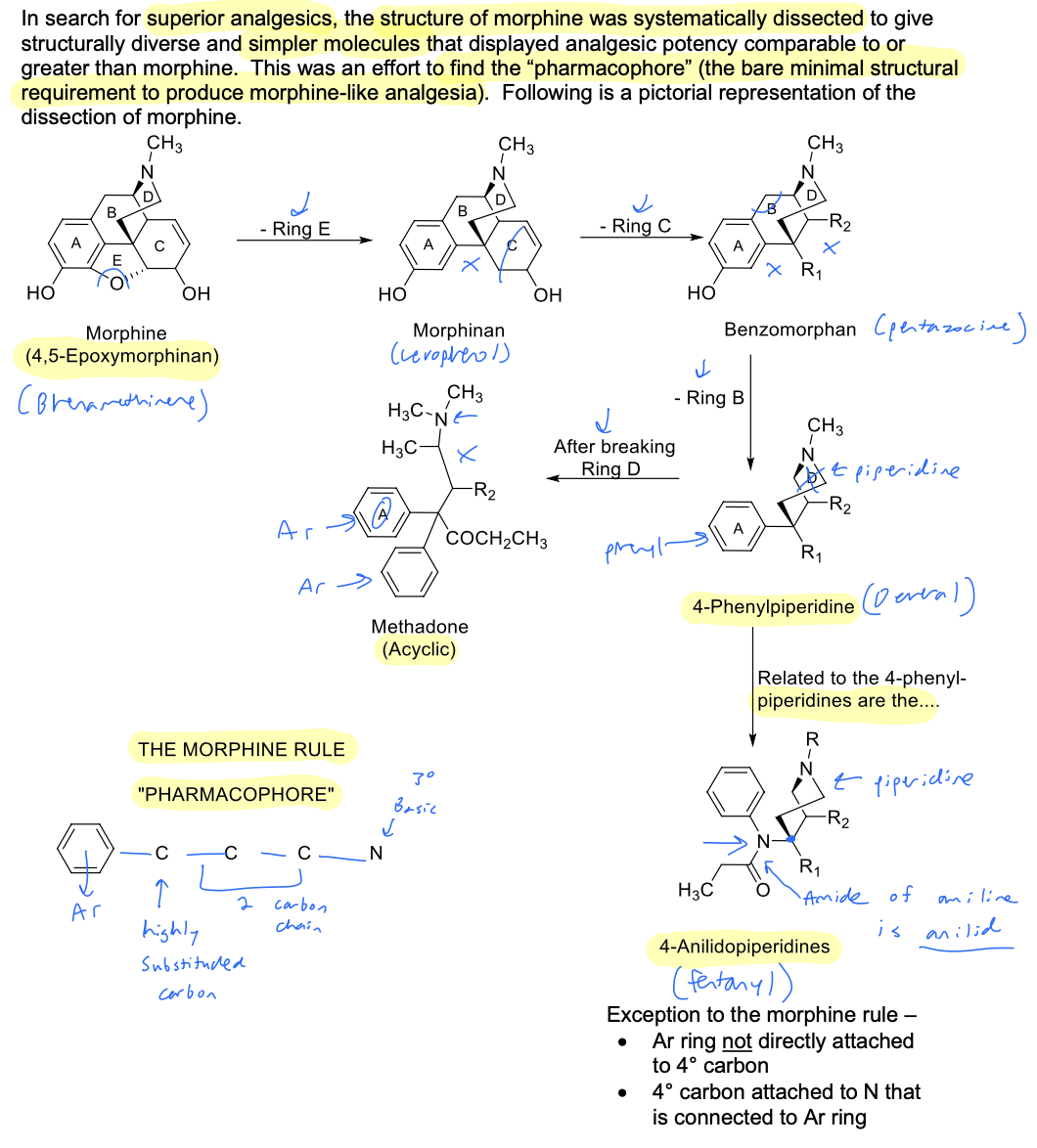
The Morphine Rule

Morphinan Derivatives (morphine minus ring E)
Levorphanol vs Dextromethorphan

Benzomorphan (AKA benzazocines) Derivatives (morphine minus rings E&C)

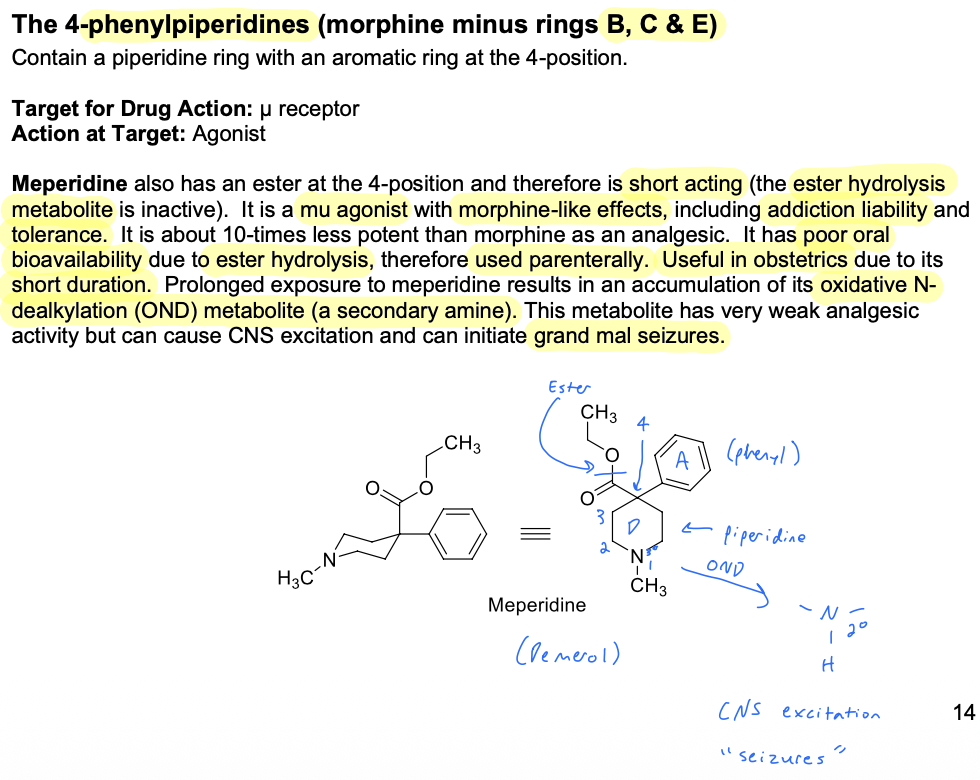
The 4-phenylpiperidines (morphine minus rings B, C & E)
Meperidine
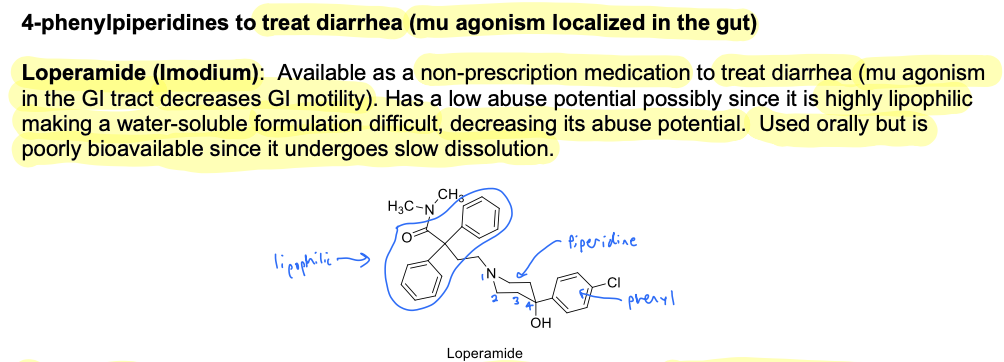
4-phenylpiperidines to treat diarrhea (mu agonism localized in the gut)
Loperamide (Imodium)
Diphenoxylate (Lomotil)

The 4-anilidopiperidines (anilide = amide of aniline)
Fentanyl
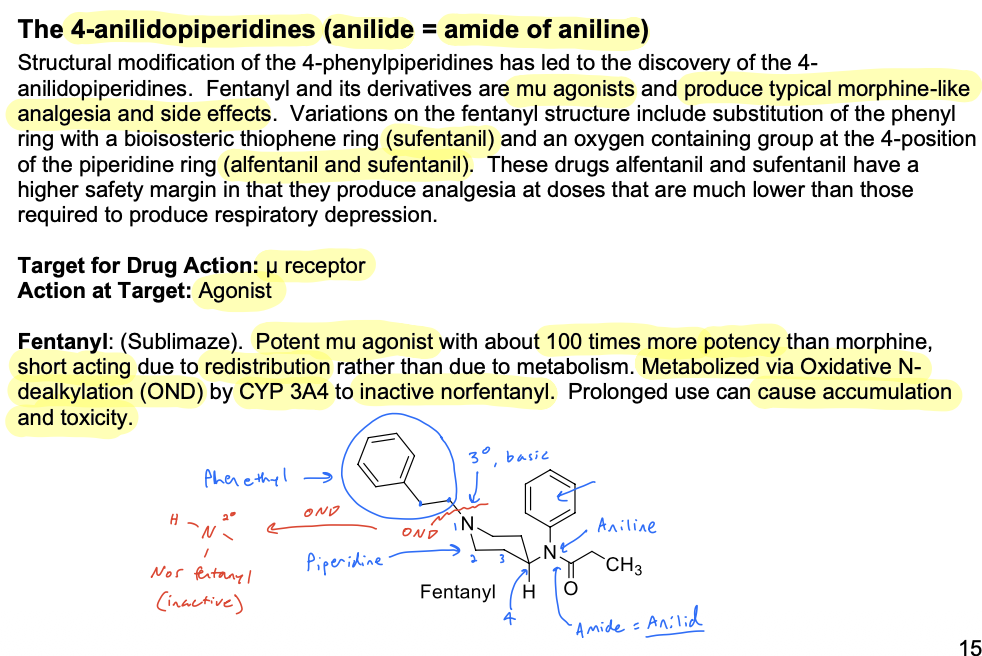
Modifications of fentanyl – newer 4-anilidopiperidines


Sufentanil (Sufenta):


Alfentanil (Alfenta):


Remifentanil (Ultiva):

Open Chain Derivatives
Methadone

Dual action opioids (mu agonists + NE/5-HT uptake blockers)
Recent Nuclear Modifications of Morphine: Development of Tramadol:

Tapentadol (Nucynta)
Phenol top right corner

Analgesic Antagonists (mu antagonists) – all are 4,5-epoxy morphinans

Mixed acting agents (mu partial agonists and kappa agonists)

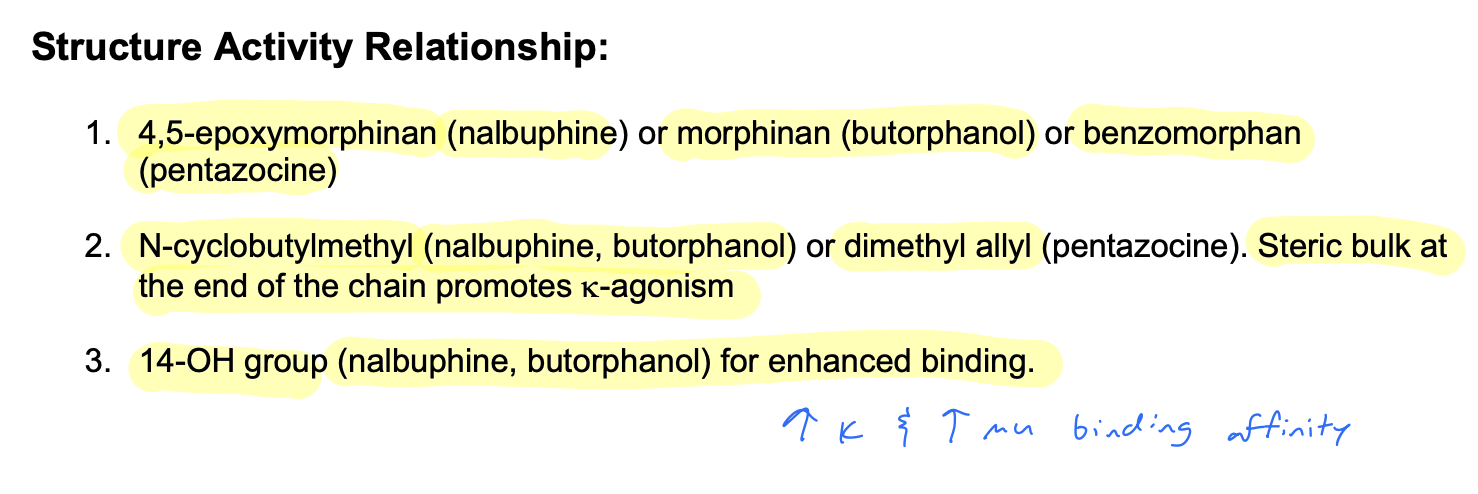
Structure Activity Relationship:
Pharmacogenomics and Opioids
