slide show 3
 Call Kai
 Learn
 Practice Test
 Spaced Repetition
 Match
 Flashcards
 Knowt Play
1/30

There's no tags or description
Looks like no tags are added yet.
31 Terms

Title & Date: Hagia Sophia, 532–537
Period: Early Byzantine
Artists: Anthemius of Tralles and Isidorus of Miletus
Context & Vocabulary: Commissioned by Emperor Justinian in Constantinople, this Early Byzantine masterpiece combines a longitudinal basilica plan with a central plan. Its architects used pendentives to rest a soaring central dome over a square base, creating a ringed clerestory that floods the central nave with divine light to showcase royal patronage and imperial power
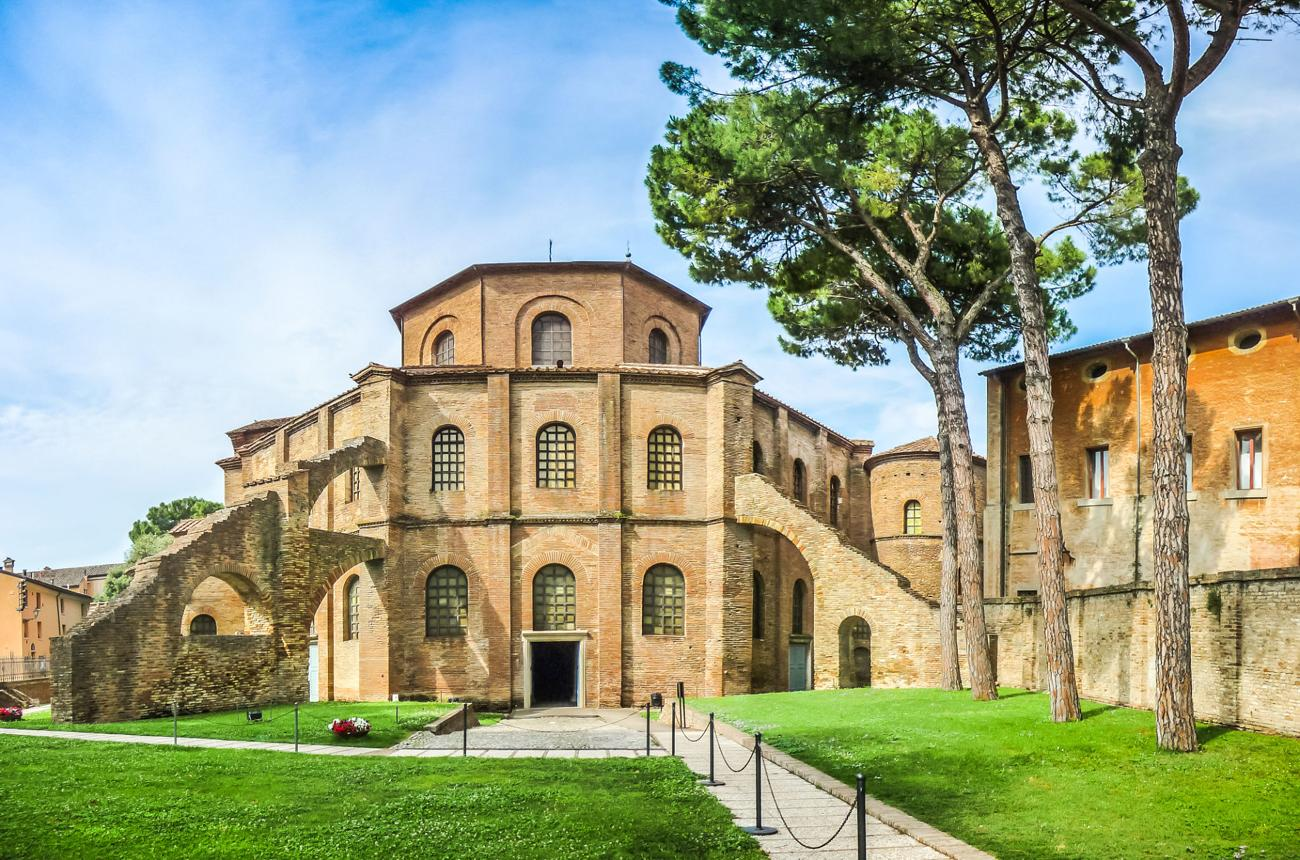
Title & Date: Church of San Vitale, c. 547 (Artist: Unknown)
Period: Early Byzantine
Context & Vocabulary: An octagonal central plan church in Ravenna, Italy, featuring a plain brick exterior contrasting with a glittering mosaic interior. It incorporates an ambulatory wrapping around a domed central space and a lavishly decorated apse containing imperial portraits of Justinian and Theodora, asserting Byzantine political and religious authority over the newly reconquered Western Roman lands.

Title & Date: Christ between Two Angels, Saint Vitalis, and Bishop Ecclesius (San Vitale), c. 547 (Artist: Unknown)
Period: Early Byzantine
Context & Vocabulary: Located in the apse of San Vitale, this mosaic depicts a youthful, royal Christ seated on a blue celestial orb representing world dominion. He presents a martyr's crown to Saint Vitalis while receiving a model of the church from Bishop Ecclesius, using shimmering gold glass tesserae to symbolize divine, heavenly authority over earthly rulers.

Title & Date: Emperor Justinian, Bishop Maximianus, and Attendants (San Vitale), c. 547 (Artist: Unknown)
Period: Early Byzantine
Context & Vocabulary: Located in the apse of San Vitale, this Early Byzantine mosaic shows Emperor Justinian bearing a paten for the Eucharist. Rejecting classical verism and intuitive perspective, the flat, floating figures emphasize imperial patronage and divine authority, visually linking the emperor's rule with religious devotion.

Title & Date: Archangel Michael (Diptych Panel), early 6th century (Artist: Unknown)
Period: Early Byzantine
Context & Vocabulary: An ivory relief panel depicting the archangel holding a orb and staff, standing before a classical archway. While his naturalistic face and flowing drapery echo classical Greco-Roman realism, his feet hover impossibly across three stairs, ignoring spatial logic and intuitive perspective to signal that he belongs to a divine, spiritual realm rather than the physical world.

Title & Date: Crucifixion (Church of the Dormition, Daphni), 1090–1100 (Artist: Unknown)
Period: Middle Byzantine
Context & Vocabulary: A wall mosaic depicting Christ on the cross flanked by the Virgin Mary and Saint John against a flat gold background. Marking the Middle Byzantine shift toward human emotion (pathos), it presents a sagging, humanized Christ with closed eyes and bleeding wounds, inviting viewers to emotionally contemplate his physical sacrifice during the Eucharist.
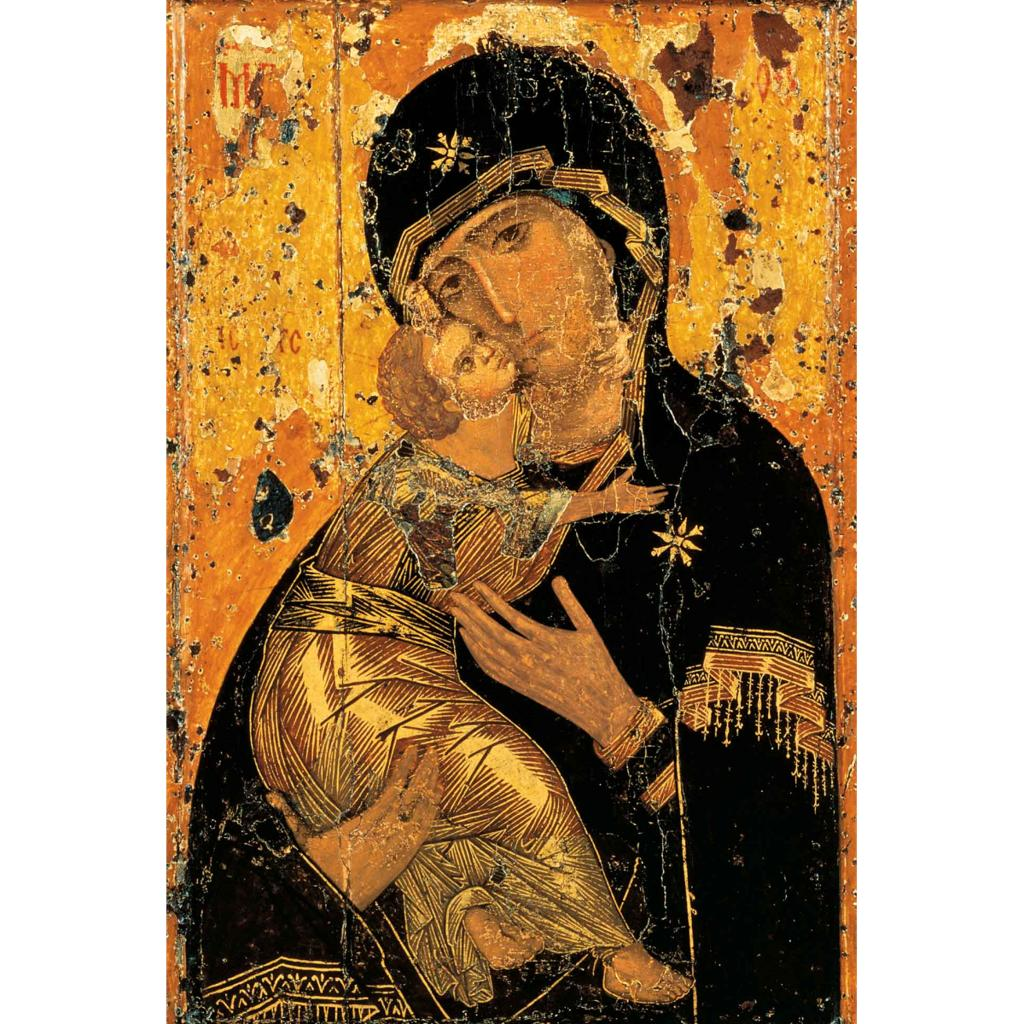
Title & Date: Vladimir Virgin, late 11th–12th centuries (Artist: Unknown)
Period: Middle Byzantine
Vladimir VirginContext & Vocabulary: A tender Middle Byzantine icon painting depicting Mary pressing her cheek to the Christ Child in an Eleusa (compassionate) pose, serving as a sacred devotional image for prayer. Rescued from the destruction of Byzantine iconoclasm, this tempera work exemplifies the period's shift toward conveying human emotion and divine intimacy, heavily influencing Eastern Orthodox art with its stylized yet deeply personal expression of maternal tenderness.

Title & Date: Christian House Church at Dura-Europos, c. 240–256 (Artist: Unknown)
Period: Early Christian
Context & Vocabulary: A modified Roman domus (house church) serving as the earliest known Christian place of worship. Built before Constantine's legalization of Christianity, it contains a central courtyard and a dedicated baptistery room decorated with wall paintings of the Good Shepherd and biblical scenes, reflecting private, secretive community worship prior to state support.

Title & Date: Catacomb of Saints Peter and Marcellinus, early 4th century (Artist: Unknown)
Period: Early Christian
Context & Vocabulary: A subterranean ceiling fresco from an Early Christian burial vault featuring Christ as the Good Shepherd framed by lunettes of Jonah and arms-raised orant figures. The composition relies on symbolic storytelling rather than naturalistic intuitive perspective, prefiguring Christ’s Resurrection through Old Testament narratives to express belief in eternal salvation
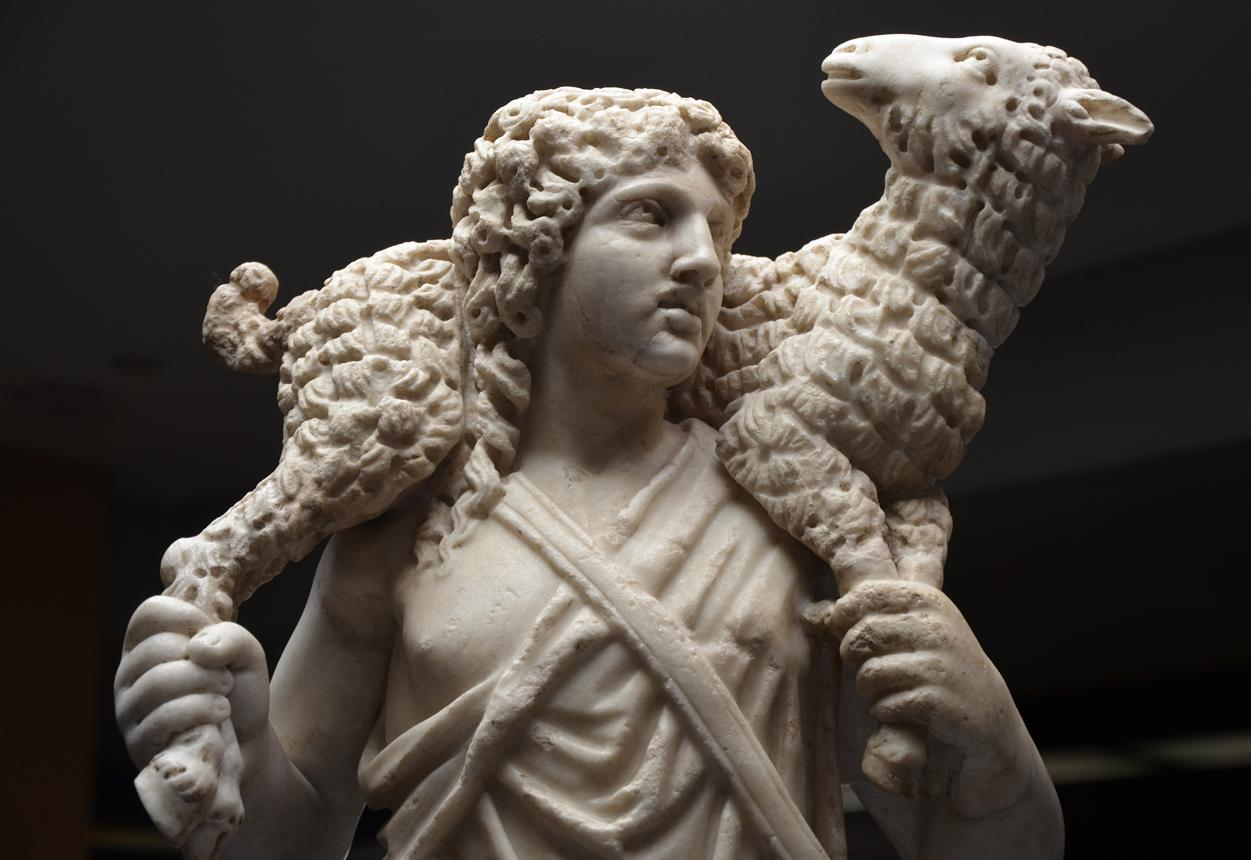
Title & Date: The Good Shepherd, 3rd century (Artist: Unknown)
Period: Early Christian
Context & Vocabulary: A small marble statuette adapting the classical pagan motif of the kriophoros (ram-bearer) to covertly represent Christ saving lost souls. Created before Constantine's legalization of Christianity, its youthful, Roman-style figure and contrapposto stance blend Greco-Roman realism with early Christian symbolism without raising suspicion from imperial authorities.

Title & Date: Old St. Peter’s, c. 320–327 (Commissioned by Emperor Constantine)
Period: Early Christian
Context & Vocabulary: Commissioned by Emperor Constantine, this monumental Early Christian church adapted the Roman basilica plan to suit Christian worship. It featured a wide central nave, illuminated by a high clerestory, leading to a focal apse positioned directly over St. Peter’s tomb to accommodate large congregations gathering for the Eucharist.

Title & Date: Santa Sabina, 422–432 (Artist: Unknown)
Period: Early Christian
Context & Vocabulary: A pristine example of an Early Christian basilica plan church in Rome. Constructed with a long nave flanked by side aisles, its reused Corinthian marble columns (spolia) form a dominant colonnade that leads the viewer's eye straight toward the focal apse, while translucent selenite clerestory windows flood the wooden-roofed interior with natural, heavenly light.
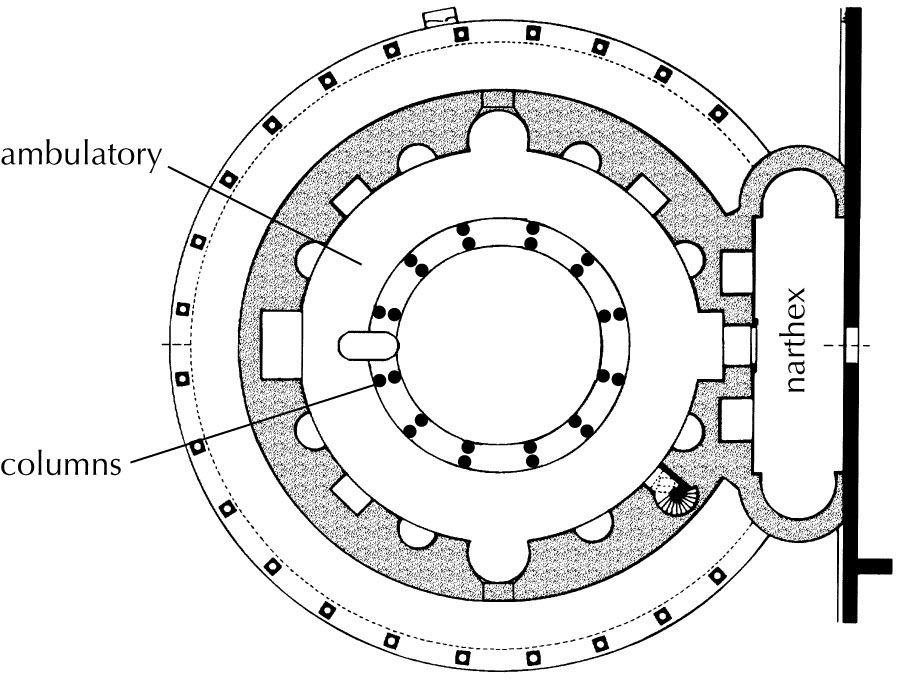
Title & Date: Santa Costanza, c. 350 (Artist: Unknown)
Period: Early Christian
Context & Vocabulary: Built as a domed imperial mausoleum, this Early Christian structure features a central plan encircled by a vaulted ambulatory ringed with columns. Adapting traditional Roman circular architecture for Christian worship, its layout influenced future baptisteries and churches while housing famous vaulted ceiling mosaics above the central space.

Title & Date: Harvesting of Grapes (Santa Costanza), c. 350 (Artist: Unknown)
Period: Early Christian
Context & Vocabulary: Located in the ambulatory barrel vault of Santa Costanza, this ceiling mosaic depicts cherub-like figures harvesting and pressing grapes. It highlights how Early Christian art repurposed pagan Dionysian wine motifs to represent sacred Christian symbolism, specifically referencing the Eucharist and eternal salvation.

Title & Date: Christ as the Good Shepherd (Mausoleum of Galla Placidia), c. 425 (Artist: Unknown)
Period: Early Christian
Context & Vocabulary: Located above the entrance in the Mausoleum of Galla Placidia, this Early Christian lunette mosaic depicts Christ as the Good Shepherd framed by sheep. Dressed in royal purple and gold rather than humble rustic attire, he holds a imperial cross, using classical composition and intuitive perspective to project his divine authority and triumph over death.

Title & Date: The Orator (Aulus Metellus), early 1st century BCE (Artist: Unknown)
Period: Etruscan / Republican Rome
Context & Vocabulary: A life-sized bronze portrait statue depicting an Etruscan magistrate wearing Roman toga and boots with his right arm raised to address a crowd, blending Etruscan bronze-casting traditions with Roman verism and civic leadership.
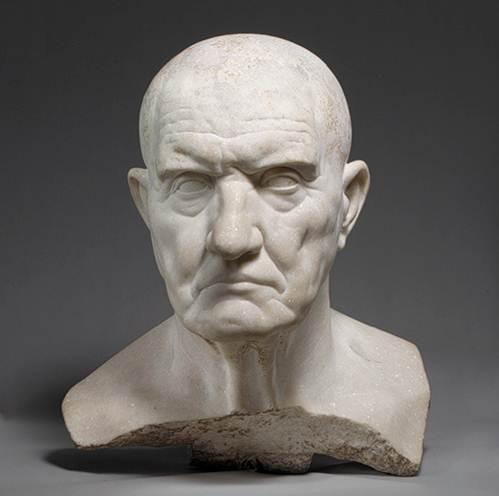
Title & Date: Head of an Old Man (Scoppito Head), 1st century BCE (Artist: Unknown)
Period: Republican Rome
Context & Vocabulary: A marble portrait bust demonstrating extreme verism, using deep wrinkles and sunken cheeks to emphasize age, experience, and civic devotion over idealized Greek beauty.
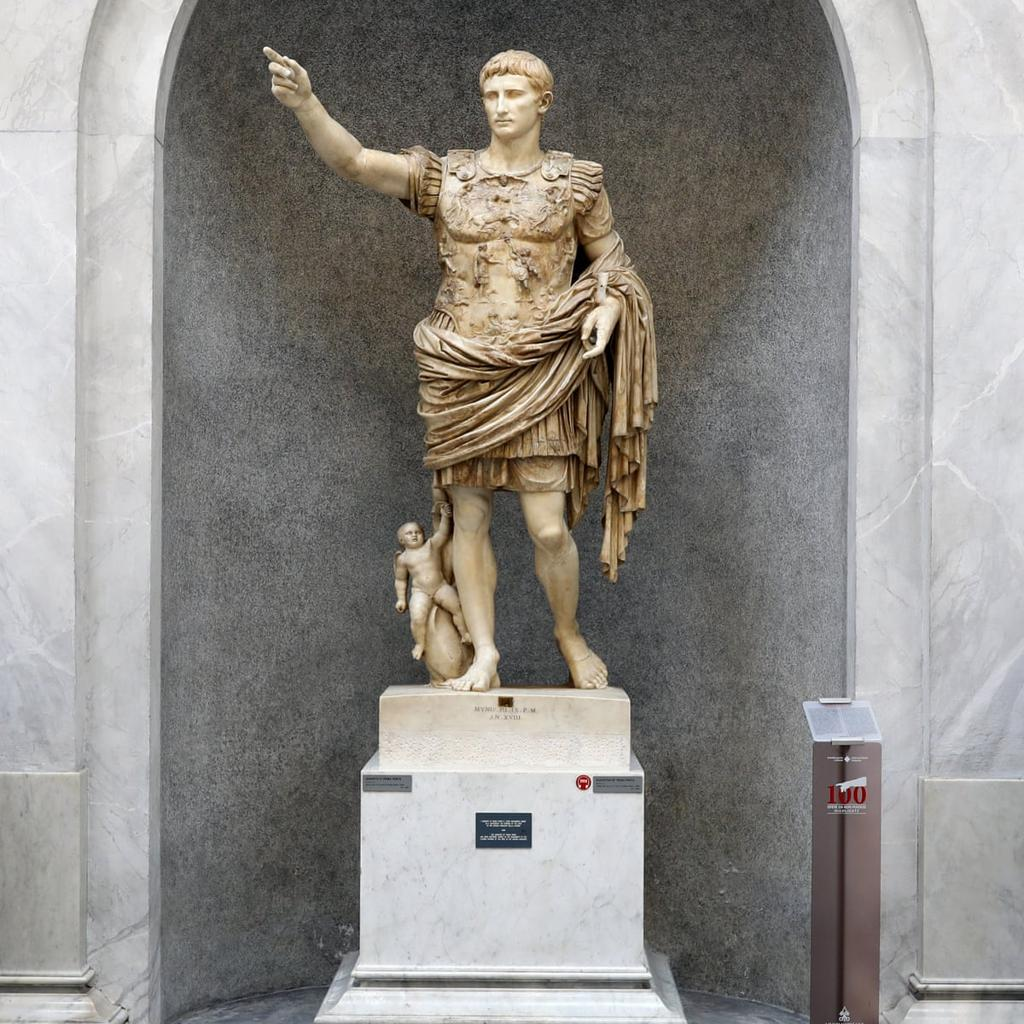
Title & Date: Augustus of Primaporta, 1st century CE copy of c. 20 BCE bronze (Artist: Unknown)
Period: Imperial Rome
A marble statue depicting Rome's first emperor as an ageless, idealized commander raised in an orator's pose (adlocutio). Modeled after classical Greek sculpture (Doryphoros) using contrapposto, it functions as state propaganda: his detailed cuirass shows diplomatic military triumph, while the cupid at his ankle asserts divine lineage from Venus.

Title & Date: Ara Pacis Augustae (Altar of Augustan Peace), 13–9 BCE (Artist: Unknown)
Period: Imperial Rome
Context & Vocabulary: An open-air marble altar featuring relief friezes of imperial family processions and allegorical figures celebrating civic piety, peace, and dynastic prosperity under Augustus. Blending classical Greek idealization with Roman verism, the reliefs project political propaganda through detailed portraits of actual citizens, children, and leaders to encourage moral reform and secure political stability.
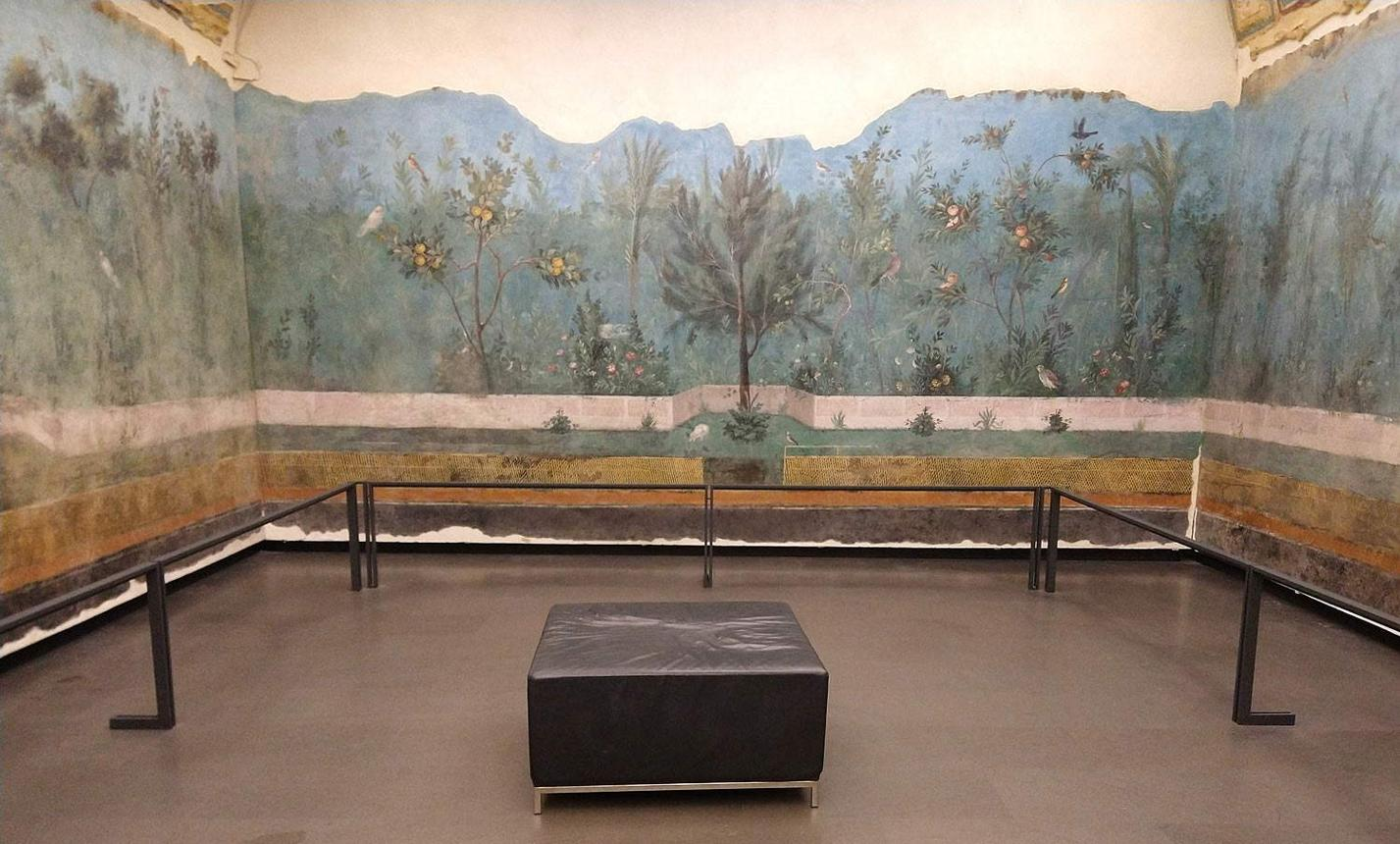
Title & Date: Garden Scene, Villa of Livia at Prima Porta, c. 30–20 BCE (Artist: Unknown)
Period: Early Imperial Rome
Context & Vocabulary: A subterranean dining room (triclinium) featuring continuous Second Style Roman wall painting. It uses atmospheric perspective—blurring distant trees and softening background colors—to dissolve the physical walls and create a 360-degree illusionistic garden filled with precisely rendered plants, fruits, and birds that symbolize eternal peace and agricultural prosperity under Augustan rule.

Title & Date: Portrait of a Husband and Wife, Pompeii, 4th Style, c. 70–79 CE (Artist: Unknown)
Period: Imperial Rome
Context & Vocabulary: A Fourth Style fresco from Pompeii depicting a middle-class couple holding a rotulus (scroll) and stylus to project literacy, refinement, and elevated civic standing. The painting employs Roman verism to capture their realistic, individualized features while utilizing intuitive perspective to give depth to the figures and spatial setting, reflecting how Roman citizens used domestic portraiture to emphasize personal accomplishments and social status.

Title & Date: Colosseum (Flavian Amphitheater), Rome, 70–80 CE (Commissioned by Vespasian)
Period: Imperial Rome
Context & Vocabulary: A massive public arena constructed using concrete, stacked rounded arches, and barrel vaults, layered with exterior Doric, Ionic, and Corinthian order engagement to seat 50,000 spectators.
Title & Date: Column of Trajan, Rome, 112 CE (Architect: Apollodorus of Damascus)
Period: Imperial Rome
Context & Vocabulary: A 128-foot marble victory column wrapped in a 625-foot continuous spiral narrative frieze depicting Emperor Trajan's successful military campaigns against the Dacians. Standing in Trajan's Forum between two libraries, it uses low-relief carving to emphasize Roman engineering, fortification construction, and imperial propaganda over actual battle violence, while serving as a funerary monument for Trajan's ashes placed in the pedestal base.

Title & Date: Pantheon, Rome, 118–125 CE (Commissioned by Hadrian)
Period: Imperial Rome
Commissioned by Emperor Hadrian, the Pantheon (118–125 CE) transitions from a traditional Corinthian columned porch into a vast concrete rotunda topped by a 143-foot dome made light through graded concrete and weight-reducing ceiling coffers. At its apex, a 27-foot open oculus serves as the sole light source, illuminating the marble interior while visually linking the temple to the cosmos.

Title & Date: Equestrian Statue of Marcus Aurelius, c. 175 CE (Artist: Unknown)
Period: Imperial Rome
Context & Vocabulary: A rare surviving gilded bronze statue depicting the philosopher-emperor on horseback with his arm extended in a gesture of clemency, using hierarchical scale and balanced posture to convey effortless control and civic authority over military force. It famously survived the Middle Ages intact because Christian authorities misidentified the ruler as Constantine, sparing it from being melted down for coinage or scrap metal like most other ancient bronze works.

Title & Date: The Tetrarchs, c. 300 CE (Artist: Unknown)
Period: Late Imperial Rome
Context & Vocabulary: A porphyry sculpture showing four co-rulers embracing in rigid, blocky forms, rejecting classical verism to symbolize political unity and shared power under the Tetrarchy.
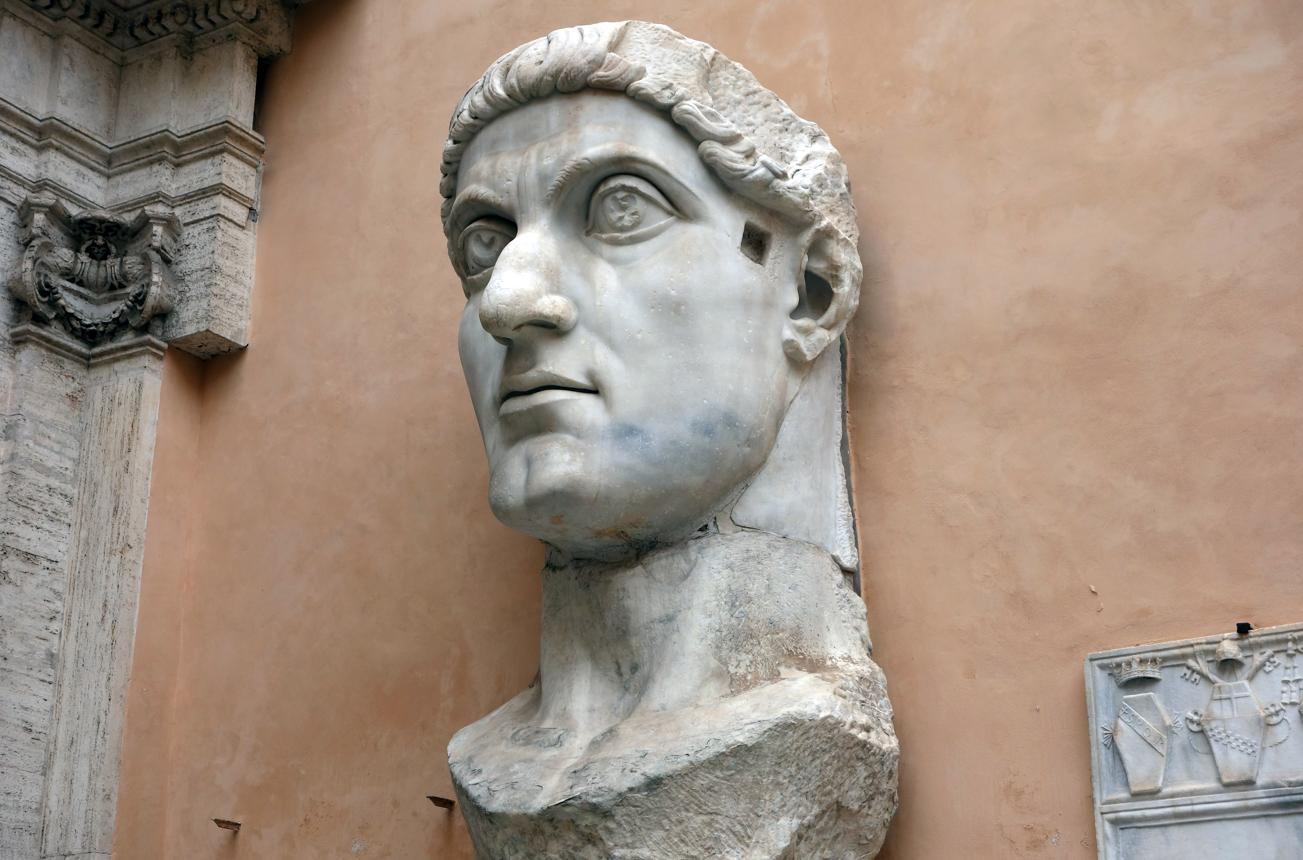
Title & Date: Colossal Head of Constantine, c. 325–326 CE (Artist: Unknown)
Period: Late Imperial Rome
Context & Vocabulary: A massive marble head—originally part of a giant seated acrolithic statue in the Basilica Nova—featuring oversized, stylized eyes gazing upward. Rejecting classical verism and individualized portraiture, it uses simplified, geometric forms to convey the emperor's eternal, divine authority and spiritual majesty rather than his physical mortality.
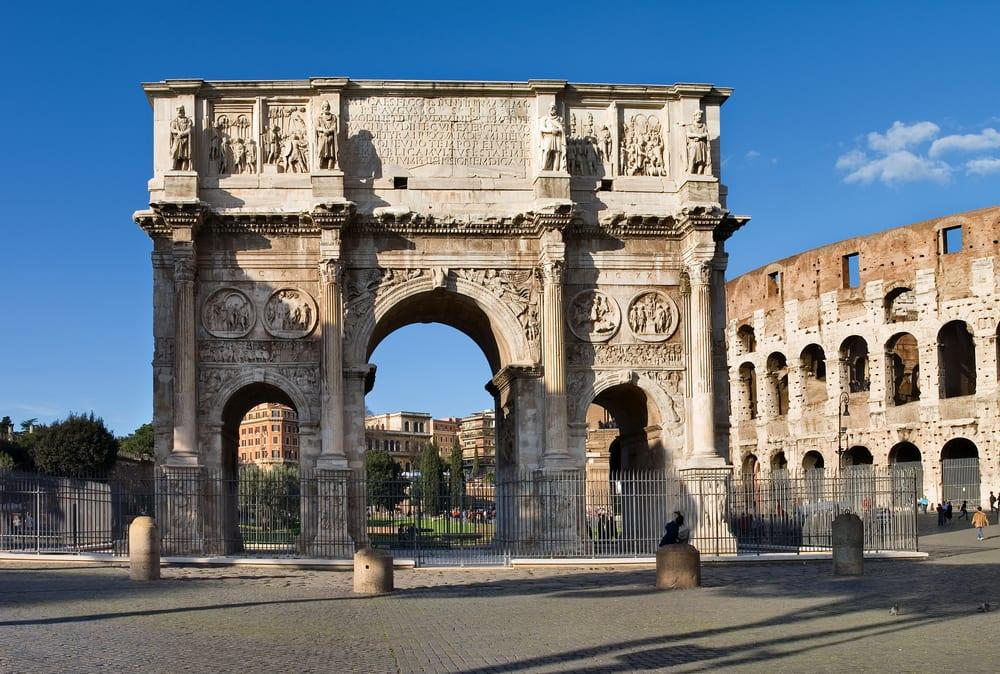
Title & Date: Arch of Constantine, Rome, 312–315 CE (Commissioned by Constantine)
Period: Late Imperial Rome
Context & Vocabulary: A monumental triumphal arch featuring spolia (recycled reliefs) from earlier golden-age emperors to legitimize Constantine’s rule. Erected near the Colosseum, its three rounded archways blend repurposed classical sculpture with new, stylized Late Antique reliefs that reject traditional verism in favor of flat, hieratic figures to emphasize imperial authority.
Ancient Rome Art
Characteristics: Realistic, civic-focused, large-scale political propaganda.
Greek Influence: Adopted Greek styles/orders, adapted them using concrete for interior spaces.
Imperial Propaganda: Used monuments like the Triumphal Arch to project state authority.
Portrait Progression: Verism (Republic age/wrinkles) → Classical Ideal (Augustan youth) → Abstract/blocky (Tetrarchy).
Architecture/Concrete: Rounded arch, barrel vault, groin vault, and oculus created unencumbered interior spaces.
Late Empire: Tetrarchy brought rigid, identical styling; Constantine legalized Christianity (313 CE) and moved the capital east.
Christian Art
Characteristics: Symbolic, narrative, spiritual; rejected realism and intuitive perspective.
Repurposing Traditions: Reinterpreted pagan imagery (Good Shepherd) and Roman civic buildings for worship.
Edict of Milan Impact: Shifted art from secret catacomb frescoes with orant figures to public imperial structures.
Architecture Types:
Basilica Plan: Long nave, side aisles, clerestory light, terminal apse for Eucharist.
Central Plan: Circular domed layout surrounded by an ambulatory
Byzantine Art
Characteristics: Gold mosaics, flat depth, weightless figures, heavenly focus.
Imperial Patronage: Justinian funded churches (Hagia Sophia, San Vitale) to show divine right.
Human Emotion: Post-iconoclasm art added tender emotion (Vladimir Virgin) to connect with viewers.
Icons & Devotional Use: An icon is a painted wood panel serving as a prayer window to the divine.
Iconoclasm: Imperial destruction of sacred images (726–843 CE) over idolatry fears