bio 225 exam 3: digestion
 Call Kai
 Learn
 Practice Test
 Spaced Repetition
 Match
 Flashcards
 Knowt Play
1/50

There's no tags or description
Looks like no tags are added yet.
51 Terms
why do we eat?
psychological reasons
eating is:..
pleasurable
connected to other emotions
social
sensory appeal
nutrition/digestion (our focus)
1st law of thermodynamics - conversation of energy
energy in = energy out
2nd law of themodynamics - entropy
disorder (death) within an isolated system always increase without the input of energy
we eat to be alive:
maintain order (health) within our body
grow (growth/development)
reproduce (reproduction)
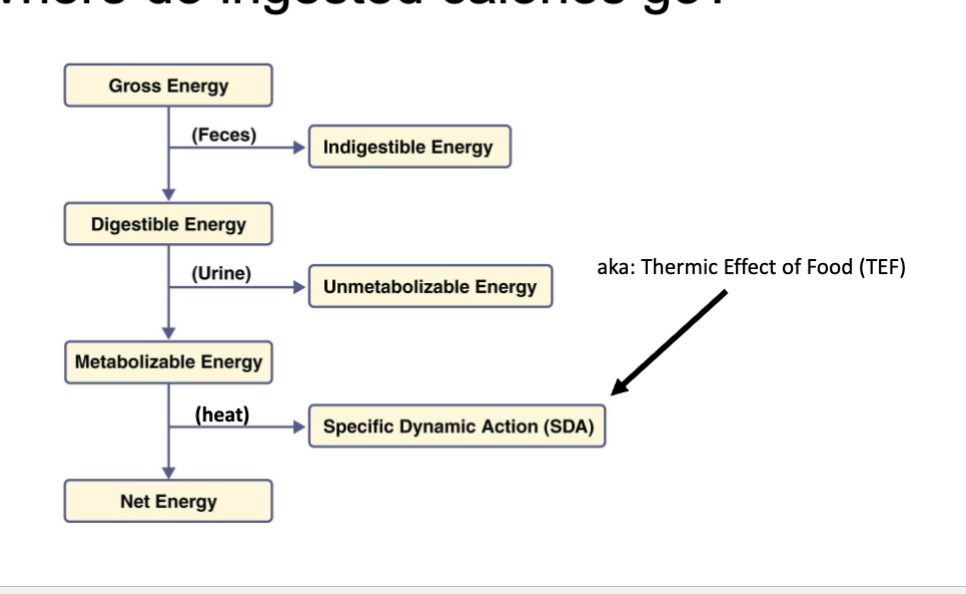
where do ingested calories go?
gross energy
feces → indigestible energy
digestible energy
urine → unmetabolizable energy
metabolizable energy
heat → specific dynamic action (SDA)
net energy
digestible (absorbable) nutrients - caloric
lipids (fats)
carbs
proteins
lipids (fats)
~9kCal/gram; C, H
glycerol with up to 3 fatty acid side chains
can be saturated, mono-unsaturated, or poly-unsaturted
kCal source/hormones/cell membranes
carbs
~4kCal/gram 1C:2H:1O
composed of chains of monosaccharides
main kCal source/structural/membrane_components/kCal storage
proteins
~4kCal/gram; H, C, O, N, S
composed of chains of amino acids
most abundant in the human body
structural, enzymatic, antibodies, hormones, membrane components
fatty acids (FAs)
saturated FA: no double bonds
unsaturated FA: 1 or more double bonds
2 classes of “essential” FAs
omega-3 fatty acid: found in flax seed oil, fatty fish, chia, walnut
omega-6 fatty acid: found in vegetable oils, nuts, seeds

carbs
typically from plant sources
glycogen source from meat, but minimal
fiber is indigestible (cellulose/chitin)
some starch is resistant to digestion
can be degraded by the microbiome
proteins
linear chain of amino acids
sources include meat (complete) and vegetable sources
20 total amino acids (in humans)
9 “essential” AA
serve structural, enzymatic, hormonal, etc. functions within humans
digestible (absorbable) nutrients - non-caloric
vitamins
minerals
water
vitamins
organic molecules which function as co-enzymes and other important metabolic functions
often not just one form - vitamers
generally required in small amounts
13 essential vitamins
grouped into fat soluble and water soluble
deficiency and toxicity is a problem
requirements are highly debated
minerals
inorganic compounds/elements
required in small amounts, except calcium and phosphorus
many important functions in metabolism
basic “organic” minerals: C, H, O, N (not dietary minerals)
quantity minerals: Na, Mg, P, S, Cl, K, Ca
trace minerals: Mn, Fe, Co, Cu, Zn, Se, Mo, I
water
most abundant inorganic molecule
humans = 60-75% water
necessary to control pH, BP, enzymatic reactions, etc.
metabolism (2 types)
metabolism: the sum process of molecular synthesis and breakdown in an organism
anabolism: synthesis of biomolecules from component molecules or elements
occurs during energy storage
requires energy input
catabolism: breakdown of biomolecules
occurs during digestion
releases stored energy

energy balance: excess energy
if food take > energy expenditure: anabolism
1st: muscle + liver store energy as glycogen (polymer of glucose)
2nd: if glycogen stores are full, excess energy converted to fat
energy balance: depleted energy
if food intake < energy expenditure: catabolism
1st: liver glycogen is broken down into glucose
2nd: if liver glycogen is depleted, glucose is taken from muscle and fat
digestive system fuctions
nutrient sensing
mechanical digestion
chemical digestion
absorption
waste removal
feeding and digestion
animals cannot use macromolecules like proteins, fats, and carbs in complex form because:
polymers are too large to pass through cell membranes
the macromolecules that make up an animal are not identical to those of its food
the process of feeding and digestion helps solve these problems
2 steps of digestion
mechanical fragmentation
chewing, mashing, physically breaking food into smaller pieces
increases the surface area exposed to digestive enzymes
enzymatic digestion
hydrolysis of complex macromolecules into monomers (ex: proteins → amino acids)
mammalian digestive system
mouth → pharynx → esophagus → stomach → intestine → anus
compartmentalized system - allows ingestion of additional meals before digestion of earlier meals
the mouth
mechanical digestion
mastication (chewing)
pushing of food against the rough hard palate
movement/squeezing motion of the esophagus (peristalsis)
saliva (exocrine salivary glands)
lubricates food
contains salivary amylase
has antimicorbial properties
controlled by nervous signals
parasympathetic: stimulates salivation
sympathetic: inhibits salivation
the stomach
sphincters at the top and bottom
very muscular
surface is composed of columnar epithelial cells
tight junctions: prevent leakage across epithelium
mucous neck cells: secrete mucus
parietal cells: secrete hydrochloric acid (HCl)
chief cells: secrete pepsinogen
enteroendocrine cells: secrete hormones (secondary endocrine function)
pepsin production in the stomach
pepsinogen = precursor of digestive enzyme pepsin
HCl from parietal cells cleaves pepsinogen to active form

the small intestine
most important site of digestion
divided into 3 sections:
most digestion occurs in the duodenum
very long (up to 6m in humans)
inner surface as large as a tennis court
lined with villi and microvilli
maximize absorptive area
villi
small intestine cells:
enterocytes: absorptive cells within the microvilli
goblet cells: secrete mucus
enteroendocrine cells (G cells): secrete hormones (gastrin)
paneth cells: secrete antimicrobial molecules
in most animals, nutrients are hydrolyzed in the lumen of the GI tract
nutrients taken up by enterocytes

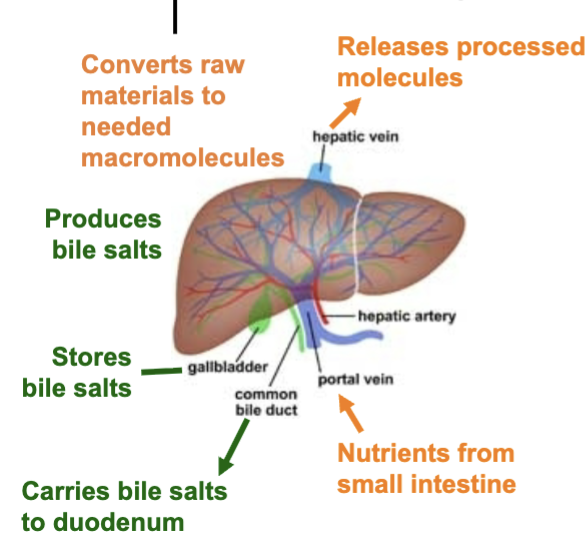
the liver (exocrine function)
secretes bile
solution of digestive chemicals and liver waste products
produced in the liver and stored in the gallbladder
22% phospholipids (aid in the uptake of lipids)
rest is mostly bile slats (emulsify fats)
bile duct connects to duodenum
pancreas (exocrine function)
secretes to duodenum:
digestive zymogens (inactive, precursor enzymes)
bicarbonate-rich, alkaline solution
neutralizes HCl in gastric juices
amylase - carbohydrate hydrolysis
nucleases
lipase
slide 34
duodenum
receives bile from liver and enzymes and zymogens (inactive proenzymes) from the enzyme
duodenum produces the enzyme enterokinase
enterokinase will cleave trypsinogen (zymogen) into trypsin (active protease)
trypsin will cleave other digestive zymogens into their active forms

advantages of zymogens
prevent unwanted protein degradation
enable spatial and temporal regulation of proteolytic activity
allows the body to control when and where an enzyme is active
can be stored or transported safely
unregulated protease activation → pancreatitis (pancreas self-figestion)
duodenum
produces:
gastic inhibitory peptide (GIP): decreases gastric emptying, produced by the K cells also stimulated insulin release
cholecystokinin (CCK): activated by high fat/protein chyme, stimulates fat digestion, bile release, and is an appetite suppresant

the large intestine (colon)
absorbs water and ions (electrolytes)
fairly long (1.5m)
regions:
cecum (appendix)
ascending colon
transverse colon
descending colon
pelvic
site of most of the gut microbiome
store and pass insoluble starches and undigested food
final destination is the rectum for storage as feces

carbohydrate digestion
mouth → partial breakdown into oligosaccharides
small intestine → breakdown into monosaccharides (glucose, fructose, galactose)
some carbs (cellulose) cannot be digested - dietary fiber
carbohydrate digestion: fructose absorption
passive
facilitated diffusion by GLUT5 transporter located in apical and basolateral side
concentration gradient dependent
carbohydrate digestion: glucose absorption
active
involves secondary active transport by Na+/glucose symporter (SGLT1) on apical side
energy dependent
glucose absorption steps
Na+/K+ pump uses ATP to set up strong Na+ concentration gradient
transport of Na+ down its concentration gradient provides energy to move glucose against its concentration gradient (secondary active transport)
glucose moves out of the cell through facilitated diffusion

protein digestion
digestion by proteases
stomach - pepsin
pancreas
trypsin
chymotrypsin
carboxypeptidases
dipeptidases
broken down into amino acids by peptides bonds

types of protein digestion
pepsin, trypsin, and chymotrypsin (PT & C)
endopeptidases - cleave in the middle of a long peptide chain
pepsin = acidic environment
trypsin = basic environment
dipeptidase (DP)
separates two peptides
carboxypeptidases (CP)
removes single aa’s from C-terminus
aminopeptidases (AP)
removes single aa’s from N-terminus

amino acids as fuel sources
amino acids, small peptides, and vitamins are absorbed by enterocytes in the small intestine by active transport
absorbed amino acids enter bloodstream and go to liver
can be used for protein synthesis or as energy
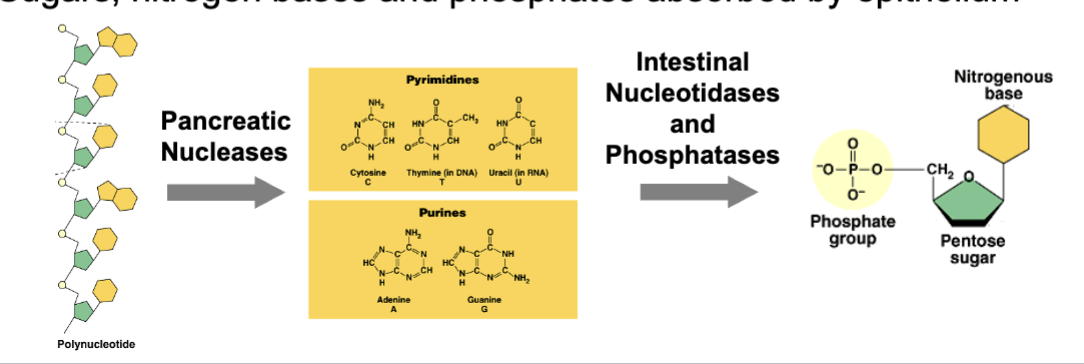
nucleic acid digestion
broken down in small intestine by hydrolytic nucleases secreted from pancreas
sugars, nitrogen bases, and phosphates absorbed by epithelium
lipid digestion
occurs solely in small intestine
bile salts
secreted by the gallbladder
emulsify large fat droplet → increases surface area of fat droplet exposed to lipase
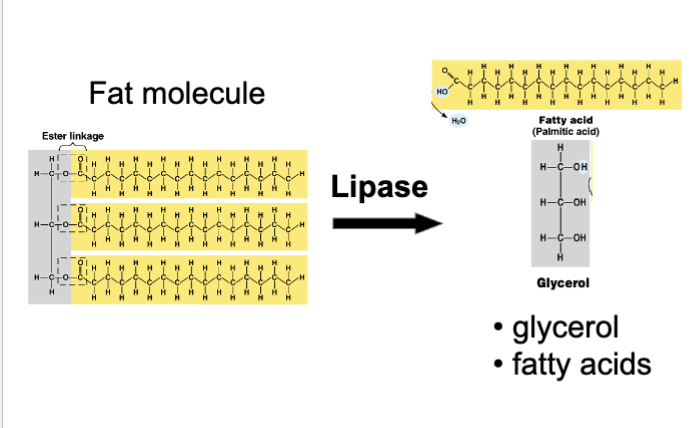
lipase
secreted by pancreas
cleaves ester bond within fat molecule
lipid digestion steps
in intestinal lumen:
bile salts emulsify fat gobules
lipase breaks down into smaller fatty acids and monoglycerides
form water-soluble micelles which deliver lipids to enterocytes
in intestinal epithelial cells:
re-esterified into triglycerides
mixed with cholesterol and coated with apolipoproteins to form chylomicrons
exocytosed out of epithelial cells into lacteal

lipid transportation steps
chylomicrons move through the lymphatic system until they enter the bloodstream through the thoracic duct
in bloodstream, lipoprotein lipase (LPL) removes some triglycerides, the remaining will go to liver
liver breaks down remaining chylomicrons to synthesize VLDL (very-low-density lipoproteins) for transport in bloodstream
in blood stream, triglycerides are removed from the VLDL for use in tissues → increases lipoprotein density
VLDL → IDL → LDL
LDL carries cholesterol to tissues for uptake
HDL collects cholesterol from tissues for recycling in liver

lipid transportation: intestinal exit routes
free fatty acids and glycerol pass directly through the enterocyte into the blood (passive diffusion)
chylomicrons are too large to enter capillaries
they bypass the blood vessels and enter the lacteal (lymphatic system)
som short- and medium-chain fatty acids are delivered to the liver via the hepatic portal vein (direction connection from intestine → liver)
lipid transportation
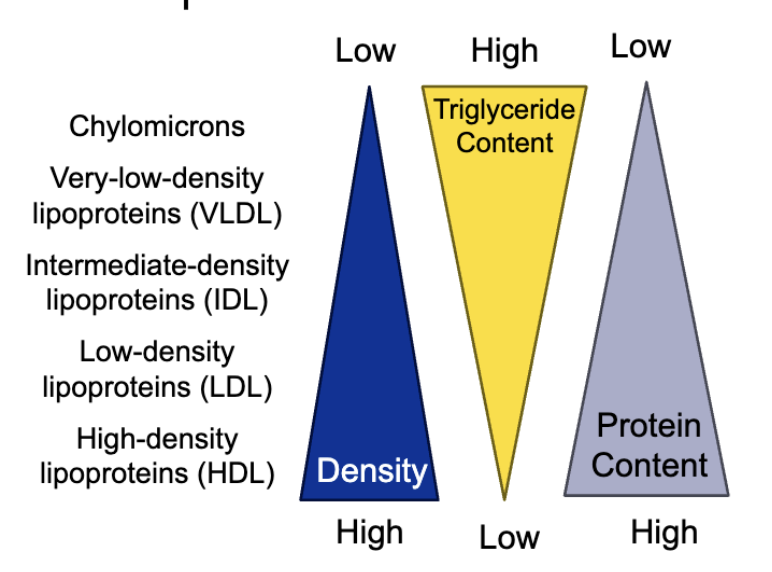
lipid transport molecules differ based on diameter and ratio of protein:triglycerides
smaller = more dense
higher protein = more dense
hormonal regulation of digestion
the wall of the stomach and duodenum secrete hormones that regulate digestion
stomach - gastrin
small intestine:
secretin
gastric inhibitory polypeptide (GIP)
cholecystokinin (CCK)
peptide YY (PYY)
leptin and insulin

digestive motility
regulated by sympathetic, parasympathetic, and enteric nervous system
occurs via