Biol 162 Lab
 Call Kai
 Learn
Learn Practice Test
 Spaced Repetition
 Match
Match Flashcards
 Knowt Play
1/226

There's no tags or description
Looks like no tags are added yet.
Name | Mastery | Learn | Test | Matching | Spaced | Call with Kai | Chat |
|---|
No analytics yet
Send a link to your students to track their progress
227 Terms
Superior
Describes the vertical position higher than another structure
Exteroceptors
Describe external stimuli like sight, hearing, touch, etc
Interoceptors
Transmit information describing internal condition of our bodies
Ossicles
Middle ear bones (malleus, incus, and stapes)

Conduction deafness
Problems with external or middle ear structures conducting sound vibrations
sensorineural deafness
Any problem with the structures inside cochlea
Proprioceptors
Special interoceptor that innervate muscles, ligaments, joints, and tendons to tell body muscle position and movement.
accommodation
when the lens changes shape to focus light reflected from near or far objects
Myopia
nearsightedness, occuring when the eyeball is too long or the focusing apparatus is too strong
Hyperopia
farsightedness, occuring when the eyeball is short or the focusing apparatus is weak
Presbyopia
The lens of the eye loses elasticity and loses the ability to accommodate for near vision as we age.
Astigmatism
The cornea is not perfectly round but looks like a football creating blurry vision
White matter

Grey matter

Dorsal root
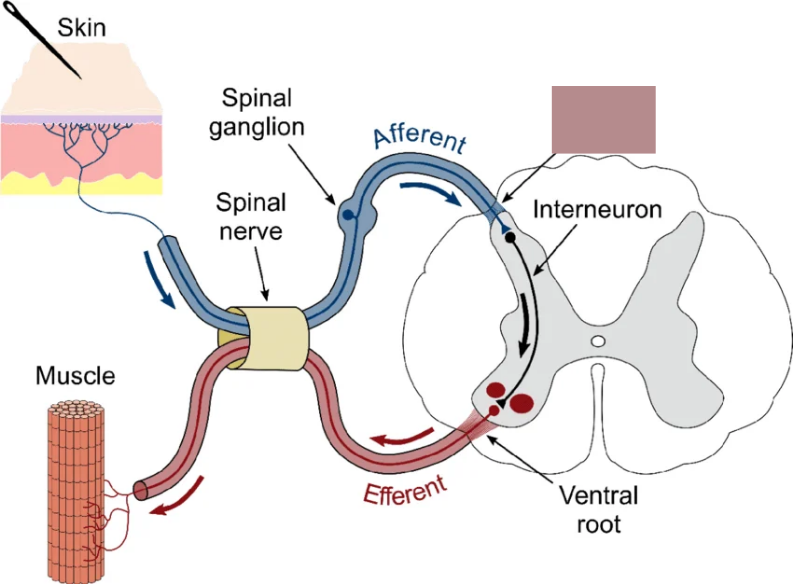
Spinal nerve
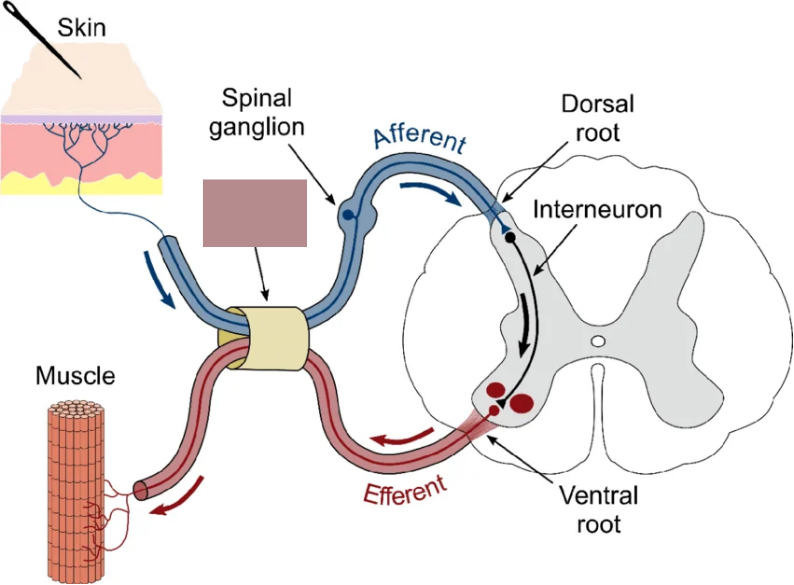
Ventral root

Ventral horn

Lateral horn

Dorsal horn

Dorsal root ganglia

Pre-synaptic neuron
The axon terminals send a signal
post-synaptic neuron
The dendrites or cell body receive a signal
Foramen rotundum
Trigeminal V2

Superior orbital fissure
Oculomotor, trochlear, trigeminal V1, abducens

Optic canal
Optic nerve

Cribriform plate
Olfactory nerve
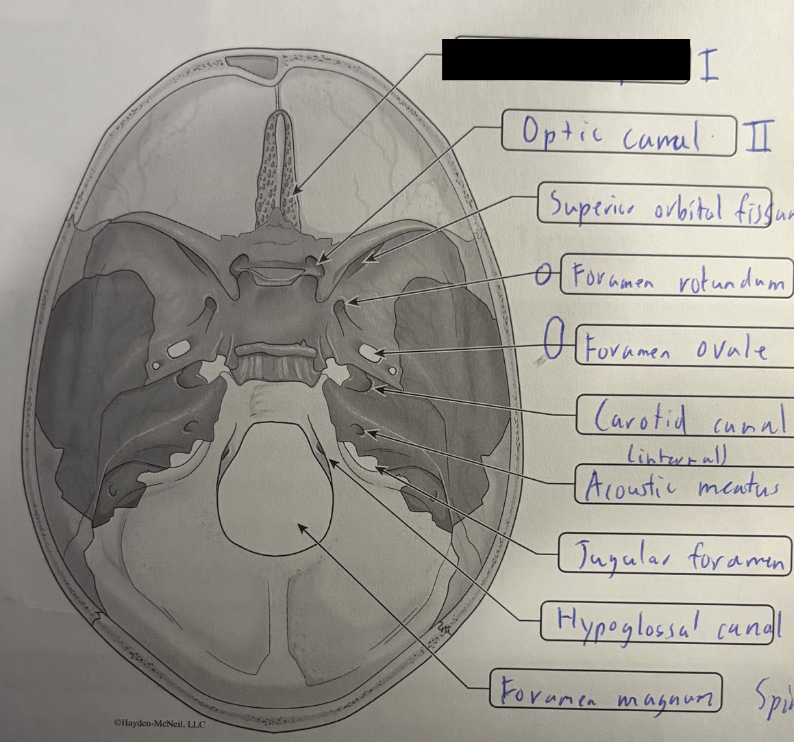
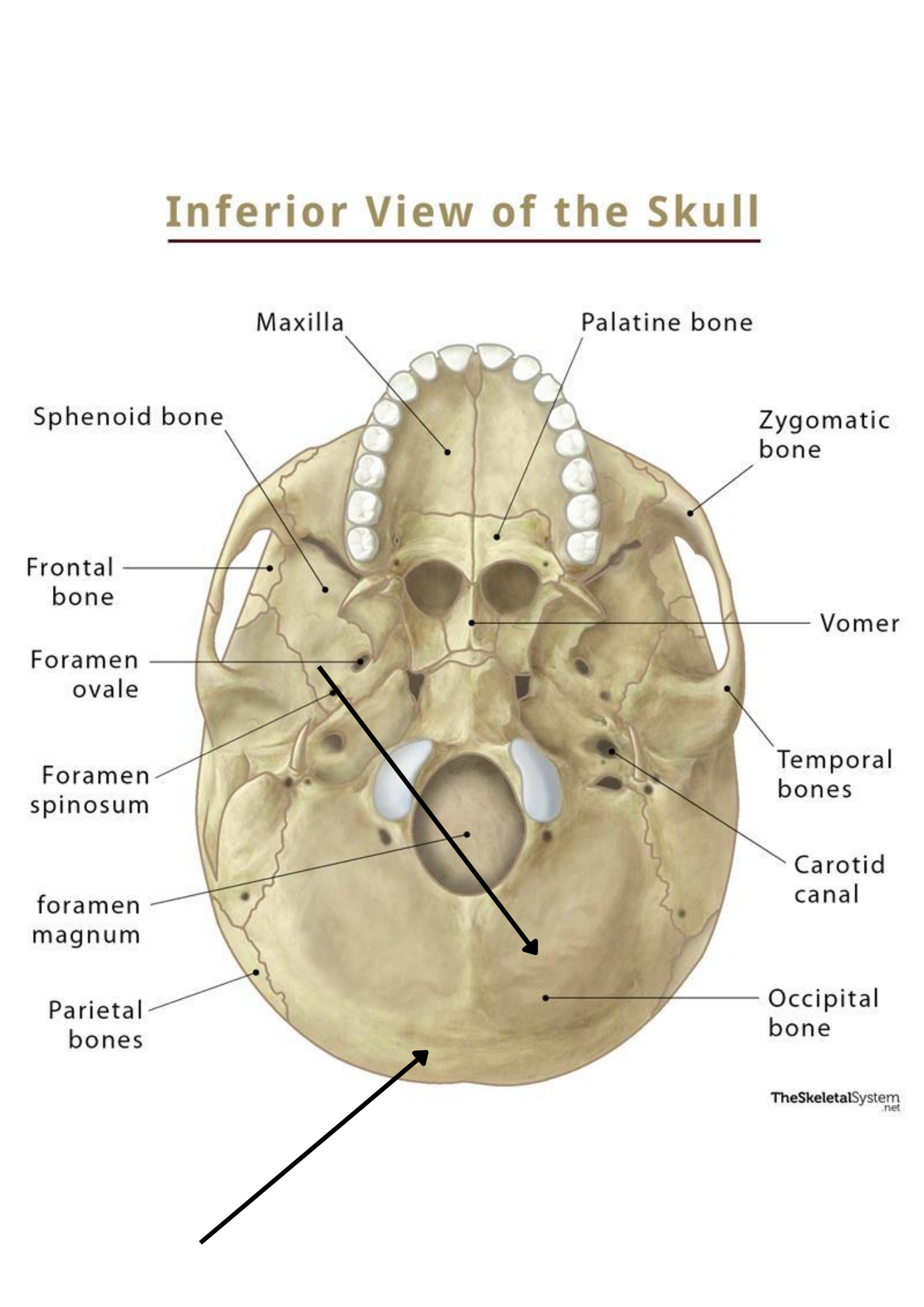
Foramen ovale
Trigeminal V3
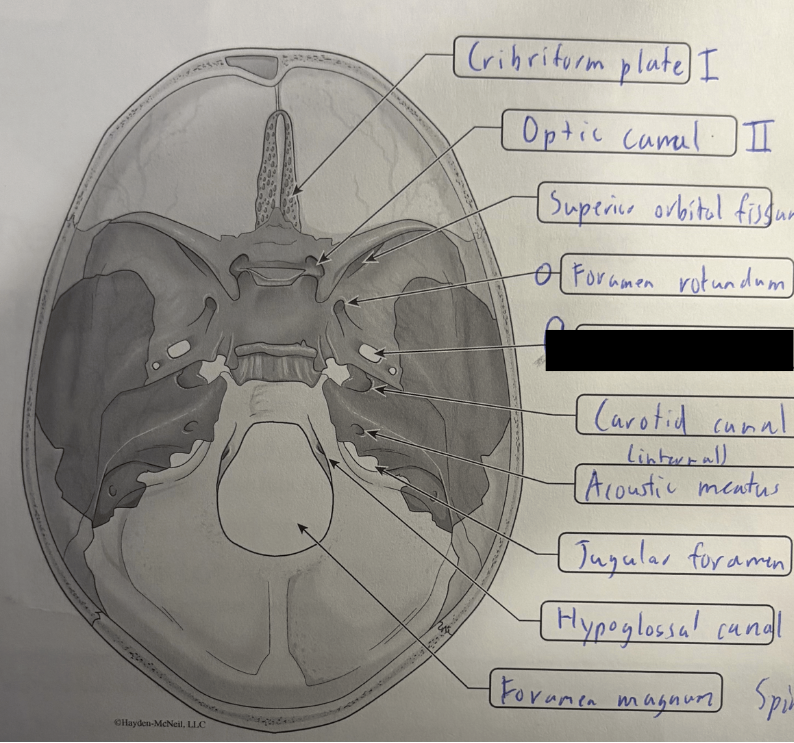
Carotid canal
Carotid artery

internal acoustic meatus
Facial and vestibulocochlear nerves

Jugular foramen
Glossopharyngeal, vagus, and accessory nerve

Hypoglossal canal
_________ nerve

Foramen magnum
Spinal cord

hypophyseal fossa
Depression in the center of the sella turcica
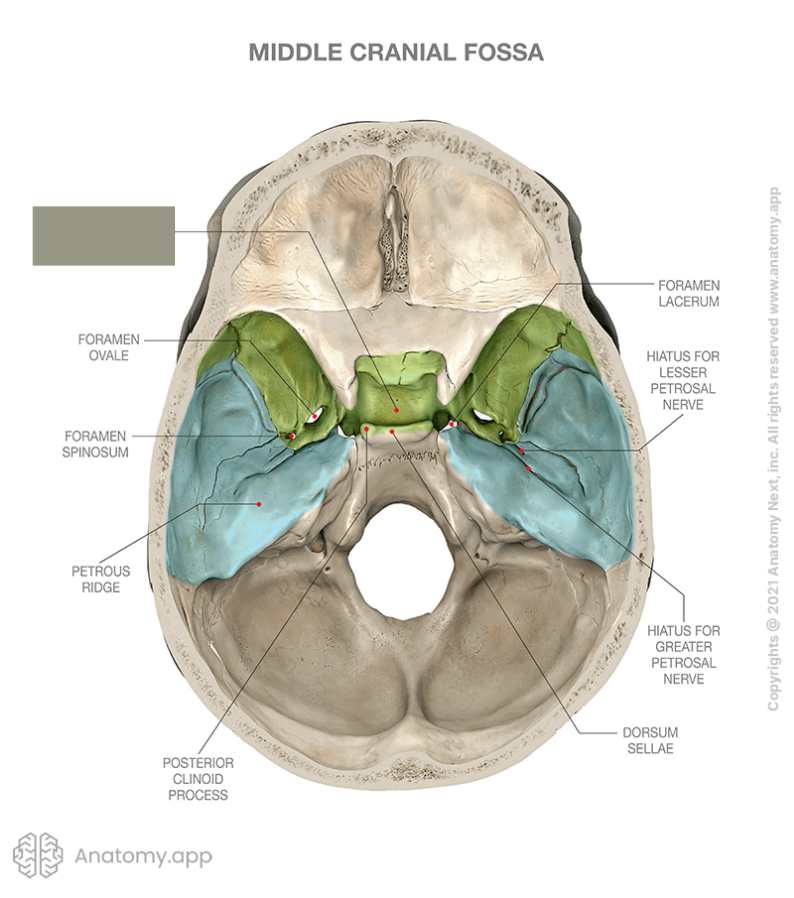
Anterior cranial fossa
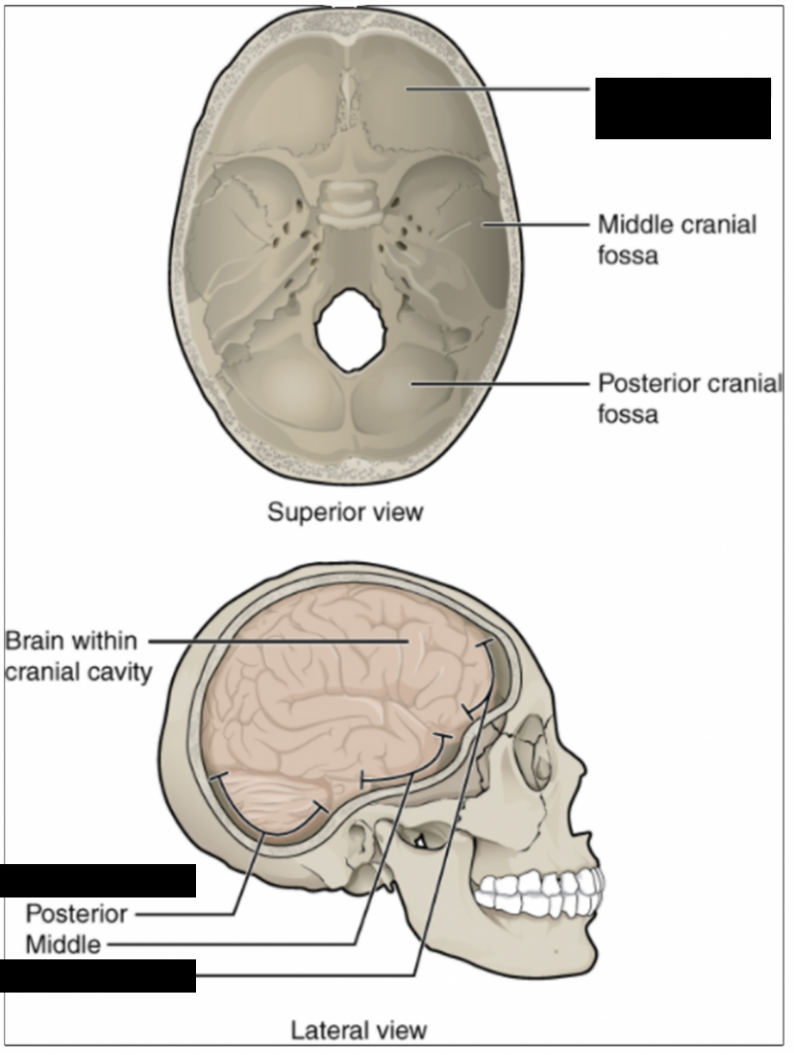
middle cranial fossa
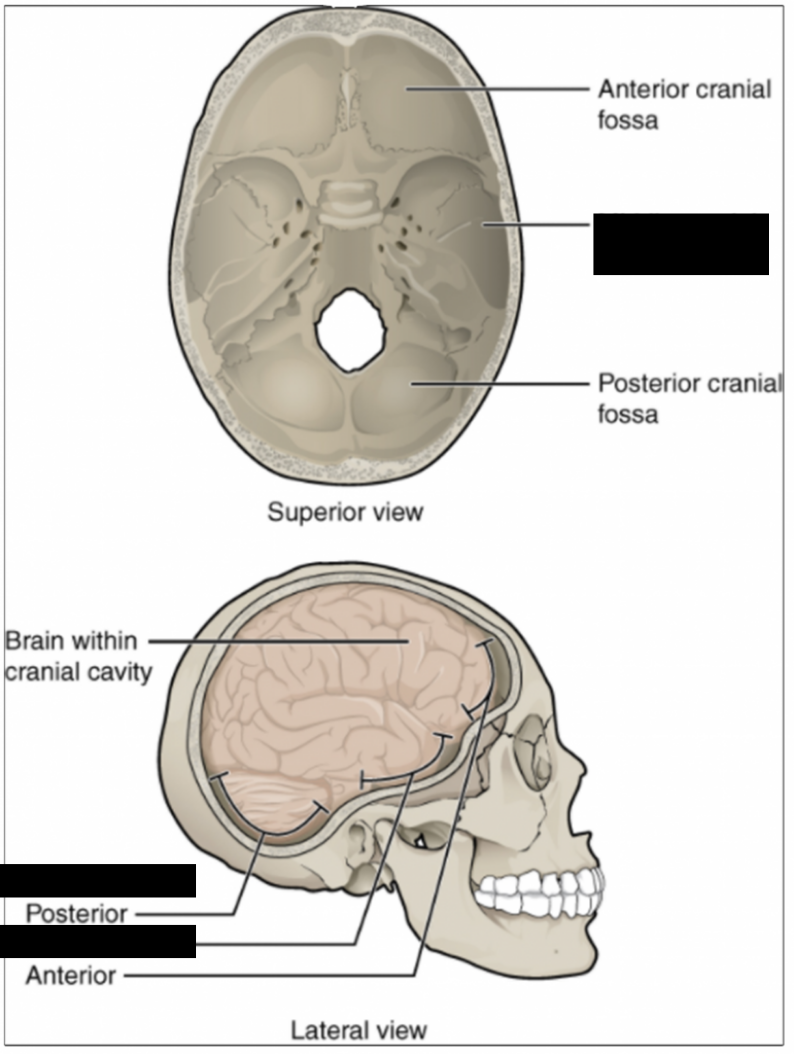
posterior cranial fossa

External occipital protuberance
bump in the middle of occipital bone

Squamous suture
Joins the temporal bone and the parietal bone

parietal bone
Largest bone visible laterally

Sagittal suture
right and left parietal bones joined by this

Coronal suture
Joins parietal bones to the frontal bone

Inferior
Describes a position lower than another structure.
Anterior
Describes the position toward the front of the body or structure.
Posterior
Describes the position of structure front-to-back twoards the back
Medial
Describes a position closer to the midline of the body or structure.
Lateral
Describes a position farther from the midline of the body or structure.
Proximal
Describes a position closer to the point of attachment or origin of a limb or structure.
Distal
Describes a position farther from the point of attachment or origin of a limb or structure.
Cranial
Describes the position of a structure towards the head.
Caudal
Describes the position of a structure toward the tail or rear.
Dorsal
Refers to a structure that is an upper structure. (Organism walking on all fours, Ex: Dog’s backbone)
Ventral
The lower structures of an organism walking on all fours.
Head
The prominent expanded end of a bone.
Shaft
The long middle portion of a bone.
Crest
A narrow ridge.
Line
A narrow raised area, smaller than a crest.
Process
A bony projection.
Condyle
A smooth, rounded projection that articulates with another bone. Have small, round projections just above them called _______.
Trochanter
A very large, rough-looking process found only on the femur.
Spine
A narrow or sharp process. Can be pointed structures, or they can be more like tall, very narrow ridges.
Tubercle
A small rounded process.
Tuberosity
A rough area or surface on a bone where a muscle attaches.
Fossa
A shallow depression.
Sulcus
A groove that allows a nerve or blood vessel to pass.
Foramen
A round hole through a bone that allows nerves and blood vessels through.
Canal
Tunnel through a bone.
Meatus
A canal or tunnel through a bone, but can be a tunnel through the skull to transmit sounds to your ear
Fissure
A narrow slit through a bone.
Greater trochanter

Head of femur

Lesser trochanter

Epicondyle
Lateral or Medial

Condyle
Lateral or Medial

Foramen spinosum

Styloid process

Occipital condyle

Mandibular fossa

Carotid canal

Mastoid process
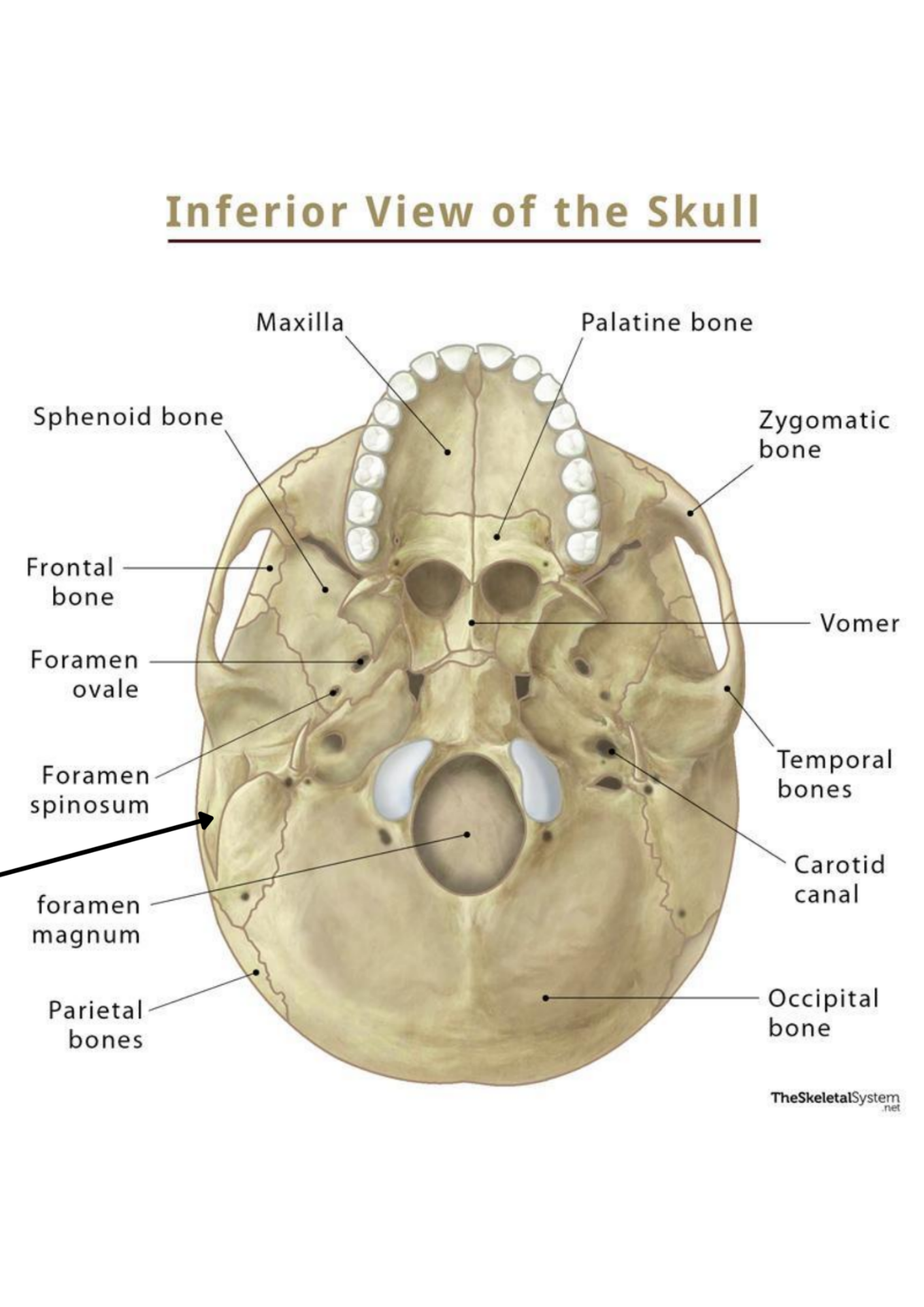
Foramen magnum

Nuchal lines
superior and inferior ones
Superior Temporal line

Inferior Temporal line

external auditory meatus

Superior orbital fissure

Greater tubercle
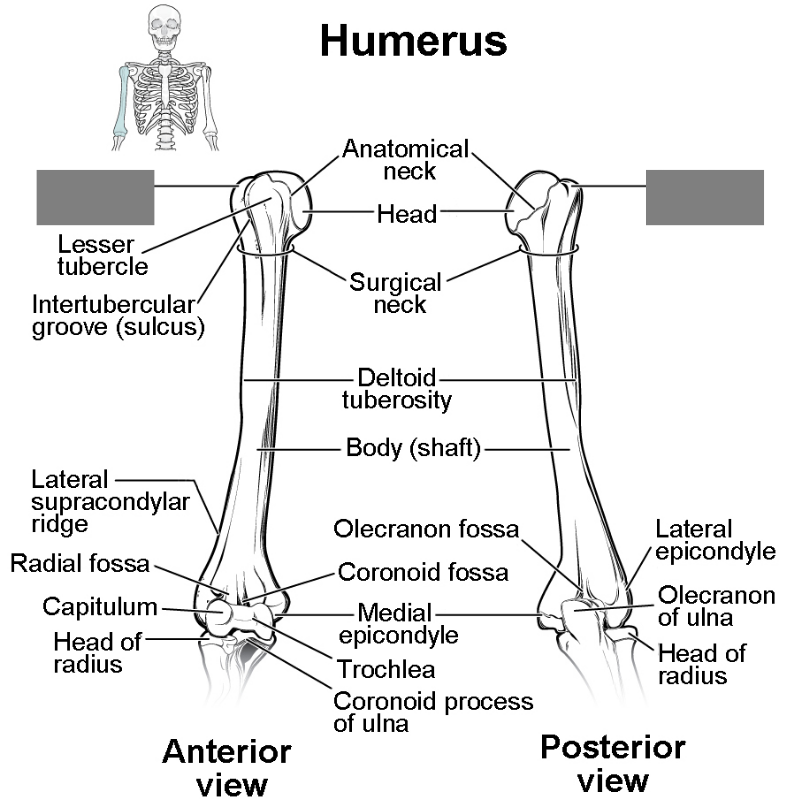
Lesser tubercle

Head

Intertubercular sulcus

Deltoid tuberosity
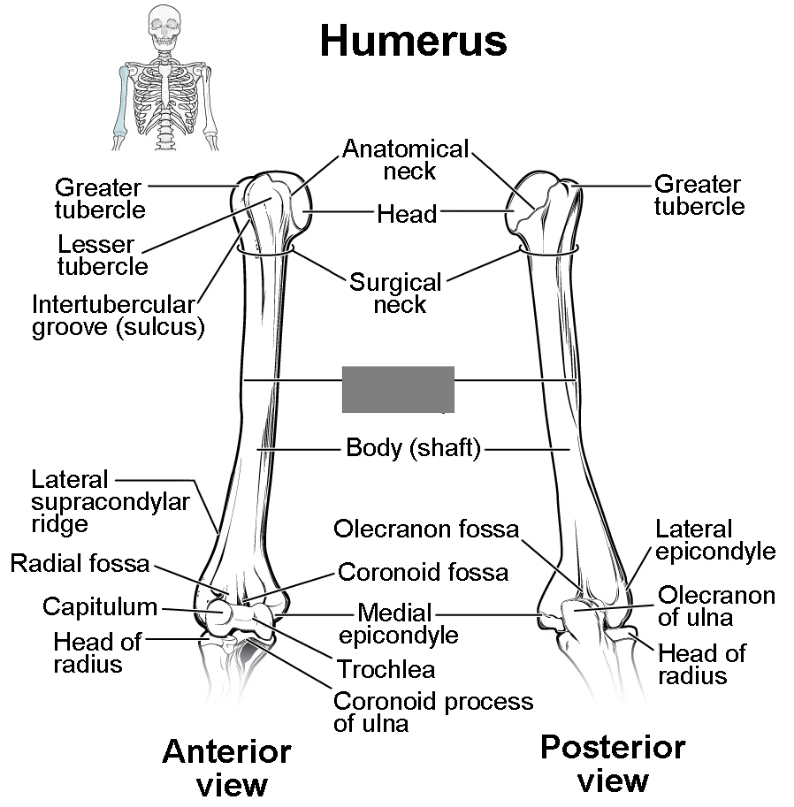
Shaft

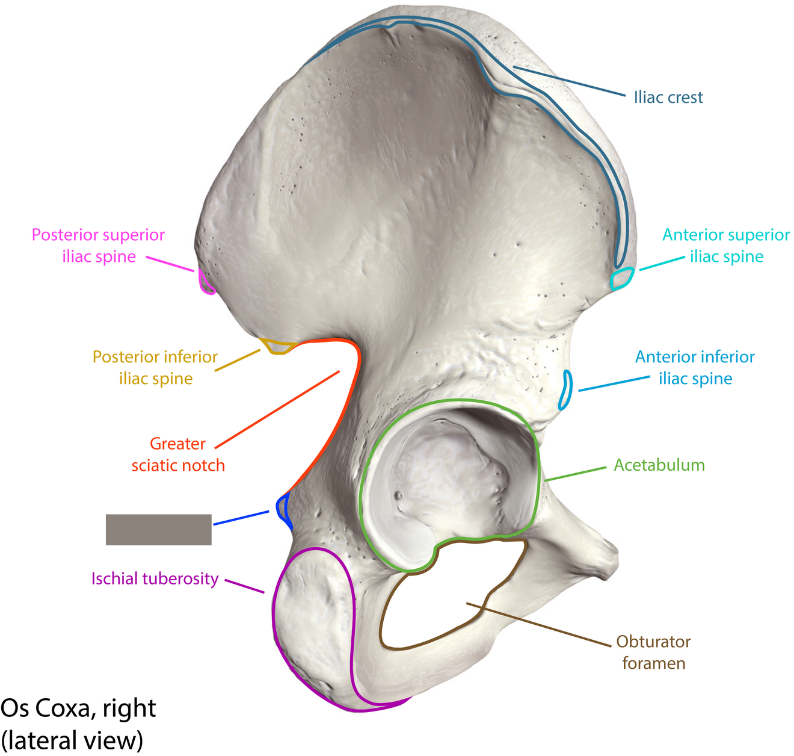
Iliac crest

Ischial spine
Scapular Spine

Tissue
Group of similar cells that work together to perform a particular function.
Histology
The study of tissues
Pathology
Study of how tissues are altered due to disease
Epithelium
High number of cells packed tightly together, lacks blood vessels, and very little extracellular material. Functions in covering surfaces of the body and forming glandular tissue. Forms glandular tissue.
Avascular
Lacks blood vessels