I&I B10/11
 Call Kai
 Learn
 Practice Test
 Spaced Repetition
 Match
 Flashcards
 Knowt Play
1/62

Earn XP
Description and Tags
Autoimmunity, Cancer immunotherapy
63 Terms
What causes Type I autoimmunity responses?
IgE (inflammatory mediator release)
What causes Type II autoimmunity responses?
IgG or IgM (complement-mediated lysis or antibody-dependent cellular cytotoxicity)
What causes Type III hypersensitivity?
deposition of antibody:antigen complexes on surfaces triggers release of inflammatory mediators and vasoactive mediators
What complications can arise from Type III hypersensitivity? (2)
Proteases released may damage connective tissues
Clots may form as complexes activate platelets
What causes Type IV hypersensitivity?
antigen sensitization by an initial exposure triggers production of a T-cell response, second exposure to the Ag (takes 24-72h) induces production of inflammatory cytokines
Which hypersensitivity response is also known as “delayed type“?
IV
Prolonged inability to clear Ag in Type IV hypersensitivity can result in formation of what? (2)
Multinucleated giant cells (macrophages)
Granulomas (macrophages and T cells)
What hypersensitivity responses can cause autoimmunity?
chronic II, III and/or IV
5 main mechanisms by which self-tolerance can be broken
inflammatory activation
molecular mimicry
epitope spreading
Exposure of sequestered antigens
Defective immune regulation
Which genes are the strongest genetic component of most autoimmune diseases?
HLA
Mutations in what genes are associated with autoimmunity?
AIRE
CTLA4
FOXP3
FAS
C1q
Systemic Lupus Erythematosus cause: self-antigen and mode of disease
antibodies against own DNA & histones
Immune complex deposition in multiple tissues causes inflammation.
Distinct Effector B Cells Induced by Unregulated (…) Contribute to Pathogenic Responses in Systemic Lupus Erythematosus
TLR7
What antigen is rheumatoid arthritis formed against?
unknown
What is the swelling pattern in arthritis?
usually bilaterally symmetrical in joints
Which MHC component is rheumatoid arthritis associated with?
HLA-DR4
What are the a) cells and b) cytokines involved in rheumatoid arthritis?
a) T cells, B cells, macrophages, neutrophils.
b) TNFα, IL-1β, GM-CSF
What causes the main symptom of Myasthenia Gravis?
antibodies are formed against the acetylcholine receptor, interfering with neurotransmitter signals at neuromuscular junction and causing muscle weakness
What MHC II alleles are associated with Diabetes type 1?
HLA-DR3, HLA-DR4
Treating symptoms (e.g. Pain relief, replacing insulin) •Anti-inflammatory drugs (e.g. corticosteroids, COX-2 inhibitors, cyclophosphamide, cyclosporin A in T1D) •Use of cytokines to modify immune response (e.g. Type I interferon) •Targeted biological therapies against key cytokines or cell types involved pathogenesis (e.g. anti-TNF, anti-IL-1, anti-GM-CSF, anti-CD20, anti-CD3) •Blocking trafficking of immune cells to site of pathology (Block adhesion molecules or chemokines) •Better understanding of the molecular mechanisms of autoimmune pathologies should enable better drug targets for more effective treatments or cure
What is the autoimmune target in multiple sclerosis?
myelin sheath

What is the myelin sheath made up of and in what proportions?
70% lipid, 30% proteins
TRUE OR FALSE: multiple sclerosis is genetic
TRUE: Risk increases 15-20 fold if first degree relatives have it
Concordance rate of multiple sclerosis is higher in (di/mono)zygotic twins
Concordance rate of multiple sclerosis is higher in monozygotic twins
Multiple genes in what pathway are multiple sclerosis risk genes?
vitamin D; Low serum levels associated with higher risk of developing MS
Vitamin D has what effects on the immune system? (4)
expression of MHC-II
cytokine expression
inhibits T cell activation
increases production of immunosuppressive factors in the CNS
Two viruses that have been most established associations with multiple sclerosis
Epstein Barr virus, human herpes virus-6
What cytokines produced by CD4+ T cells are implicated in multiple sclerosis and how? (3)
IL-17 promotes neutrophil recruitment
IFNγ promotes cytotoxic CD8 T cells and activates macrophages
GM-CSF recruits and activates monocytes and macrophages
Frontline therapeutics for MS: identity, type, mechanism (3)
β-interferon— cytokine—alters T cell responses
Glatiramer acetate— amino acid copolymer— unknown mechanism
dimethyl fumarate—small molecule— reduces oxidative stress to suppress inflammation
What are the second-line therapeutics for MS and their side effects? (5)
Natalizumab—allergic reactions and increased infection
Rituximab & Ocrelizumab—immunosuppression (of B cells)
Fingolimod—sequesters lymphocytes in lymphoid organs
Cladribine—cytotoxic to lymphocytes
Third-line treatments for MS: identity, type/source, method (2)
Alemtuzumab—Monoclonal antibody—lyses all cells (including lymphocytes) that express CD52
Autologous HSC transplant—Patient’s own hematopoietic stem cells harvested from bone marrow—chemotherapy to kill circulating immune cells and replace with harvested ones
What is the murine model disease used to study multiple sclerosis? (name and mechanism)
Experimental autoimmune encephalomyelitis: CD4+ infiltration in perivascular regions and within central nervous system parenchyma.
What cell is speculated to drive pathogenesis of Experimental autoimmune encephalomyelitis?
Th1
How do the pathogens (+ what?) develop in Experimental autoimmune encephalomyelitis?
DC + CD4 + IL-6 + TGFβ → Th17
Th17 + IL-23 → GM-CSF
GM-CSF → IL-17 + IFNγ
Pathogenic (…) cells that make GM-CSF express (…) and not (…) and require (…) to migrate to the CNS and cause EAE.
Pathogenic Th17 cells that make GMC-SF express CCR2 and not CCR6 and require CCR2 to migrate to the CNS and cause EAE.
Immune cells commonly found in established solid tumours (5)
Macrophages, neutrophils, memory CD4+ and CD8+ T cells, Tregs
What are the two types of immune responses that affect the nature of the tumour cell compositions and how?
cold: immunosuppressive cells→ Poor penetration of anti-tumour T cells
hot: anti-tumour T cells→ inflamed

What is associated with positive patient outcome in cancer?
increased density of CD3+ or CD8+ T cells at the invasive margin of the tumour
What is a a) benefit and b) disadvantage of tumour specific T cells?
a) destroy tumour cells
b) pressure of anti-tumour immune response drives emergence of tumour variants with reduced antigenicity
What are the steps in immunoediting in cancer? (3)
HINT: the three E’s
elimination: T cells targeting tumours
equilibrium: dormant state and editing of tumour, less signals for T cell activity
escape: no longer recognized by T cell
Tumour Associated Antigens are classified into what 3 groups?
mutant self-proteins
Overexpressed self protein
Viral oncogenes associated with tumour progress
How do NK cells recognise tumours? (2)
Downregulation of MHC Class I molecule
NKG2D activating receptors on NK cells binds stress ligands expressed on many tumours, overriding inhibitory receptor signaling
How can macrophages a) inhibit and b) help tumour cells?
a) release of ROS and cytokines, role in immunosurveillance
b) favour tumour growth and metastasis (spread) of established tumours
tumour eradication by immune system (4 steps)
Tumour Associated Antigens are picked up by cross-presenting cDC1s
DCs migrate to LN and present TAAs to CD8+ T cells (with MHC I)
Clonal selection: CD8+ T cell proliferation and differentiation
Tumour-specific CTLs leave LN and migrate to the tumour and kill tumour cells
The immune response will fail to negate tumours if it fails to… (3)
adequately prime anti-tumour immunity
effectively migrate into solid tumours
function in the tumour microenvironment
Do cells already have tumour tolerant phenotypes, or does the cancer skew the responses to favour it?
Both can be the case!
What specific cells can be attracted by the tumour to inhibit the immune response? (3)
Tumour associated/ M2-like Macrophages: favour tissue generation
Tregs: suppress anti-tumour immune response
Tolerogenic DCs: inhibit T cell activation
T cell exhaustion
In chronic conditions, T cells can receive too much engagement and become hyporesponsive in an attempt to avoid overwhelming the body by upregulating inhibitory receptors
What makes anti-tumour immunotherapies better than, say, chemotherapy? (2)
can induce immune T cell memory
specific to tumour cells to avoid damaging healthy cells
What anti-tumour immunotherapies are in use? (3)
Cytolytic and neutralising mAbs
Immune checkpoint inhibitors
Adoptive T cell therapy (CAR-T cells)
monoclonal antibodies
a crop of antibody molecules specific to a single antigen
a) what are conjugated mAbs conjugated to and b) what do they cause?
a) radioisotope (or responsive to radiotherapy), or drug that may be too toxic to use alone
b) apoptosis from toxic payload

What are bi-specific mAbs/ their goals?
target two different antigens on immune cells and tumour cells to force contact
What are the two types of bi-specific mAb?
2 Ab binding sites linked by Fc
2 Ab binding sites directly joined (BiTE)
what is the in vitro modification of patients’ T cells in a) Adoptive T cell and b) CAR-T therapy?
a) expanded against tumour antigens
b) Expanded and genetically-modified to express recombinant Chimeric Antigen Receptors
What are the components of a CAR-T cell? (4)
Single chain variable fragment of an antibody (scFv) targeted against tumour antigen
Linker
CD3 Intracellular signaling domain
CD28, 41BB intracellular costimulatory molecules
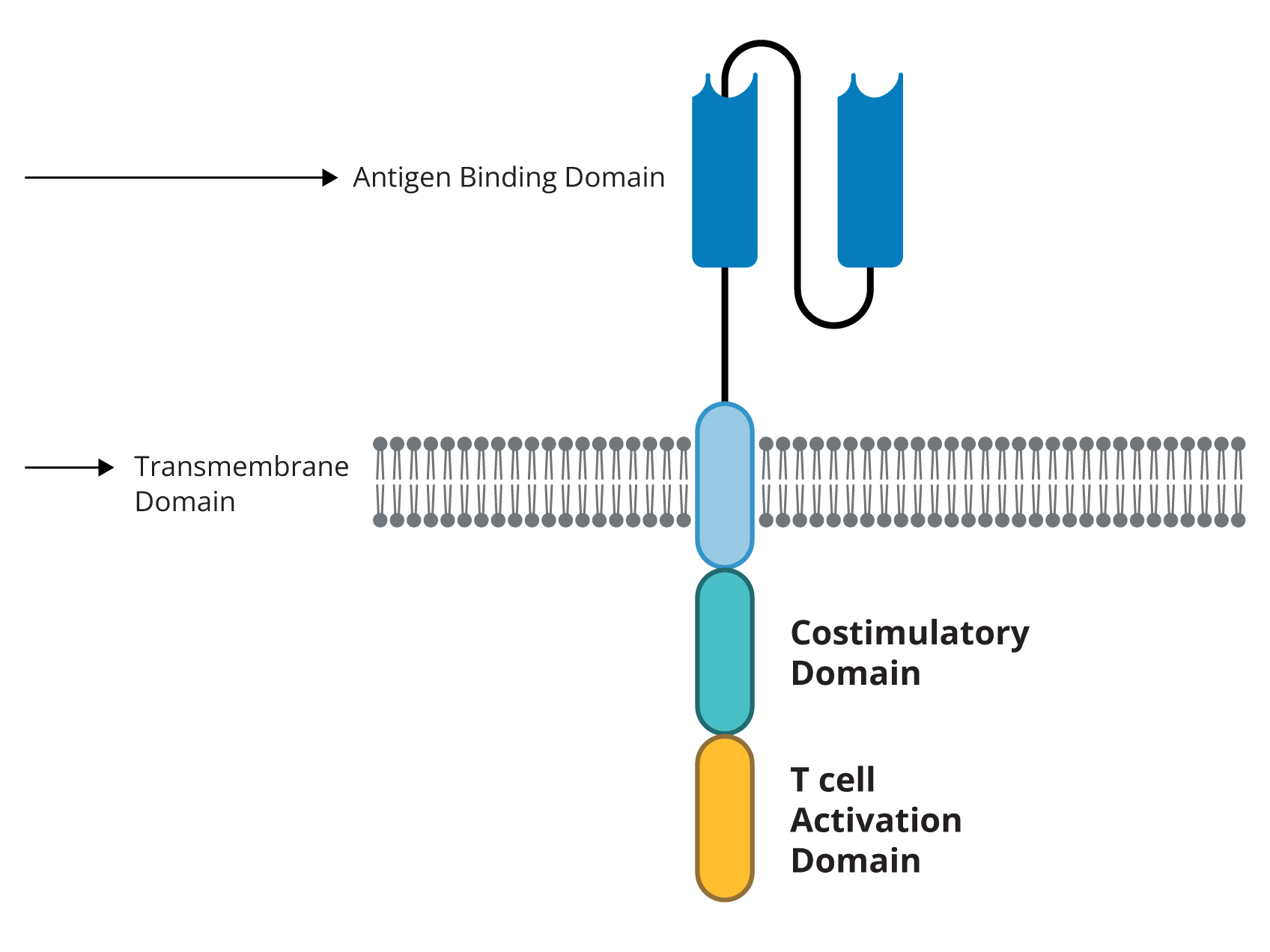
Can CAR-T cells express cytokines?
4th generation ones can release perforin and granzyme
What MHC do CAR-T cells require for activation?
neither; recognize tumour directly

CAR-T cells dangers/ problems? (3)
Cytokine release syndrome; systemic inflammatory response
Immune cell associated neurotoxicity syndrome
Off target cytotoxicity
Oncolytic viruses
attenuated/naturally non-pathogenic viruses that selectively infect/lyse tumor cells due to tumor cells either overexpressing virus receptor or being unable to produce anti-viral proteins
Oncolytic viruses dangers/ problems? (4)
Immunosuppressed patients
limited efficacy in advanced cancers
pre-existing anti-viral immunity
limited re-use

What are the two types of diabetes and which one is autoimmune?
Type I: loss of insulin producing cells— autoimmune
Type II: Insulin resistance develops