ECON-211 Midterm 3
 Call Kai
 Learn
 Practice Test
 Spaced Repetition
 Match
 Flashcards
 Knowt Play
1/26

There's no tags or description
Looks like no tags are added yet.
27 Terms
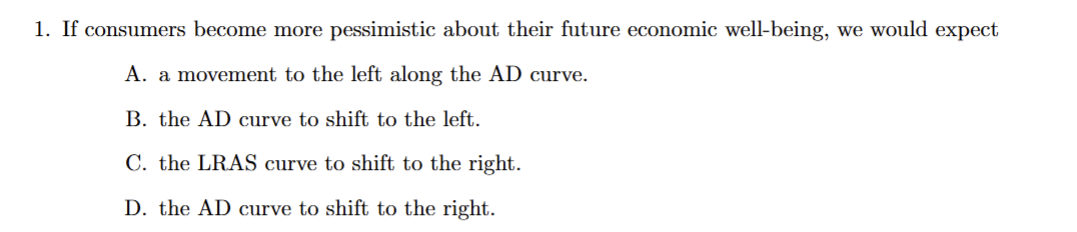
B (AD curve shift to the left)

D (Greater than)

C (an increase in interest rates and a decrease in private investment)

B (wages and some prices are fixed or “sticky.”)
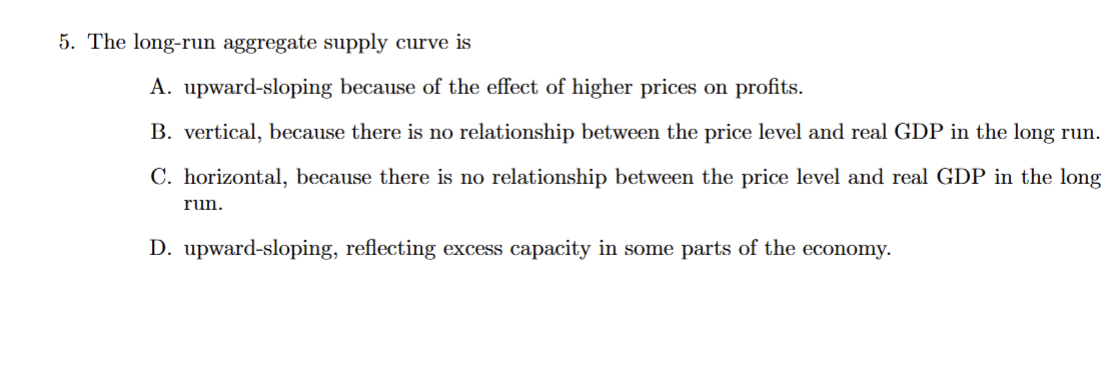
B (vertical, because there is no relationship between the price level and real GDP in the long run.)

A (graph A)
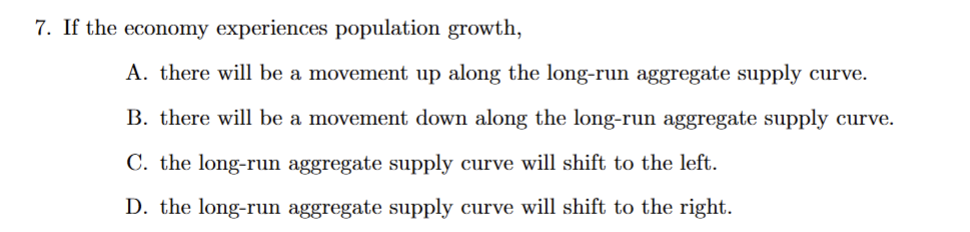
D (he long-run aggregate supply curve will shift to the right.)

D (The MPC is small and if the tax cut is temporary)

A (An increase in the expected price level)

D (All of the above are correct)

B (active monetary policy is necessary for steady economic growth.)
Stagflation is:
a period of rising prices and falling output.
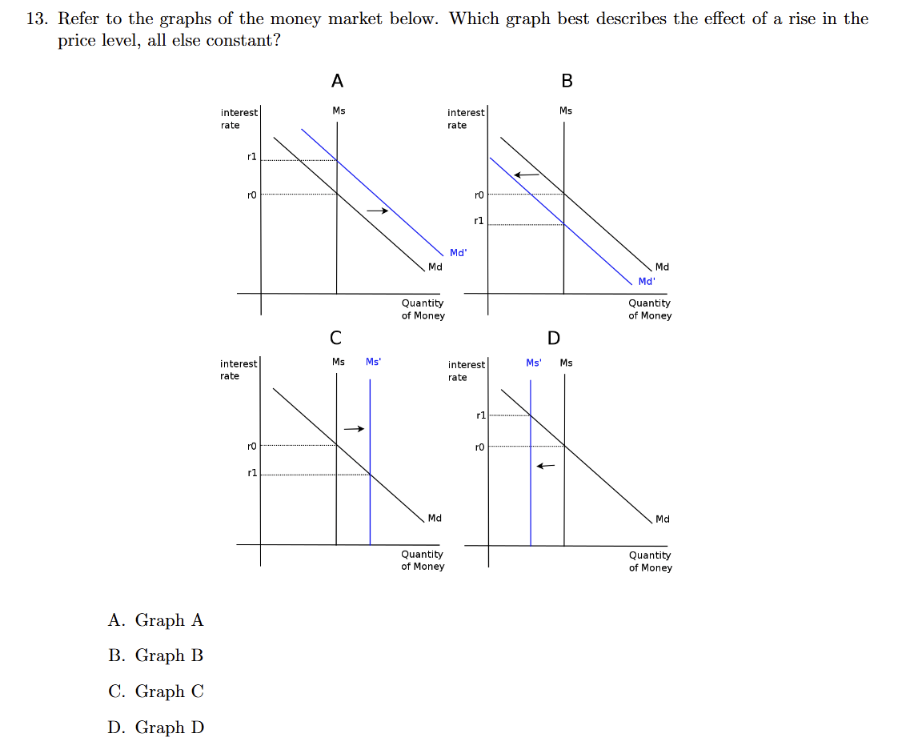
A (Graph A)

A (the multiplier effect of fiscal policy decreases.)

C (Graph C)
What happens to unemployment in the long-run equillibrium
Unemployment returns to its natural rate
What are the Four steps to analyzing economic fluctuations?
1. Determine whether the event shifts AD or AS.
2. Determine whether curve shifts left or right.
3. Use AD–AS diagram to see how the shift changes Y and P in
the short run.
4. Use AD–AS diagram to see how economy moves from new
SR equilibrium to new LR equilibrium .
What does G stand for
Government purchases
What does T stand for
Taxation
What is the result of an increase in G (government spending) and/or decrease in T (taxation)
shifts AD right
What is the result of a decrease in G (government spending) and/or increase in T (taxation)
shifts AD left
What is Crowding Out?
Offset in aggregate demand, results when expansionary fiscal policy raises the
interest rate
What is the Phillips Curve?
an economic model showing an inverse relationship between unemployment and inflation
Phillips Curve equation

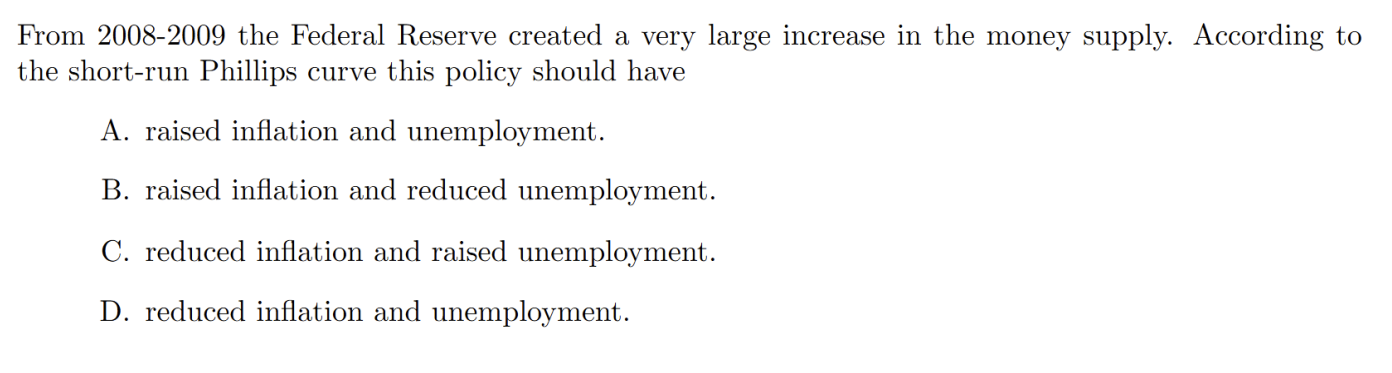
Raised inflation and reduced unemployment
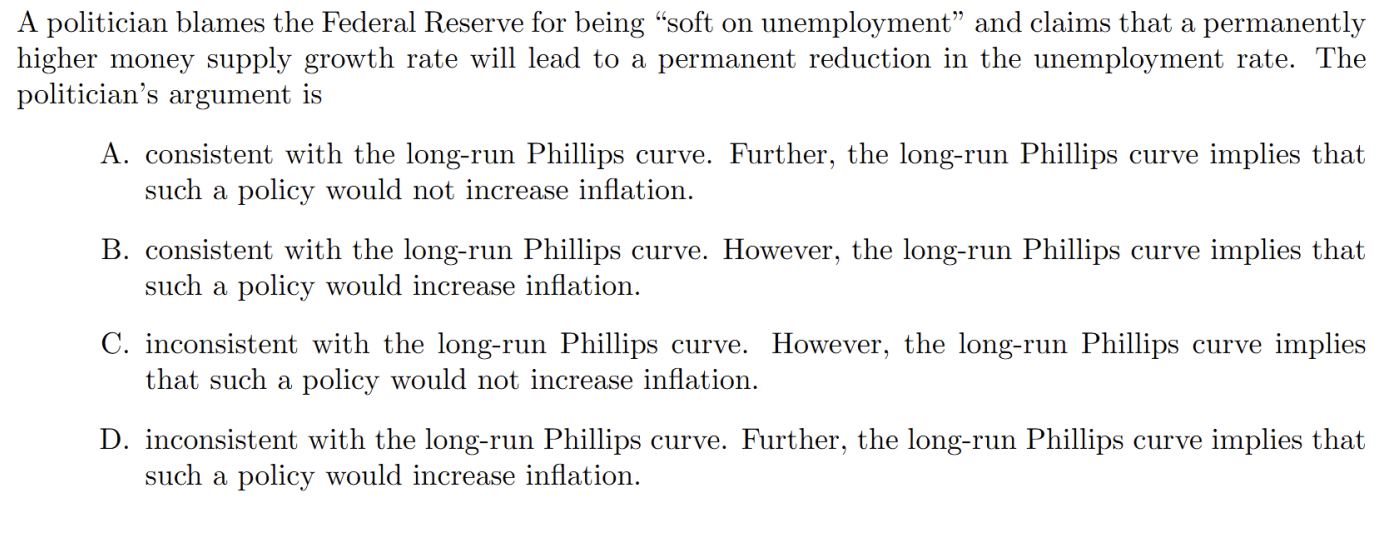
Inconsistent with the long-run phillips curve. Further, the long-run phillips curve implies that such a policy would increase inflation
