Resp Tract Infections, Allergies & Medications
 Call Kai
 Learn
 Practice Test
 Spaced Repetition
 Match
 Flashcards
 Knowt Play
1/29

There's no tags or description
Looks like no tags are added yet.
30 Terms
Name the different types of RTIs (Resp tract infections)
PNA
Bronchitis
TB
Describe the pathophysiology of acute bronchitiis.
Pathogen/irritant enters, attaches to the epithelial cells in the bronchi, leads to inflammatory response, increased cytokines/chemokines and neutrophil activity, leads to vasodilation and increased vascular permeability.
Inflammation of the bronchi related to pathogens and environmental irritants is known as what RTI?
Acute Bronchitis
Mucus production is commonly seen in what RTI?
Acute bronchitis
T/F: Acute bronchitis is 90% caused by bacteria.
F, it has a 90% viral etiology for infectious acute bronchitis.

Which RTI can be dormant and active?
TB
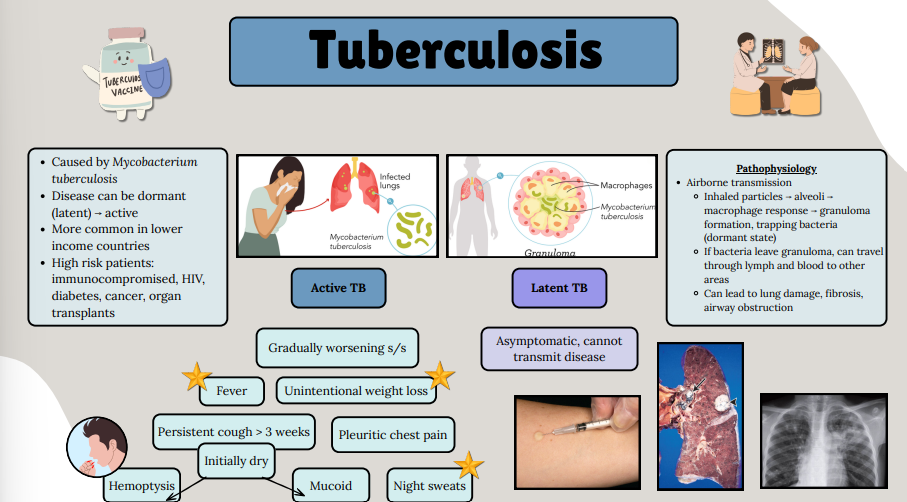
What are the key symptoms of active TB?
Fever, unintentional weight loss, and night sweats.

Describe the pathophysiology of TB.
Gotten through airborne transmission. Inhaled particles —> get into alveoli —> macrophages respond —> granuloma formation —> when bacteria gets trapped here, latent TB occurs.
If the bacteria leave the granuloma, it can travel through the lymph and blood to other areas, leading to lung damage, fibrosis, and airway obstruction.
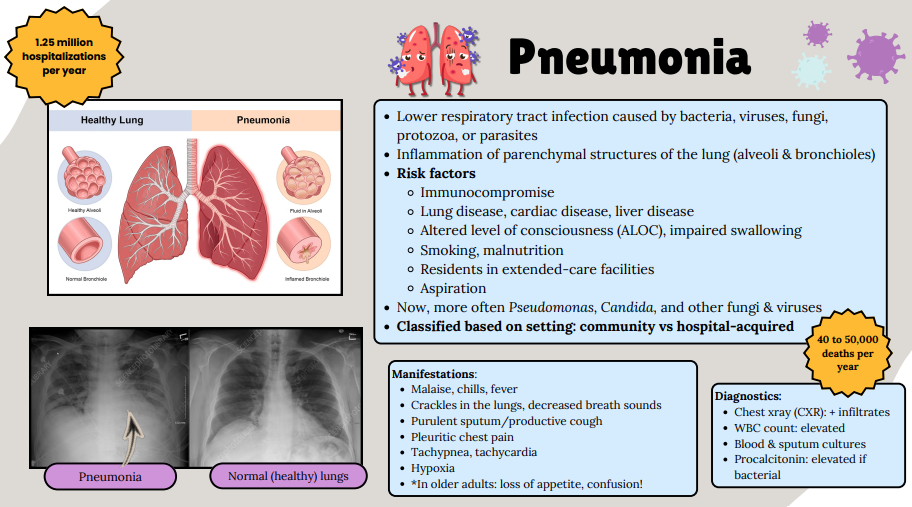
A lower RTI caused by bacteria, viruses, fungi, protozoa, or parasites is called
PNA
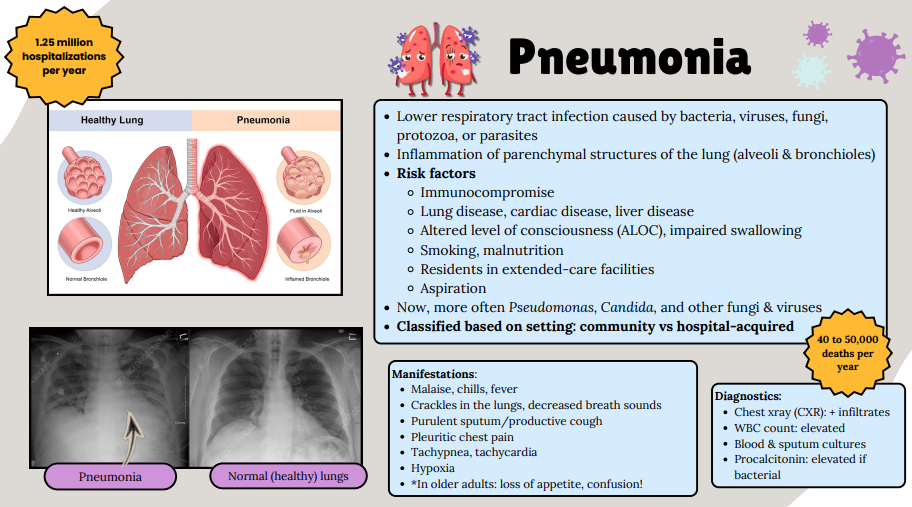
What are the risk factors for PNA?
immunocompromised
lung disease, cardiac disease, liver disease
ALOC, impaired swallowing
smoking, malnutrition
residents in extended care facilities
aspiration

How is PNA classified?
Community vs hospital acquired
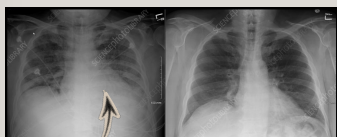
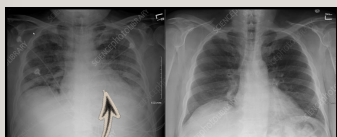
The lungs on the right represent normal, healthy lungs. What is the likely RTI being shown on the left?
PNA


A CXR is ordered for a patient. Their WBC is elevated. What is the likely RTI?
PNA
A patient presents with elevated procalcitonin levels, WBC count, and has blood & sputum cultured conducted. What is the likely RTI?
PNA

Describe the pathogenesis of PNA.
Pneumococcus enters via inhalation, reproduces rapidly in alveolus, leading to edema
Inflammatory response leads to PMNs + RBCs, leading to congestion in the alveoli, causing red hepatization
Macrophages replace PMNs, RBCs, and eat cellular debris to cause gray hepatization
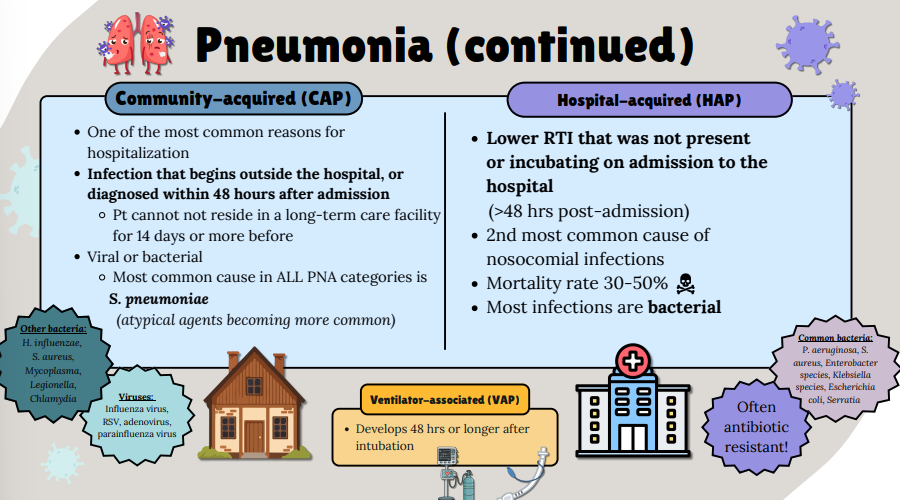
A PNA infection that begins outside the hospital or diagnosed within 48 horus after admission is what type of PNA?
CAP (community acquired).
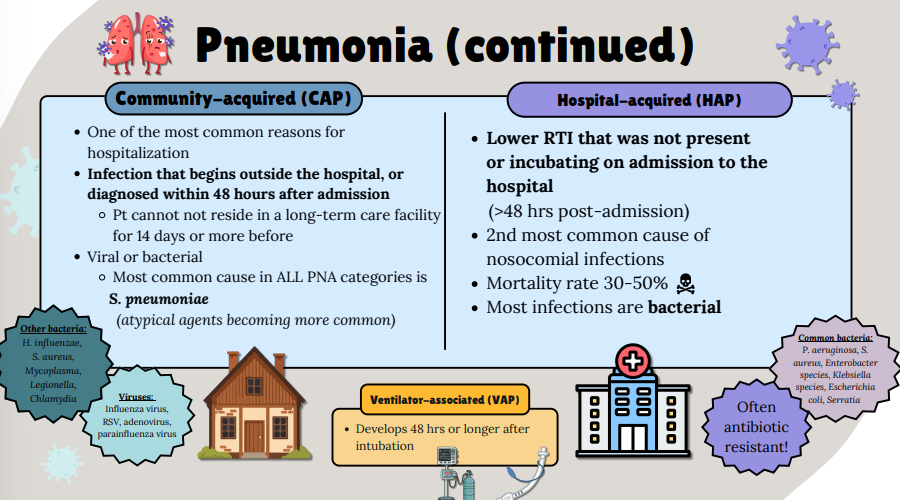
The most common cause and culprit in all PNA categories for PNA is
S. pneumoniae
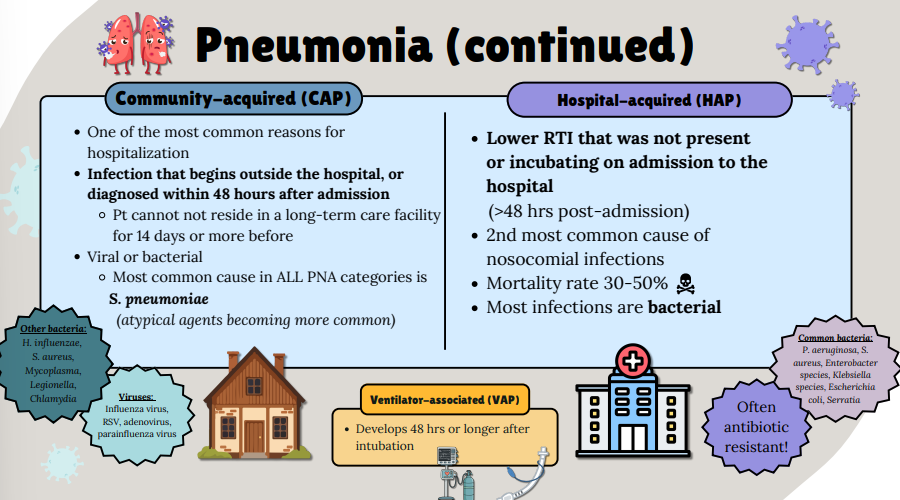
A lower RTI that was not present or incubating on admission to the hospital would be considered what type of PNA?
HAP (hospital acquired)
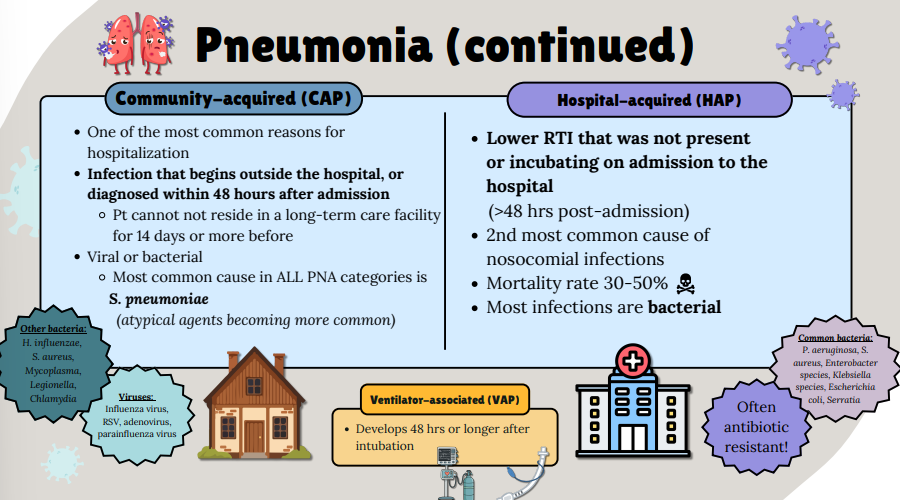
T/F: Most hospital acquired PNA infections are viral.
F, most infections in HAP PNA are bacterial.
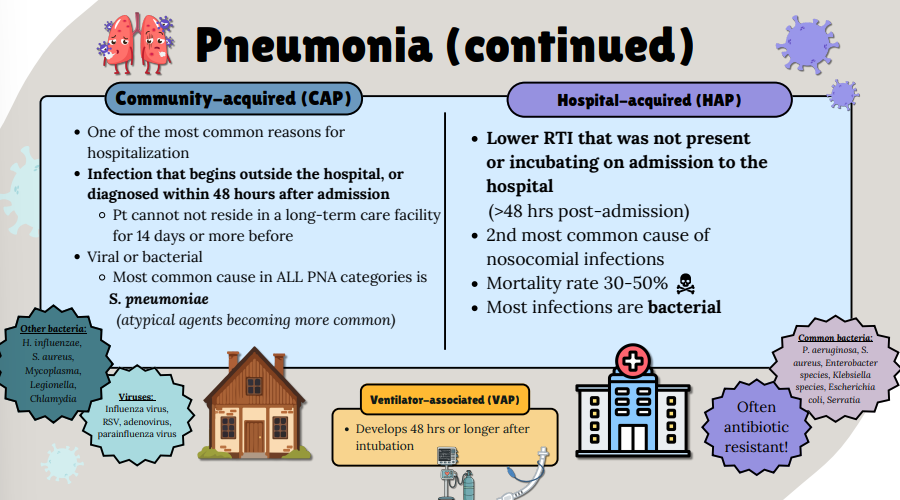
PNA that develops 48 hours or longer after intubation is
VAP (ventilator associated PNA)
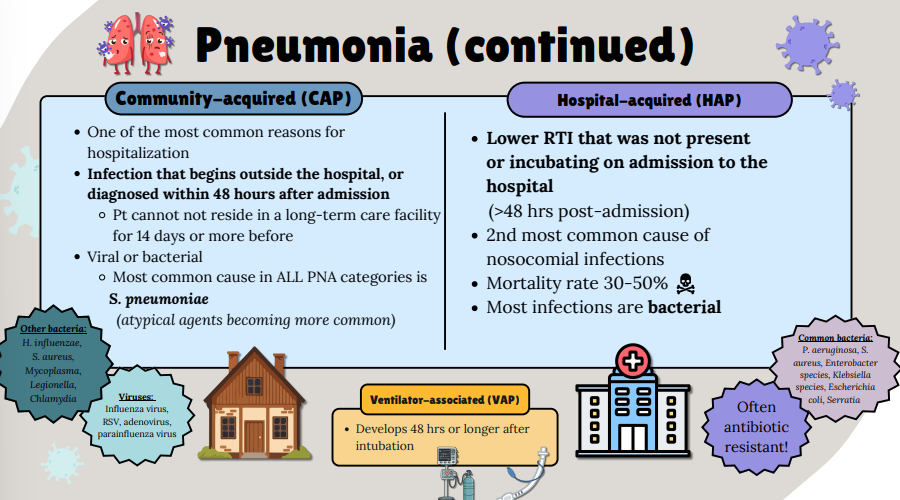
T/F: Bacteria causing PNA are often antibiotic resistant.
T
What 3 things should be practiced to prevent RTIs?
Hand Hygiene
Antibiotic Stewardship
Mobilization of Secretions
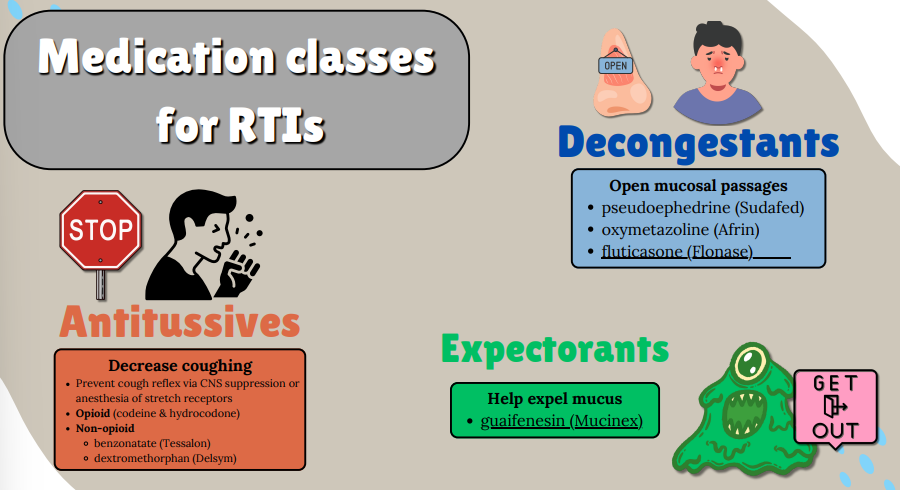
What are the medication classes for RTIs?
Antitussives
Decongestants
Expectorants

Describe antitussives.
Decrease coughing. Opioid and non-opioid versions. Prevents the cough reflex via CNS suppression or anesthesia of the stretch receptors.

Describe decongestants.
Open mucosal passages.
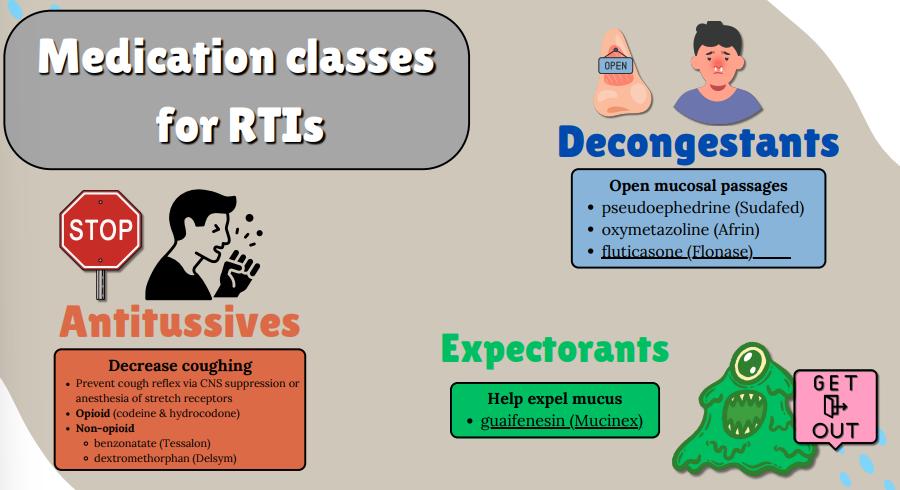
Describe expectorants.
Help expel mucus

What are common herbal interventions for RTIs?
Vitamin C, Echinacea, and Zinc

Excessive histamine can lead to what condition, which is a medical emergency?
Anaphylaxis

What is the treatment for anaphylaxis?
EDF
Epinephrine, diphenhydramine, famotidine

concepts to review
ty