Ear, Pinna, and Anal sac Disease
 Call Kai
 Learn
 Practice Test
 Spaced Repetition
 Match
 Flashcards
 Knowt Play
1/99

There's no tags or description
Looks like no tags are added yet.
100 Terms
How is the external ear canal layedo out in canines?
A vertical canal and a horizontal canal
What does the ear canal produce to maintin itself?
Cerumen
What are the components of the tympanic membrane?
Pars tensa with three layers and the flaccida
What is the purpose of the pars tensa?
Responsible for hearing mechanism
What is the purpose of the pars flaccida?
Accomodates pressure within the middle ear
What are the three layers of the pars tensa composed of?
Outer layer: Squamous epithelium
Middle layer: fibrous connective tissue
Inner layer: respiratory epithelium
If the tympanic membrane is damaged, how long can it take to heal?
Days up to 8 weeks
How does the tympanic membrane clean itself?
Continuous outward migration of epithelial cells, removes debris and cerumen
What rate does the tympanic membrane repair itself at?
100-225 micrometers/day
What are the auditory ossicles in the middle ear?
Malleus, incus, and stapes
What are the four openings within the middle ear?
Tympanic membrane, oval window, round window, and auditory (Eustachian) tube
Which opening in the middle ear leads to the vestibule?
Oval window
Which opening in the middle ear leads to the cochlea?
Round window
Which opening in the middle ear is the only one not covered by a membrane?
Auditory (Eustachian) tube
What is the structure of the middle ear mucosa?
Thin epithelial lining containing ciliated columnar epithelium and squamous epithelium and few secretory cells.
Supported by a thin lamina propria
What is the function of the middle ear mucosa?
Facilitates mucociliary clearance of debris and microorganisms, produces small amounts of mucus, maintains middle ear environment, and provides continous contact with the mucosa of the auditory tube
What is the function of the auditory tube?
Pressure equalization between the middle ear and nasopharynx
Where does the auditory tube open into?
Dorsolateral aspect of the soft palate/nasopharynx
What is the auditory tube lined by (epithelium type)
Respiratory epithelium (Pseudostratified ciliated columnar epithelium)
What characteristics would a helathy dog/cat ear have?
NOT sterile, diverse microbial community
Why do ears have a diverse microbial community?
Competing pathogens help to modulate local immune responses, support epithelial barrier functions
What are features of the vestibular system?
Connected to the oval window, contains sensory hair cells, filled with endolymph
Responsible for balance, head position and spatial orientation
What are features of the Cochlea?
Connected to the round window, contains the Organ of Corti with sensory hair cells
Responsible for hearing
What are features of the Vestibulochochlear Nerve (CNVIII)?
Carries auditory information from cochlea
Carries balacne information from vestibular apparatus
transmits signals to the brain for hearing and equilibrium
What nerves may be affected by otitis media and interna conditions?
Facial nerve (VII), sympathetic fibers, Parasympathetic fibers (VII), and Vestibulochochlear nerve (VIII)
Why may the tympanic cavity of the cat be more predisposed to horner syndrome?
They have a superficial postganglionic sympathetic fiber running through a rather small opening
What clinical signs may be seen in otitis externa?
Shaking of ehad, scratching at ear, odor from ear
What clinical signs may be seen in otitis media?
Facial drooping, recurring ear infections, discomfort or pain
What clinical signs may be seen in otitis interna?
Head tilt, loss of balance, disorientation or dizziness
What role do primary factors play in otitis pathogenesis?
They initiate inflammation in a normal ear
What role do secondary factors play in otitis pathogenesis?
Overgrowth of microorganisms that exploit the inflamed ear
What role do perpetuating factors play in otitis pathogenesis?
Changes that maintain disease and prevent resolution
What are examples of primary factors contributing to otitis?
Atopic dermatitis and food allergies, ectoaprasites, foreign bodies, polyps, tumors, cysts
Less commonly Immune mediated diseases, endocrine disorders, metabolicc disorders, and adverse drug reactions
What are examples of predisposing factors to otitis?
Frequent swimming, stenotic and hairy ear canals, excessive serumen production, pendulous ears
What are examples of secondary factors contributing to otitis?
Bacterial and/or yeast infections
What are examples of perpetuating factors that contribute to otitis?
Antimicrobial-resistant bacteria, stenosis, cerumenolith accumulation, tympanic rupture and otitis media
What are the biggest conditions that contribute to otitis externa occurence?
Atopic dermatitis and ectoparasites
What clinical events should happen to aid a diagnosis of otitis?
History, dermatological exam, neurological exam, otoscopy, cytology, culture and susceptibility testing, and Diagnostic imaging (MRI/CT)
What is the purpose of history taking in the clinical approach to otitis?
Identify primary and perpetuating factors
What is the purpose of a dermatological exam in the clinical approach to otitis?
Detect evidence of skin disease (Atopic dermatitis, PF)
What is the purpose of a neurological exam in the clinical approach to otitis?
Detect evidence of otitis media and/or interna
What is the purpose of otoscopy in the clinical approach to otitis?
Assess the ear canal and tympanic membrane
What is the purpose of cytology in the clinical approach to otitis?
Identify inflammatory cells, bacteria, and yeasts
What is the purpose of a culture and sensitivity test in the clinical approach to otitis?
Guide antimicrobial selection, particularly in recurrent or severe infections
What is the purpose of diagnostic imaging in the clinical approach to otitis?
Evaluate otitis media/interna, assess how advanced structural changes are

What condition are we suspicious of in these images?
Atopic dermatitis
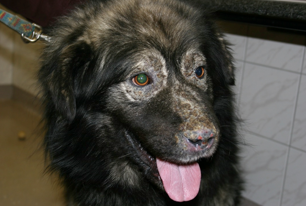
What condition are we suspicious of in this image?
Pemphigus foliaceous
How can you determine if a patient has facial nerve (VII) paralysis?
Drooping lip, drooping eyelid, reduced or absent blink reflex
What clinical signs will lead you to consider Horner syndrome?
Miosis, ptosis, protrusion of the third eyelid, and/or enopthalmos (sunken eye)
What clinical signs can lead you to consider a parasympathetic nerve dysfunction?
Keratoconjuctivitis sicca, dry and hyperkeratotic nose
What clinical signs will lead us to consider vestibular syndrome in a patient?
Nystagmus, head tilt, vestibualr ataxia, circling

What is seen on this cytology?
Malassezia

What is seen on this cytology?
Cocci and corneocytes
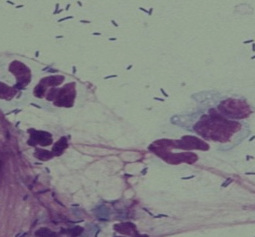
What is seen on this cytology?
Rods and neutrophils
What are some benefits of a culture and suceptibility test?
Accurately identify the causative organism, assess antimicrobial susceptibility and guide therapy
What are some limitations of a culture and suceptibility test?
Based on systemic antibiotic concentrations, topical therapy can achieve much higher concentrations so topicals may be clinically effective despite in vitro resistance
When should you perform a culture ans susceptibitily test?
In cases of otitis media, chornic or recurrent otitis, previous treatment faikures, suspeected antimicrobial resistances, or rod infections
What is the general requirements for successful treatment of otitis?
Ear cleaning, control inflammation, control infection, manage underlying causes, monitor treatment response, surgical intervention if necessary
What is the take home message for vets in regards to ear cleaning and its importance in resolving the patient’s otitis?
You cannot effectively treat what you cannot reach
What is the preferred method of ear cleaning?
Video-otoscocpic ear flush
What is the take home message for owners in regards to ear cleaning and its importance in resolving the patient’s otitis?
Ear cleaning is essential therapy that improves effectiveness of other treatments
How do we primarily control the inflammation brought on by otitis?
Glucocorticoids
Why are glucocorticoids considered the “cornerstone of otitis therapy?”
Reduces inflammation, reduces pain and edema, improves ear canal patency, enhances efficacy of topical therapy
What is the go to method for controling the infection in otitis cases?
Antimicrobial ear cleaner with gentamicin, topical always.
When may you consider systemic antibiotics for otitis?
In otitis media, erosive/ulcerative otitis, or severe canal stenosis
When would you NOT want to use a topical otic medication?
If a patient has a ruptured ear drum
What is considered the “best” topical otic medication?
One that is effective, safe, and can be administered correctly by the owner
What are suitable cases to administer long-acting topical otic preparations?
Mild to moderate otitis externa caused by cocci or malassezia
Poor owner compliance or patients difficult to medicate at home
Always perform after adequate ear cleaning
What are UNsuitable cases to administer long-acting topical otic preparations?
Severe and complicated otitis, ears that need daily cleaning, ruptured tympanic membranes, or infections with rods (G-)
What are potential underlying causes for otitis?
Allergies, ectoaprasites, foreign bodies/polyps, or other primary diseases
How frequently should you recheck otitis patients?
Every 2 weeks
Why shoudl you recheck otitis patients?
To re-examine and re-evaluate if therapy needs adjusted or continued, or stopped.
After resolution of otitis, when may further monitoring be indicated?
Cases of stenosis, hyperplasia, concern in recurrent otitis media, or long-term primary disease is present (atopic dermatits)
What is Total Ear Canal Ablation (TECA)?
Complete removal of the diseased external ear canal
What is Laterla Bulla Osteotomy (LBO)?
Surgical opening and curettage of the tympanic bulla
Why may surgical intervention be indicated in otitis treatment?
End-stage otitis (severe setnosis, irreversible damage, persistent otitis media)
Neoplasia or obstructive masses/polyps
What are the typical clinical features of pseudomonas otitis?
Severe pain, marked erythema and edema, ulcers, purulent exudate
Often after a treatment failure
What will cytology look like in a case of pseudomonas otitis?
Rod shaped bacteria, degenerate neutrophisl, biofilm
What is the recommended treatment for pseudomonas otitis?
Thorough ear cleaning (Triz Ultra), topical therapy with gentamicin and control inflammation with glucocorticoids
Consider systemic antibiotics if severe infection
What is an aural hematoma?
Accumulation of blood between the auricular cartilage and skin of the pinna
What causes an aural hematoma?
Rupture of small blood vessels in the ear from head shaking/scratching
Commonly associated with otitis externa and/or allergies
What are the clinical signs seen in a patient with an aural hematoma?
Soft to firm fluctuant swelling of the pinna, pain and discomfort, head shaking, ear scratching, unilateral or bialteral involvement
How can we treat aural hematomas conservatively?
Glucocorticoids for 3 weeks with gradual tapering ± needle drainage if large
head bandage in select cases with regular rechecks to assess reduction in size
When should we treat aural hematomas surgically?
If conservative treatment is unsuccessful
What diseases may lead to a patient with interdigidtal dermaitits (pododermatitis)?
Canine atopic dermatitis, trauma and foreign bodies, infectious and parasitic diseases, immmune-mediated diseases, metabolic and nutritional diseases, neoplasia
What does the root word Onycho- refer to?
Nail or claw
What does paronychia mean?
Inflammation of the claw bed
What does onychomadesis mean?
Sloughin or complete shedding of the claws
What does Onychorrhexis mean?
Splitting or brittleness of the claws
What does Onychodystrophy mean?
Abnormal or malformed growth of the claw structure
What conditions can lead to disease of the nail/claw or nail bed?
Trauma, infectious/parasitic causes, immune-mediated conditions, or digital tumors
What age of dog is most impacted by lupoid onychodystrophy?
Young to middle-aged dogs
What breeds are predisposed to lupoid onychodystrophy?
German Shepherd Dogs, Gordon Setters, and Rottweilers
What is Lupoid onychodystrophy?
An immune mediated disorder that attacks the claw matrix
How can we treat lupoid onychodystrophy?
Remove remaining claws, administer glucocorticoids
Long term: Cyclosporine or oclacitinib and essential fatty acids with regualr nail care (trimming and polish)
What are typical clinical signs of paw pad disease?
Erythema, licking and chewing, hyperkeratosis, fissures and ulceration, pain and lameness
What are the three most common diseases of the anal sac?
Impaction, sacculitis, and adenocarcinoma
Describe what an anal sac imapction is
The structure does not empty adequately, contents become thicked and enlarged and uncomfortable → scooting, licking, tial posture change, or sudden yelping
Describe what anal sacculitis is.
Impaction with inflammation and infection, may lead to abscessation and rupture
Why should we be concerned if an anal sa adenocarcinoma is identified?
These ahve high metastatic potential