Feline myocardial dx
 Call Kai
 Learn
Learn Practice Test
 Spaced Repetition
 Match
Match Flashcards
 Knowt Play
1/40

There's no tags or description
Looks like no tags are added yet.
Name | Mastery | Learn | Test | Matching | Spaced | Call with Kai | Chat |
|---|
No analytics yet
Send a link to your students to track their progress
41 Terms
What are the primary myocardial diseases in cats?
Can get most cardiomyopathies
HCM (main one)
With or without LV obstruction
Restrictive cardiomyopathy
Non-specific cardiomyopathy
DCM
Arrythmogenic right ventricular cardiomyopathy
What are the 2° myocardial dx that can cause cardiomyopathy in cats?
Hypertensive cardiomyopathy
Hyperthyroid cardiomyopathy
Cardiomyopathy associated with acromegaly, azotaemia, diabetes etc.
Transient myocardial thickening (young cats, following stressful incident, reversible)
What can feline systemic hypertension lead to?
2° cardiomyopathy
Often can identify heart murmurs
Ocular/ CNS complications (vital to recognise before this)
What do you need to screen for when a cat has systemic hypertension?
Screen for underlying systemic dx —> haematology, biochem, TT4 etc.
Explain the pathological processes that come with HCM
Marked concentric hypertrophy of LV
Diastolic dysfunction
Can pump but cant fill

What would be the gold standard diagnosis for HCM?
Histopath to rule out other potential causes of concentric hypertrophy
Fibromyocyte disarray
Fibrosis

What potential causes do you need to rule out to diagnose HCM?
Aortic stenosis
Systemic hypertension
Hyperthyroidism
CRF
Acromegaly (± diabetes mellitus)
Transient myocardial thickening
(All cause concentric left ventricular hypetrophy)
What causes true HCM?
Genetic:
Can genetic test Maine coons & ragdolls —> mutations detected in genes encoding myosin binding protein C
How does preclinical HCM present?
Asymptomatic heart murmur most common
Sometimes arrythmias/ diastolic gallops (S3 & S4)
Incr. NT-proBNP and/or Troponin I in blood sample (cardiac biomarkers)
What NT-pro-BNP value is normal?
<100 pmol/L
How does clinical HCM present?
Dyspnoea/ tachypnoea because of CHF → pulmonary oedema +/or pleural effusion
Feline arterial thrombo embolism (FATE)
Syncope
Period of open mouth panting
Sudden death
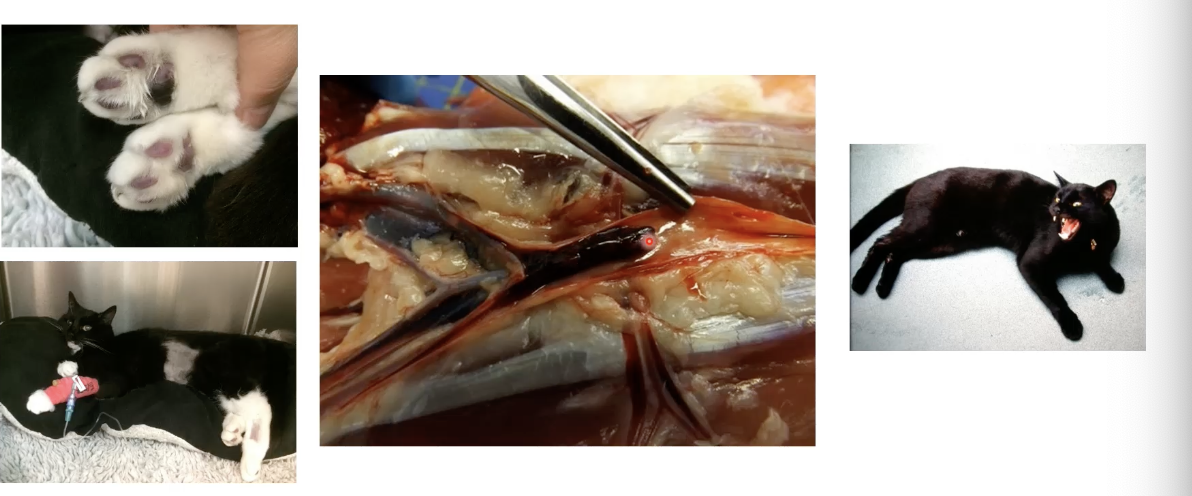
How does FATE present?
Non pigmented nail beds
Loss of function of back legs (can also be front legs)
Very painful
Saddle thrombus seen in distal aorta PM
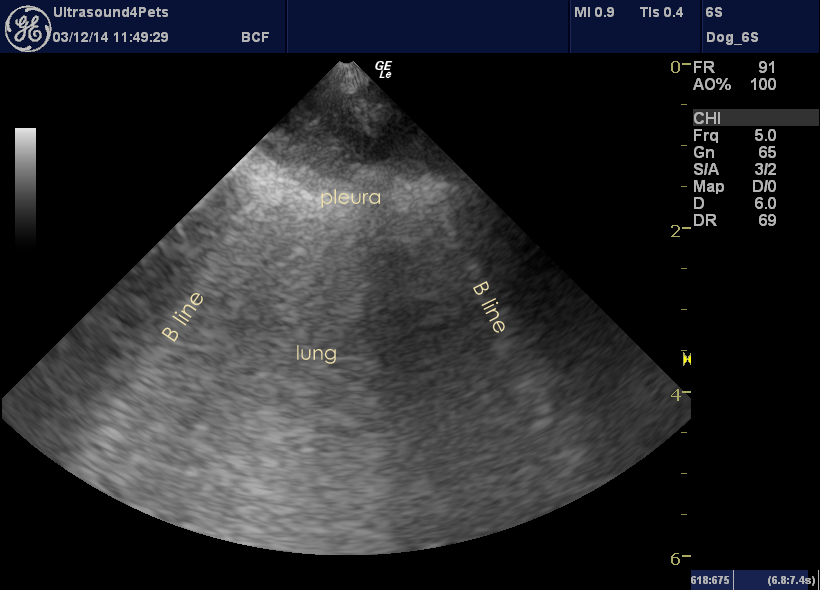
How does pulmonary oedema present on echo?
B lines
How does HCM present on echo?
Thick walls but normal sized L atrium which then progresses to incr. sized L atrum
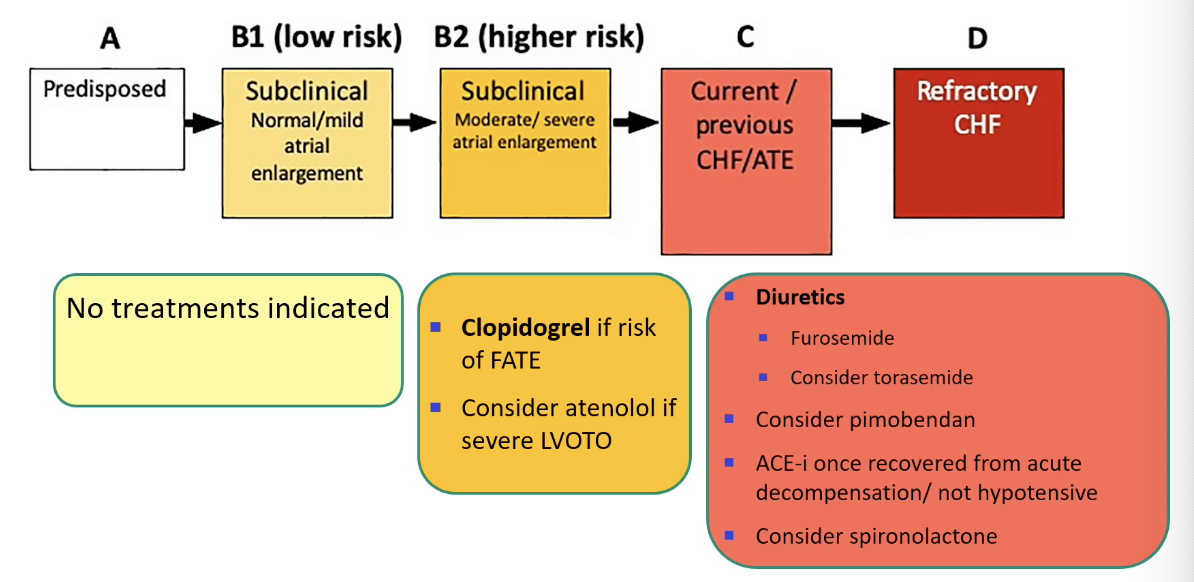
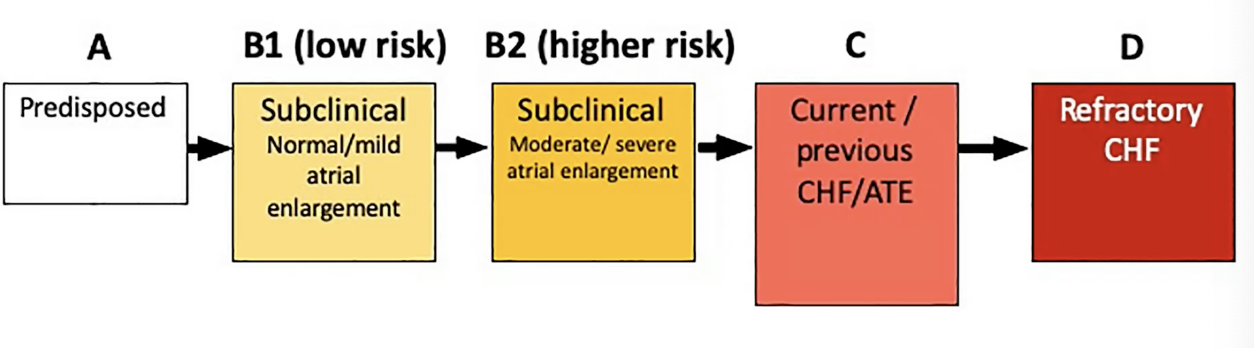
How is feline HCM classified?
What is this lung pattern showing?
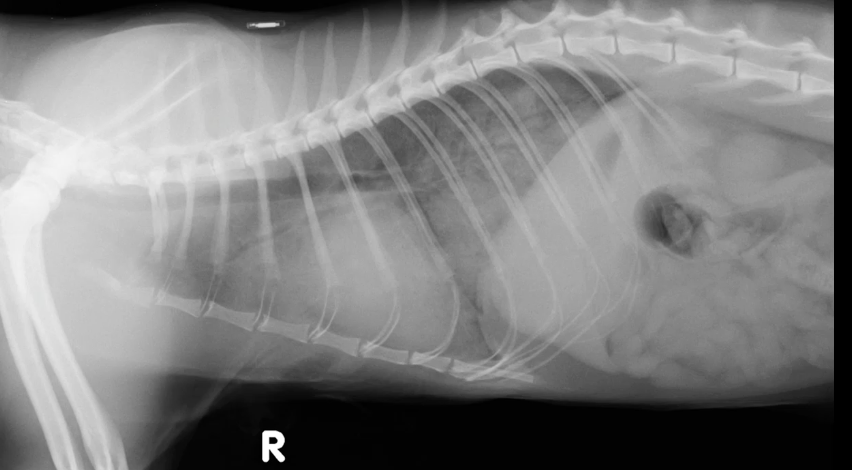
Alveolar pattern in caudodorsal lung field
Trachea no longer parallel to sternum = cardiogenic pulmonary oedema
How may a HCM heart present on a radiograph?
'Valentine' heart on DV view
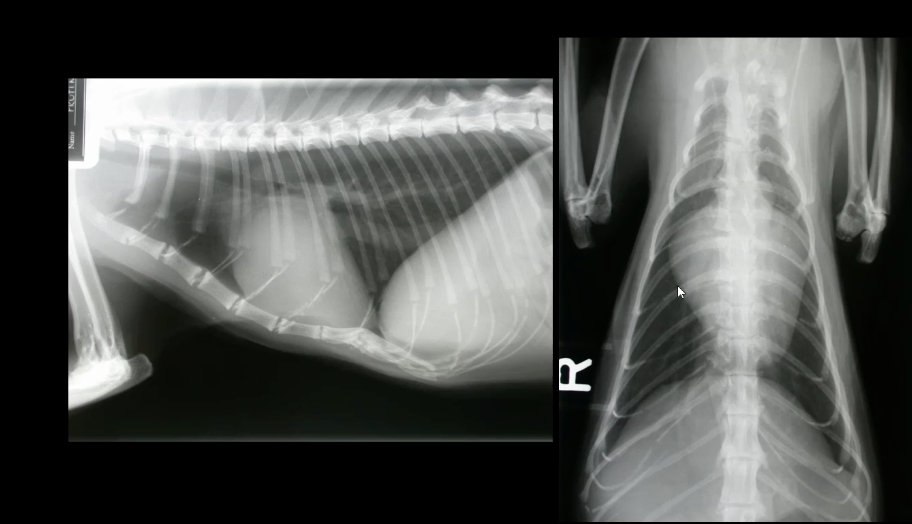
Atrial enlargement —> L & R atrium
Pointed apex
Enlarged cardiac silhouette
How may ECGs be useful in the diagnosis of HCM?
Confirm presence of arrhythmias
Intraventricular conduction disturbancces
Tall R waves because of LV enlargement (0.9mV)
(Not always useful)
What does this ECG show?

Atrial fibrillation —> large R-R interval, no discernable P waves
What are the sources of murmurs in HCM?
Septal bulge resulting in LV outflow tract obstruction
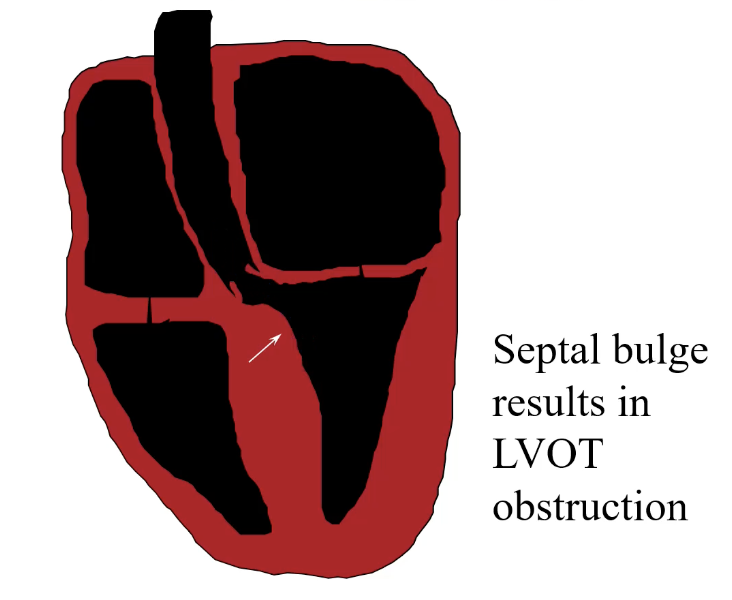
Systolic anterior motion of MV → mitral regurgitation due to mitral valve being open in systole when it shouldn’t be
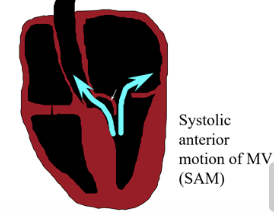
Two jets
Systolic anterior motion (SAM) of the septal mitral valve leaflet leading to dynamic left ventricular outflow tract obstruction (DLVOTO)
What does LVOT look like on echo?

Scimitar shape
What causes an audible S3?
Rapid deceleration of blood in LV

What causes an audible S4?
LV filling associated with atrial contraction

How do you treat HCM & CHF?
If CHF:
Diuretics (Furosemide)
IV —> better as venodilatory effect —> if can be administered w/o stress if severe dyspnoea
IM if cannot be given IV
Clopidogrel; aspirin —> to prevent thromboembolism
Depending on owner compliance can add:
Venodilator (for life-threatening pulmonary oedema)
ACE inhibitor (Benazepril licensed for CKD)
Ang II blocker (Telmisartan)
Do you treat an asymptomatic HCM cat?
Not much evidence for outcome but could use beta blockers because can reduce severity of LVOT obstruction/systolic anterior motion
indirectly improve diastolic function
DO NOT use beta blockers in cat with uncontrolled CHF —> will slow heart rate —> need symp drive to survive
Maybe ACE inhibitors
Maybe dilitazem —> positive lusitrope, improves diastolic function (no longer available)
What are some predisposing factors that contribute to cats being more likely to have HCM?
Large, overweight males
Increased insulin, glucose & IGF-1
Low carb, high protein diet over 12months can reduce progression of preclin HCM
Which drug may prevent significant increase in hypertrophy over 6 months?
Rapamycin
What is an important cause of DCM in cats?
Taurine def
Reversible with taurine supplementation
DCM rare in cats because taurine present in most modern cat diets
What are the gross features of DCM
Thin wall
Insufficient contracting ability of ventricles

What can you use for DCM treatment?
Supportive with warmth, O2, pleural effusion drainage
Furosemide
ACE inhibitors
Pimobendan (+ve ionotrope) —> not in murmurs because worsen obstructions
Taurine supplementation
What are the two forms of restrictive cardiomyopathy?
Myocardial form
Endomyocardial form
What is restrictive cardiomyopathy characterised by?
Normal dimension and systolic function but reduced diastolic function
Presents with LA enlargement
How do the forms of RCM differ on echo?
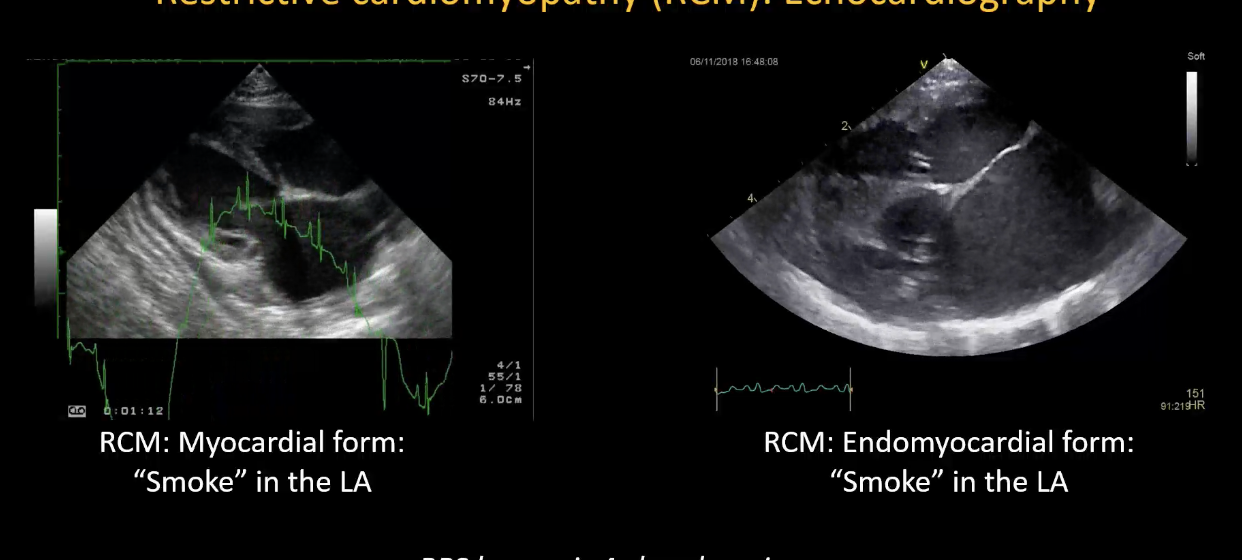
Both cause severe heart m. stiffness & dyastolic dysfunction due to stretching & enlargement of LA
Endomyocardial form = bridging scars formed
What is a non-specific-CM?
Features of more than one cardiomyopathy, describe the abnormalities
What is arrythmogenic RV cardiomyopathy?
Fatty replacement of the myocardium, initially around RVOT
Dilation of R heart usually
How do cats with arrythmogenic RV cardiomyopathy present?
R-CHF so ascites
Maybe arrythmias/ conduction disturbances
Some 3rd degree AV block

Summarise your treatment plan for CHF in cats, whatever the form of cardiomyopathy?
Furosemide
± Pimobendan (unless murmur)
ACE inhibitor
± Spirinolactone
How do you stabilise a dyspnoeic cat with CHF?
Oxygen therapy w/o additional stress
Reduce anxiety (butorphanol)
Calm, gentle handling & environ
Delay investigations until more stable
Nitroglycerin topically or GTN patches
IV (or IM if stressed) furosemide
What samples can you use to run a NT pro-BNP SNAP test?
Blood / pleural effusion (drain)
Can use in very dyspnoeic patient to identify cardiac cause / exclude it
What is recommended for specific breeds that are prone to HCM?
Pedigree breeding cats screened annually by echo —> main diag but expensive, time-consuming, requires training
NT pro-BNP quantitative assay (SNAP test)
immediate so useful in dyspnoeic petients
not usueful to screen healthy cats as needs values of > 150-200pmol/L to show “abnormal” on SNAP test
Summary of treatments for cardiomyopathy stages