Art History Test 2
 Call Kai
 Learn
 Practice Test
 Spaced Repetition
 Match
 Flashcards
 Knowt Play
1/34

There's no tags or description
Looks like no tags are added yet.
35 Terms

Who: Indian Artist
What: Shiva as Lord of Dance (Nataraja)
Where: Tamil, India
When: 1000 CE
Who: This is a sculpture of the Hindu god Shiva dancing. It is dancing in one foot showing power of balance. One hand holds a flame representing destruction, while another holds a drum representing life and creation. The snake represents rebirth, and another hand makes a gesture offering protection and safety. It is important because it represents the Hindu belief in the cycle of life, destruction, and rebirth.

Who: Buddhist Artist
What: Buddah Shakyamuni
Where: Ancient India
When: 1000 CE
Why: Sitting in classic meditation posture. The elongated ears symbolize royalty. Made under chola dynasty in southern India. Show calmness and peace. The sculpture is important because it represents Buddhist beliefs and the goal of reaching enlightenment.

Who: Islamic Artist
What: Ilkhanid Mihrab
Where: Iran
When: 1500 CE
Why: This is a decorated prayer niche found in a mosque. It points toward Mecca, the direction Muslims face when praying. It has detailed tile designs and Arabic writing. It was used to help people know which direction to pray. It is important because it shows how Islamic art connects religion with decoration and design.
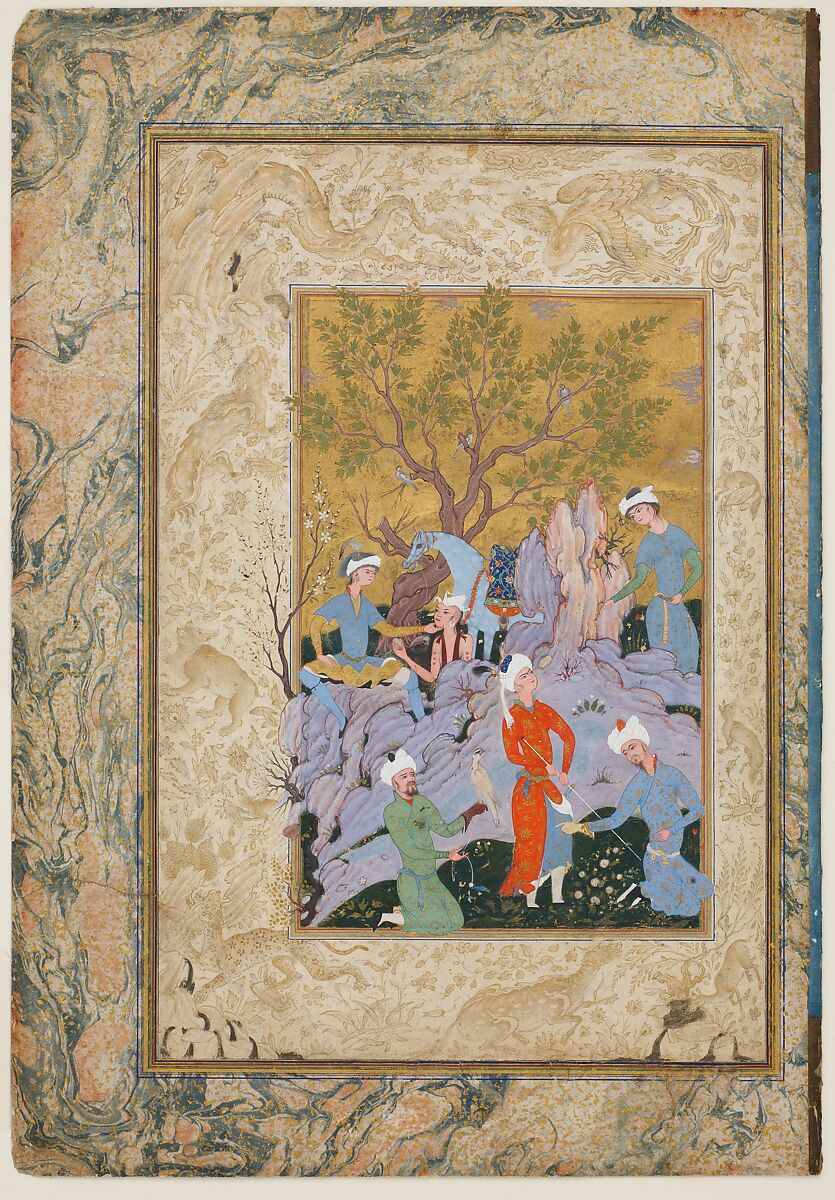
Who; Mirza ‘Ali
What: Princely Hawking Party
Where: Iran
Where: 1500 CE
Why: This painting shows a prince and his group hunting birds with trained falcons. Falconry was a popular activity among wealthy and powerful people. The detailed landscape, clothing, and animals show the wealth and high status of the prince. The painting is important because it shows Persian culture and the lifestyle of the royal class. It also demonstrates the detailed style of Persian miniature painting.

Who: Giotto
What: Lamentation Panel
Where: Italy
When: 1300
Why: This painting shows people mourning the death of Jesus after he was taken down from the cross. Mary holds Jesus while others around them show sadness and grief. Giotto was the first artist to step away from medieval style painting. Giotto helped change art from the medieval style to a more realistic style that led to the Renaissance. Jesus is not in the middle or biggest showing more realism/naturalism at work.

Who: Masaccio
What: Holy Trinity
Where: Italy
When: 1500 CE
Why: This painting shows the Holy Trinity: God the Father, Jesus on the cross, and the Holy Spirit represented by a dove. Mary and Saint John stand beside Jesus, while two donors kneel in front. Masaccio uses linear perspective to make the painting look like it has real depth and space. The figures also look more realistic and three-dimensional. The painting is important because it shows how Renaissance artists used perspective and realism to make artwork look more lifelike.

Who: Sandro Botticelli
What: Birth of Venus
Where: Italy
When: 1500 CE

Who: Donatello
What: St. Mark
Where: Italy
When: 1500 CE

Who: Jan van Eyck
What: Arnolfini Portrait
Where: Belgium
When: 1500 CE

Who: Raphael
What: School of Athens
Where: Italy
When: 1500 CE

Who: Leonardo da Vinci
What: The Last Supper
Where: Italy
When: 1500 CE

Who: Titian
What: Venus of Urbino
Where: Italy
When: 1500 CE

Who: Michelangelo
What: David
Where: Italy
When: 1500 CE

Who: Michelangelo
What: Creation of Adam
When: Vatican City
When: 1500 CE

Who: African Artist
What: Vase With Rope
Where: Nigeria, Africa
When: 1000 CE

Who: African Artist
What: Shell Vessel with Leopard
Where: Nigeria, Africa
When: 1000 BCE

Who: Local Djenné builders
What: Great Mosque of Djenné
Where: Dijenné, Mali
When: 1200 CE

Who: Djenné Artist
What: Seated Figure
Where: Mali, Africa
When: 1200 CE

Who: African Artist
What: Ife Head
Where: Ife, Africa
When: 1200 CE

Who: Diego Velázquez
What: Juan de Pareja
Where: Painted in Rome
When: 1600 CE

Who: Mexican Artist
What: Mass of St. Gregory
Where: Mexico
When: 1500 CE

Who: Miguel Cabrera
What: Doña María
Where: Mexico
When: 1800 CE

Who: Rembrandt
What: Anatomy Lesson of Dr. Tulp
When: Amsterdam, Netherlands
When: 1700 CE

Who: Willem Kalf
What: Still Life with a Silver Ewer
Where: Amsterdam, Netherlands
When: 1600 CE

Who: Jacob van Ruisdael
When: View of Haarlem with Bleaching Grounds
Where: Haarlem, Netherlands
When: 1600 CE

Who: Judith Leyster
What: Self Portrait
Where: Harlem Netherlands
When: 1600 CE

Who: Unknown Chinese Artist
What: Chinese Vase with "Garlic" Mouth
Where: China
When: 1800 CE

Who: Shitao
What: Returning Home
Where: China
When: 1700 CE

Who: Giuseppe Castiglione
What: The Qianlong Emperor as Manjushri
Where: China
When 1800 CE

Who: Yi Lantai
What: Perspective Painting of the Lake to the East
Where: China
When: 1800 CE

Who: Chinese Artist
What: Torah Case
Where: China
When 1900 CE
Who: Jacques-Louis David
What: Oath of the Horatii
Where: France
When: 1800 CE