Disorders of the Equine Lower Respiratory Tract 1
 Call Kai
 Learn
 Practice Test
 Spaced Repetition
 Match
 Flashcards
 Knowt Play
1/38

There's no tags or description
Looks like no tags are added yet.
39 Terms
Endoscopy can give you what information about the equine trachea and bronchi?
• Excessive coughing
Suggestive of respiratory disease
• Examine carina
May see 'oedema' of carina
Suggestive of lower airway inflammation
Particularly severe equine asthma
• Examine secretions
May contain food material if dysphagic
What lower respiratory tract sampling can be performed on equines?

Describe the main features of a tracheal wash.
Two methods
• Collect secretions from the distal trachea
Reflects whole of lungs, but also trachea
• Samples can be used for cytology and microbiology
• Two methods:
For both 20mls sterile saline instilled high into the trachea and then retrieved from there (Put high up and chase it down)
Trans-tracheal (percutaneous)
Bypasses nasopharynx (Avoids contamination)
Sedation, sterile prep, local anaesthetic, small incision
Introducer catheter and long collection catheter
20mls sterile saline instilled and then retrieved
Trans-endoscopic
Via biopsy channel of scope (If we don’t care or are not worried about a sterile sample)
• Two types of catheter
- Single lumen
Cytology only as endoscope, biopsy channel and catheter contaminated by nasopharynx
- Triple lumen catheter (More expensive)
guarded catheter - agar plug at end
cytology + microbiology
• In top third of trachea with scope, move down after fluid with the catheter to retrieve fluid
well before reach horizontal 'sump' of trachea
• Advance catheter from within biopsy channel
Instil 20mls sterile saline -wash down trachea
Then chase and retrieve at 'sump'
For culture ensure only tip of triple lumen catheter enters fluid

How do you submit the tracheal wash for cytology?
• Submit sample in EDTA tube
• Differential cell count of leucocytes and cell morphology
• Microbiological agents
True bacterial infection: increased cell count, increased percentage degenerate neutrophils, free bacteria, phagocytosed bacteria (intracellular and extracellular)
• Particulate matter
Generally inhaled but could be related to dysphagia
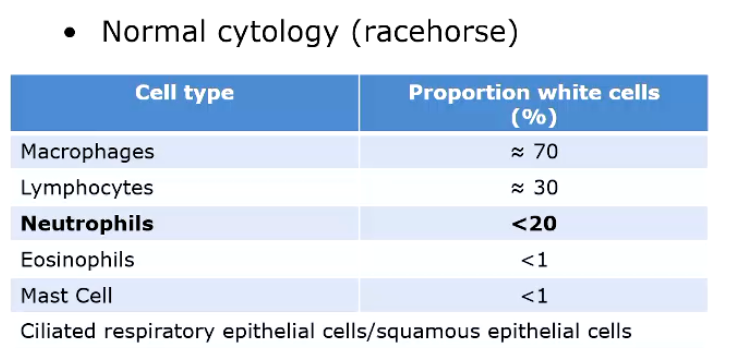
What does a normal tracheal cytology look like?
• Housing or traveling a horse can result in a TW having increased proportion of neutrophils
A normal horse could briefly have up to 50% neutrophils (and rarely even higher) but would expect to then decrease and also have no clinical problems!
If we want a sterile sample, what are the best methods for culture?

If we want a cleaner sample and what to know what is happening in the alveoli, we should perform…?
Two Methods
Blind BAL Tube (Fogarty)
• Tends to sample right dorsocaudal lobe
• Via endososcope, after tracheal wash, utilise the catheter to deliver lignocaine at the carina
• Pass sterile BAL tube using sterile gloves
When horse starts to cough instill more lignocaine
Pass until 'wedges' then inflate cuff
Instil warm 0.9% NaCl 180-360mls
Retrieve fluid
Should see surfactant
Discard first syringe retrieved (maline saline)
Submit sample in EDTA
Do not always retrieve all instilled
Rest horse for few days after
Occasionally horses may have pyrexia post BAL
Via endoscope

What is the normal appearance of a bronchoalveolar lavage?
Not suitable for microbiology

Describe the interpretive process for bronchoalveolar lavage.
• For example
BALF with neutrophil proportion (>10%) +/- mast cells (>5%) +/- eosinophils (>5%) - would be consistent with mild/moderate EA
Equine Asthma
• Stabling or travelling healthy horses can result in an increase in proportion of neutrophils in BAL
>10%, and up to 25%, neutrophils with no clinical signs
Care with interpretation - in light of other clinical findings
Usually a healthy stabled horse will moderate this inflammatory response over time
• Bacterial pneumonia
Depending on location of lesion/focal or diffuse may see increased proportion of neutrophils, degenerate neutrophils, intra or extra cellular bacteria etc
Or may be no abnormalities detected if didn't sample affected area
How might hematology and serum biochemistry be useful for equines with lower respiratory disease?
• Infectious diseases (see earlier)
influenza serology etc
May be lymphopenia in viral infection
• Pneumonia/pleuropneumonia
Expect left shift neutrophilia, elevated fibrinogen and SAA (Acute phase proteins)
• Seldom useful for equine asthma (as unchanged)
• Parasitism
May be inflammatory response
• Neoplasia
• Immunodeficiency syndromes
What forms of arterial blood gas analysis can be monitored?

What is the use of thoracic ultrasonography in equine LRT disease?

How can thoracocentesis be used for horses with pleural effusions?
Pleural effusion - either neoplasia or certain pneumonias

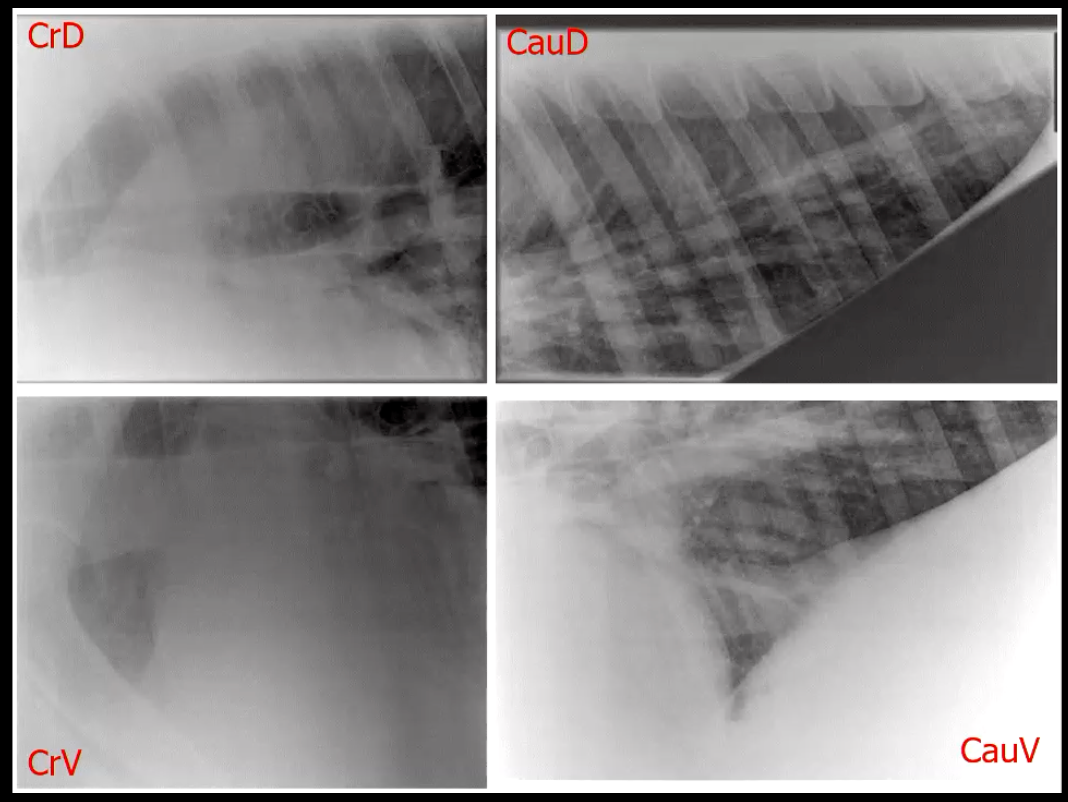
How useful is radiography for equines with LRT disease?
• Limited by availability (except foals)
• Generally limited to lateral views
Divided into four views (lateral)
What other respiratory diagnostics might be used in equines?
• Dynamic endoscopy
• СТ/MRI
• Lung function testing
• Lung scintigraphy
• Mass FNA/biopsy
• Lung biopsy
Describe the main features of equine asthma.
Spectrum of syndromes, equine is neutrophilic inflammation
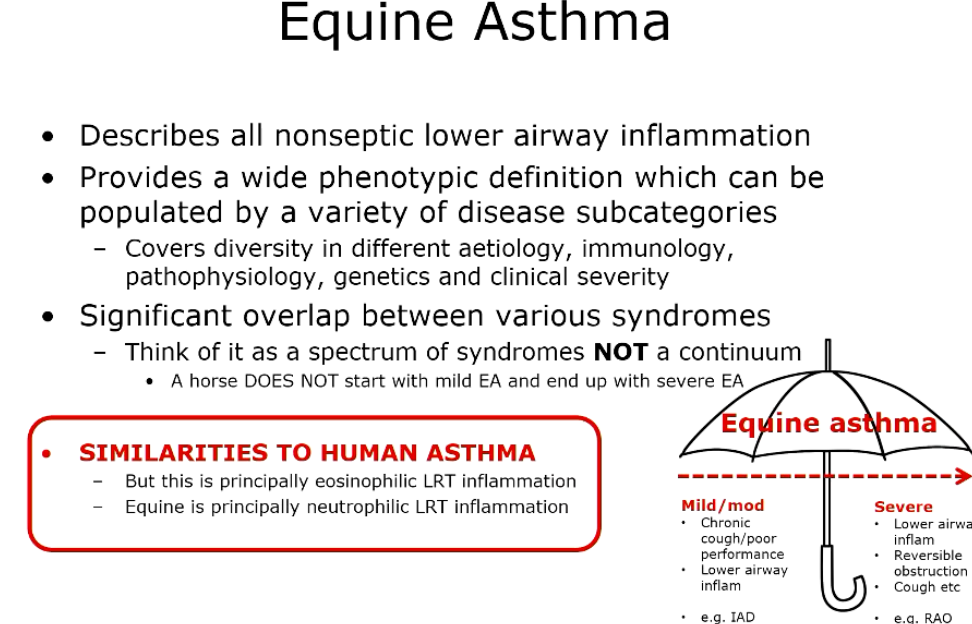
What categories exist for equine asthma?
Mild - moderate - usually younger horses
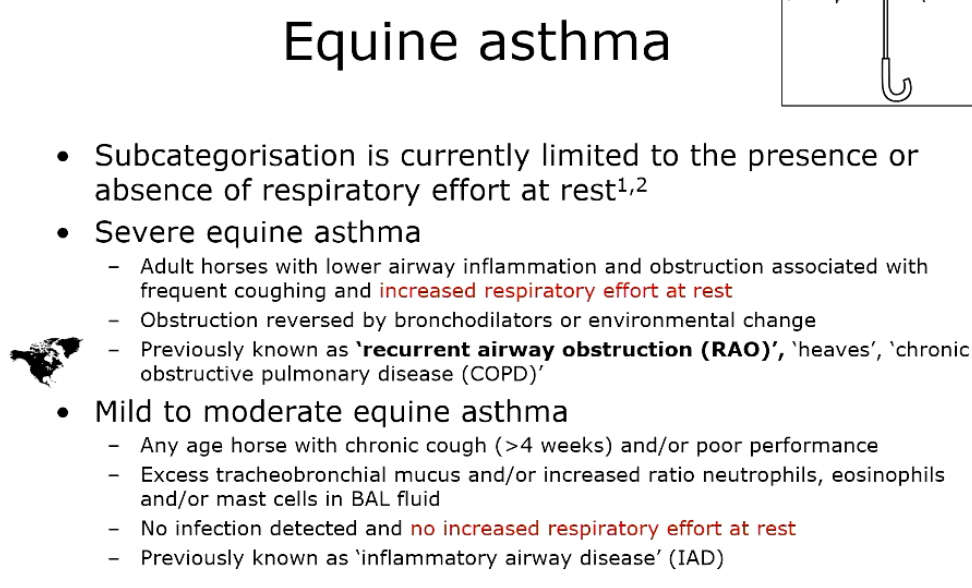
Describe the features of SEA or severe equine asthma.
Moulds - big driver

What is the pathogenesis for SEA.
Causes bronchoconstriction - is reversible by improving the environment or drugs
Over time can get permanent remodeling

What is a bronchospasm?
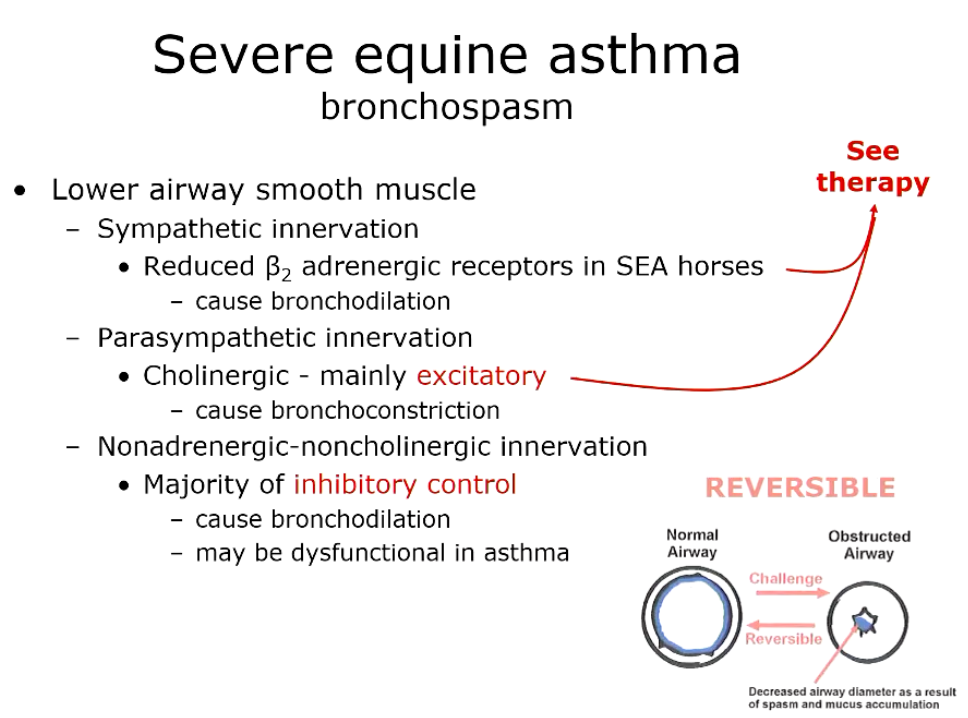
What are the signalment and prevalence of horses experiencing SEA?
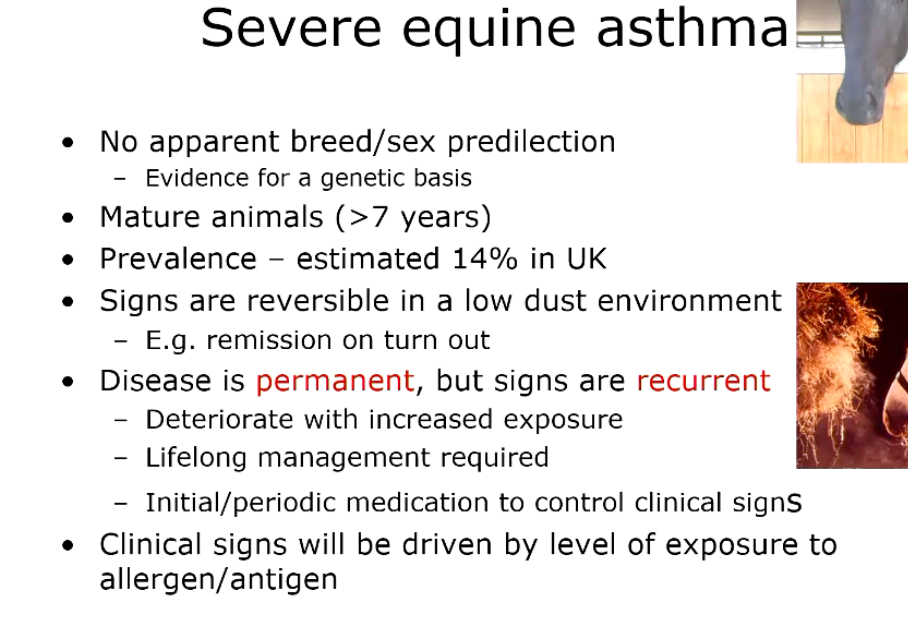
Describe clinical signs of SEA.
History very important
Can go into remission

Describe diagnostic process for SEA.
Tracheal wash - high neutrophils, no evidence of bacterial infection
Ideally perform BAL - better - key to diagnosis

If we have evidence of obstruction, how can this aid our diagnosis of SEA?
Horse with increase effort - give anticholinergic → bronchodilates → dilates airways → is diagnostic in itself
Use Buscopan
Could use atropine - due to long lasting effect - can relax intestines and can cause impaction

What is the main goal of treatment considering SEA?
• Goals?
1. Treat airway inflammation
2. Relieve airway obstruction
3. Prevent re-occurrence
• How?
1. Environmental management
2. Pharmacological treatment
Describe the environmental management for treatment of severe equine asthma. (1)

Describe the environmental management for treatment of severe equine asthma. (2)

Describe the environmental management for treatment of severe equine asthma. (3)

Describe the pharmacological therapy for treatment of severe equine asthma.

What are the aims of treatment for SEA?

How can we control inflammation in SEA?
Not an instant response but gives long term response

Reminder** Where steroids act in inflammatory pathway.
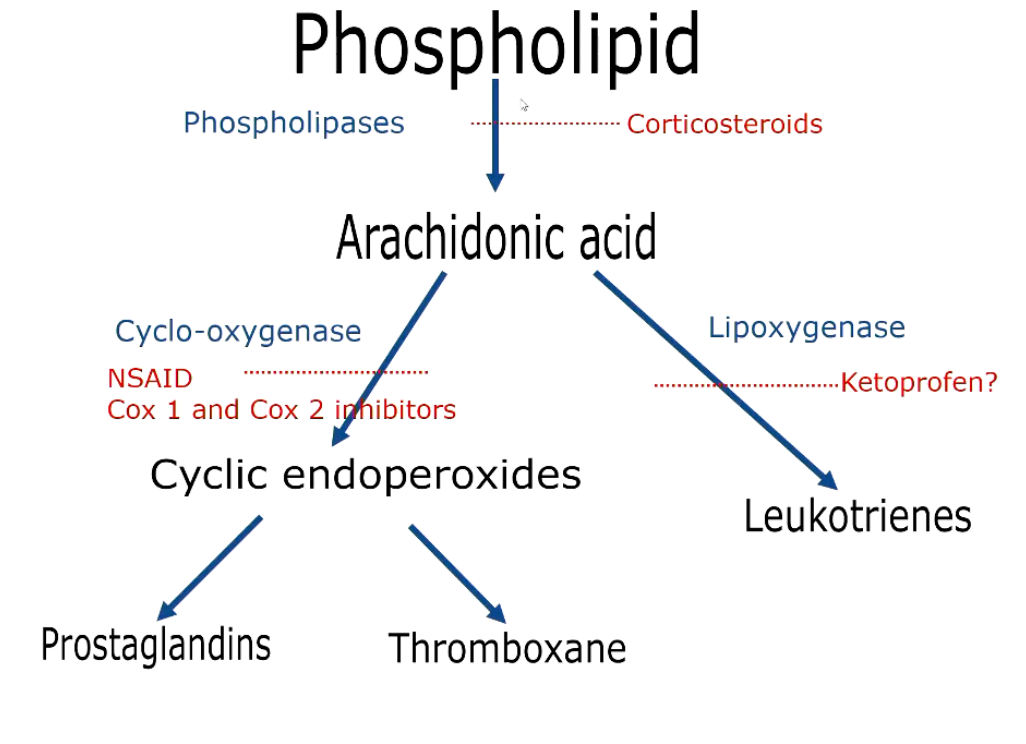
How can we provide inhalational therapy for SEA?

What inhaled corticosteroids are key for SEA?


What inhaled bronchodilators are key for SEA?
Clenbuterol**

What long and short acting bronchodilators are available for SEA?

What anticholinergics are available for SEA?

What other medications might be used for SEA?

Ultimately summarize SEA treatment options.
