Ch9. How Genes & Genomes Evolve
 Call Kai
 Learn
 Practice Test
 Spaced Repetition
 Match
 Flashcards
 Knowt Play
1/45

There's no tags or description
Looks like no tags are added yet.
46 Terms
T/F: There are natural mechanisms for making long stretches of entirely novel nucleotide sequence
FALSE
There is no natural mechanism for making long stretches of entirely novel nucleotide sequences; evolution repurposes existing sequences
Enumerate 6 primary types of genetic changes important in evolution
GRED TH
Mutation within a gene
Mutation within a regulatory DNA
Exon shuffling
Gene duplication
Mobile genetic elements / transposons / jumping genes
Horizontal gene transfer
Which primary genetic change is being described below?
Genes change with changes in single nucleotides, i.e., insertions or deletions.
The resulting mutation may alter 3 things: _
MUTATION WITHIN A GENE
SSL
Stability/splicing of RNA transcribed from the gene
Sequence/activity/interaction with other proteins of the protein translated from RNA
Protein localization
In mutation within a gene, genes refer to coding sequences (CDS) because _
Coding sequences represent nucleotide sequence within a gene (exons) that are translated into amino acid sequence to form a protein

Explain figure
Despite the sophisticated mechanisms to accurately replicate and repair DNA sequences, _ can occur rarely due to errors in DNA replication or repair steps
In many cases, it is a _ mutation that does not affect apparent viability or reproductive ability
In the case of the change of the third base of the codon, the designated AA does not change in many cases, and this is called _
Initially, there’s a mutant E. coli cell that can’t grow in the absence of His because of a point mutation in His gene that changed codon into stop codon > inactive gene
Grown in media w/ histidine, allowing cells to accumulate spontaneous mutations
Selectively plating cells into media lacking histidine, they observed rare “revertant” cells that underwent a second spontaneous mutations (changed codon back to functional codon) and thus were able to regain ability to synthesize histidine
Point mutations
Neutral
Synonymous substitution
Base mutation rates per replication are remarkably similar between species
E. coli = _
Humans = _
However, mutant appearance rates vary greatly due to _, i.e.,
E. coli = _
Humans = _
Base mutation rates per replication are remarkably similar between species
E. coli = 3×10⁻¹⁰
Humans = 1×10⁻¹⁰
However, mutant appearance rates vary greatly due to generation time difference, i.e.,
E. coli = 15-20 mins
Humans = years (for sensei, it took him 28 yrs)


Mutations in germ-line cells and somatic cells have different consequences, i.e.,
Germ-line mutations _
Somatic mutations _
Germ-line mutations occur in reproductive cells and can be passed onto cell’s progeny
Somatic mutations occur in somatic cells and can only be passed onto the progeny of that specific cell
Point mutations in the _ region may change transcriptional regulation
e.g., Lactase persistence
Ancestrally, lactase was only expressed during infancy, but regulatory mutations have allowed certain populations to safely digest milk into adulthood
Specifically, populations in Northern Europe and Africa evolved these lactase persistence mutations near LCT gene during the rise of cattle domestication and dairy farming
REGULATORY DNA
Point mutations in the regulatory DNA region may change _
Explain e.g., Lactase persistence
TRANSCRIPTIONAL REGULATION
Ancestrally, lactase were only expressed during infancy, but regulatory mutations have allowed certain populations to digest milk safely into adulthood
Specifically, populations in Northern Europe and Africa evolved these lactase persistence mutations near LCT gene during the rise of cattle domestication and dairy farming
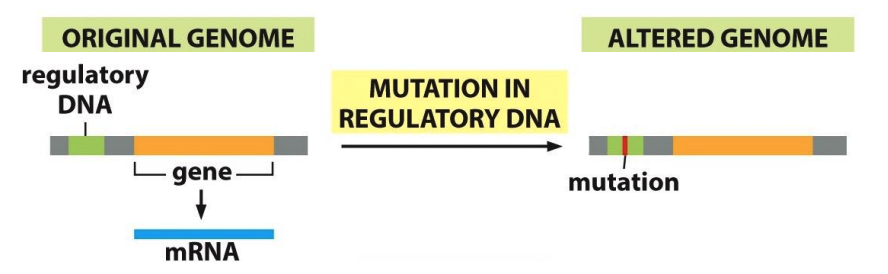
_ creates a backup copy of a gene
Because the original copy continues doing its essential function, the duplicate copy can safely mutate over time without harming the organism, eventually developing new functions
GENE DUPLICATION
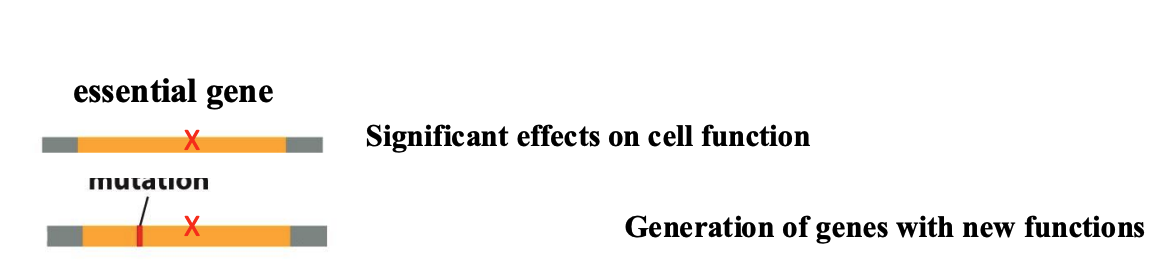
Which primary genetic change?
Existing genes and DNA regions may overlap
Even if it’s an essential gene, since there is a copy of the gene, there is a possibility that a new functional gene may be generated due to point mutation
GENE DUPLICATION
Explain Globin Gene Family as example of gene duplication
Millions of years ago, an ancestral single-chain globin gene was duplicated.
Over time, the duplicated copies accumulated mutations to form 2 oxygen-carrying proteins
Fetal hemoglobin = evolved high-oxygen affinity to pull O2 from mother’s blood
Adult hemoglobin = evolved to efficiently transport O2 throughout adult body
_ refers to the genetic change where exons (CDS) from 2 different genes break and recombine to form a chimeric gene
EXON SHUFFLING

Explain exon shuffling
Process where exons (CDS) from 2 different genes break and recombine to form a chimeric gene
Recombination typically occurs within non-coding introns so that exons can recombine without disrupting their internal sequence
This results in novel proteins with unique combinations of functional protein domains

Cleavage and recombination of 2 or more genes occurs, and a fusion or chimeric gene may be generated
This often happens within an intron removed by splicing
Many proteins have a structure composed of multiple function domains
This seems to be the result of _
EXON SHUFFLING
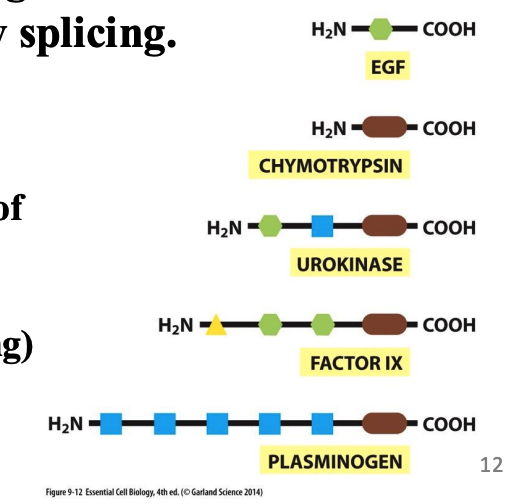
Which primary genetic change?
Specialized DNA sequences physically move from one position to another within the genome via transposition
Explain 2 examples
Fruit fly mutation
Variegated morning glory
MOBILE GENETIC ELEMENTS (transposons/jumping genes)
Fruit fly mutation
Transposition in regulatory gene causes legs to grow on its head where antennae should be
Variegated morning glory
Jumping genes cause color variations in flower petals
_ refers to when DNA fragments may be transferred from the genome of one cell to the genome of another cell, and may also occur between heterologous/host organisms
Common among bacteria, rare in eukaryotes
HORIZONTAL GENE TRANSFER
Explain bacterial conjugation as example HGT
Real-world impact
HGT = when genetic material is transferred directly from genome of one organism to another (rather than vertically, i.e., from parent to offspring)
Bacterial conjugation, where bacteria connect via sex pilus to transfer DNA directly between individuals, or even across different species (e.g., E. coli to Streptomyces)
This mechanism contributes to the rapid spread of antibiotic resistance genes across different bacterial species, posing a major challenge in hospital settings
Explain the statement
“Genetic variability at molecular level is not directional, but fixation of genetic variation is directional”
Comparison of mouse & human leptin genes
At cellular/organism level, the influence of the genetic variation to cell viability determines its fixation (whether this mutation is fixed)
In case of advantageous mutations, these are passed onto progeny and may lead to emergence of new biological populations
Neutral mutations, passed onto progeny and may eventually lead to new functions
Harmful mutations, get eliminated because organisms fail to reproduce
Important genetic regions are highly conserved over evolutionary time because mutations in critical sequences are usually harmful
Exons/coding regions = highly conserved and show very few mutations because the CDS for functional proteins are under high selective pressure; harmful mutations get eliminated
Introns/noncoding = unconserved and accumulate many mutations because mutations in these regions are generally not harmful

T/F: Important genetic regions are highly conserved over evolutionary time because mutations in critical sequences are usually harmful
TRUE
What mutation in the exon region is harmful?
What mutation in the intron region is harmful?
Exon
Mutations that alter critical amino acids, including nonsense mutation that introduces premature stop codon or frameshift mutation, can ruin protein folding & enzymatic function
Intron
Mutations at splice sites are harmful, as this can disrupt correct mRNA splicing and produce abnormal proteins
T/F: Because harmful mutations are eliminated by natural selection, fundamental or homologous genes essential for basic life functions remain highly conserved across vastly different species
TRUE
Explain why homologous genes essential for basic life functions are highly conserved across vastly different species
It is because the influence of genetic variation to cell viability is what determines fixation of mutation.
Specifically, harmful mutations get eliminated because organisms fail to reproduce.
Due to this selective pressure, homologous genes essential for basic life functions remain highly conserved across vastly diff species.

Explain “Genes homologous to human genes are highly conserved,” and how does this allow us to trace evolutions?
Example is the small subunit rRNA because translation is essential in all living cells. Thus, the rRNA gene sequence shows high homology across humans, archaebacteria (Methanococcus), bacteria (E. coli).
By comparing the variations in these conserved gene sequences across different organisms, scientists can reconstruct evolutionary relationships and map them on a phylogenetic tree.

From a phylogenetic tree, how do we analyze the genetic relation between
Closely related species
Distant species
Closely related species
Analyzed by focusing on neutral mutations
e.g., Compare human, chimp, gorilla DNA changes to determine divergence times
Distant species
Focus on highly conserved regions (rRNA) to classify living organisms into 3 domains: Bacteria, Archaea, Eukaryotes
Homologs: Orthologs vs. Paralogs
Homologs = genes sharing a common evolutionary origin
Orthologs (“others”)
Interspecies homologs
Arise due to speciation
Genes in 2 different species that evolved from a common ancestor
e.g., Human vs. mouse leptin gene
Paralogs
Intraspecies homologs
Arise due to gene duplication
Duplicated genes in same species that could evolve new functions
e.g., alpha-, beta-globin
_
Interspecies homologs
Arise due to speciation
Genes in 2 different species that evolved from a common ancestor
e.g., Human vs. mouse leptin gene
ORTHOLOGS
_
Intraspecies homologs
Arise due to gene duplication
Duplicated genes in same species that could evolve new functions
e.g., alpha-, beta-globin
PARALOGS
_ are genes sharing a common evolutionary origin
HOMOLOG
Explain 2 modes of movement of TRANSPOSONS
Cut-and-paste transposition
The transposon sequence is excise-cut out of the donor DNA and inserted directly into a new target DNA site.
Replicative transposition (Copy-and-paste)
The transposon replicates itself so a copy is inserted into the target site while leaving the original in place.
Transposons code for the _ enzyme needed for their movement, flanked by specific recognition sequences
TRANSPOSASE
Explain 2 cargo & effects of transposons
They often carry antibiotic resistance genes (e.g., AmpR, TetR), facilitating resistance spread via horizontal gene transfer.
Insertion can disrupt an existing gene or introduce promoter-like sequences that create new transcription sites nearby.

Explain EXON SHUFFLING by transposons
Transposons can mistakenly recognize recognition sequences of 2 separate nearby transposons, flanking an exon in Gene A.
Transposase ends up excising the whole segment, including the exon from A, and inserts into Gene B, resulting in exon shuffling/duplication
_ are human retrotransposons transcribed into RNA, converted into a double-stranded DNA copy by their own self-encoded reverse transcriptase, and integrated into a new genomic location
L1 elements

_ are human retrotransposons dose not encode their own reverse transcriptase and thus depend on enzymes already present in the cell to help them move.
Alu elements
_ consists of a genome wrapped in a protective protein coat, capable of moving between host cells/organisms
Cannot reproduce on its own; hijack host cell machinery to replicate DNA/RNA, transcribe/translate proteins, assemble new progeny particles, and often lyse (destroy) the host cell
VIRUSES
Explain biological definition & legal regulatory definition of VIRUSES
Biological definition: Not considered an organism because it lacks independent metabolism and cellular structure.
Legal/Regulatory definition: Treated as a biological organism under genetic recombination safety regulations (e.g., Cartagena Protocol).
_ is the virus with part single- and part double-stranded DNA
Hepatitis B virus (HBV)
_ are viruses that replicate using a DNA intermediate like retrotransposons, e.g., HIV (Human Immunodeficiency Virus)
RETROVIRUSES
Explain life cycle of retrovirus (HIV)
ERIE
Entry
Virus enters host cell and uncoats
Reverse transcription
Its reverse transcriptase converts its genetic material ssRNA into dsDNA
Integration
The viral DNA integrates directly into the host cell's chromosome (becoming a permanent part of the host genome)
Expression & Assembly
Host machinery transcribes and translates the integrated viral DNA to produce viral RNA genomes, coat proteins, and enzymes, assembling new infectious virus particles.
The Human Genome Project (1990s) took _ (money and time), whereas Next-Generation Sequencing (NGS) allows sequencing a human genome for _ (money and time)
HGP = 3 billion dollars, 10 yrs
NGS = 1000 dollars, 2-3 days
T/F: Protein-coding introns account for only ~1.5% of the entire human genome
FALSE
Protein-coding exons account for only ~1.5% of the entire human genome.
4 things we found out by examining human genome
Had fewer genes than expected; only ~21,000 protein-coding genes as opposed to originally estimated 100,000
Relative gene size is unusually large (mainly because non-coding introns and regulatory DNA regions make up the vast majority of the gene space)
Most of gene region is intron
Regulated DNA region is long
T/F: Knowing the complete DNA sequence is enough to fully comprehend how an organism works
FALSE
It is also important to know when and where genes are expressed. Spatiotemporal understanding is also necessary.
About 50% of human genome consist of high-copy _
repetitive elements (LINEs, SINEs, retrotransposons, transposon “fossils”)
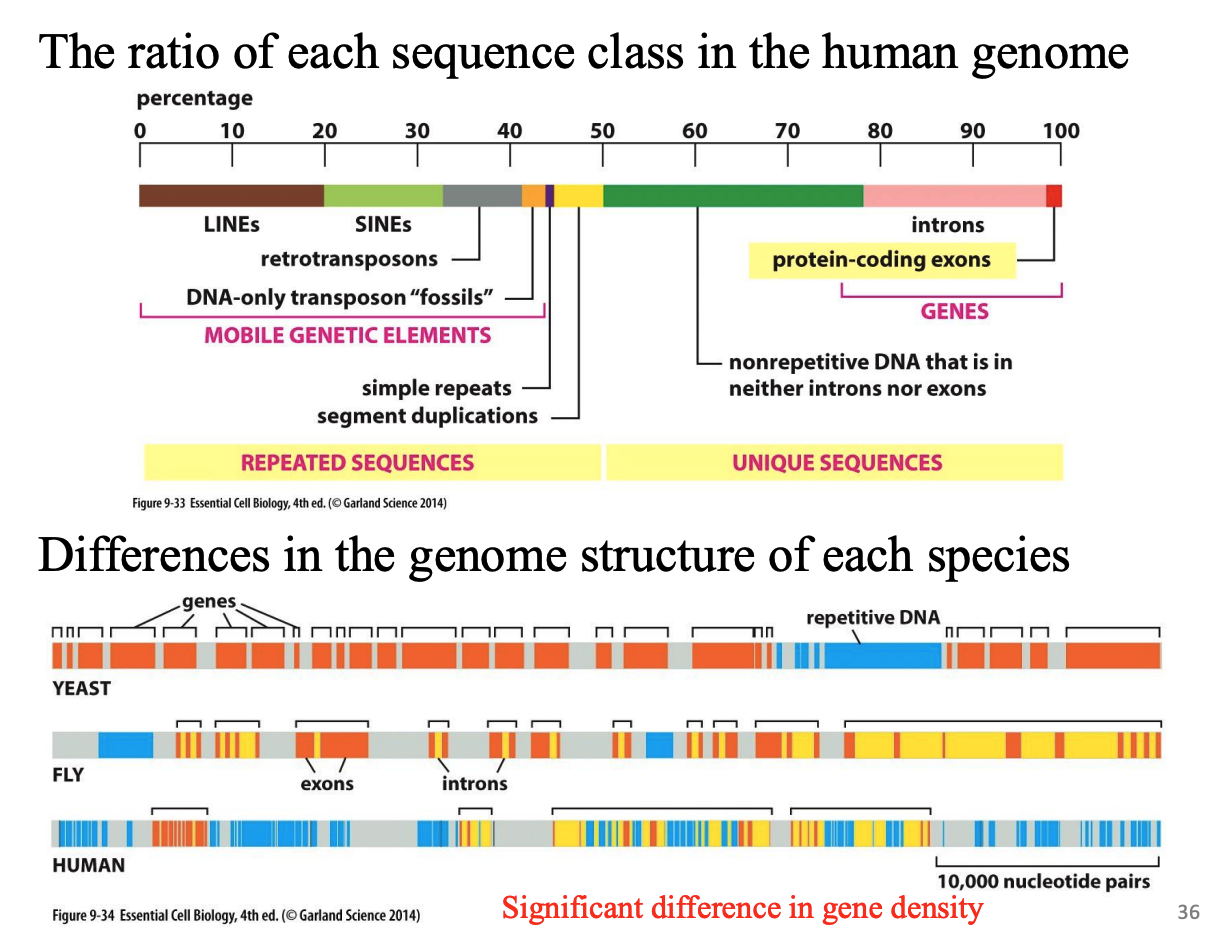
Simpler organisms like yeast have _ gene density with _ non-coding regions;
While humans have a much _ gene density with _ introns and repetitive DNA separating coding exons.
High, very short
Lower, expansive