MBB 222 - M2 material
 Call Kai
 Learn
 Practice Test
 Spaced Repetition
 Match
 Flashcards
 Knowt Play
1/194

There's no tags or description
Looks like no tags are added yet.
195 Terms
origin of replication
Location on chromosome where DNA replication begins in eukaryotic and prokaryotic cells.
Replication-initiator protein recognizes (binds specifically) to particular sequence in the origin site
Chlamydomonas reinhardtii
unicellular algae with phototaxis
cell swims towards light that is
sensed by its eyespot organelle
eyespot has specialized protein “channelopsin”
(green algae)
channelopsin
protein that absorbs light + responds by transporting Na+ ions
into cell to create an electrical signal
found in green algae

** human eye needs multi[;e proteins to respond to light
Optogenetics
biological technique that uses light to control neurons within living tissue, often through genetically encoded light-sensitive proteins.
Light-sensing electrical
signaling capability can be introduced to any cell!

coding sequence
DNA sequence that encodes amino acids in a protein
non-coding sequence
other regions of the chromosome
that do not encode proteins, often involved in gene regulation and expression.
“binding sites for proteins that preform functions”
Electrophoresis/ miracle of polymerization
method used to separate charged particles, such as DNA or proteins, based on their size and charge under an electric field.
takeaway:
DNA + NTPs had RNAP added next to it for comparison and we saw that a RNA was polymerized
DNA template is catalytic (not altered, not annealed to the RNA product and is not used up)
all RNA product molecules have the same length (+ non-random sequence) showing how RNAP starts and stops at unique locations to make specific products intentionally.

Transcription factors
(transcription)
Proteins that bind to specific DNA sequences to regulate transcription of genes, influencing the recruitment of RNAP and the transcription process.
Expression of a gene relies on these proteins
recognize other specific DNA sites than RNAP (it’s before)
often clustered in a "promoter region" just upstream of the promoter ... but might be after the promoter, or even inside the coding sequence!

Upstream
Upstream in DNA orientation refers to the direction toward the 5' (five-prime) end of the coding (sense) strand, opposite to the direction of transcription.

non-coding (non-template)
Downstream
Downstream in DNA orientation refers to the direction toward the 3' (three-prime) end of the coding (sense) strand, in the same direction as transcription.

coding strand (non-template)
RNAP
(transcription)
RNA polymerase, the enzyme synthesizing RNA from a DNA template during the transcription process.
binds specifically to promoter sequence to initiate transcription, aided by
gene regulation proteins called TFs
Other sequences in mRNA are termination sequences - signaling RNAP to end transcription

ribosome
(translation)
a non-membrane-bound cellular structure made of ribosomal RNA (rRNA) and proteins that synthesizes proteins by translating genetic code from messenger RNA (mRNA)
binds mRNA at a specific regulatory sequence ("ribosome binding site", RBS) ... translation starts at the nearest downstream 5' aug 3' sequence, which is the initiation (start) codon.
therefore, Translation does not start at the end of the mRNA strand!
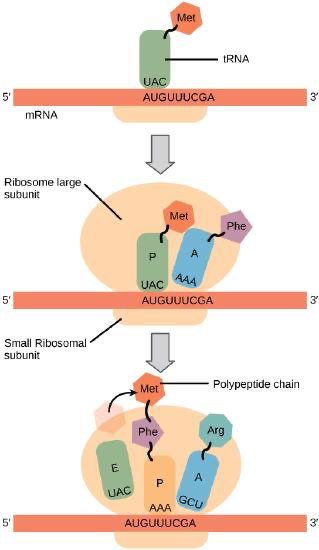
*start codon encodes Met, so Met is the first (N-terminal) a.a. in every polypeptide ... translation subsequently continues in the same reading frame until the termination (stop) codon is reached.
(ORF) open reading frame
a consecutive sequence of codons in mRNA that begins with a start codon and ends with a stop codon, capable of being translated into a protein.

operons
cluster of bacterial genes controlled by 1 promoter and transcribed together into 1 mRNA molecule.
(genes in 1 operon are transcribed from 1 promoter)
Each coding sequence has its own ribosome binding site, start codon & stop codon

polycistronic
1 mRNA that encodes multiple proteins, typically seen in operons of prokaryotic cells. (bacteria)
possible adaptive benefit…
less non-coding DNA = rapidity of DNA rep.
proteins that need to work tgt. are expressed at same time, in same amount
monocistronic
1 mRNA that encodes 1 protein, typical in eukaryotic cells and some viruses. (us fr).
RNAP vs. DNAP (7 thing table)
Feature | DNA Polymerase (DNAP) | RNA Polymerase (RNAP) |
|---|---|---|
Primary Function | DNA replication (copies DNA to DNA) | Transcription (copies DNA to RNA) |
Product | Double-stranded DNA (daughter strand) | Single-stranded RNA (mRNA, tRNA, rRNA) |
Nucleotides Used | Deoxyribonucleotides (dNTPs: A, T, C, G) | Ribonucleotides (rNTPs: A, U, C, G) |
Primer Requirement | Requires a primer with a free 3'-OH group (cannot start de novo) | Does not require a primer (starts de novo) polymerize single NTPs w/o primer |
Helicase Needed | Yes (cannot unwind DNA strands on its own) | No (opens duplex to expose template) |
Proofreading | Yes (3'→5' exonuclease activity; very high accuracy) | Minimal/different (lower fidelity, higher error rate) |
Speed | Very fast (~1000 nucleotides/sec) | Slower (~20 to 80 nucleotides/sec) |
RNAP has no proofreading according to slides; fidelity is less important than speed
RNAP can’t start from a single DNA strand or a single DNA strand w/ a primer; needs duplex.
RNAP acts processively without any external sliding clamp
bacterial RNAP
Bacteria have only 1 RNAP responsible for nearly** all transcription (mRNA, tRNA, etc.)
primase
(DNA replication)
A specialized RNAP that synthesizes a short RNA primer to initiate DNA replication, providing a starting point for DNA polymerase.
(template-hybrid strand)
NTPs
Nucleotide triphosphates, the substrates of RNA synthesis: new phosphodiester linkage forms, w/ release of diphosphate.
RNA(n) + NTP →←RNA(n+1) + PPi
what direction does DNA duplex get renatured/denatured in transcription
happen simultaneously at opposite ends of a moving transcription bubble as the RNA polymerase enzyme moves along the DNA template from the 3' to 5' direction.
renatured in rear, denatured in front.

topoisomerase I
Topoisomerase I relieves supercoil strain (Wr.) in DNA ahead of RNAP
RNAP core
The core enzyme of RNAP: binds DNA non-specifically
requires sigma protein
for recognizing promoter
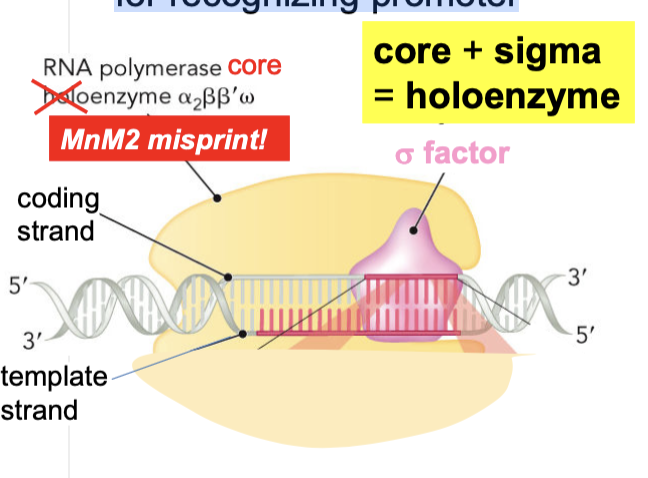
holoenzyme
core + sigma
(transcription)

“+1” position
position on DNA coding strand matching 1st base of mRNA

-35 and -10 box
Regions in the promoter of bacterial DNA that are crucial for the binding of RNAP;
the -35 box is typically recognized by the sigma factor, while the -10 box is known as the Pribnow box.
What is a consensus sequence, and how can differences affect gene expression?
A consensus sequence is the idealized DNA sequence recognized by a protein.
Real sequences may differ from it, potentially reducing protein binding and gene expression.
imagine a bacterial promoter has this consensus sequence:
TATAAT
But an actual promoter has this sequence:
TATGAT
One base is different from the ideal sequence.
Perfect match: RNAP may recognize the promoter more effectively, leading to more transcription.
Imperfect match: RNAP may bind less effectively, leading to less transcription.
sigma factors
proteins that facilitate RNAP binding to promoters in bacterial transcription
1 bacterial species has multiple sigma factors,
each targeting a different promoter sequence,
for use in different circumstances
Sigma 70 “housekeeping”
Sigma 32 “heat shock/expression of proteases and chaperone”

steps in the transcription initiation process
closed (pre-initiation) complex formation, opening of the DNA helix (open complex), and promoter escape by RNA polymerase (promoter clearance). Then elongation complex.
closed (pre-initiation complex)
A formation where RNA polymerase and the sigma factor bind to the promoter region of DNA without unwinding the helix.
RNA polymerase binds nonspecifically to DNA
RNAP binds w/ high affinity to promoter sequences in the -35 and -10 region
DNA is partially unwound at initiation site of transcription
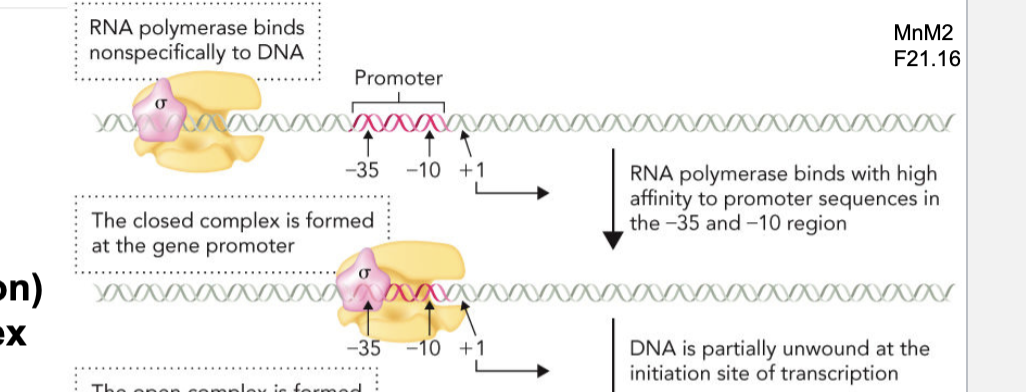
open complex
intermediate state during transcription initiationthe double-stranded DNA is unwound so that RNAP can access the template strand
Binding of sigma to promoter triggers conformational change in RNAP that denatures DNA ~10 bp
RNA synthesis is initiated in a primer-independent RX’N
sigma factor is released and promoter clearance occurs

promoter clearance
when RNAP moves away from the promoter after synthesizing RNA, allowing elongation to proceed. (transitional phase btwn open complex and elongation complex)
sigma factor leaves

elongation complex
a dynamic molecular assembly formed when an RNAP transitions from the initiation phase to synthesize a nascent RNA strand along a DNA template.
occurs in bacterial cytoplasm, so ribosomes can start translation on the mRNA while transcription is ongoing!

nascent strand
a newly formed, growing strand of DNA or RNA that is actively being synthesized by an enzyme like DNA polymerase or RNA polymerase
polynucleotide template
a single-stranded or double-stranded nucleic acid molecule that serves as a pattern for the synthesis of a complementary strand during processes like transcription or replication or translation.
rely on specific sequences in the template for initiation of their function, such as:
replication origin (for DNA rep)
promoter (for transcription)
ribosome binding site + start codon (for translation)
IN BACTERIA
initiation of
(RNAP) action is guided by regulatory sequences, recognized by a sigma factor that later leaves during promoter clearance
chromosomes
structure composed of DNA and proteins that carries genetic information, (replication + division)
in humans, compacted by supercoiling in nucleosomes, with higher coiling levels forming heterochromatin that suppresses transcription.
much DNA is non-coding, with structural or regulatory purposes
introns that interrupt coding sequences (exons) are
removed by splicing the RNA that is initially transcribed

nucleosomes
the basic repeating structural unit of chromatin in eukaryotic cells that packs and organizes DNA inside the nucleus]

Histone proteins + DNA
H2A,H2B,H3,H4 (packaged inside octamer)
H1 histone binds OUTSIDE octamer
prokaryotes DONT have histones or nucleosomes
Duplex is supercoiled by nucleosomes
![<p><mark data-color="#f2f2f2" style="background-color: rgb(242, 242, 242); color: inherit;">the basic repeating structural unit of chromatin in eukaryotic cells that packs and organizes DNA inside the nucleus]</mark></p><img src="https://assets.knowt.com/user-attachments/7a403fa4-5fa2-4409-a695-b35264830de5.png" data-width="50%" data-align="center" alt="Nucleosome - an overview | ScienceDirect Topics" style="display: block; width: 50%; margin-left: auto; margin-right: auto;"><p>Histone proteins + DNA</p><ul><li><p>H2A,H2B,H3,H4 (packaged inside octamer)</p></li><li><p>H1 histone binds OUTSIDE octamer</p></li></ul><p>prokaryotes DONT have histones or nucleosomes</p><p><strong>Duplex is supercoiled by nucleosomes</strong></p>](https://assets.knowt.com/user-attachments/2ac159c9-8360-4b35-a5e0-8018e058f391.png)
Beads on a string
a model describing the structure of nucleosomes where DNA wraps around histone proteins, resembling beads (nucleosomes) strung on a string (the linker DNA). This configuration helps organize and compact the DNA within the nucleus.
arrangement leaves space for enzymes to access individual nucleosomes ... for replication and expression
Histone core octamer
2 copies each of subunits of 4 histones = 8 core histone subunits alltogether
H2A,H2B,H3,H4
packages and organizes eukaryotic DNA into repeating units (nucleosomes)
H1 histone binds OUTSIDE octamer
Histone proteins
Proteins that package and order DNA into structural units called nucleosomes.
Histone proteins associate with the backbone of any DNA duplex ... thus not specific for a sequence**
subtle differences in how histones bind to G:C-rich vs. A:T-rich sequences

Draw histone octamer and DNA duplex coiled up; differences?


heterochromatin
a tightly packed form of DNA that is transcriptionally inactive, often found at the centromeres and telomeres.


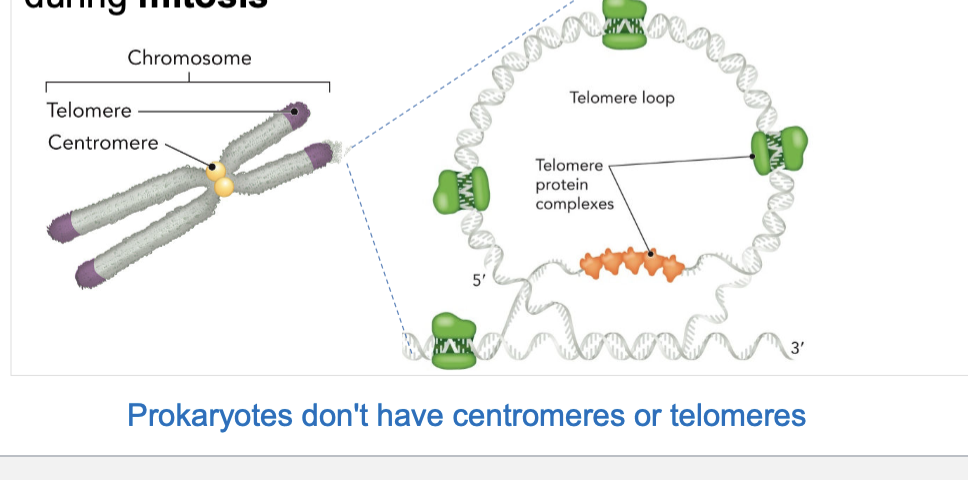
Centromere & telomere are used for physical structure
- not for coding - sequence is repetitive
how centromere and telomere work together on a chromosome
NOTE: both sequences are repetitive
Centromere: combines with
proteins in a kinetochore
- will be grabbed for pulling
sister chromatids apart
(during mitosis) AKA anaphase
Telomere: combines
with proteins to
protect strand ends
PROKARYOTES DONT HAVE THESE
Chromatin
DNA in a cell is always packaged with protein to form a complex called chromatin, which regulates gene expression and DNA replication.
30-nm fibre
A higher-order structure of chromatin formed by the coiling of the nucleosome fibers, facilitating DNA packaging in the nucleus.
typical in interphase
(between cell divisions)
- 30-nm fibre is
supercoiled & again
supercoiled etc.
Euchromatin
varying degree of access for transcription
and is typically associated with actively expressed genes, found at the gene-rich regions of the genome.
10nm- before 700 ish nm
heterochromatin
visibly denser in
light microscope
- no access for
transcription
750ish nm to 1,400 nm
DNA is replicated to make sister chromatids here
Prokaryotes DONT have this
Hierarchical chromatin structure in the chromosome


introns
non-coding sections of a gene that are transcribed into precursor mRNA (pre-mRNA) but are removed during RNA splicing before translation.
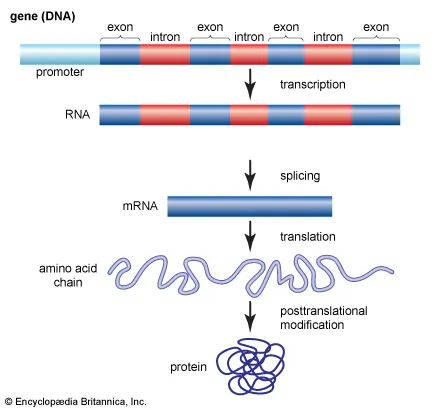
PROKARYOTES DONT HAVE INTRONS OR SPLICING
exons
coding sections of a gene that remain in the mature mRNA after splicing and are translated into protein.

Exon shuffling
The process by which exons from different genes are mixed and matched during recombination or gene duplication, potentially leading to the creation of new proteins with novel functions.
can occur in chromosome ... exons rearranged into different order, or wholly lost!

eukaryote
Protein is made in cytoplasm, but DNA resides in nucleus
Replication & transcription both happen in nucleus, but RNA is exported to cytoplasm for translation
numerous other internal compartments ...some of which evolved from
bacteria that invaded the cell!

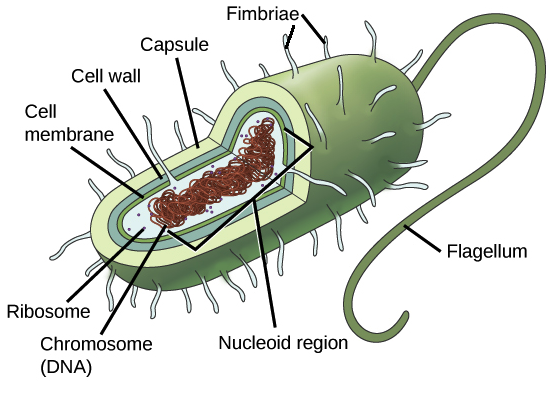
prokaryote
bacterial cell
DNA & RNA & proteins are
all made in the cytoplasm
Eukaryotic mRNA processing
In eukaryotes, extensive maturation modifications are made to the premature mRNA (pre-mRNA) as it is being synthesized by RNAP II ...
transcription initiation
5’ capping
splicing
3’ processing
transcription termination
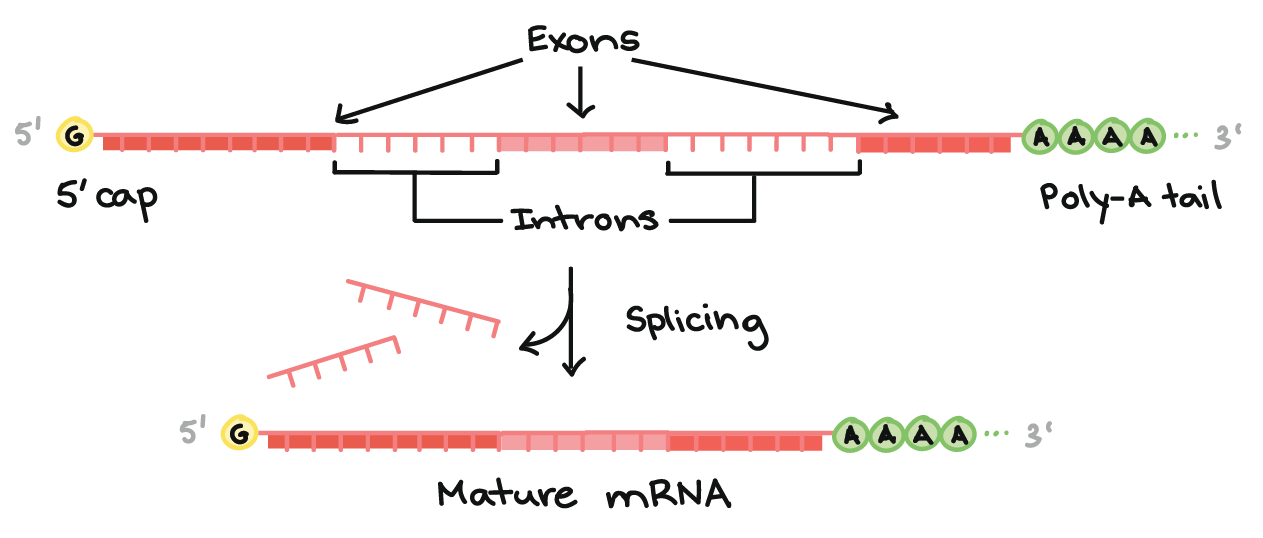
introns that interrupt coding sequences (exons) are
removed by splicing, and a 5' cap and 3' poly-A tail
are covalently attached
transcription in nucleus
3 RNAP in nucleus:
RNAP II: dedicated to mRNA
- the focus in MBB 222
RNAP I: for rRNA
RNAP III: for tRNA plus some rRNA,
other non-coding RNAs; ALL must be exported out of nucleus since aminoacyl-tRNA synthesis and translation (by the ribosome) ALL happen in the cytosol (of cytoplasm)
NOTE: mitochondria + chloroplasts have separate RNAPs

General; mRNA maturation?
RNA polymerase II, an enzyme responsible for synthesizing messenger RNA (mRNA) from DNA during transcription in eukaryotic cells.
RNAP II transcription complex
changes its structure during elongation:
covalent modifications and even protein subunits
are added or subtracted
5’capping
splicing
5’poly A-tail addition
(Prokaryotic mRNA doesn't have this maturation)
If a mature mRNA transcript loses a 5' cap or 3' tail, it is excluded from translation and degraded by exonucleases

exonuclease
An enzyme that removes nucleotide residues from the ends of DNA or RNA molecules.
what’s 5’ cap? specifically state what happens to it during transcription
The 5' cap is a modified guanine nucleotide added to the 5' end of eukaryotic mRNA during transcription.
5' triphosphate at end of pre-mRNA (not a “sequence”): recognized by
capping enzymes which bind to RNAP II
soon after transcription initiation.
5' phosphate gets linked to 5' end of a
methylated G for 5' - 5' triphosphate link
- no free 5' phosphate remains !

splicing
The process of removing introns from pre-mRNA and connecting exons to produce mature mRNA, which can then be translated into protein.
regulated - some exons may or may not
be excluded (alternative splicing of mRNA)
One gene's DNA can thus produce
multiple variant mRNAs,
hence variant proteins
by the splicesome complex
- composed of protein and RNA, where RNA is the
catalytic component, similar to the ribosome
5’poly A-tail addition
at termination of transcription,
polyA polymerase (not RNAP II) adds A nucleotides
(up to 250!) to 3' end of mRNA, not using any template
polyA polymerase
An enzyme responsible for adding a long chain of adenine nucleotides to the 3' end of eukaryotic mRNA during transcription termination.
addition of up to 250 adenines, forming the poly A tail that stabilizes the mRNA and aids in its export from the nucleus.

What does Mature mRNA do?
assembles into a circular complex where both 5' cap and polyA tail are
recognized by specific proteins
- names of proteins are not in Objectives
Circular complex associates with small ribosomal subunit:
ATP hydrolysis is used to pull mRNA past the ribosomal
subunit until the RBS (ribosome binding site) is found
- the RBS in eukaryotes typically overlaps the start codon
extrachromosomal genetic elements
DNA outside a cell’s chromosomes
can be replicated and / or expressed using host cell resources, and inherited through host cell divisions.
Plasmids
circular DNA duplex (extrachromosomal circular DNA duplex)
that:
- is found inside a host cell ...
(usually a bacterium)
- and is copied & inherited through
host cell divisions ...
- but is not part of the host cell's chromosome(s) ...
(i.e. it is not found in every cell of the host species!)
entirely made of DNA, and typically encode genes giving adaptive benefit to the host
has a replication origin sequence
for DNAP to start replication,
mimicking the host chromosome!
Thus the plasmid propagates along with the host cell population

Replication: (with replication origin) can't prevent
random loss of the plasmid over many host generations
(e.g. mutation or replication failure)
Expression of genes conferring fitness advantage
ensures that the plasmid persists over generations
= SELFISH ITS ADAPTED TO ENSURE ITS REPLICATION
Viruses
(parasitic, infectious particle)
parasitic and encode coat proteins and other enzymes that enable exiting the host cell and infecting other cells (as an extracellular virion particle)..
some viruses have an RNA genome that encodes an RNA-dependent RNAP for replication
polynucleotide with genes, but protected by a protein
coat (capsid), sometimes also with lipid envelope
- not a cell itself: no metabolism outside of a host cell*
Plasmids & viruses are adapted (by natural selection)
to replicate efficiently inside a host cell

capsid
The protein shell that encases and protects the viral genome, allowing the virus to survive outside the host cell and facilitating infection of new host cells.
Viral genome
The complete set of genetic material, either DNA or RNA, found within a virus.
contains a replication origin (like plasmids)
plus genes: for coat proteins &
for enzymes to do assembly of new
particles (virions) ready to exit cell
(don’t benefit host)
viruses carry genes for proteins that:
- maximize replication efficiency to out-compete the host
using host resources (parasitism)
- enable exiting the host & invading a new host (infection)
Eukaryotes don't naturally take up plasmids!
But they certainly can be infected by viruses
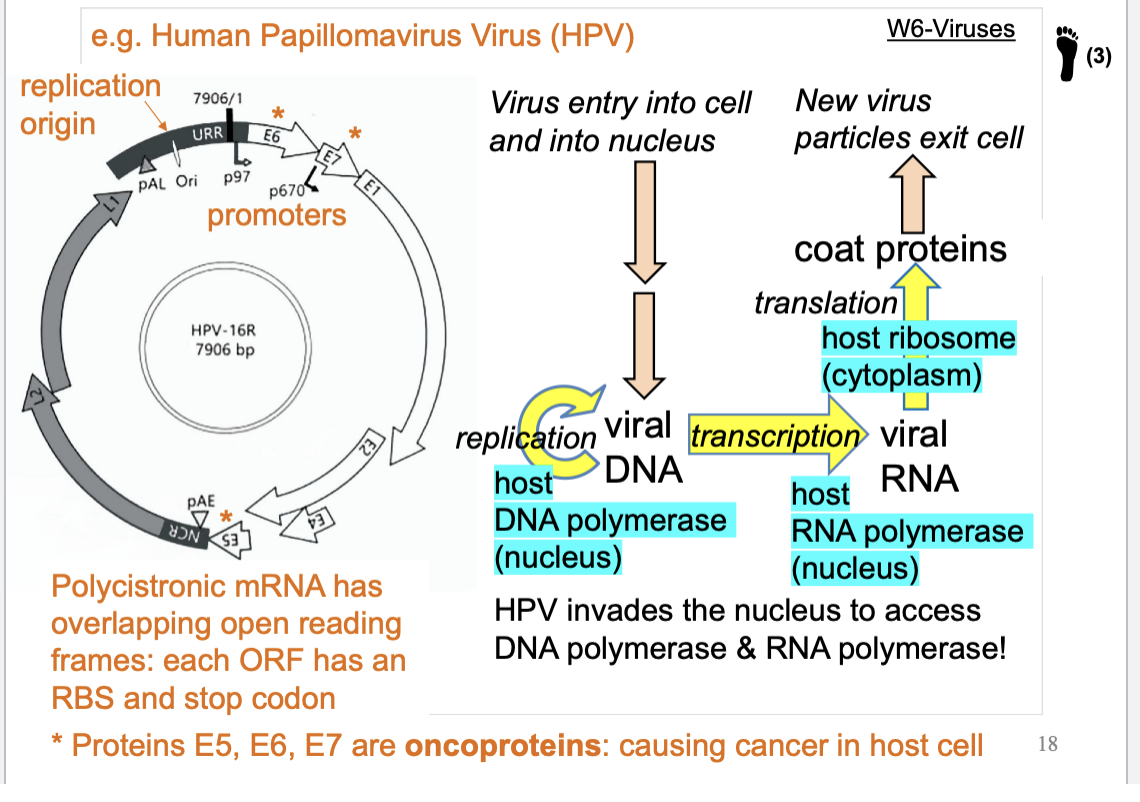
HPV cycle
The HPV cycle refers to the lifecycle of the human papillomavirus, which includes attachment to host cells, entry, uncoating, viral gene expression, replication of the viral genome, assembly of new virions, and eventual exit from the host cell to infect new cells. This process often involves integration of viral DNA into the host genome, leading to persistent infection.
RNA viruses ( SARS-CoV2)
encode an RNA-dependent RNAP (RdRp)
for rep the genome strand is used as a template for RdRp to make a complementary (non-genome) strand → used as template for RdRp to make a new genome strand.

transformation
when a cell takes up foreign DNA from its surroundings, incorporating it into its own genome.
Bacteria can acquire new DNA!
- importing plasmids or linear DNA
directly from outside


conjugation
receiving a plasmid from another bacterium via a connecting pilus


recombination
(breaking & re-joining DNA strands)
Inside the cell, new DNA fragments (e.g. resistance genes)
can get incorporated into a plasmid through

spinocerebellar ataxia
neurological disease traced to mutation in a gene ATXN1 residing on chromosome 6, encoding a transcription factor called ataxin-1.
ATXN1 gene (pre-mRNA) covers 462,349 bases (excluding polyA)
Mature mRNA is only 10,557 bases from 9 exons
Coding sequence is only 2,448 bases (start codon to stop codon)
using only exons 8 & 9 ... for 815 a.a. polypeptide
There are numerous 5' AUG 3' triplets in the long 5' UTR which
are somehow not recognized by the ribosome as start codons
... thus the RBS is poorly understood for this particular gene
7
Eukaryotes have a lot of non-coding DNA
Human genome is >95% non-coding DNA!
(3.1 billion bp total, of which 60 million bp are coding)
Contrast prokaryotes & viruses: < 15% non-coding DNA
e.g. E. coli: 4.6 million bp total, of which 4 million bp are coding
HPV: 7.9 kbp total, of which 7 kbp are coding
Pros of a high percentage of non-coding DNA
- more possibilities for regulatory sequences
e.g. larger number of transcription factor binding sites
- some DNA is used for structural purposes
e.g. centromere for moving chromosomes around the cell
Cons of a high percentage of non-coding DNA
- genome replication takes longer
- human genome has about 50,000 replication origin sites!
- proteins recognizing specific sequences
have more DNA to search through
- chromosomes occupy more space in cell
Polymerase Chain Reaction (PCR)
uses DNAP in a test tube (in vitro) to exponentially replicate (amplify) a targeted region of DNA duplex.
Target specificity is achieved with single-stranded primers and cycles of annealing & melting.
Combining PCR with reverse transcriptase enables diagnostic detection of RNA
e.g. from RNA viruses
helps get a targeted gene fragment for analysis (pedigree)
think of dominant allele disease, we can use PCR to amplify a test segment of exon 8 in ATXN1 gene …
design PCR primers that flank the test segment

reverse transcriptase
an enzyme that synthesizes complementary DNA (cDNA) from an RNA template; converting RNA into DNA for studies such as PCR.
DNAP
DNA polymerase, an enzyme responsible for synthesizing new DNA strands by adding nucleotides to a pre-existing chain during DNA replication.
cannot recognize an
isolated single-strand DNA template ...
and cannot link two single nucleotides to start!
Rather, DNAP can only extend a pre-existing strand
(called a primer) that is already paired to the template
Without primer-template annealing, replication
won't happen: this specificity is exploited in PCR
etc.

How does PCR start A-C
A) synthesize 2 primers, one per duplex strand
B) heat & cool to anneal (shape w/ heat) primers
C) DNAP RXN w/ dNTPs: Any non-target DNA in the original sample is not replicated
Steps B. & C. make one PCR cycle (= simple doubling)
For "chain reaction": repeat the PCR cycle many times!

taq DNAP
A thermostable DNA polymerase derived from the bacterium Thermus aquaticus, used widely in PCR for its ability to withstand high temperatures during DNA denaturation.
processive
with a built-in clamp ...
AND it is heat-stable so it
withstands extreme heating

processivity
The ability of a polymerase enzyme to continuously synthesize DNA or RNA by adding nucleotides without dissociating from the template.
Exponential amplification:
a process where the amount of a target (such as DNA, RNA, or an electrical signal) doubles or multiplies at a rapid, compounding rate with each cycle or reaction step
After 1st cycle: TWO duplexes
- each has original template with new strand
After 2nd cycle: FOUR duplexes (two with original template)
After n cycles: 2^n duplexes (most are new DNA strands)

Electrophoresis detects extra DNA in one ATXN1 allele
A laboratory technique used to separate DNA fragments based on their size and charge. It helps visualize and identify extra DNA segments within a specific allele, such as ATXN1.
Here, PCR has a
preparative purpose
(obtaining a desired material)
and electrophoresis has an
analytical purpose
(measuring a property)

DNA sequencing results from previous flashcard
DNA sequencing (= determining sequence of a DNA sample)
reveals that this region of ATXN-1 has multiple repeats
of 5'cag3' codon (for amino acid Glu, Q)
Disease-associated allele has
many extra 5'cag3' repeats - but
no disruption of the reading frame!

How does: SARS-CoV2 testing detects RNA using PCR
SARS-CoV-2 testing uses RT-PCR to convert viral RNA into complementary DNA (cDNA) and make many copies of it, allowing the virus to be detected even when only small amounts are present.
single stranded RNA, not DNA
Special enzyme that reverse transcriptase (RT) (derived from different virus)

Reverse transcriptase (RT)
An RNA-dependent DNA polymerase that synthesizes complementary DNA (cDNA) using a single-stranded RNA template.
Mechanism:
Synthesizes DNA in the 5′→3′ direction, requiring a primer annealed to the RNA template to initiate extension.
Often exhibits RNase H activity to degrade the RNA template in RNA:DNA hybrid intermediates, facilitating double-stranded cDNA synthesis.
Biological Origin:
Derived from retroviruses to transcribe their viral RNA genome into double-stranded DNA for host genome integration.
Key Applications:
RT-PCR: Enables detection and amplification of RNA viruses (e.g., SARS-CoV-2) by converting unstable viral RNA into stable cDNA before PCR cycles.
Transcriptomics: Converts total cellular mRNA into cDNA libraries for high-throughput sequencing and gene expression

Recombinant DNA
made by combining DNA fragments from different sources into one DNA molecule.
Restriction endonucleases: Cut DNA at specific sequences.
DNA ligase: Joins DNA fragments together.
Plasmid vector: Carries the recombinant DNA into host bacteria, where it can be copied.
Example: A gene of interest is inserted into a bacterial plasmid to create recombinant DNA, which can then be copied inside bacteria.


amplification
the process of multiplying cells that contain the desired recombinant DNA to produce large amounts of the desired cells or product.
Steps:
Insert the desired gene into a plasmid to create recombinant DNA.
Introduce the plasmid into host cells, such as bacteria.
Select the cells with the desired genetic trait.
Multiply these cells to produce large amounts of the desired cells or product.
Remember: Amplification = making many copies or increasing the amount of something desired.

controlling amplification
To amplify a DNA with a sequence of interest we need..
Host cells (growth we can control like E. coli bacteria)
Vector (plasmid that can replicate in the host containing a selectable marker gene like antibiotic resistance)
vector carry our DNA of interest inside the host

ampillicin antibiotic (amp^R) vector
used to select for bacteria containing plasmids with antibiotic resistance.
added to nutrient agar before inoculation with bacteria
provides selection for the marker gene amp^R
bacteria can’t grow UNLESS they carry the vector with amp^R
Growth Hormone (GH)
Growth Hormone (GH) Production Using Bacteria
GH: A protein made by the pituitary gland into blood; helps with childhood growth and tissue repair.
Problem: Donated pituitary glands provide very little GH.
Solution (genetic engineering):
Insert the human GH gene into a plasmid (small circular DNA).
Introduce the recombinant plasmid into bacteria (transformation).
Grow the bacteria in culture so they multiply.
The bacteria produce GH, which is then harvested for medical use.
Key idea: Use genetically engineered bacteria to produce large amounts of human GH for treating GH deficiency.
replacement therapy
A medical treatment that involves replacing a missing or deficient substance in the body, often using hormones or enzymes, to restore normal function.
GH deficiency (dwarfism) can be treated by injections of GH
PCR helps get starting material for recombinant DNA
Our DNA of interest is a tiny proportion of a chromosome:
We can amplify our DNA of interest using PCR
Primer 1: sequence matches strand A, annealing to strand B
Primer 2: sequence matches strand B, annealing to strand A
DNA then prepped for recombination

DNA Cloning (Recombinant DNA)
the host cells in the isolated population are clonal,
genetically identical to the first transformed cell
selected for the desired trait (carrying the plasmid)
The desired gene DNA inside the plasmid has been
replicated exactly as part of the host cell growth
- so the desired gene DNA exists as a population
of "molecular clones"
Key idea: One bacterium multiplies into a colony of genetically identical cells, each carrying copies of the desired gene.
DNA cloning
Making many identical copies of a desired DNA sequence.
Clonal cells
Genetically identical cells that come from one original transformed cell containing the desired plasmid.
Molecular cells
Copies of the desired gene made as bacteria multiply and replicate their DNA
Nutrient agar plate
Gel containing nutrients that allows bacteria to grow.
Bacterial colony
A visible group of bacteria that grows from a single bacterium.
Each of these colonies contains many cells ...
but each colony is a clonal population that grew
from a single bacterium placed on the plate
What’s the work flow for DNA cloning?
Recombine DNA of interest (“insert”) w/ a plasmid vector, to make a new recombinant plasmid (only tiny amount of this recombinant plasmid DNA is needed)
Transform host cells with recombinant plasmid
(Only a tiny amount of transformed cells are needed)
Amplify (grow) lots of host cell culture
- make sure we select cells carrying the plasmid
(e.g. treat with antibiotic to select for resistance)
A) Isolate lots of clone DNA of recombinant plasmid
and / or
B) Isolate lots of protein from expression of insert

what are some common types of enzymes for recombination?
endonucleases:
(cleave strands)
-ligases:
("ligate" or join strands)
-recombinases
(all-in-one enzymes: cleave 2 duplexes & re-ligate their strand ends in a new arrangement)
Typically, endonucleases & recombinases have a specific recognition sequence in DNA where they bind and act

expression vector
a plasmid "engineered" for high expression of a protein of interest
in a host cell, allowing for the production and purification of large quantities of that protein.
