Physiology Exam 1
 Call Kai
 Learn
Learn Practice Test
 Spaced Repetition
 Match
Match Flashcards
 Knowt Play
1/157

There's no tags or description
Looks like no tags are added yet.
Name | Mastery | Learn | Test | Matching | Spaced | Call with Kai | Chat |
|---|
No analytics yet
Send a link to your students to track their progress
158 Terms
Anatomy Vs. Physiology
Anatomy is the structure of the body. Physiology is the function of the body
Levels of Organization
Cell
Tissue
Organ
Organ System
Organism
Homeostasis
The bodies ability to maintain a stable internal environment despite external changes
Negative Feedback
The most common type. This involves a response that is reverse of the change detected.
Positive Feedback
Less common. involves a response that involves a response that reinforces the change detected
Atoms
The smallest unit of an element that retains the chemical properties of that element
Molecules
A group of two or more atoms chemically bonded together that forms the smallest unit of a substance.
Ions
Atom or molecule that has an electrical charge because it has gained or lost one or more electrons
Cations
Positively charged ion that forms when an atom loses one or more electrons
Anions
A negatively charged ion that forms when an atom gains one or more electrons
Solutes
A substance that is dissolved in a solvent to form a solution
Solvent
The substance that dissolves the solute to form a solutions
What are basic chemical bonds?
Forces that hold atoms together to form molecules and compounds
What are the 3 main types of basic chemical bonds?
Ionic bonds
Covalent bonds
Hydrogen bonds
Ionic Bonds
Electrons transferred between atoms
Covalent bonds
Electrons that are shared between atoms
Hydrogen bonds
Weak attractions between modules
What are the four major elements in living matter?
Hydrogen
Oxygen
Carbon
Nitrogen
Electrolytes
Substances that dissolve in water and separate into ions. Allowing the solution to conduct electricity
Acids
A substance that releases hydrogen ions when dissolved in water giving it a pH below 7
pH
Is a measurement of how acidic or basic a solution is.
Buffers
Substances that resist changes in pH when acids or bases are added to a solution
What are the major organic molecules?
Carbohydrates
Lipids
Proteins
Nucleic acids
Carbohydrates
Organic molecule made from carbon, hydrogen, oxygen. Provides the body with its main source of energy
Lipids
Organic molecules that include fats, oils and cholesterol. They store energy, insulate and protect the body, help form cell membranes
Proteins
Large molecules made of amino acids. They help build and repair tissues, and are used to make enzymes, hormones, and antibodies.
Nucleic Acids
Molecules that store and transmit genetic information.
Anabolism
The process of building larger molecules from smaller molecules which require energy
Catabolism
The process of breaking down larger molecules into smaller molecules which releases energy
How do buffers help maintain pH?
They resist sudden changes in acidity or alkalinity. They can bind excess hydrogen ions when a solution becomes too acidic or release hydrogen ions when it becomes too basic
What are the major cell structures?
Rough endoplasmic reticulum
Vesicle
Goli body
Mitochondria
Lysosome
Ribosome
Smooth endoplasmic reticulum
Centriole
Nucleus
Nucleolus
Nuclear envelope
Cytoplasm
Cell membrane
Rough Endoplasmic Reticulum
Involved with the production, folding, quality control, and dispatch or some proteins.
Vesicle
Transports, stores, and digests substances inside the cell

Golgi body
Helps process and package proteins and lipid molecules especially proteins destined to be exported from the cells
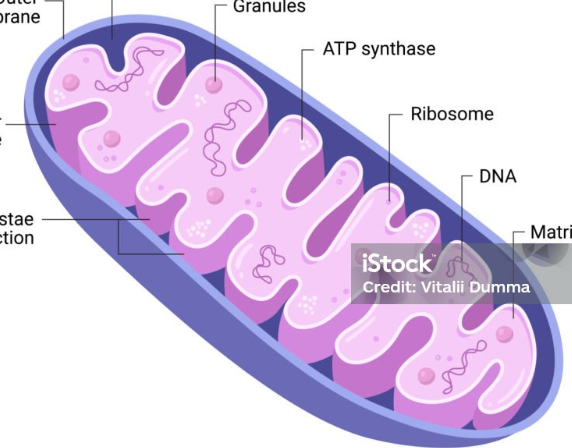
Mitochondria
Generates most of the chemical energy needed to power cells biochemical reactions
Lysosome
Breaks down unwanted material
Ribosome
Manufacturers cellular proteins after receiving RNA from the nucleolus. Ribosomes leave the nucleolus and the nucleus become active in the cytoplasm. They also attach to the endoplasmic reticulum.
Smooth endoplasmic reticulum
Responsible for the synthesis of the essential lipids such as phospholipids and cholesterol
Centriole
Anchors microtubules and assists in cell division
Nucleolus
Considered the “ribosome factory” inside the nucleus where the cell builds the parts needed to make proteins
Nuclear Envelope
Considered the protective shell that surrounds the nucleus. It has tiny openings that allow important molecules to move in and out
Cytoplasm
Provides the structural environment in which organelles are suspended. it serves as the site for many metabolic reactions
Cell membrane
Regulates the transport of materials entering and existing the cell separates the interior of the cell from the outside environment
Selective Permeability
The ability of a cell membrane to allow certain substances to pass through while preventing others from passing
Membrane transport
The movement of substances into and out of the cell through the cell membrane
Simple diffusion
The movement of molecules from high to low concertation
Facilitated Diffusion
The movement of substances from an area of high concentration to low concentration through protein channels or carrier proteins in the cell membrane
Osmosis
The movement of water across a selective permeable membrane from an area of lower to higher solute concentration
Active transport
The movement of substances from an area of low to high concentration using ATP energy
The sodium-potassium pump
A type of active transport that uses ATP to move 3 sodium ions out of the cell and 2 potassium ions into the cell
What are the body fluid compartments?
Intracellular Fluid
Extracellular Fluid
Interstitial Fluid
Intravascular Fluid
Interstitial Fluid
Fluid found between cells that surrounds and bathes the cells. It helps transport nutrients and oxygen to cells and carry away waste products
Extracellular Fluid
The fluid outside of the cells that surrounds cells and provides them with nutrients and oxygen while carrying waste away
Intracellular Fluid
Fluid inside cells
Intravascular Fluid
The fluid inside blood vessels, primarily blood plasma
Osmolality
How concentrated a fluid is with dissolves particles
General sodium potassium distribution inside Vs. outside cells
Sodium is low inside of the cell and high outside of the cell and Potassium is high inside of the cell and low outside the cell
Isotonic Conditions
A condition where the fluid outside the cell has the same solute concentration as inside the cell, so there is no net movement of water
Hypotonic Conditions
A condition where the fluid outside the cell has a lower solute concentration than inside the cell causing water to move into the cell
Hypertonic Conditions
A condition where the fluid outside the cell is higher solute concentration than inside the cell causing water to move out of the cell. The cell shrinks
Fluid Shifts
The movement of water between the different fluid compartments of the body to maintain proper fluid balance
Cell Swelling
When a cell takes in too much water
Cell shrinking
When a cell loses water causing in to decrease
Edema
Abnormal accumulation of fluid in the tissues causing swelling
Insensible water loss
The loss of water from the body the occurs without being noticed or easily measured, mainly though breathing and evaporation though the skin
Acid-base balance
The process of maintaining the proper balance of acids and bases in the body, keeping blood pH within a normal range
Membrane potential
The difference in electrical charge between the inside and outside of the cell membrane, caused by the unequal distribution if ions
Polarized resting cell
A cell whose membrane has a difference in electrical charge with the inside of the cell more negatively charged than the outside.
Depolarization
The process in which the inside of a cell becomes less negative and more positive, usually because sodium ions move into the cell
Repolarization
The process in which the cell membrane returns toward its normal resting state, making the inside of the cell more negative again.
Cell cycle
A series of steps a cell goes through to grow, copy its DNA, and divide into two daughter cells. G1, S, G2, Mitosis
G1-Phase
Longest phase, cell grows, organelles synthesize proteins and produce energy
S-Phase
S stands for synthesis because during this phase DNA is replicated so that the daughter cell receives identical copies of the genetic material.
G2- Phase
Checks that duplicated DNA is complete and intact before the cell divides
Mitosis
When it actually divides into daughter cells involving separating the replicated DNA in two distinct nuclei
Protein synthesis
The process cells use to make proteins from the instructions stored DNA. DNA to RNA to Protein
Transcription
The process of copying the genetic information from DNA to mRNA
Translation
The process of using the instructions mRNA to build protein
What are major components of blood
Plasma
Red blood cells
White blood cells
Platelets
Plasma
Liquid portion of blood that carries blood cells and other substances though the body. It also transports nutrients, hormones, proteins, gasses, and waste products
Red blood cells
Cells that transport oxygen throughout the body
White blood cells
Cells that protect the body from infection and disease
Platelets
Cell fragments in the blood that help stop bleeding
What are the major functions of blood?
Transportation
Regulation
Defense
Transportation
Carrying substances throughout the body, such as oxygen, carbon dioxide, nutrients, hormones
Regulation
Helps maintain stable conditions inside the body such as body temperature, pH, fluid balance
Defense
Helps protect the body from infection, disease, and blood loss
Relationship between red blood cells and hemoglobin
RBCs are cells that transport oxygen and hemoglobin is the protein inside red blood cells that binds to oxygen
Oxygen transport from lungs to tissues
Oxygen enters the lungs, oxygen moves from the alveoli into the blood, hemoglobin inside red blood cells binds to oxygen, red blood cells carry the oxygen trough the blood stream, at the bodies tissues oxygen is released.
Carbon dioxide transport from lungs to tissues
Cells produce carbon dioxide as a waste product, carbon dioxide moves from tissues into the blood, blood carries it to the lungs, and removed when breathed out
Erythropoiesis
The process of producing red blood cells from red bone marrow
What is the role of erythropoietin (EPO) when tissue oxygen is low?
Kidneys release EPO, signals the bone marrow and makes more reb blood cells
Hemostasis
the process that stops bleeding when a blood vessel is damages
What are the steps of hemostasis
Vessel injury
Platelet response
Platelet plug
Clot formation
Fibrin stabilization
Clotting factors
Proteins in the blood that work together to from a stable blood clot to stop bleeding
Fibrin
A protein that forms a mesh-like network during blood clotting
Neutrophils
A type of white blood cell that provides rapid defense against bacterial infections
Monocytes
A type of white blood cells that fight infection and clean up damaged tissue
Macrophages
Large immune cells that engulf and destroy pathogens, dead cells, and debris