Chemistry 1 Final
 Call Kai
 Learn
 Practice Test
 Spaced Repetition
 Match
 Flashcards
 Knowt Play
1/124

Earn XP
Description and Tags
Includes information on Valence Shell Electron Repulsion Theory, Classifying Chemical Reactions, Polyatomic Ions, Strong Acids, Oxidation Numbers, Stoichiometry and Chemical Analysis, Gases, and Solids and Liquids
125 Terms
EG
Electron Geometry
MG
Molecular Geometry
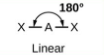
What is the EG & MG for 2 electron pairs and NO lone pairs?
Linear with angles 180 degrees

What is the EG & MG for 3 electron pairs and no lone pairs?
Trigonal Planar w 120 degrees

What is the MG for 3 electron pairs and 1 lone pair?
Bent or Angular w 120 degrees
What is the EG & MG for 4 electron pairs and no lone pairs?
Tetrahedral w 109 degrees

What is the MG for 4 electron pairs and 1 lone pair?
Trigonal Pyramid w 109 degrees

What is the MG for 4 electron pairs and 2 lone pair?
Bent or Angular w 109 degrees

What is the EG & MG for 5 electron pairs and no lone pairs?
Trigonal Bipyramid w 120 degrees and 90 degrees
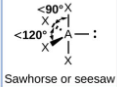
What is the MG for 5 electron pairs and 1 lone pair?
Sawhorse or seesaw w 120 and 90 degrees
1st Type of Chemical Reaction
Precipitation
2nd Type of Chemical Reaction
Acid/Base
3rd Type of Chemical Reaction
Oxidation-Reduction (Redox)

Precipitation Reactions
Dissolved substances react to form one (or more) solid products.
In precipitation reactions, what is the precipitate?
The insoluble solid
Solubility Rules
a set of general guidelines used in chemistry to predict whether an ionic compound will dissolve (be soluble) or form a solid (be insoluble) when mixed in water
1st Solubility Rule
Group 1 Alkali Metal Cations are ALWAYS soluble
2nd Solubility Rule
Ammonium Ion: NH₄⁺ is ALWAYS Soluble
3rd Solubility Rule
NO₃⁻, C₂H₃O₂⁻ (acetate), ClO₃⁻, and ClO₄⁻ are ALWAYS soluble
4th Solubility Rule
Cl⁻, Br⁻, I⁻ are generally soluble, with exceptions
When are Cl⁻, Br⁻, I⁻ insoluble?
With silver (Ag+). lead (Pb²⁺), and mercury(I) (Hg₂²⁺)
5th Solubility Rule
Sulfates (SO₄²⁻) is generally soluble, with exceptions
When are Sulfates (SO₄²⁻) insoluble?
with barium (Ba²⁺), strontium (Sr²⁺), calcium (Ca²⁺), lead (Pb²⁺), silver (Ag⁺), and mercury(I) (Hg₂²⁺)
6th Solubility Rule
Hydroxides (OH⁻) and Sulfides (S²⁻) are generally insoluble, with exceptions
When are Hydroxides (OH⁻) and Sulfides (S²⁻) soluble?
with Group 1 alkali metals, the ammonium ion (NH₄⁺), and heavier Group 2 alkaline earth metals
7th Solubility Rule
Carbonates (CO32-), Phosphates (PO₄³⁻), Chromates (CrO₄²⁻), and Sulfites (SO₃²⁻) are generally insoluble, with exceptions
When are Carbonates (CO32-), Phosphates (PO₄³⁻), Chromates (CrO₄²⁻) soluble?
when paired with Group 1 alkali metals or the ammonium ion (NH₄⁺)
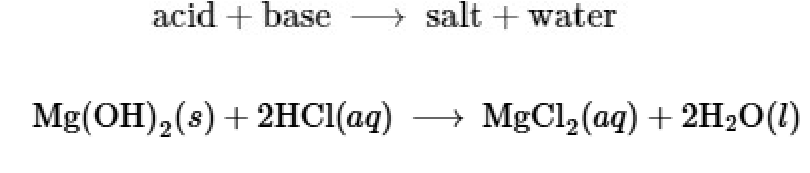
Acid-Base Reactions
typically resulting in neutralization to form a salt and water (or a gas).
Strong Acid
an acid that completely ionizes (or dissociates) into hydrogen ions (H⁺) and anions when dissolved in water (HA → H⁺ + A⁻).
1st Common Strong Acid
HBr
2nd Common Strong Acid
HCl
3rd Common Strong Acid
HI
4th Common Strong Acid
HNO3
5th Common Strong Acid
HClO4
6th Common Strong Acid
H2SO4
HBr
Hydrobromic acid
HCl
Hydrochloric acid
HI
Hydroiodic acid
HNO3
Nitric acid
HClO4
Perchloric Acid
H2SO4
Sulfuric Acid
Weak Acids
an acid that only partially dissociates into ions when dissolved in water
Oxidation
occurs when an atom or ion loses electrons, increase in oxidation number
Reduction
occurs when an atom or ion gains electrons, decrease in oxidation numbers
Oxidation–reduction (redox) reactions
involve the transfer of electrons.
Oxidation states (oxidation numbers)
used to keep track of the electron transfer in redox reactions.
1st Rule for Assigning Oxidation States
Oxidation number of an atom in a elemental substance in zero
elemental substance
a pure substance made entirely of a single type of atom
2nd Rule for Assigning Oxidation States
Oxidation number of a monoatomic ion is equal to the ions charge
monoatomic ion
a single atom that has gained or lost one or more electrons, giving it a net electrical charge
monoatomic ion example
Na⁺ (sodium ion), Ca²⁺ (calcium ion), Al³⁺ (aluminum ion)
3rd Rule for Assigning Oxidation States
Hydrogen is +1 when combined with nonmetals, -1 with metals
4th Rule for Assigning Oxidation States
Oxygen’s is mostly -2, sometimes -1 with peroxides (O2-2), -1/2 with F
5th Rule for Assigning Oxidation States
Halogen has -1 always with F, and -1 with other halogens except when combined with oxygen or other halogens (positive)
6th Rule for Assigning Oxidation States
The sum of oxidation numbers for all atoms in a molcecule or polyatomic ion equals the charge on the molecule or ion
If a molecule is oxidized, what kind of agent is it?
A reducing agent
If a molecule is reduced, what kind of agent is it?
a oxidizing agent
oxidizing agent
A substance that gains electrons
reducing agent
A substance that loses electrons
What is the formula for ammonium?
NH4+
What is the formula for Hydronium?
H3O+
What is the formula for peroxide?
O22-
What is the formula for hydroxide?
OH-
What is the formula for acetate?
C2H3O2-
What is the formula for cyanide?
CN-
What is the formula for azide?
N3-
What is the formula for carbonate?
CO32-
What is the formula for bicarbonate?
HCO3-
What is the formula for Nitrate?
NO3-
What is the formula for Sulfate?
SO42-
What is the formula for Hydrogen Sulfate?
HSO4-
What is the formula for Phosphate?
PO43-
What is the formula for hydrogen phosphate?
HPO42-
What is the formula for dihydrogen phosphate?
H2PO4-
What is the formula for Chlorate?
ClO3-
What is the formula for Chromate?
CrO42-
What is the formula for dichromate?
Cr2O72-
What is the formula for Permanganate?
MnO4-

The coefficients in the balanced equation give you what?
the ratio of moles of reactants and products.
Theoretical Yield
the maximum amount of product that can be made
Actual Yield
the amount of product actually obtained from a chemical reaction, measured experimentally
Percent Yield
compares how much product you actually obtained to the maximum possible amount predicted

Percent Yield Formula
Actual Yield/Theoretical Yield x 100%
Titrations
Type of analysis that determines the amount of a unknown in a solution by measuring the volume of a known concentration of reagent required to complete a reaction with it, typically using an indicator:
Gravimetric Analysis
Quantitatively determine the mass or concentration of a specific analyte by converting it into a pure, weighable substance.
What does Gravimetric Analysis rely on?
measuring the mass of a solid or volatile product.
Combustion Analysis
Burn a known mass of organic compounds CxHyOz and weigh the amounts of product made.
What happens once all of the masses of the reactants are found in combustion analysis?
The empirical formula can be found.
Pressure
Defined as the force exerted on a given area. Unit: N/m2 or Pa.
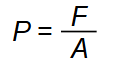
Pressure Formula
P=F/A
1st Common Pressure Unit
Atmosphere (atm)
1 atm in Pa
101,325 Pa
1 atm in mmHg
760 mmHg
1st Characteristic for Gas
There is a lot of “free” space in a gas.
2nd Characteristic for Gas
Gases can be expanded infinitely.
3rd Characteristic for Gas
Gases occupy containers uniformly and completely.
4th Characteristic for Gas
Gases diffuse and mix rapidly and randomly
5th Characteristic for Gas
Gases are the most disordered of the phases of matter.
Ideal Gas Law
an equation of state describing how an ideal gas behaves under conditions of low pressure and high temperature. It combines several simpler gas laws into one relationship
Ideal Gas Law Equation
PV = nRT