Blood and CVS
 Call Kai
 Learn
 Practice Test
 Spaced Repetition
 Match
 Flashcards
 Knowt Play
1/20

There's no tags or description
Looks like no tags are added yet.
21 Terms
Explain how blood and the CVS maintain cellular homeostasis through transport, protection, and regulation
Liquid nature → constant circulation → transport, protection and regulation → stable environment
Major components in blood
plasma (55%) and formed elements (45%)
Components of formed elements
RBCs (erythrocytes)
WBCs (leukocytes)
Platelets (thrombocytes)
function of RBCs
transport O2 delivery and CO2 removal through hemoglobin within the blood
Function of WBCs
defense against infections and foreign substances in the body
function of platelets
clot formation and repair
role of transport in maintaining homeostasis
Deliver oxygen and nutrients to cells
Remove CO2 and waste
Distribute hormones
Role of protection in homeostasis
Prevent blood loss (clotting)
Fights infection (immune cells, antibodies)
Role of regulation in homeostasis
Stabilizes temperature and pH
Maintains fluid balance
three core components of the CVS
heart: pump
Vessels: distribution and exchange
Blood: transport medium (nutrients, gases, and waste)
function of arteries
take blood away from the heart
function of valves
ensure one way flow
function of veins
return blood to the heart
function of capillaries
site of exchange for nutrients and waste
Composition of plasma
water (90%)
Proteins (6-8%) - albumin, globulins, fibrinogen
electrolytes (ions)
nutrients (glucose, amino acids, lipids, vitamins)
wastes (urea, creatine, lactic acid)
Respiratory gases (O2 and CO2)
functions of plasma
maintain water balance (osmotic pressure), pH buffering, transport and defense
function of albumin in plasma
60% of proteins in plasma
maintain osmotic pressure
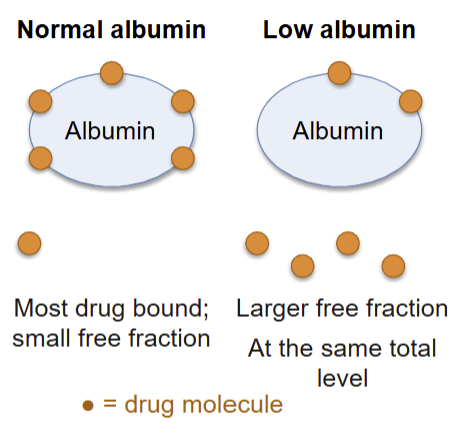
transport fatty acids, hormones, and drugs
Edema
fluid accumulation due to low albumin
larger free fraction of highly bound drugs like phenytoin and warfarin
function of globulin in plasma
35% of proteins in plasma
carriers (alpha and beta) and antibodies (gamma)
Function of fibrinogen in plasma
4% of proteins in plasma
soluble precursor of fibrin for clot information
function of electrolytes in plasma
regulate osmotic balance, pH and membrane potential