Chem 203 pKas
 Call Kai
 Learn
Learn Practice Test
 Spaced Repetition
 Match
Match Flashcards
 Knowt Play
1/20

There's no tags or description
Looks like no tags are added yet.
Name | Mastery | Learn | Test | Matching | Spaced | Call with Kai | Chat |
|---|
No analytics yet
Send a link to your students to track their progress
21 Terms
pKa of HCl
-8
pKa of H2SO4 (both protons)
-3, 1.99
pKa of H3O+
-1.7
H2O
15.7
NH3
35
NH4+
9.2

pKa of a carboxylic acid
4.76
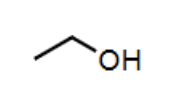
pKa of alcohol/hydroxyl
16

C-H pka in alkane
51

Vinyllic C-H pka in alkene
44

C-H pka in alkyne
24

Ketone H pKa
19

Allyic alkene C-H pKa
43
More s character means…
more electronegative carbon → better stabilization of negative charge (more stable base)→ more acidic H
Resonance vs Equilibrium
Resonance: same molecule, different valid Lewis structures.
Equilibrium: two or more different chemical species interconvert. (different atoms)
Types of isomers
Constitutional isomers — same molecular formula, different connectivity.
Example: ethanol vs dimethyl ether
Conformational isomers — same connectivity, different arrangement caused by rotation around single bonds.
Example: staggered vs eclipsed ethane
Configurational isomers — same connectivity, but you must break bonds to convert between them.
Includes enantiomers and diastereomers such as cis/trans or E/Z.
What determines structural stability (ARIO)
ARIO determines stability of a negative charge:
A – Atom: more electronegative/larger atom = more stable
R – Resonance: more delocalization = more stable
I – Induction: nearby electron-withdrawing (electronegative) groups = more stable
O – Orbital: more s-character = more stable (sp > sp² > sp³)
More stable conjugate means…
lower pKa, stronger acid.
Why does more S character mean more stable?
More s-character = more stable because an s orbital holds electrons closer to the nucleus than a p orbital does.
electrons closer to nucleus → stronger attraction to positive nucleus → lower energy → more stable
Why does resonance make an structure more stable
For resonance, stability comes from spreading the charge out over multiple atoms.
localized negative charge → less stable
delocalized negative charge by resonance → more stable
Why does an electron-withdrawing group stabilize a negative charge? (inductive effects)
It pulls electron density away through σ bonds, reducing electron–electron repulsion and stabilizing the charge.