HDE 012 Midterm 3 Study Guide (FINAL)
 Call Kai
 Learn
 Practice Test
 Spaced Repetition
 Match
 Flashcards
 Knowt Play
1/120

There's no tags or description
Looks like no tags are added yet.
121 Terms
Identify the different expressions of sexual orientation. **Be sure to understand the terminology and definitions (e.g. homosexual, gay, queer, +, etc.) - only need to know those discussed in lecture and in the textbook.
Understand the acronym regarding the sexual minorities (LGBTQIA+ etc) - see handout of full acronym
Which letter(s) is/are not about attractions or orientation, but are more about identity? (also in textbook)
LGBTTQQIAAP
Lesbian, Gay, Bisexual, Transgender, Transsexual, Queer, Questioning, Intersex, Ally, Asexual, Pansexual
Queer
Understand the changing descriptions regarding sexual attraction / orientation
Why is context important? (pointed out in several areas of chapter / by guest panel)
An example is that A used to stand only for Ally, now Asexual also including more letters, from LGBTA to LGBTTQQIAAP.
The context is important because it was not inclusive of a lot of groups.
What is the difference between sexual acts and sexual orientation?
Do sexual acts identify sexual orientation?
Sexual acts are the activity where orientation is how you identify
No, e.g.,: Men having sex with Men (MSM)
Understand the spectrum of sexual orientation (e.g. Kinsey Scale, Klein Scale)
Why is understanding sexual orientation as a spectrum important?
Understand related terminology
What were the key points / findings of the Kinsey, Klein, etc scales?
The Kinsey Scale viewed sexual orientation as a spectrum, allowing us to understand sexual diversity, whether heterosexual, bisexual, gay/lesbian, or something else. Kinsey scale showed being 100% heterosexual was the exception, only 4% of men were fully heterosexual. He concluded that human sexual nature allows for a lot of flexibility in sexual expression as conditioned by gender, age, experience, and cultural context.
Klein’s scale was more refined, it included community identification and other such questions. He included 3 periods: past, present, and future (ideal)

Understand the gap between sexual attraction and behavior.
How have researchers studied this "gap"?
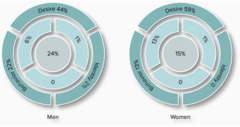
Research reveals that some individuals experience a gap between their sexual attractions and their expressed sexual behavior. For example, a man may be attracted to other men, but date or have sex only with women
• Researchers have studied this with statistics and come to understand that more people experience attraction to the same gender than there are people who actually express their attractions and engage in sexual behavior with the same gender.
Understand the factors (or sources) that help explain the development of sexual orientation (e.g. genetic, prenatal, etc).
How do twin studies aid in understanding sexual orientation?
What is the interactive biopsychosocial approach?
Some factors that can help explain the development of sexual orientation are genetics and environment (genetics people were born with may be pre-assigned a orientation but with environmental influence new pathways could occur), prenatal (imprinting: early learned behavior pattern and attraction to other animals of its own kind or object identified by parents), and interactive biopsychosocial approach.
Twin studies: research that compares twins to determine what part of nature or nurture may have influenced behavior. The largest twin studies have determined that 30% of identical twins share a gay/lesbian or bisexual orientation
Interactive biopsychosocial approach: A theory that suggests that biological, psychological, and social factors work together to produce sexual attractions and feelings, and perhaps sexual orientation.
Describe compulsory heterosexuality and how society may influence (socialize) the expression of sexual orientation
The condition of being socially compelled to have sexual relationships with the other gender, be married, and have children, regardless of sexual orientation. Eg: In some cultures and religions, such as Islam, heterosexuality is compulsory. Regardless of sexual orientation, Muslim men and women are expected to marry and have children.
What is sexual individuality? (reading / apply other topics and knowledge as well)
Sexual individuality may be an acquired expression of self that is grounded in very basic experiences of our own body and biology: our DNA, prenatal hormones, genitals, attractions, attachments, and early feelings about other people's bodies
Identify same-sex relationships across cultures as structured by differences in age, gender, and roles.
What is meant by two-spirit people?
Many cultures in Asia and the Pacific, North and South America, and Africa permitted the expression of same-sex behaviors by a male who would actually take on the gender role of women
During a ceremony for the baby, they placed a basket to represent women on one side of the baby and a bow and arrows to represent men on the other side. Whichever tool the baby selected for its play object was an indication from the individual and the spirits that the child would become defined as two-spirit.
Describe the social and political context of the LGBTQIA (LGBTQ is the textbook specific abbreviation) movement (and identity) in the United States.
What is meant by sexual geography?
Sexual geography was used to address what myth? (reading only)
The social and political context of the LGBTQIA+ movement in the United States included continuing advocation for protections and rights for people of various sexual identity and more representation in media and spaces it used to be less open at (in STEM, government, etc).
Sexual geography: Cities and neighborhoods where sexual minorities migrate to, as safe places to live.
Sexual geography was used to address the myth about the true number of people in the US are part of the LGBTQIA+ community.
Describe and understand the different types of sexual orientations: Bisexuality, BODL, MSM, sexual fluidity, queer / questioning, etc.
*critical thinking: Are some of these related to sexual acts vs. sexual orientation or combination of the two?
Heterosexuality: sexually attracted to opposite biological gender
Homosexuality (lesbian & gay): sexually attracted to same biological gender
Bisexuality: sexually attracted to own or opposite biological gender
MSM (men sex with men): men who are married or date women and also have sex with other men
BODL (being on the down low: terms used for African American man that hides his sexual orientation
Transgender: someone who identifies as a different gender than assigned at birth
Queer: expression of sexual attractions and identity labels, they may also be exploring or questioning their orientation
Questioning: questioning of one's sexual orientation, sexual identity, gender, or all three
Intersex: sexual anatomy or chromosomes don't fit the typical
Ally: someone who supports LGBTQ+ community
Asexual: spectrum of feeling little to no sexual attraction
Pansexual: sexual, romantic, physical attraction to all gender identities/expressions
Understand stigma, sexual prejudice, homophobia (including different forms) and homonegativiy. What do these terms mean?
What is a consequence of these perceptions / attitudes?
How does bullying (different types) lead to terrible outcomes?
What is internalized homophobia? What risk does this lead to?
What factors contribute to hate crimes?
stigma: Extreme disapproval attached to someone who deviates from socially and culturally acceptable standards of behavior, turning the person into a social outcast.
sexual prejudice: Irrational hatred directed toward people because of their sexual orientation or sexual behavior.
homophobia: Irrational fear of or discrimination against same-gender sexuality or LGBTQIA+ individuals.
homonegativity: Subtle negative social perceptions and behaviors against LGBTQIA+ people or those suspected of same-gender sexuality.
A consequence of these perception or attitudes is carried by extreme, homophobia may lead to aggression or even violence directed at LGBTQIA+ people, including cases of people who assaulted or murdered LGBTQ individuals.
Sexual bullying can hurt whoever is being bullied which in turn leads them to hurt themselves or others, physically and/or mentally. An example of this was a Rutgers University student named Tyler Clementi who committed suicide after sexual bullying.
Hate crimes: An act of aggression or hatred targeted toward someone because of religion, race, or sexual orientation.
What is "coming out"?
What steps are involved in "coming out"?
Describe the social, psychological and other related pressures of keeping sexual orientation hidden.
Coming out: disclosing your sexual orientation to people that you want to tell.
There is no one way of coming out. Some methods depending on how one feels may be reading about it from sources online, talking to a trusted adult, keeping a sexual diary, staying anonymous as they explore, go to counselor or someone who can provide psychological help if needed, and planning it to your own accord.
Some people of color may postpone their sexual orientation expression until later because of social pressures in their communities (friends, family, geographies).
Understand the dynamics of LGBTQIA family formation in the United States (some aspects of this already discussed in previous lectures)
What is a "family of choice"?
What has been found regarding LGBTQ parents? (see box: Controversies in Sexuality)
& 2. Family of choice: a group composed of those intimate partners or legally married spouses, close friends, and neighbors who feel so close to each other that they celebrate holidays and birthdays.
There was, however, no statistical difference showing that children are more likely to be gay, lesbian, bisexual, or transgender or difference in gender roles
Understand how the LGBTQIA youth's well-being is affected.
What type of school environment helps with the LGBTQIA youth's well-being? How?
For youth to thrive in schools and communities, they need to feel socially, emotionally, and physically safe and supported.
A positive school environment has been associated with decreased depression, suicidal feelings, substance use, unexcused school absences.
What sexual orientations did the panelists share as part of their identities?
What pronouns did they share that they prefer
What are neo pronouns that was brought up?
& 2. Rachel identifies a femme lesbian, Dr. Camden Doolittle identifies as a a transgender lesbian, Blake identifies as a gay man, and Marcus Sander is a binary transgender man who is straight.
A word created to serve as a pronoun without expressing gender
What campus roles do the panelists have?
Counselor at SHCS, Director and Co-director of LGBTQIA+ Center on campus
What did the discussion about labels demonstrate?
Does everyone fit neatly into a specific label? What term did Blake say that he actually hates?
Are labels defined differently in scientific research vs. social uses?
Is the LGBTQIA+ community re-inventing the meanings of certain labels? Why or Why not?
Does the LGBTQIA+ community all agree on the meanings of certain labels? Why or Why not?
*Example: Is the term "queer" accepted by everyone in the LGBTQIA+ community as a type of identity? (Athena talked about this).
Why are there generational differences regarding labels, even within the LGBTQIA+ community?
No, Blake said he hates the term "homosexual"
Yes, labels defined in scientific research can differ from social uses.
Yes, the LGBTIA+ community has re-invented the meanings of many labels. An example is the word queer (it used to be a bad terminology, but is more commonly used now despite still not accepted by all)
Depends on the person some yes, some no (e.g., bi or queer)
There are generational differences regarding labels because some terms used to hold different meanings and the accepted terms nowadays are different than they were back then.
Were there LGBTQIA+ communities that were not inclusive? Are there divisions within the LGBTQIA+?
What percentage of UC Davis students identified .... (last two bullet points were also clicker questions)
o as bisexual?
o as transgender or non-binary?
o as not straight?
• bisexual - 13%
• transgender or non-binary - 5%
• not straight - 26-30%
Is sexual behavior congruent with sexual orientation?
no
What did the panel discuss regarding if trauma (any form) played a role in forming specific sexual orientation identities?
??
What were the views of the panelists regarding pedophilia as part of the LGBTQIA+ community?
NOT a part of the LGBTQIA+ community, this is a coercive behavior that cannot be given consent, not accepted at all
Understand how sexually coercive behaviors differ from typical sexual behavior.
Understand the different types of "force" used with sexual coercion
Sexual coercion occurs against an unwilling or incapacitated individual.
There are psychological/emotional force, physical force, and the use of weapons like alcohol & drugs.
Understand two core concepts central to sexual coercion—molestation and sexual exploitation.
- molestation = tied in with children; done by an older child or adult
- sexual exploitation =exchange of sexual acts for something else
- about control, not sexual desire
What are included as forms of sexual violence? (lecture - graphic)
o Understand the different forms (both lecture material and textbook)
- sexual abuse
- sexual assault/rape
- sexual harassment
- stalking
- indecent exposure
- degrading sexual imagery
- voyeurism
- cyber harassment
- trafficking
- sexual exploitation
Why has the "Me Too" movement been significant in the United States?
gained traction due to celebs sharing personal stories and spreading awareness online
- led to prison sentencing for famous offenders
What is the legal definition of rape?
Understand how this definition has changed from the original (legacy) definition.
What impact did the current revised definition of rape have compared to the legacy definition? (see charts in lecture)
Did the number of actual assault increase or was it an increase in the number of reports?
Law enforcement definition: Penetration, no matter how slight, of the vagina or anus with any body part or object, oral penetration by a sex organ of another person, without consent of the victim
Textbook definition: Sexual penetration of the body using physical force, the threat of bodily harm, or oral penetration by a sex organ of another person without consent
Legacy definition specified penile-vaginal sex, didn't include male victims, female perps, and cited nothing but penis as a weapon.
There has been an increase in the number of reports, not an actual increase in assault.
Compare and contrast the different categories of rape, including date rape, marital rape, and prisoner rape.
o Understand statistics discussed in lecture (from RAINN) regarding rape.
-- Are these statistics under-reported? Why/Why not?
o Is marital rape taken seriously? Understand why/why not.
o Understand gender differences regarding prisoner rape.
o Understand the risk factors for college students.
o What are date rape drugs? Understand the more common ones and how it affects victims.
o What are some ways to one can protect him/her/their self from date rape?
o What is victim-blame? Understand examples of "victim blaming."
o What is rape culture?
-- What contributes to rape culture?
-- What other social issues have been found to connected with rape culture?
-- What is predatory behavior? Are some sexually related comments predatory? Understand why / why not.
Categories of rape
- date rape: forcible sex from someone a victim is dating or had some sort of romantic or potentially sexual relationship
- Marital rape: rape between spouses
- prisoner rape
Statistics
- many rape cases used to go unnoticed an under-reported due to the non-inclusive definition
- yes, we've made laws that you cannot force your spouse into sex
- prisoner rape has majority of male victims
-college women are 3x more likely to experience sexual assault than women in general. college men are 5x more likely to experience SA
- date rape drugs are substances used by predators to overcome their victims in order to commit nonconsensual acts with them (alcohol, roofies, GHB, Ketamine, MDMA)
- practice "intelligent drinking"
- the tendency of victims to place blame on themselves or to be blamed by others
- an environment in which rape is normalized due to societal attitudes towards gender
- victim blaming, sexual harassment, denial of problem
- correlated with racism, sexism, homophobia, etc.
- predatory behavior is
- yes, sexual harassment is predatory
Describe cultural differences in sexual norms as they relate to coercive behaviors / sexual violence.
US is hostile towards victims, which creates a culture of blame. A culture that is rape-prone is likely due to the normative occurrence of sexual violence and the belief that women's desires are unimportant. Culture influences prevalence of acts committed and how communities/groups respond to victims and perps.
Identify commonly observed characteristics of perpetrators / offenders of sexual coercion.
o What other issues are these characteristics positively correlated with?
Heterosexual males who are more aggressive, use of coercive tactics (manipulation/psychological)• • low self-esteem, hostile attitudes toward women sexual minorities, conservative and moralistic, sex-negative attitudes about intimacy, associate with peer groups that accept rape, may grow up feeling guilty about sex and see sex/nudity as foul and shameful, may have been victims of sexual abuse
What are the reported differences between more rape-prone and less rape-prone societies and groups?
Rape-prone: women desires and rights are considered to be unimportant, women are not valued, physical sexual coercion is normative, war zone/conflicts
Less rape-prone: egalitarian power and authority structure, female traits are valued, does not engage in victim blaming
Understand and explain the impact of rape on its survivors, including suggestions on supporting survivors.
o Is rape trauma? (Review table 14.3)
o What did Dr. Rapalyea explain regarding physiological sex response (e.g.vaginal lubrication, etc) in reaction to
sexual assault?
o Understand the perspectives by survivors in articles posted in the module.
- yes, rape is a traumatic experience of a violation of one's body, trust, and vulnerability
- physiological response does not equal consent - it's PHYSICAL not CHOICE
- the trauma that has followed them in everyday life and the need for offenders to take accountability
Identify the different forms of child sexual abuse (e.g. online, incest, etc) and characteristics of children at risk.
• Online: predators posing as younger online. Usually statutory rape.• Incest: most is between daughters and fathers and older brothers and younger sisters, as well as stepfathers. Usually hidden so may be underreported.
Identify signs of childhood sexual abuse, behaviors of children who have been abused sexually, and consequences of childhood sexual abuse experienced by survivors.
Some signs are reports from child to trusted person, detailed understanding of sexual behavior, torn or bloody underwear, victim of other abuse, STIs, compulsive masturbation or seductive behaviors/inappropriate sexual activity or aggression, school problems/change in academic performance, soils bed, sudden speech disorders• Inappropriate, unusual, or sexually aggressive ways with peers or toys.
There is a link between later alcohol abuse, self-destructive behavior, and PTSD.
Understand how child pornography contributes to the sexual victimization of children.
Images can be quickly distributed and usually anonymously through the internet. Many laws against it but laws have not actually stopped production. There has been greater prosecution of first-time offenders due to increased online surveillance.
Identify behaviors that are part of sexual harassment and explain how to respond to them.
o What are the types of sexual harassment? Be able to apply definitions to scenarios. (was discussed in part in lecture)
• Any unwelcome verbal, physical, or sexual conduct that has the effect of creating an intimidating, hostile, or offensive environment.• Actual or attempting rape or sexual assault, pressuring for sexual favors/dates, deliberate touching/leaning over/cornering/pinching, sending letter/phone class of sexual nature, sexual looks, gestures, jokes, remarks, questions, name calling, sexual discussion at work, personal questions, kissing/whistling sounds, touching or rubbing, up-down look• Tell the offender what you find offensive and ask them to stop. If it is reoccurring, ask someone else for help or report.
Identify behaviors associated with teen dating abuse and sexual bullying.
- Prevention from spending time with family or friends, pressure to only spend time with partner. Sexual expectations/pressure and going sexually further than desired.
- directing sexual comments/jokes, writing sexual messages in public places
What is the sex work?
-- What is another term used to describe sex work? How is this term different from "sex work"?
-- Do sex workers have different types of work? Understand the sex industry
• How are sex workers exploited?
• How does survival sex explain sex work / sex workers?
-- Do sex workers have rights? Understand the differences among different countries.
sex work = employed in the sex industry; provide sexual services
also called prostitutes - different from sex work bc it historically has not been a choice
different kinds of work - not all have sex but rather work in the sex industry
not all are exploited
some sex workers (like those in rural Nevada and the Netherlands) have rights protecting them
What is human trafficking?
What are the purposes of human trafficking?
What is this also thought of?
Is human trafficking profitable? Which country was discussed as making almost a third of global profit?
Human trafficking is the 3rd largest international crime industry; involving transporting someone across International and domestic borders.
The purposes of human trafficking are labor and sexual exploitation.
Human trafficking is also thought of as modern day slavery
Human trafficking is highly profitable with a profit estimated at $32 billion/year globally. The United States makes about a third of the global profit.
What is sex trafficking?
-- How does the United States define sex trafficking?
-- Which group(s) is most exploited?
-- Who are the sex traffickers?
the use of force, fraud, or coercion to compel a person into commercial sex acts or labor or services against his or her will
most exploited = minor boys and girls (ages 12-14), vulnerable, broken homes, history of abuse, bullied, LGBTQ, addiction to drugs
pimps, master manipulators
Understand the myths regarding prostitution (lecture only)
myth: being a prostitute is a choice
- age, manipulation, force, control
myth: prostitutes enjoys having sex
- many cope with alcohol, drugs, and/or dissociation
myth: prostitution is a victimless crime
- they don't have a choice
myth: prostitution is a glamorous lifestyle
- perpetuated by media/pop culture
How are trafficked victims found and recruited? (lecture only)
o Who are the trafficked victims?
o Who are exploiters? Understand the different terminologies regarding exploiters.
-- What are the mindset of specific exploiters?
- found through internet, specific areas (tracks), businesses (strip clubs, truck stops, hotels/motels, casinos, massage parlors), low income apartments, sporting events
- victims can be anyone; vulnerable, history of abuse, broken/dysfunctional home, bullied, LGBTQ, addiction to drugs
- exploiters = sex purchasers ("Johns" , "tricks", "dates") and pimps ("daddy", "mama" )
- girls/boys are seen as products or property, research how to build their business, money is their primary motivation
Why don't victims ask for help? (lecture only)
What is meant by "the life" or "the game"?
How are victims kept in "the life"?
Understand the relationship between a pimp and victim.
Victims are often manipulated or coerced into “the life” during early and struggle to return to a “normal life” afterwards.
“the life” or “the game” = sex trafficking
Victims are kept in the life through isolation, violence, threats, fear, intimidation, and branding.
Their relationship is similar to domestic violence relationships (Stockholm syndrome, victim is broken down to see exploiter as savior/provider)
How has COVID affected sex trafficking? (lecture only)
increased sex trafficking; bc of increased isolation, less checking on kids, kids weren't in school, and social workers couldn't check up on kids
How does pornography affect sex trafficking?
high demand = high need for supply
increases demand for child pornography
teen girls make up majority of porn
How has certain legislation discussed affected sex trafficking? (lecture only)
How is law enforcement working to end sex trafficking?
Certain legislations have affected sex trafficking through decriminalization of juvenile prostitution, legalization of adult prostitution, and the shutdown of internet sites.
Law enforcement is working to end sex trafficking by focusing on reducing demand.
Describe resiliency research and discuss its importance in understanding sexual coercion.
Positive capacity of people to cope with stress and adversity. Many sexual abuse victims face depression, PTSD, substance abuse, low self-esteem, and risk of revictimization
More encouraging research shows not all victims resort to denial or poor coping mechanisms-good coping skills predict better emotional adjustment and decrease rate for future revictimization.
What can good men/males do to prevent sexual violence? (lecture only - see additional resource handouts that is posted in the
lecture module)
o Why should men should care about sexual violence / rape?
o Why are they important as allies in the fight to end sexual violence?
Acknowledge statistics involving victims
- Don't ignore predatory behaviors of male friends and ask if you would let them around your female family and friends
- Don't be passive and let other male behaviors define males and masculinity• Be an ally/upstander
What is consent? (see also video posted in module)
o When is consent able to be given? When is it not able to be given?
o When is consent no longer valid?
A clear and unambiguous "yes"
- it is able to be given voluntarily, freely, and enthusiastically
- must be ongoing during sexual activity
- it is no longer valid if your partner changes his/her mind, unclear responses, incapacitated, physiological reaction does NOT equal consent
Understand the difference between an upstander vs. bystander?
o How would the two male / Swedish grad students in the Stanford case be described? (see article posted)
o Understand how being an upstander applies to other situations besides sexual violence. (for example, recent and current protests)
An upstander is someone who...
- stands up for their belief
- someone who does what they think is right, even if they're alone
Bystander: watches things happen without taking action
- upstanders
- being courageous and joining organizations
Understand the different issues of sexual arousal and dysfunction between male and female
Female sexual arousal disorder (FSAD): The inability to attain or maintain sexual excitement due to subjective or physical factors and responses.
Erectile dysfunction (ED): The inability to have or maintain an erection for sexual expression.
Describe the DSM-5 criteria for diagnosis. What does DSM mean?
o Understand the differences between paraphilia vs. paraphilic disorder
-- How is paraphilia determined to be or not be a psychological disorder?
-- What does "clustering" of paraphilias mean?
o Explain why people with a paraphilia may experience difficulty when they seek treatment.
Means Diagnostic and Statistical Manual of Mental Disorders
• Paraphilia: does not require psych. treatment Paraphilic disorder: may cause distress/impairment to individual's daily funct. personal harm or risk of harm to others
-- coercive = harmful to others ; non-coercive = not harmful
-- means more than one paraphilia
• may feel they are treated as ill or sick (?)
Understand the difference between impulsive and compulsive disorders.
o Understand related terms / concepts
o Is sexual addiction a reality or a myth?
compulsive sexual behavior: Behavior that individuals are unable to control even though they have repeatedly tried to do so.
• hypersexuality: Frequent or sudden expression of sexual urges; not a paraphilia.
• extreme sexual behaviors: Risky, noncoercive behaviors between consenting adults that test the limits of what a culture tolerates within its spectrum of sexual behavior.
• sexual compulsivity: A person's inability to control sexual urges; not a paraphilia.
• sexual shame: overwhelming feelings of shame, guilt and remorse about sexual memories, feelings and fantasies, negatively affects sexual satisfaction
• sexual addiction: A controversial disorder of intimacy; not a paraphilia; similar characteristics of other types of additctions
Understand the different types of paraphilias (both textbook and lecture)
o A research project may challenge a specific type of behavior as being a "paraphilia" - which paraphilia was this project on and how may its classification be challenged?
o What is the response that one should take with dealing with exhibitionists and obscene phone calls? Why?
coercive paraphilia: A sexual practice that involves the use of force against a sexual partner.
noncoercive paraphilia: A sexual practice that involves only one person or involves consent between adults to engage in a sexual practice that may involve pain, humiliation, pleasure,
and other emotions.
• this project was on ABDL (Adult Baby Diaper Lover) and they found that it wasn't about sex but about comfort and security that was missing earlier in life
• give no reaction, because they will get aroused by your reaction and use this for later
Understand the theories regarding the origins of paraphilias
(1) inner conflict and unresolved incestuous fantasies; freud
(2) Behavioral theory: consider a young boy who hides in his mother's closet to mastur- bate. Several pairs of high-heeled shoes are also in the closet. He masturbates to orgasm with all the shoes in his field of vision. If he continues this behavior regularly, he might become conditioned to become sexually aroused just looking at a pair of high-heeled shoes. Just touch- ing the shoes may give him an erection. That positive reinforcement can set off a chain reaction in sexual development that may lead to extreme sexual behaviors as the outcome.
(3) Sociobiological theory: different paraphilias may enhance an individual's level of sexual excitation through a process of adaptation that results in increased procreation, and thus survival of the species
Describe treatments for paraphilic disorders
Cognitive-behavioral therapy, which may help people to recondition their sexual behaviors. This approach has proven to be increasingly popular and successful.
Social skills training, which may be applied to how people handle intimacy, and thus help them relate to sexual partners better.
Twelve-step programs, historically modeled on Alcoholics Anonymous (AA), may help people when they think they cannot control their sexual urges, including the challenge of compulsive sexual behavior. These programs are available around the globe.
Group psycho- and sexual therapy, which may help people to overcome shame and guilt, and, perhaps, overcome past trauma.
Individual supportive psychotherapy, which can support a person's desire and need to change.
Medications, such as anti-androgens, psychiatric drugs, prescribed by a psychiatrist or physician, which may enable people to address coexisting conditions which might be responsible for the lack of impulse control or compulsive behavior.
Understand the context behind how extreme sexuality varies across cultures.
It is influenced by the perspective of people.
EX:
oral sex was considered strange or foreign and is now popular in the US
biting at each others eyelashes in Trobriand culture
French kissing considered extreme in some cultures
Define extreme sexual behaviors (ESBs).
risky, non-coercive behaviors between consenting adults that test the limits of what a culture tolerates
What is kinky sex?
kinky sex: a form of sexual interaction that may involve pain and ritual rules, pushing sexuality to the extreme.
What is sex tourism?
sex tourism: Traveling for the purpose of having sex in return for money or goods
Identify how sexual novelty in pleasure is normative.
Sexual Novelty: Creative exploration of what is sexually arousing and satisfying to one or both partners
- Includes other sexual behaviours, such as using new sexual techniques or delaying orgasm
Discuss some common sexual alternatives, including sex toys.
Plastic or rubber dildos can stimulate various parts of the body.
Penis-shaped vibrators, some of which are very long.
Vibrators simulate a massage for the vagina or anus or another bodily orifice.
Artificial vaginas allow for penile insertion.
Cock rings clamp around the base of the penis to increase arousal and prolong sex.
Penile extensions are short dildos that increase penis size.
Nipple clamps can put gentle pressure on nipples and breasts to create pleasure.
Describe the meaning of normative variations in the context of healthy sexuality.
Occasional viewing of adult pornography is no longer considered an extreme sexual behavior and is not a paraphilia. Viewing child pornography, however, is a diagnostic of a paraphilia, especially pedophilia.
How has sexual content changed our culture?
o Understand the different ways sex and aspects of sexuality is involved with media
1. Private sexual imagery has become more public
2. More explicit sexual images are being shared in public
3. Explicit sex talk has become more acceptable in diverse conversations
4. Sex in pop culture has transformed public attitudes about sexuality in society as a whole
Describe how the media can blur the boundary between private and shared sexual images.
o What is shared sexual imagery? (understand application to examples shared in lecture and in reading)
o What is sexual consumerism?
Shard sexual imagery:
Any content that contains sexual messages, these can be
explicit or hidden; real or imagined; visual or auditory
Sexual consumerism: selling items with sexuality (manipulation to buy the product)
Ex: think carls junior and the bikini lady eating the burger
Examine how diverse media types have influenced sexual norms, sexual expression, sexual expectations, and/or socioemotional development (both lecture and reading).
Influences's sexual expectations- by sending expectations to men and women. Influences behaviors and sensitivity towards others
Affects:
•self-esteem
•body image
•perception of attractiveness
- Music-- Auditory format in which a culture describes what is significant of sexual love and as being beautiful or ugly. Music influences people's sexual well-being in a variety of ways
-Television and Movies-- Initially, television shows and early movies were censored or pretty restricted and there was a lot of strong gender stereotypes-- Later, movies started depicting the new notions of love, sex, and romance
-From TV to Reality TV-- Television evolved to include explicit discussion about sexual themes and new sexual themes previously regarded as private-- Reality TV showed situations that challenged sexual normsThe Internet and Sexual Literacy
Explain the role that the Internet has played in revolutionizing human society and how it impacts our social connection to one another.
The internet has become a practical tool for individuals who have little social support in their local community for expression variations in sexual attraction and may find identity, support and sexual relationships online
Generally, the internet is a positive force that improves people's lives. Although it has opened up a whole new world of online dating, virtual relationships, virtual love, virtual sex and virtual humans which is debatable.
Discuss norms and boundaries as they occur online.
NORMS: use social networking, search information online
BOUNDARIES: help people know what is unique about their own sexual individuality
These limits have a wide range and affects sexual well-being
What is social media?
How has social media usage changed over time?
Social media is a collective term for online communication channels devoted to user-based input, interaction, collaboration, and sharing of content.
In 2005 only 5% of internet users were on social media while in 2019 70% were
Understand the benefits vs. potential problems associated with social media
o Understand the different types of information disorders
Benefits:
•social support
•easy and quick assess to info
•online learning
•employment opportunities
Problems:
•online v reality
•mis/dis/mal information
addictive
•fomo
•social skill issues
What are social media influencers? How knowledgeable are they about specific topics?
Influences focus on specific topics of knowledge that generate large groups of followers who pay very close attention to their views
•Mega- gained fame offline
Macro- B-grade
•Micro- everyday ppl with a small following
What does "strange familiarity" mean? How does this contribute to influencing aspects of sexuality?
Strange familiarity- when you feel like you know a lot a bout a person because you follow them when they don't even know that you exist
Are online / internet activities truly private?
NOOOOO. the second something goes onlie it is copied
What are the influences of the internet on sexuality?
o Effect on sexual literacy?
o Understand some of the examples giving regarding online dating.
Sexual literacy
PRO:
-provides for a safer, more neutral area for ppl to explore their sexuality
- give support to those that express variation in sexual attraction, allows one to find their sexual identity
CON:
-distorts health perceptions
-distorts realistic relationships
-source of rape culture
-spreads fake news
-used to harass others
Online dating:
-predators
-catfish
-also allows ppl to find others
What is sexting? Know the positive and negative aspects of sexting.
o Understand the legal issues around sexting
o What is revenge porn? Is this legal?
Sexting is sending, receiving, or forwarding sexually explicit messages, photographs, or videos
POS:
-ave of communication
-way to enjoy sexuality
NEG:
-sexual risk taking
-lack of boundaries
-anti-social goals
-Legal issues (ONLY LEGAL BTWN ADULTS)
-Revenge porn
Why is online sexual socialization a concern regarding children?
Because children can consume incorrect information
Explain how the internet allows for sexual self-exploration and has changed the ways in which people have interact with their sexuality online. (reading mainly)
What is meant by "online boundaries"?
The internet allows for sexual self-exploration as it allows users to establish boundaries and helps them know what is unique about their own sexual individuality.
Online boundaries refer to the self-imposed rules of what a person may want to post online. It can affect sexual well-being and these limits have a wide, varying range.
What are sexual avatars?
o Review research on Second Life (see textbook pg. 91)
-Mostly in Massively Multiplayer Online Role-playing games
-an online representation of an alter ego playing a computer game used in a sexual sense (there is gender bending)
•Second life: interactive sexual experience, allows people to have imaginary sexual bodies and sex lives in dreamlike experiences
Describe how pornography has changed the role of media in our personal sexual lives
o Understand the different types of pornography
o How is pornography different from erotica?
Types of porn:
-Soft porn: just nude images
-Hard-core porn: Aggressive and violent. Usually demeaning
-Homegrown porn: penetrative sex but much more demographic
Erotica is about sex but it is supposed to evoke feeling
Describe the process of pornification and its effect on sexual conduct on- and offline
Very controversial
Using sex from pop culture as pornography when its not
Emphasizing the nakedness when it's not even pornography
Discuss the cultural influence on the standards of physical attractiveness.
- There are different cultural influences on the standards of physical attractiveness for each culture. Some cultures value thinner people, while others value more curvaceous/buff bodies- Some cultures value height while others don't. Some cultures value natural looks while others prefer more manicured people
Not all standards of physical attractiveness are the same culture to culture
Identify the main theories of biological, physical and psychological attraction.
BIOLOGICAL:
•Influenced by- genes, hormones, brain and other factors
PHYSICAL:
•Halo effect- the perception of what is beautiful is good
•Most important in early stages
•heterosexual makes place greater emphasis on this
•standards btwn beauty and sexiness vary
•The matching hypothesis
people select romantic and sexual partners based upon the other person's attractiveness
- Characteristics include: body image, facial features, sex, age, personality, education, faith, ethnicity, social class
PSYCHOLOGICAL:
•Similarity-attraction hypothesis: the more similar two individuals are, the greater attraction there will be between them
•Homogamy: sharing characteristics such as; Attachment style, Political and religious views, Socioeconomic status, Educational level, and Intelligence level
•Complementarity: the idea that opposites attract
•Sexual scripts theory: love maps (scripts) guide our actions internally and with others. Theory that individuals develop scripts for sexual roles and behavior that incorporate the sexual rules of their culture
•Proximity: exposure effect
•Reciprocity: when someone likes us back it boosts our self esteem
What is Exotic becomes erotic (EBE) theory
A heterosexual theory.
people are attracted to what is unusual or exotic to them
What was the "bottomline" emphasized about attraction?
Attraction is not the same for everyone and there are differences in long term balances
Describe variability in physical attractiveness across cultures.
What is considered beautiful or disgusting in a part of the one culture may differ across cultures
Explain forms of sexual interest across cultures.
Sexual culture and communication in all societies involve shared sexual images, whether real or imagined, visual or auditory, the content of which contains explicit or hidden sexual messages.
Music has the impact as does touch and smell, to arouse deep feelings and desires.
Understand the concept of "love"
How does it develop?
How is it defined? What components are involved?
Understand the different "types". How is it different from lust?
Love begins with attraction (can develop quickly or slowly)
It is difficult to define because it means different things to different people. Some components include models we observe, conversations with others, societal influences (culture, religion, media)
Love is not lust.The different types of love include:
Familial: between parent, family and child
Philia or platonic: between friends
Romantic: between lovers (often described as passionate and companionate)
Understand the different components of Sternberg's Triangular theory of love.
o Which component(s) are more enduring? Which component(s) have short duration?
o Which type of kind of love is the hardest to achieve? (note there are several kinds of love in the Triangular theory of love).
o Do people stay in one type of love?
3 components:
1. Passion (builds and then fades)
- passion alone is called infatuation
2. Intimacy (feeling of closeness)
-intimacy alone is called liking
3.Commitment
- commitment alone is empty love
OTHER TYPES:
-Romantic love: intimacy and passion
-Companionate love: intimacy and commitment
-Fatuous love: passion and commitment
-Consummate love: intimacy, passion, and commitment. This is the hardest type of love
PPl move in and out of these types of love

Understand Lee's styles of love.
o Are these individual styles or relationship styles?
o Are these stable styles?
PRIMARY:
1. Eros (romantic)
-Beauty and sexuality
2. Storage (companionate)
-Peqace and Friendship
3. Ludus (game-playing)
-Entertainment and excitement
SECONDARY:
4. Agape (Altruistic)
-Eros+ Storge
-Selfnessness and compassion
5. Pragma (pragmatic)
-Ludas + Storge
-Practicality and tradition
6. Mania (obsessive/possesive)
-Eros+ Ludus
-Elation and depression
These are individual styles
What is attachment?
How does attachment influence love and/or later intimate relationships?
Love as Attachment: Love is an emotional bond rooted in infancy]
Securely attached: secure in relationships, comfortable with being dependent and depended on.
Anxious-ambivalent: want to be close, but don't believe others want the same, don't trust partners to love them.
Avoidant Attached: not wanting to be close to others, don't believe in love, afraid of intimacy
How do we move from attraction to "falling in" love?
-deep social and emotional needs in humans
-biological need as great as hunger and sex
-evolutionary theory (exclusivity of sexual partners to ensure reproductive success)
Understand jealousy in relationships and gender differences.
Jealousy-prone person:
low self esteem and puts high value on wealth and popularity
Negative consequences:
precipitates partner violence, stifles relationship development, and raises anxiety, depression and anger
Gender differences:
- Women: more jealous of rivals' attractiveness, acknowledge jealously, more upset by emotional attachments
- Men: more jealous of wealth/recognition, deny jealous feelings, more upset by sexual relationships
What are the common reasons given for relationships breaking up? (see also summary slide in lecture notes / reading)
o What is the number one reason for relationship failure?
o What positive(s) can result from relationship failure(s)?
Common reasons:
-poor communication
-selfishness
-inequality
-intolerance
-incompatibility
-deception
BUT: breakups are an opportunity for learning and growing
What is needed to build / nurture healthy romantic relationships? (see also summary slide in lecture notes / discussed across various topics all quarter)
o Which of these is the key to achieving healthy relationships (not just sexual)? (apply knowledge)
•Starts with self-respect and acceptance
• Acceptance of and respect for partner
• Expect and respect changes in self, mate, and relationship
• Explore each other's interest and passions
• Build a foundation of mutual empathy and respect
•Establish good communication •Expect conflicts
• Be willing to compromise
• Make a commitment
• Make effort to "maintain" the relationship
•sexual variety
COMMUNICATION IS SOOOOO IMPORTANT
Explain how emotional literacy affects your sexual and intimate communication.
o Understanding sexual language
o What is emotion work?
o What is non-verbal communication?
Being able to communicate your feelings is key to better your sexual and intimidate communication with your partner
Describe the importance of the connection between sexual health, positive decision making, and communication skills.
AVOIDING OBSTICALS:
-Sex myths: feeling comfortable about anatomical correct information will increase communication
- Sexual fear: fearing sexuality makes communication impossible-- Negative beliefs about sex: certain beliefs in families, cultures, and communities will discourage individuals to engage in positive conversations about sexuality
- Lack of sex information: a lack of sexual education may cause some sexual communication problems
- Privacy and boundaries: people's sense of privacy affects their ability not only to communicate, but also to purchase contraception or to purchase items that may enhance their sexual experience\
What is sexual self-disclosure?
Understand communication privacy management theory
Sexual self-disclosure: How much to reveal/not to reveal
Communication privacy theory: States that the revelation of private information in a relationship has the potential to leave individuals feeling vulnerable or resentful regarding the shared information.
Describe how the concept of emotional literacy contributes to sexual literacy and sexual well-being.
Being emotionally literate allows you to express your feelings. Sexual literacy allows you to talk openly about sexuality which connects to sexual well-being
Understand Gottman's styles of communication
o What ratio does Gottman discuss? (see pg. 469 textbook)
GOTTMAN STYLES OF PROBLEM SOLVING:
1. Validating- when in an argument the couple lets each-other knows what emotions they are feeling and they validate eachothers emotions even if they do not agree with them
2. Volatile- fight on a large scare but also make up on a large scale
3. Conflict-avoiding- make light of difference's instead of trying to resolve them
Key is to have a balance between negativity and positivity is 5 positives: 1 negitive